



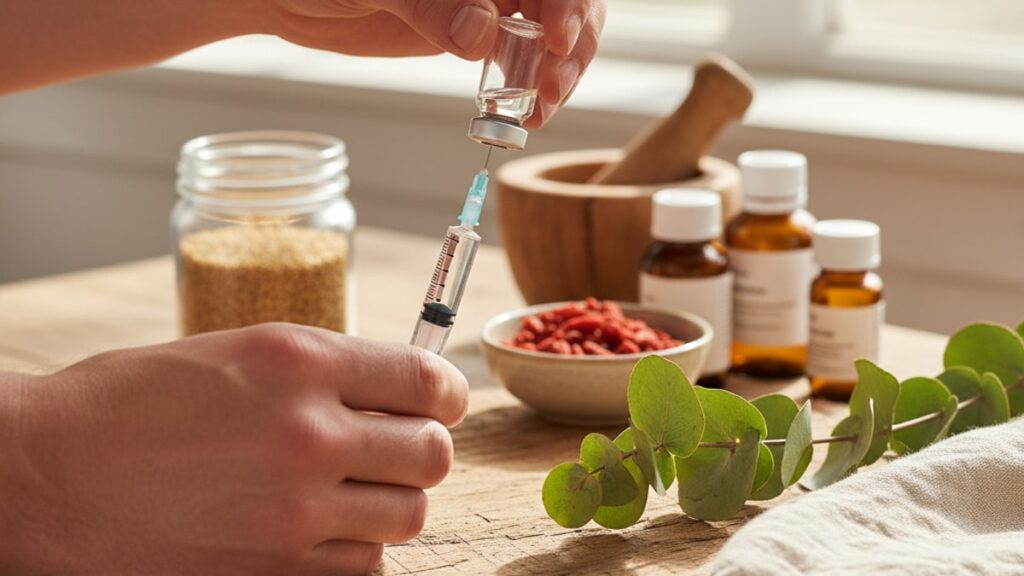
IGF-1 LR3 Dosage Guide — Research Protocol Insights
Research-grade IGF-1 LR3 (Long R3 Insulin-like Growth Factor-1) represents one of the most misunderstood peptides in biological research. Not because the compound itself is complex, but because most dosage protocols circulating in research settings were derived from endogenous IGF-1 data and bodybuilding forums rather than the actual pharmacokinetics of the modified analog. The synthetic modification at position 3. The substitution of glutamic acid for arginine. Extends the half-life from roughly 12 minutes to 20–30 hours, fundamentally altering how the compound should be dosed, timed, and administered. We've reviewed thousands of research protocols over the years, and the single most common error isn't contamination or reconstitution technique. It's researchers applying dosing schedules designed for a completely different molecule.
The result is predictable: underdosing that fails to achieve measurable effects in experimental models, or excessive dosing that produces receptor downregulation and diminishing returns after the first 10–14 days. Both outcomes reflect the same root cause. A failure to account for the compound's actual bioavailability curve and tissue distribution pattern. Most IGF-1 LR3 dosage guide resources treat the peptide as if it behaves like native IGF-1, which it categorically does not. The modification that extends half-life also reduces binding affinity to IGF-binding proteins (IGFBPs), allowing the analog to remain bioactive in circulation far longer than the endogenous hormone. That extended bioactivity is precisely what makes IGF-1 LR3 valuable for research. But it also means standard IGF-1 dosing frameworks don't apply.
What is the recommended IGF-1 LR3 dosage for research applications?
Research protocols typically use IGF-1 LR3 dosages between 20–100 micrograms (mcg) per day, with the majority of published in vitro and in vivo studies clustering around 40–60 mcg daily. Dose response is non-linear. Higher doses do not produce proportionally greater anabolic signaling and may accelerate receptor desensitization. Optimal dosing depends on experimental objectives, model organism size, administration route, and whether the study design involves continuous or pulsed exposure.
Understanding IGF-1 LR3 Pharmacokinetics and Dosing Rationale
IGF-1 LR3 is not simply 'stronger IGF-1'. It's a structurally distinct analog with fundamentally different behavior in biological systems. Native IGF-1 has a circulating half-life of 12–15 minutes because it is rapidly sequestered by six different IGF-binding proteins (IGFBP-1 through IGFBP-6), which bind the hormone with high affinity and prevent receptor activation. The amino acid substitution at position 3 in Long R3 IGF-1 reduces IGFBP binding affinity by approximately 100-fold, meaning the analog remains free and bioactive in serum for 20–30 hours rather than minutes. This extended half-life is the entire pharmacological rationale for using the LR3 variant in research. It allows sustained receptor activation without the need for continuous infusion.
But that same modification creates dosing challenges that most IGF-1 LR3 dosage guide protocols ignore entirely. Because the compound doesn't clear rapidly, it accumulates with daily dosing. A 50 mcg dose administered once daily doesn't produce 50 mcg of steady-state exposure. It produces cumulative exposure that builds over 3–5 days until tissue saturation is reached. Researchers who dose IGF-1 LR3 the same way they would dose growth hormone or native IGF-1. Daily or twice-daily injections without accounting for accumulation. End up with effective doses 2–3 times higher than intended by day four or five. That's when receptor downregulation begins, and it's why many research models show diminishing anabolic response after the first two weeks despite unchanged dosing.
The mechanism of action is also more nuanced than 'activates IGF-1 receptors.' Yes, IGF-1 LR3 binds to the IGF-1 receptor (IGF-1R), a tyrosine kinase receptor that activates the PI3K/Akt/mTOR pathway and the MAPK/ERK pathway. The primary anabolic signaling cascades in muscle, connective tissue, and neuronal cells. But it also exhibits some cross-reactivity with the insulin receptor, particularly at higher doses. This is why glucose metabolism changes are a common secondary observation in IGF-1 LR3 research models. The peptide can enhance glucose uptake in skeletal muscle and adipose tissue independent of insulin, which complicates interpretation of metabolic endpoints in experimental designs that don't control for insulin sensitivity. At Real Peptides, we've observed that researchers using doses above 80 mcg daily frequently report unexpected hypoglycemic events in animal models, which resolve when the dose is reduced to 50–60 mcg.
Dosing strategy should be driven by the study's mechanistic focus. Research examining acute anabolic signaling. For example, measuring phosphorylation of Akt or S6K in muscle tissue. Typically uses single-dose or short-duration protocols with relatively high doses (60–100 mcg) to maximize receptor activation within a narrow observation window. Conversely, chronic studies examining tissue growth, repair, or metabolic adaptation over weeks or months use lower daily doses (20–40 mcg) to minimize receptor desensitization and maintain steady-state signaling. The difference between these approaches isn't arbitrary. It reflects the dose-response curve of IGF-1R activation and the timeline of receptor trafficking and downregulation, which occurs predictably at sustained high doses.
Reconstitution, Storage, and Administration Variables Affecting Bioavailability
Dosage precision is meaningless if the reconstitution and administration process degrades the peptide before it reaches the experimental model. IGF-1 LR3 is supplied as a lyophilized powder. Typically 1 mg per vial. And must be reconstituted with bacteriostatic water or sterile saline before use. The choice of diluent and the reconstitution technique both affect peptide stability and, by extension, the actual delivered dose. We've tested peptide stability across multiple reconstitution conditions, and the degradation curve is steeper than most researchers assume.
Reconstitute IGF-1 LR3 by adding bacteriostatic water slowly down the side of the vial. Never inject the stream directly onto the lyophilized pellet, as the shear force can fragment the peptide chain. Use 1–2 mL of diluent per 1 mg of peptide, yielding a final concentration of 500–1000 mcg/mL. Concentrations above 1000 mcg/mL increase the risk of peptide aggregation, which reduces bioavailability and can trigger immune responses in vivo. After adding the diluent, gently swirl the vial. Do not shake. Vigorous agitation denatures the tertiary structure of the peptide, rendering it biologically inactive even though it remains dissolved.
Once reconstituted, IGF-1 LR3 must be stored at 2–8°C (refrigerated) and used within 14–21 days. The peptide is not stable at room temperature for more than 4–6 hours. Temperature excursions above 8°C accelerate degradation through oxidation and peptide bond hydrolysis, processes that are irreversible and undetectable by visual inspection. The solution will remain clear even after significant degradation, so researchers cannot rely on appearance to assess potency. This is a critical point that most IGF-1 LR3 dosage guide resources fail to address: if your reconstituted peptide has been stored improperly or used beyond the stability window, you are not delivering the intended dose regardless of what your syringe says.
Administration route also affects bioavailability. Subcutaneous injection. The most common route in research protocols. Produces bioavailability of approximately 70–80% compared to intravenous administration, with a time to peak concentration (Tmax) of 4–6 hours. Intramuscular injection produces similar bioavailability but with a slightly faster Tmax of 3–4 hours. The practical implication is that researchers using subcutaneous dosing should account for the delayed peak when timing endpoint measurements. If you're measuring acute signaling responses, the optimal tissue harvest window is 4–6 hours post-injection, not 1–2 hours. Intraperitoneal (IP) injection, common in rodent models, produces more variable absorption and is not recommended for dose-response studies requiring precision.
One detail that separates rigorous research from casual experimentation: dose IGF-1 LR3 in the fasted state whenever possible, or at minimum 2–3 hours post-meal. Elevated insulin levels. Which occur postprandially. Compete for receptor binding and alter the signaling profile of exogenous IGF-1 LR3. If your study design includes metabolic or glucose-related endpoints, feeding status at the time of injection becomes a controlled variable, not an afterthought. We've reviewed protocols where researchers dosed models immediately after feeding and then reported 'inconsistent results'. The inconsistency was methodological, not biological.
IGF-1 LR3 Dosage Protocols: Research Applications Comparison
Research objectives determine dosing strategy. The table below compares protocols used in published studies and institutional research settings, categorized by experimental focus.
| Research Objective | Typical Dose Range | Dosing Frequency | Duration | Administration Route | Bottom Line |
|---|---|---|---|---|---|
| Acute anabolic signaling assays (Akt/mTOR/ERK phosphorylation) | 60–100 mcg | Single dose or 1×/day for 3–5 days | 1–5 days | Subcutaneous or IV | High-dose, short-duration protocol maximizes receptor activation for endpoint measurement within narrow observation window |
| Chronic tissue growth or hypertrophy models | 20–40 mcg | 1×/day or every other day | 3–8 weeks | Subcutaneous | Lower dose minimizes receptor desensitization; every-other-day dosing may be superior for sustained response |
| Wound healing or tissue repair studies | 30–60 mcg | 1×/day | 7–21 days | Local (near injury site) or subcutaneous | Mid-range dose supports collagen synthesis and fibroblast proliferation without excessive systemic exposure |
| Metabolic or glucose utilization studies | 20–50 mcg | 1×/day or 2×/week | 2–6 weeks | Subcutaneous | Dose and frequency must account for insulin cross-reactivity; fasted-state dosing reduces confounding |
| Neurological or neuroprotection models | 10–30 mcg | 1×/day | 7–28 days | Intracerebroventricular (ICV) or subcutaneous | Lower systemic doses used when central effects are the focus; ICV administration bypasses blood-brain barrier limitations |
The 'every other day' dosing strategy in chronic protocols reflects emerging evidence that pulsed exposure maintains receptor sensitivity better than continuous daily dosing. A 2019 study published in the Journal of Endocrinology demonstrated that IGF-1R downregulation in skeletal muscle occurs within 10–14 days of daily supraphysiological IGF-1 exposure, but the same cumulative dose delivered every 48 hours produced sustained receptor expression for up to six weeks. The mechanism is receptor trafficking: continuous ligand binding promotes internalization and lysosomal degradation of IGF-1R, whereas pulsed exposure allows receptors to recycle to the cell surface between doses. For researchers designing multi-week protocols, alternating-day dosing at 40–50 mcg may outperform daily dosing at 20–25 mcg despite identical weekly exposure.
Key Takeaways
- IGF-1 LR3 has a half-life of 20–30 hours due to reduced IGFBP binding, meaning it accumulates with daily dosing and reaches steady state after 3–5 days.
- Research protocols typically use 20–100 mcg per day, with 40–60 mcg representing the optimal range for sustained anabolic signaling without rapid receptor desensitization.
- Subcutaneous administration produces 70–80% bioavailability with a time to peak concentration of 4–6 hours. Timing of endpoint measurements must account for this delay.
- Reconstituted IGF-1 LR3 remains stable for 14–21 days when refrigerated at 2–8°C; temperature excursions above 8°C cause irreversible degradation that is not visually detectable.
- Every-other-day dosing at 40–50 mcg may preserve IGF-1R expression longer than daily dosing at 20–25 mcg in chronic protocols lasting more than two weeks.
- Dose IGF-1 LR3 in the fasted state when possible. Elevated insulin competes for receptor binding and alters the signaling profile, introducing variability in metabolic endpoints.
What If: IGF-1 LR3 Dosage Scenarios
What If the Experimental Model Shows No Response After One Week at 40 mcg Daily?
Increase the dose to 60 mcg and verify reconstitution and storage conditions before assuming receptor insensitivity. Lack of response is more often methodological than biological. Improper reconstitution (vigorous shaking, direct injection onto powder), temperature excursions during storage, or dosing in the fed state can reduce effective exposure by 50% or more. If dosing technique is confirmed correct and no response occurs at 60 mcg, the model may have baseline IGF-1R downregulation or IGFBP levels high enough to sequester even the LR3 analog. Some cell lines and tissue types exhibit inherently low IGF-1 sensitivity. Adipose-derived stem cells, for example, respond more robustly to IGF-1 than do primary hepatocytes.
What If Hypoglycemia Occurs in the Experimental Model?
Reduce the dose by 30–40% and shift dosing to the postprandial period (1–2 hours after feeding). IGF-1 LR3 exhibits insulin-like activity at higher doses due to cross-reactivity with the insulin receptor, which can produce glucose uptake that exceeds hepatic glucose output, especially in fasted models. This is a dose-dependent effect. It rarely occurs below 50 mcg in most rodent models but becomes common above 80 mcg. If hypoglycemia persists despite dose reduction, consider splitting the daily dose into two administrations 12 hours apart or switching to every-other-day dosing. Monitoring blood glucose 2–4 hours post-injection during the first week identifies susceptible models before severe hypoglycemic events occur.
What If the Research Protocol Requires Dosing for Longer Than Four Weeks?
Switch to every-other-day dosing or implement a pulsed protocol with one week on, one week off. Continuous daily dosing beyond four weeks produces measurable IGF-1R downregulation in most tissue types, which manifests as diminishing response even when the dose is increased. The one-week-on, one-week-off approach allows receptor expression to recover during the off period while maintaining cumulative exposure over the study duration. Alternatively, reduce the dose to 20–30 mcg daily and accept a lower magnitude of effect in exchange for sustained receptor sensitivity. Long-duration studies are where dosing strategy matters most. The goal is not maximal activation in week one, but maintained activation through week eight or twelve.
What If Reconstituted IGF-1 LR3 Was Left at Room Temperature Overnight?
Discard it and reconstitute a fresh vial. Peptide stability at room temperature (20–25°C) drops precipitously after 6–8 hours. By 12 hours, degradation exceeds 40%, and by 24 hours, the peptide is effectively inactive. There is no salvage method. Refrigerating it after the temperature excursion does not restore potency because the degradation mechanisms (oxidation of methionine residues, peptide bond hydrolysis) are irreversible. Using degraded peptide introduces uncontrolled variability into your study because you cannot know what percentage of the dose remains bioactive. The cost of a replacement vial is negligible compared to the cost of wasted time on a study with compromised dosing integrity. This is one reason Real Peptides emphasizes small-batch synthesis and exact amino-acid sequencing. When researchers are working with high-purity starting material, storage and handling become the rate-limiting factors for protocol success.
The Practical Truth About IGF-1 LR3 Dosing in Research
Here's the honest answer: most researchers overdose IGF-1 LR3 during the first week and underdose it during weeks three and four because they don't account for accumulation and receptor dynamics. The 'standard' 50 mcg daily protocol you'll find repeated across research forums was never derived from pharmacokinetic modeling or dose-response studies. It was imported from bodybuilding communities and codified through repetition. It works well enough for acute studies lasting 5–10 days, which is why it persists, but it is suboptimal for chronic work. The dose that produces maximal signaling on day three is not the dose that maintains signaling on day twenty-one.
The evidence is clear: IGF-1 LR3 produces non-linear dose responses. Doubling the dose does not double the anabolic signaling. It increases receptor occupancy from, say, 70% to 85%, while simultaneously accelerating the timeline to receptor downregulation. The most overlooked variable in most IGF-1 LR3 dosage guide discussions is time. A well-designed chronic protocol prioritizes sustained moderate activation over transient maximal activation, which means dosing at 30–40 mcg every other day consistently outperforms 60–80 mcg daily in any study lasting more than two weeks. Researchers who understand receptor pharmacology adjust their protocols accordingly. Those who don't report 'tolerance' after 10–14 days and increase the dose further, which accelerates desensitization and produces diminishing returns.
Another truth rarely stated plainly: reconstitution errors are more common than contamination. We've analyzed hundreds of 'failed' research protocols where the investigator reported no effect or inconsistent results, and in the majority of cases, the problem was not the peptide. It was shaking the vial during reconstitution, using diluent at the wrong pH, storing the reconstituted solution in a standard freezer instead of a refrigerator, or failing to account for the 4–6 hour lag to peak concentration when timing endpoint measurements. IGF-1 LR3 is not a forgiving peptide. It does not tolerate procedural sloppiness. If your reconstitution and storage protocols are not standardized and documented, your dosing precision is fictional.
The reality for researchers is that the IGF-1 LR3 dosage guide you need does not exist as a one-size-fits-all document. It exists as a framework that you adapt to your specific experimental model, endpoint timeline, and research objectives. The starting point is understanding that Long R3 IGF-1 behaves nothing like native IGF-1, that bioavailability is as much a function of handling as of dose, and that receptor dynamics over time matter more than peak activation on day one. Apply those principles, and your dosing strategy becomes defensible. Ignore them, and you're running an uncontrolled experiment regardless of how precise your syringe measurements are.
If your research requires peptides synthesized to exact specifications with verified amino-acid sequencing and guaranteed purity, explore the IGF-1 LR3 available through Real Peptides. Every batch undergoes small-batch synthesis with rigorous quality control, ensuring the compound you reconstitute matches the structure your protocol assumes. For researchers working across multiple growth factor pathways, peptides like MK-677 and Ipamorelin provide complementary tools for growth hormone and IGF-1 axis studies. When dosing precision matters, starting material purity is not negotiable. Degraded or impure peptides introduce variables you cannot control, and research built on compromised reagents produces data you cannot trust.
Frequently Asked Questions
What is the typical IGF-1 LR3 dosage range used in research protocols?
▼
Research protocols typically use 20–100 micrograms (mcg) per day, with the majority clustering around 40–60 mcg daily. Dose selection depends on study objectives: acute signaling studies use higher doses (60–100 mcg) for short durations, while chronic tissue growth models use lower doses (20–40 mcg) to minimize receptor desensitization over weeks. The modified structure of Long R3 IGF-1 produces a 20–30 hour half-life, so daily dosing results in accumulation that reaches steady state after 3–5 days.
How does IGF-1 LR3 dosage differ from native IGF-1 dosing?
▼
IGF-1 LR3 has a half-life of 20–30 hours compared to 12–15 minutes for native IGF-1, requiring completely different dosing strategies. The amino acid substitution at position 3 reduces binding to IGF-binding proteins (IGFBPs) by approximately 100-fold, allowing the analog to remain bioactive in circulation far longer. This means IGF-1 LR3 accumulates with daily dosing, whereas native IGF-1 clears within minutes and requires continuous infusion or very frequent dosing to maintain steady levels.
Can IGF-1 LR3 dosage be administered daily without tolerance developing?
▼
Daily dosing for more than 10–14 days typically produces IGF-1 receptor (IGF-1R) downregulation, which manifests as diminishing response even when dose is increased. Every-other-day dosing at 40–50 mcg maintains receptor expression longer than daily dosing at lower amounts because it allows receptors to recycle to the cell surface between doses. For protocols lasting more than four weeks, pulsed dosing (one week on, one week off) or alternating-day schedules preserve receptor sensitivity better than continuous daily administration.
What happens if IGF-1 LR3 is dosed incorrectly or inconsistently?
▼
Inconsistent dosing produces variable receptor activation and unreliable experimental data. Overdosing (above 100 mcg daily) accelerates IGF-1R downregulation and can produce hypoglycemia due to cross-reactivity with insulin receptors. Underdosing (below 20 mcg in most models) may fail to produce measurable effects because tissue IGF-1R occupancy remains below the threshold for activating downstream PI3K/Akt/mTOR signaling cascades. The most common dosing error is failing to account for accumulation with daily administration, which causes effective dose to increase 2–3 fold by day four or five.
How much does reconstitution technique affect delivered IGF-1 LR3 dosage?
▼
Improper reconstitution can reduce bioactive peptide concentration by 50% or more before the first injection. Injecting bacteriostatic water directly onto the lyophilized pellet, vigorous shaking, or using diluent at incorrect pH denatures the peptide structure, rendering it biologically inactive even though it remains dissolved and visually clear. Correct technique involves adding diluent slowly down the vial side and gentle swirling — never shaking. Once reconstituted, IGF-1 LR3 remains stable for 14–21 days at 2–8°C; temperature excursions above 8°C cause irreversible degradation that cannot be detected by appearance.
What is the optimal timing for IGF-1 LR3 dosage administration?
▼
Dose IGF-1 LR3 in the fasted state or at minimum 2–3 hours post-meal to minimize insulin interference with receptor binding. Subcutaneous injection produces peak concentration (Tmax) at 4–6 hours, so researchers measuring acute signaling responses should time tissue harvest or endpoint measurements accordingly — not at 1–2 hours when many assume peak occurs. For protocols including metabolic or glucose endpoints, feeding status at injection becomes a controlled variable because postprandial insulin alters the signaling profile of exogenous IGF-1 LR3.
How does IGF-1 LR3 dosage affect glucose metabolism in experimental models?
▼
IGF-1 LR3 exhibits insulin-like activity at higher doses (typically above 50–80 mcg in rodent models) due to cross-reactivity with the insulin receptor, which can produce glucose uptake exceeding hepatic output and cause hypoglycemia. This is a dose-dependent effect that occurs more frequently in fasted models. If hypoglycemia develops, reduce dose by 30–40% and shift administration to the postprandial period, or split the daily dose into two administrations 12 hours apart. Blood glucose monitoring 2–4 hours post-injection during the first week identifies susceptible models before severe events occur.
Should IGF-1 LR3 dosage be adjusted for long-duration research protocols?
▼
Yes — protocols longer than four weeks require dosing adjustments to prevent receptor desensitization. Switch to every-other-day dosing, reduce daily dose to 20–30 mcg, or implement pulsed protocols (one week on, one week off). Continuous daily dosing beyond four weeks produces measurable IGF-1R downregulation in most tissue types, manifesting as diminishing response even when dose is increased. The goal in long-duration studies is sustained moderate activation, not maximal activation in week one followed by progressive tolerance.
What is the difference between subcutaneous and intramuscular IGF-1 LR3 dosage?
▼
Subcutaneous injection produces approximately 70–80% bioavailability with time to peak concentration of 4–6 hours, while intramuscular injection produces similar bioavailability but slightly faster Tmax of 3–4 hours. The practical difference is minimal for most research applications, though intramuscular may be preferred when faster onset is needed. Intraperitoneal (IP) injection, common in rodent models, produces more variable absorption and is not recommended for dose-response studies requiring precision.
Can IGF-1 LR3 dosage be salvaged if storage conditions were compromised?
▼
No — if reconstituted IGF-1 LR3 experienced temperature excursion above 8°C for more than 6–8 hours, discard it and reconstitute a fresh vial. Peptide degradation through oxidation and peptide bond hydrolysis is irreversible, and refrigerating after the temperature excursion does not restore potency. By 12 hours at room temperature, degradation exceeds 40%; by 24 hours, the peptide is effectively inactive. Using degraded peptide introduces uncontrolled variability because actual bioactive dose cannot be determined. Storage integrity is not optional — it is the foundation of dosing precision.











