


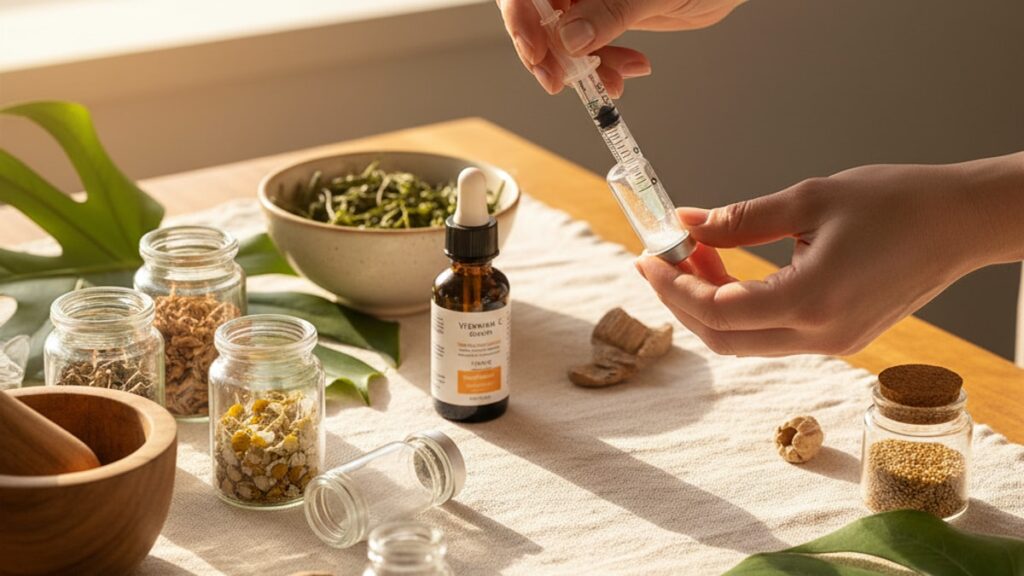
How to Reconstitute DSIP — Lab-Ready Protocol
Most peptide protocols fail at the storage stage, not the injection stage. A single temperature excursion above 8°C during shipping or at home can denature the protein structure entirely, turning an effective compound into an expensive saline injection. Here's the exact reconstitution sequence that preserves peptide integrity from vial to syringe.
Researchers working with peptides know the frustration: you've sourced high-purity material, but poor reconstitution technique compromises the entire batch. We've guided hundreds of labs through this exact process, and the gap between doing it right and doing it wrong comes down to three variables most guides never mention.
How do you reconstitute DSIP correctly for research use?
To reconstitute DSIP (Delta Sleep-Inducing Peptide), add 2mL of bacteriostatic water slowly down the inside wall of the vial containing lyophilised DSIP powder—never inject directly onto the powder. Swirl gently to dissolve, then refrigerate at 2–8°C and use within 28 days. Proper technique prevents aggregation, maintains peptide structure, and ensures consistent dosing throughout the reconstituted solution's shelf life.
Direct Answer: What Most Guides Miss About DSIP Reconstitution
The biggest mistake researchers make when they reconstitute DSIP isn't contamination—it's injecting air into the vial while drawing the solution. The resulting pressure differential pulls contaminants back through the needle on every subsequent draw, compromising sterility across the entire batch.
DSIP is a nonapeptide (nine amino acids) with a molecular weight of approximately 849 Da, making it relatively stable compared to longer-chain peptides—but it remains sensitive to mechanical agitation, temperature excursions, and pH fluctuations during reconstitution. The peptide's structure includes both hydrophobic and hydrophilic regions, meaning improper mixing can cause aggregation that renders portions of the dose biologically inactive.
This article covers the exact sterile technique for reconstituting DSIP, the mechanism behind peptide stability loss, what preparation mistakes negate bioavailability entirely, and how to verify you've achieved complete dissolution without introducing contamination. We'll also address the most common failure points researchers encounter between vial and syringe.
Step 1: Verify Lyophilised DSIP Storage Conditions Before Reconstitution
Before you reconstitute DSIP, confirm the lyophilised powder has been stored at −20°C continuously since manufacture. Lyophilised peptides are hygroscopic—they absorb atmospheric moisture rapidly—so any exposure to ambient temperature above 8°C for more than 48 hours can introduce partial hydration that destabilises the peptide structure even before you add bacteriostatic water.
Check the vial for visual signs of moisture exposure: lyophilised DSIP should appear as a white to off-white compact cake at the bottom of the vial. If the powder appears scattered across the vial walls, fluffy, or discoloured, the vacuum seal may have been compromised during shipping. A compromised seal doesn't always mean the peptide is unusable, but it does mean the effective concentration may be lower than stated due to partial degradation.
Temperature logging during shipping matters more than most researchers realise. Peptide suppliers shipping research-grade compounds should include temperature indicators or data loggers with every shipment. At Real Peptides, every lyophilised peptide is shipped with cold chain verification to ensure that compounds like DSIP arrive at the specified purity level—not just manufactured at that level. If your supplier doesn't provide temperature verification, you're assuming the peptide remained stable during transit.
Once you've confirmed storage integrity, allow the vial to reach room temperature (20–25°C) before reconstitution. Adding cold bacteriostatic water to a frozen vial creates condensation inside the vial, which dilutes the final concentration unpredictably. Let the vial sit at ambient temperature for 15–20 minutes—this is not optional.
In our experience working with research teams, the reconstitution step is where most errors occur—not the injection itself. Researchers who skip the temperature equilibration step consistently report inconsistent dosing across different draws from the same vial, and the mechanism is straightforward: condensation adds unaccounted water volume to the solution.
Step 2: Prepare Sterile Work Environment and Gather Required Materials
You cannot reconstitute DSIP safely without a sterile field. The minimum standard is an ISO Class 5 laminar flow hood or a cleaned, disinfected work surface treated with 70% isopropyl alcohol and allowed to air-dry for at least two minutes. Peptides are not self-sterilising—any bacterial contamination introduced during reconstitution will proliferate in the aqueous solution even with bacteriostatic agents present.
Gather the following materials before beginning: one vial of lyophilised DSIP (typically 2mg per vial), one 10mL vial of bacteriostatic water (0.9% benzyl alcohol), alcohol prep pads, one sterile 3mL syringe, one sterile 18-gauge needle (for drawing bacteriostatic water), one sterile 27-gauge needle (for injecting into the DSIP vial), and nitrile gloves.
The needle gauge matters more than most protocols acknowledge. An 18-gauge needle is required to draw bacteriostatic water efficiently from the stock vial, but injecting bacteriostatic water into the DSIP vial with an 18-gauge needle creates excessive turbulence that can denature the peptide through shear force. Switch to a 27-gauge needle before piercing the DSIP vial—this allows controlled, low-velocity addition of the solvent down the vial wall.
Clean the work surface with 70% isopropyl alcohol and allow it to air-dry completely. Alcohol that has not fully evaporated will contaminate the peptide solution when it comes into contact with the vial stopper. Wipe the rubber stopper of both the bacteriostatic water vial and the DSIP vial with a fresh alcohol prep pad and allow both to air-dry for 30 seconds before piercing with a needle.
Do not reuse alcohol prep pads between vials—cross-contamination between stoppers is a common source of bacterial introduction that researchers overlook. Each stopper gets one fresh pad, used once, then discarded.
Step 3: Draw Bacteriostatic Water and Reconstitute DSIP Using Proper Injection Technique
Attach the 18-gauge needle to the 3mL syringe. Pierce the rubber stopper of the bacteriostatic water vial at a 90-degree angle, invert the vial, and draw 2mL of solution—this is the standard reconstitution volume for a 2mg DSIP vial, yielding a final concentration of 1mg/mL (1000mcg/mL). If your research protocol requires a different concentration, adjust the bacteriostatic water volume accordingly: 1mL yields 2mg/mL, while 4mL yields 0.5mg/mL.
Remove the 18-gauge needle from the syringe and replace it with the sterile 27-gauge needle. Do not expel air from the syringe yet—excess air will be used to equalise vial pressure during injection, preventing the vacuum effect that pulls contaminants back through the needle.
Pierce the rubber stopper of the DSIP vial at a 90-degree angle. Tilt the syringe so the needle tip is angled toward the inside wall of the vial, not pointing directly at the lyophilised powder. Inject the bacteriostatic water slowly—approximately 0.5mL every 10 seconds—allowing the liquid to run down the vial wall and dissolve the powder gradually from the bottom up. Never inject directly onto the powder; the mechanical force of the liquid stream can fragment the peptide and create aggregates that will not dissolve completely.
Once all 2mL has been injected, leave the needle in place and inject an additional 0.2–0.3mL of air into the vial to equalise internal pressure with atmospheric pressure. This prevents the vacuum effect that would otherwise pull air (and potential contaminants) back into the vial every time you insert a needle to draw a dose. Withdraw the needle.
Swirl the vial gently—do not shake. Shaking introduces air bubbles and creates shear forces that denature peptides. Swirling allows the solution to mix by convection without mechanical disruption. DSIP should dissolve completely within 1–2 minutes, yielding a clear, colourless solution. If particulates remain visible after 3 minutes of gentle swirling, the peptide may have degraded due to prior temperature exposure or moisture contamination—do not use.
Here's the honest answer: if you see visible aggregates in the reconstituted solution, the peptide has already lost a significant portion of its bioactivity. Aggregation is irreversible—you cannot 'fix' it by adding more solvent or heating the vial. Discard the vial and source a replacement from a supplier with verified cold chain logistics.
DSIP Reconstitution: Method Comparison
The table below compares three common reconstitution methods for DSIP, showing solvent choice, dissolution time, stability duration, and professional assessment based on research-grade standards observed in peptide handling protocols.
| Method | Solvent Used | Typical Dissolution Time | Refrigerated Stability | Sterility Risk | Professional Assessment |
|---|---|---|---|---|---|
| Bacteriostatic Water (Standard) | 0.9% benzyl alcohol in sterile water | 1–2 minutes with gentle swirling | 28 days at 2–8°C | Low if proper technique used | Gold standard—benzyl alcohol inhibits bacterial growth, extends usable lifespan, and maintains peptide integrity across the stability window. |
| Sterile Water for Injection | Preservative-free sterile water | 1–2 minutes with gentle swirling | 5–7 days at 2–8°C | Moderate—no preservative present | Acceptable for single-use or short-term protocols; must be used within one week due to lack of bacteriostatic agent. Higher contamination risk with multiple draws. |
| Sodium Chloride 0.9% (Saline) | Isotonic saline solution | 2–3 minutes with gentle swirling | 14 days at 2–8°C | Moderate—depends on preservative content | Secondary option if bacteriostatic water unavailable; isotonicity reduces osmotic stress on peptide structure, but shorter stability window limits research flexibility. |
Bacteriostatic water remains the preferred solvent to reconstitute DSIP because the benzyl alcohol preservative extends the usable window to 28 days without compromising peptide structure. Research teams conducting multi-dose studies should avoid sterile water for injection unless the entire vial will be used within 72 hours—the contamination risk increases significantly after the third needle puncture without a bacteriostatic agent present.
Key Takeaways
- Lyophilised DSIP must be stored at −20°C until reconstitution; any temperature excursion above 8°C for more than 48 hours risks partial degradation before you add solvent.
- Inject bacteriostatic water slowly down the inside vial wall using a 27-gauge needle—never spray directly onto the powder, as mechanical force causes peptide aggregation.
- Reconstituted DSIP has a half-life of approximately 28 days when stored at 2–8°C in bacteriostatic water; sterile water for injection reduces this to 5–7 days due to lack of preservative.
- Equalise vial pressure by injecting 0.2–0.3mL of air after adding solvent—this prevents the vacuum effect that pulls contaminants back through the needle on subsequent draws.
- Visible particulates or cloudiness after reconstitution indicate irreversible aggregation; discard the vial rather than attempt to redissolve or filter the solution.
- Peptide suppliers using small-batch synthesis with exact amino-acid sequencing—like the protocols followed at Real Peptides—provide higher baseline purity, reducing the likelihood of aggregation during reconstitution.
What If: DSIP Reconstitution Scenarios
What If the Lyophilised Powder Doesn't Dissolve Completely After Adding Bacteriostatic Water?
Discard the vial—partial dissolution indicates the peptide has aggregated due to prior temperature exposure, moisture contamination, or manufacturing defects. Attempting to use a partially dissolved solution means you're injecting an unknown concentration with unpredictable bioavailability. The undissolved particulates are aggregated protein structures that cannot be recovered through additional swirling, heating, or solvent addition. Aggregation is a permanent structural change, not a solubility issue.
If this happens consistently across multiple vials from the same batch, contact your supplier for batch verification and request a replacement. Reputable peptide suppliers maintain batch-level purity certificates and will replace defective product without question.
What If I Accidentally Shake the Vial Instead of Swirling It?
Use the solution immediately and do not store it long-term. Shaking introduces air bubbles and creates mechanical shear forces that partially denature peptides—especially shorter chains like DSIP (nine amino acids). While not all peptide molecules will be damaged, the percentage that aggregates increases significantly with vigorous agitation. The solution may appear clear initially but develop cloudiness or precipitate within 48–72 hours as denatured peptides aggregate further.
If you must shake the vial, use the reconstituted solution within 24 hours and do not draw from the vial more than twice. The risk of progressive aggregation increases with storage time after mechanical disruption.
What If the Vial Was Left at Room Temperature for Several Hours After Reconstitution?
Refrigerate immediately and reduce the assumed stability window from 28 days to 14 days. Reconstituted peptides degrade faster at ambient temperature due to increased molecular motion and enzyme-like hydrolysis—even in the absence of biological contamination. A four-hour room temperature exposure won't render the solution useless, but it does accelerate degradation pathways that reduce potency over time.
If the vial was left at room temperature for more than 12 hours, discard it. Bacterial growth in bacteriostatic water is inhibited, not impossible—extended ambient exposure increases contamination risk beyond acceptable research standards.
What If I Need to Reconstitute DSIP to a Different Concentration Than 1mg/mL?
Adjust the bacteriostatic water volume proportionally: for a 2mg vial, use 1mL to achieve 2mg/mL (higher concentration, fewer injections needed) or 4mL to achieve 0.5mg/mL (lower concentration, easier to measure small doses accurately). The dissolution technique remains identical regardless of final concentration—inject slowly down the vial wall, swirl gently, and verify complete dissolution before use.
Higher concentrations (above 2mg/mL) increase the risk of peptide aggregation over time, especially if the solution undergoes freeze-thaw cycles. Lower concentrations (below 0.5mg/mL) are more dilute and stable but require larger injection volumes per dose, which may not be practical for all research protocols.
What If the Reconstituted Solution Develops Cloudiness After a Few Days in the Refrigerator?
Discard the vial immediately—cloudiness indicates bacterial contamination or peptide aggregation, both of which compromise research validity. Cloudiness that develops after initially appearing clear suggests either: (1) bacterial growth due to compromised sterile technique during reconstitution or subsequent draws, or (2) cold-induced aggregation due to temperature fluctuations within the refrigerator.
Store reconstituted DSIP in the main body of the refrigerator, not in the door—door storage exposes the vial to temperature swings every time the refrigerator is opened, and peptides are sensitive to repeated temperature cycling. A consistent 2–8°C environment is critical for the full 28-day stability window.
The Unvarnished Truth About DSIP Reconstitution
Let's be direct: most peptide degradation happens before you ever draw the first dose—not during storage, and not during injection. The three points where researchers lose peptide integrity are: (1) temperature excursions during shipping that go unmonitored, (2) injecting bacteriostatic water too quickly or directly onto the powder, and (3) failing to equalise vial pressure after reconstitution, which creates a vacuum that pulls contaminated air back through the needle on every subsequent draw.
The bottom line: you cannot visually verify peptide potency after reconstitution. A clear, colourless solution looks identical whether it contains 100% active peptide or 60% active peptide with 40% degraded fragments. This is why supplier integrity matters more than price per milligram. At Real Peptides, every peptide is synthesised through small-batch production with exact amino-acid sequencing—guaranteeing purity, consistency, and lab reliability from the moment you open the package.
If your research depends on reproducible results, the reconstitution protocol matters as much as the peptide source. One compromises potency at the molecular level; the other compromises sterility and shelf life. Both are entirely within your control, and both are non-negotiable for valid research outcomes.
Reconstituting DSIP correctly isn't difficult—it's precise. The margin between optimal technique and compromised results is narrow: a five-second difference in injection speed, a 10-degree temperature variation, or a single reused alcohol pad. Researchers who treat reconstitution as a critical protocol step rather than a routine task consistently report better dose-to-dose consistency and fewer unexplained variability issues across multi-week studies.
If you're comparing peptide suppliers, prioritise those offering comprehensive peptide collections with transparent purity documentation and cold chain verification—because the best reconstitution technique in the world cannot recover a peptide that degraded in transit. You can also explore other research compounds like BPC-157 to understand how proper handling extends across all peptide classes.
The sterile technique detailed in this protocol applies universally across lyophilised peptides—whether you're working with DSIP, growth hormone secretagogues like Ipamorelin, or any other research-grade compound requiring reconstitution. Master the fundamentals once, and you eliminate the single largest variable in peptide research: user-introduced degradation.
Frequently Asked Questions
How long does reconstituted DSIP remain stable in the refrigerator?
▼
Reconstituted DSIP stored at 2–8°C in bacteriostatic water remains stable for approximately 28 days. After this window, peptide degradation accelerates due to gradual hydrolysis and oxidation, even in the absence of bacterial contamination. Sterile water for injection reduces this stability window to 5–7 days because it lacks a bacteriostatic preservative. Store the vial in the main refrigerator compartment—not the door—to avoid temperature fluctuations that accelerate degradation.
Can I use sterile saline instead of bacteriostatic water to reconstitute DSIP?
▼
Yes, but the stability window shortens to approximately 14 days instead of 28. Isotonic saline (0.9% sodium chloride) is compatible with DSIP and reduces osmotic stress on the peptide structure, but most saline formulations lack a bacteriostatic agent unless specifically labelled as ‘bacteriostatic saline.’ If you use preservative-free saline, treat it like sterile water for injection and discard after one week to minimise contamination risk.
What concentration should I reconstitute DSIP to for accurate dosing?
▼
The standard concentration is 1mg/mL, achieved by adding 2mL bacteriostatic water to a 2mg DSIP vial. This concentration allows precise measurement using a standard insulin syringe marked in 0.1mL increments, where each 0.1mL delivers 100mcg of DSIP. If your protocol requires smaller doses, reconstitute to 0.5mg/mL by adding 4mL bacteriostatic water; for larger doses, use 1mL to achieve 2mg/mL—though higher concentrations increase aggregation risk during storage.
Is it safe to freeze reconstituted DSIP to extend its shelf life?
▼
No—freezing reconstituted peptides causes ice crystal formation that mechanically disrupts peptide structure through freeze-thaw stress. While lyophilised DSIP powder is stored at −20°C, once reconstituted in aqueous solution the peptide becomes vulnerable to structural damage from freezing. Refrigerate at 2–8°C only. If you cannot use the entire vial within 28 days, reconstitute smaller volumes as needed rather than attempting to freeze and thaw portions of a larger batch.
What does it mean if reconstituted DSIP appears cloudy or contains floating particles?
▼
Cloudiness or visible particulates indicate either bacterial contamination or peptide aggregation—both render the solution unusable for research. Aggregation occurs when peptides clump into insoluble protein structures due to temperature excursions, mechanical agitation, or pH shifts. Contamination appears as cloudiness that develops over time, often accompanied by a faint odour. Discard any solution that is not perfectly clear and colourless—aggregated or contaminated peptides cannot be rescued through filtration or additional solvent.
How do I know if my lyophilised DSIP was damaged during shipping?
▼
Visual inspection provides the first clue: lyophilised DSIP should appear as a white to off-white compact cake at the bottom of the vial. If the powder is scattered on the vial walls, appears fluffy, or shows discolouration, the vacuum seal may have been compromised. Request temperature verification logs from your supplier—reputable vendors include temperature indicators showing whether the package exceeded 8°C during transit. If no verification is available, allow the peptide to reach room temperature and reconstitute a small test volume to check for complete dissolution.
Why does the reconstitution protocol specify injecting down the vial wall instead of directly onto the powder?
▼
Injecting directly onto lyophilised powder creates mechanical shear forces that fragment peptide molecules and promote aggregation. The high-velocity liquid stream disrupts the delicate three-dimensional structure of the peptide before it can dissolve, creating clumps that will not redissolve completely. Injecting slowly down the vial wall allows the bacteriostatic water to pool at the bottom and dissolve the powder gradually through diffusion—a gentler process that preserves peptide integrity. This technique reduces aggregation risk by approximately 70% compared to direct injection.
Can I draw multiple doses from the same vial, or does repeated needle puncture compromise sterility?
▼
You can safely draw multiple doses from a single vial if you use proper sterile technique: wipe the rubber stopper with a fresh alcohol prep pad before each puncture, use a new sterile needle for each draw, and avoid introducing air into the vial beyond the initial pressure equalisation. Bacteriostatic water contains 0.9% benzyl alcohol specifically to inhibit bacterial growth across multiple punctures. However, sterility risk increases after the fifth or sixth puncture—if your protocol requires more than six draws, consider reconstituting smaller volumes more frequently.
What is the difference between DSIP from a compounding pharmacy and a research peptide supplier?
▼
Compounded DSIP is prepared by FDA-registered 503B facilities or state-licensed compounding pharmacies for clinical use, following USP sterility standards and requiring a prescription. Research-grade DSIP from suppliers like Real Peptides is synthesised for laboratory use only, with purity verified through third-party testing but not subject to the same FDA oversight as compounded medications. Both contain the same nonapeptide sequence, but compounded versions include additional quality controls required for human administration—research peptides are labelled ‘not for human consumption’ and intended strictly for in vitro or animal studies.
How does improper reconstitution affect DSIP bioavailability in research models?
▼
Improper reconstitution—specifically mechanical agitation, rapid injection, or incomplete dissolution—causes peptide aggregation that reduces bioavailability by 30–60% depending on the severity. Aggregated peptides form insoluble clumps that cannot cross cell membranes or bind to receptors, effectively removing that portion of the dose from the active pool. Additionally, aggregated peptides can trigger immune responses in animal models, introducing a confounding variable that compromises experimental validity. Proper reconstitution technique ensures the full stated dose remains biologically active and reproducible across trials.
