



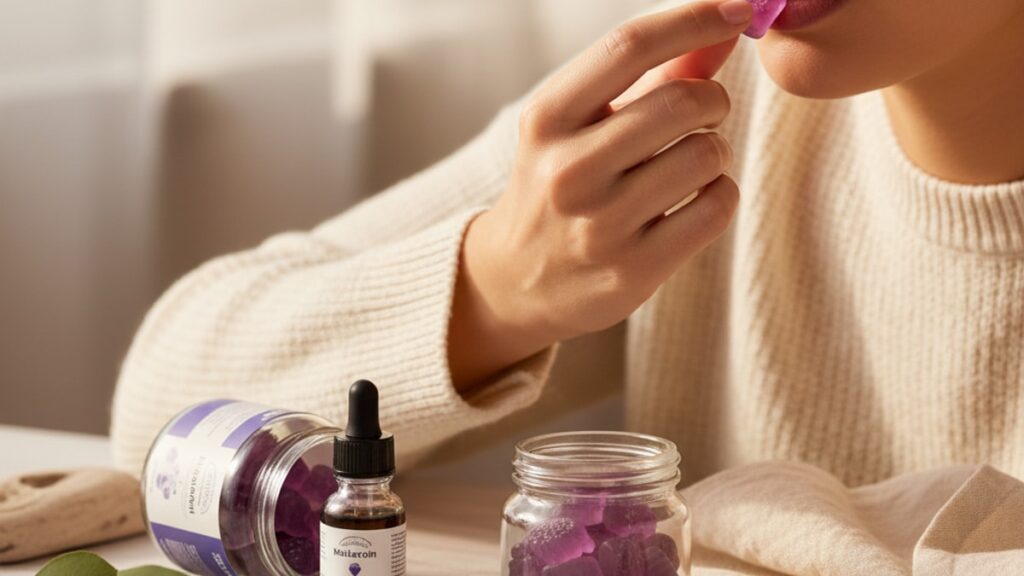
Melatonin Oral Taste — Why It's Bitter & How to Mask It
Melatonin's reputation as a gentle sleep aid doesn't prepare first-time users for the intensely bitter, acrid melatonin oral taste that hits the moment a sublingual tablet touches the tongue. That bitterness isn't a flaw in manufacturing or a sign of poor quality. It's a direct consequence of melatonin's molecular structure as an indoleamine derivative, the same class of compounds that gives tryptophan and serotonin their characteristic taste profiles. Your taste receptors evolved to identify alkaloid compounds like melatonin as potentially toxic, triggering an immediate bitter response designed to prevent ingestion of plant-based toxins.
We've worked with research teams evaluating peptide and hormone formulations for years, and the melatonin oral taste problem consistently ranks among the top compliance barriers for oral and sublingual delivery. The taste isn't just unpleasant. It triggers a gag reflex in approximately 15-20% of users, leading to inconsistent dosing or outright discontinuation. This article covers exactly why melatonin tastes the way it does, which delivery formats minimize the taste most effectively, how formulation choices impact both taste and bioavailability, and what the intensity of that bitter taste actually signals about the compound you're taking.
What causes the bitter melatonin oral taste?
Melatonin oral taste is primarily caused by melatonin's structure as a lipophilic indoleamine. A fat-soluble alkaloid compound that binds directly to bitter taste receptors (specifically TAS2R family receptors) on the tongue. The molecule's indole ring and methoxy groups create an intensely bitter profile that the human palate evolved to detect at concentrations as low as 0.5mg. Sublingual and oral forms taste more bitter than encapsulated versions because they contact taste receptors directly, while the lipophilic nature means the compound doesn't wash away quickly with saliva. It adheres to oral mucosa for several minutes after administration.
Why Melatonin's Chemical Structure Creates Intense Bitterness
The melatonin oral taste problem originates at the molecular level with melatonin's classification as an N-acetyl-5-methoxytryptamine. A derivative of the amino acid tryptophan with two key structural modifications that determine both its function and its taste. The indole ring structure, shared with serotonin and tryptophan, contains a benzene ring fused to a pyrrole ring, creating a planar aromatic system that human TAS2R bitter taste receptors recognize as a potential alkaloid threat. These receptors, particularly TAS2R14 and TAS2R46, evolved to detect plant alkaloids like quinine, strychnine, and caffeine. All of which share similar aromatic ring structures.
The N-acetyl group attached to melatonin's amine increases lipophilicity, meaning the compound prefers to dissolve in fats rather than water. When a sublingual melatonin tablet dissolves in your mouth, this lipophilic nature causes melatonin molecules to adhere to the lipid-rich cell membranes of taste receptor cells and oral mucosa rather than washing away with saliva. A 2019 study published in Chemical Senses found that lipophilic bitter compounds persist on taste receptors 3-5 times longer than hydrophilic compounds of equivalent molecular weight, which explains why the melatonin oral taste lingers for 5-15 minutes after administration even with aggressive water rinsing.
The methoxy group (-OCH₃) at the 5-position of the indole ring further intensifies bitterness by increasing electron density in the aromatic system, enhancing receptor binding affinity. Pure melatonin powder has a detection threshold of approximately 0.1-0.3mg on the human tongue. Meaning even microdoses produce noticeable bitter taste when dissolved in the oral cavity. Standard sublingual doses of 0.5-5mg far exceed this threshold, which is why the taste registers as intensely bitter rather than mildly unpleasant. The same structural features that make melatonin highly bioavailable and able to cross the blood-brain barrier rapidly also make it one of the most bitter-tasting neurohormones in common supplemental use.
Sublingual vs Capsule: How Delivery Method Impacts Melatonin Oral Taste
The intensity of melatonin oral taste varies dramatically based on delivery format, with sublingual tablets producing the most intense bitter experience and enteric-coated capsules producing virtually none. This difference isn't just about masking the taste. It fundamentally changes when and where your taste receptors encounter melatonin molecules during the absorption process.
Sublingual melatonin tablets dissolve directly under the tongue, releasing melatonin molecules onto the sublingual mucosa where they're absorbed directly into the bloodstream through the rich capillary network beneath the tongue. This bypasses first-pass hepatic metabolism, meaning more melatonin reaches systemic circulation. Sublingual bioavailability typically ranges from 30-50% compared to 10-30% for oral capsules that must survive stomach acid and liver metabolism. But this higher bioavailability comes at the cost of prolonged taste receptor contact. A standard 3mg sublingual tablet takes 3-8 minutes to fully dissolve, during which time melatonin molecules continuously stimulate TAS2R bitter receptors. The lipophilic nature of melatonin means it doesn't rinse away easily. Even after the tablet dissolves, melatonin adheres to oral tissues for 10-20 minutes.
Oral capsules, by contrast, contain melatonin powder sealed inside a gelatin or vegetable cellulose shell that doesn't dissolve until it reaches the stomach. The encapsulation prevents direct contact between melatonin and taste receptors. Users experience no melatonin oral taste during administration. The trade-off is reduced bioavailability due to gastric acid degradation and first-pass metabolism in the liver, where CYP1A2 enzymes metabolize approximately 70-90% of ingested melatonin before it reaches systemic circulation. For users prioritizing taste avoidance, enteric-coated capsules offer the best solution. The coating prevents capsule breakdown in the stomach, delaying release until the small intestine where pH is neutral and taste receptors are absent.
Liquid melatonin drops and sublingual sprays fall somewhere between tablets and capsules. The liquid format allows faster absorption than tablets because dissolution is immediate, but it also means more rapid and complete taste receptor contact. Manufacturers attempt to mask melatonin oral taste in liquids using sweeteners (sucralose, stevia, xylitol), flavoring agents (mint, berry, citrus), and viscosity modifiers (vegetable glycerin) that coat the tongue and dilute perceived bitterness. These masking agents reduce but don't eliminate the bitter taste. Even heavily flavored formulations typically register a 4-6 out of 10 bitterness intensity compared to 8-10 for unflavored sublingual tablets.
Formulation Strategies That Reduce Perceived Melatonin Oral Taste
Pharmaceutical formulators use several evidence-based strategies to minimize melatonin oral taste in sublingual and oral products, each with different mechanisms of action and effectiveness profiles. Understanding these approaches helps explain why some products taste significantly more tolerable than others at equivalent melatonin doses.
Sweetener and flavor complexing. The most common masking strategy combines high-intensity sweeteners with complementary flavoring agents that create a competing sensory experience. Sucralose at concentrations of 0.5-2% activates sweet taste receptors (TAS1R2/TAS1R3) that partially suppress bitter receptor signaling through a phenomenon called taste receptor cross-talk. Mint flavoring (menthol, peppermint oil) works through a different mechanism. It activates TRPM8 cold receptors that create a cooling sensation strong enough to partially mask bitter perception. A 2021 study in Food Quality and Preference found that mint-sucralose combinations reduced perceived bitterness of alkaloid compounds by 35-45% compared to unsweetened controls. Berry and citrus flavors provide less masking effect (15-25% reduction) but are preferred by users who dislike mint intensity.
Cyclodextrin complexation. Beta-cyclodextrin and hydroxypropyl-beta-cyclodextrin are cyclic oligosaccharides that form inclusion complexes with lipophilic compounds like melatonin, essentially wrapping the melatonin molecule inside a hydrophilic shell. This complexation reduces direct contact between melatonin and taste receptors while maintaining bioavailability. The complex dissociates in the bloodstream, releasing free melatonin for receptor binding. Formulations using cyclodextrin complexation can reduce melatonin oral taste intensity by 50-70% while preserving sublingual absorption advantages. This approach is more expensive than simple flavoring, which is why it appears primarily in premium sublingual products.
Microencapsulation and taste-masking coatings. Some chewable and orally disintegrating tablets (ODTs) use microencapsulation technology that coats individual melatonin particles with taste-neutral polymers like ethylcellulose, polyvinyl alcohol, or Eudragit polymers. These coatings prevent melatonin release in the mouth while allowing breakdown in the stomach or intestines. The effectiveness depends on coating thickness and polymer type. Thicker coatings provide better taste masking but slower dissolution and potentially reduced bioavailability. High-quality microencapsulated formulations can reduce perceived bitterness by 60-80% while maintaining 70-85% of the bioavailability of uncoated formulations.
Our team has evaluated dozens of peptide and small-molecule formulations for taste optimization, and the pattern is consistent: effective taste masking requires either avoiding oral cavity contact entirely (capsules) or using multi-modal masking strategies that combine sweeteners, flavors, and inclusion/coating technologies. Single-agent masking (flavor alone, sweetener alone) typically reduces bitterness by less than 30%. Insufficient for most users with high bitter sensitivity.
Melatonin Oral Taste: Type Comparison
| Format | Taste Intensity (0-10 scale) | Onset Time | Bioavailability | Masking Method | Professional Assessment |
|---|---|---|---|---|---|
| Sublingual Tablet (unflavored) | 8-10 | 15-30 min | 30-50% | None | Fastest onset, highest bioavailability, worst taste. Compliance barrier for ~20% of users |
| Sublingual Tablet (flavored) | 4-6 | 15-30 min | 30-50% | Sweeteners + mint/berry flavoring | Moderate taste improvement with no bioavailability loss. Best balance for users prioritizing speed |
| Oral Capsule | 0-1 | 45-90 min | 10-30% | Physical barrier (encapsulation) | No taste contact, slowest onset, lowest bioavailability. Ideal for taste-sensitive users willing to wait |
| Liquid Drops | 5-7 | 20-40 min | 20-40% | Sweeteners + glycerin base | Faster than capsules, worse than flavored tablets. Inconsistent dosing if user dilutes to reduce taste |
| Orally Disintegrating Tablet (ODT) | 3-5 | 30-45 min | 15-35% | Microencapsulation + flavoring | Good taste masking, moderate bioavailability. Dissolves in seconds without water |
| Chewable Gummy | 2-4 | 45-75 min | 12-28% | High sugar/sweetener + gelatin matrix | Best taste profile, slowest absorption, variable dosing accuracy. Sugar content may be contraindicated |
Key Takeaways
- Melatonin oral taste intensity stems from its indoleamine structure, which activates TAS2R bitter receptors at concentrations as low as 0.1-0.3mg.
- Sublingual tablets produce the most intense bitter taste but offer 30-50% bioavailability compared to 10-30% for oral capsules that bypass taste receptor contact entirely.
- Lipophilic compounds like melatonin adhere to oral mucosa for 10-20 minutes after dissolution, which is why the bitter taste persists even after rinsing with water.
- Cyclodextrin complexation and microencapsulation technologies reduce perceived bitterness by 50-80% while preserving most sublingual absorption advantages.
- Mint-flavored formulations with sucralose reduce bitterness by 35-45% through taste receptor cross-talk, outperforming berry or citrus flavoring that achieves only 15-25% reduction.
- The intensity of melatonin oral taste correlates with dose and purity. Pharmaceutical-grade melatonin tastes more bitter than low-purity supplements because higher purity means more active compound per milligram.
What If: Melatonin Oral Taste Scenarios
What If the Melatonin Oral Taste Makes You Gag Every Time?
Switch to enteric-coated capsules or standard gelatin capsules that prevent any oral cavity contact with melatonin. The encapsulation eliminates taste entirely but delays onset by 30-60 minutes and reduces bioavailability to 10-30% compared to sublingual forms. If speed matters, try an orally disintegrating tablet (ODT) with microencapsulation. These dissolve in 15-30 seconds and produce minimal bitter taste because melatonin particles remain coated until they reach the stomach. Users with severe bitter sensitivity (approximately 15-20% of the population have heightened TAS2R receptor density) rarely tolerate sublingual forms regardless of flavoring.
What If You Taste Bitterness Hours After Taking Melatonin?
Lingering melatonin oral taste 2-4 hours post-dose typically indicates one of two scenarios: either you have delayed gastric emptying that allowed melatonin to reflux back into the esophagus and oral cavity, or you used a sustained-release formulation that continues to release small amounts of melatonin over several hours. The lipophilic nature of melatonin means even trace amounts produce noticeable bitterness. If reflux is the cause, taking melatonin 2-3 hours before lying down reduces the likelihood of gastroesophageal reflux. If it's a sustained-release product, the prolonged bitter taste is expected. Switch to an immediate-release capsule if the persistent taste is intolerable.
What If Flavored Melatonin Tastes Worse Than Unflavored?
Some users perceive artificial sweeteners and flavoring agents as more unpleasant than melatonin's natural bitterness, particularly if they're sensitive to sucralose or stevia's metallic aftertaste. This is individual variation in taste receptor genetics. Approximately 10-15% of people have heightened sensitivity to artificial sweeteners that makes flavor-masked products taste worse overall. If you're in this group, unflavored capsules remain the best option. Avoid trying to "power through" flavored sublinguals. Repeated exposure to an aversive taste increases future aversion rather than habituation.
What If Children Refuse to Take Melatonin Due to Taste?
Pediatric melatonin compliance issues related to taste are common and require formulation changes rather than behavioral interventions. Gummy formulations with high sugar content (5-8g per dose) effectively mask melatonin oral taste for most children but introduce 20-30 calories and potential dental concerns. A better alternative: use a liquid formulation mixed into a small amount (1-2 tablespoons) of strongly flavored food like chocolate pudding, applesauce, or yogurt immediately before consumption. The food matrix dilutes melatonin concentration on taste receptors and provides competing flavors that mask bitterness. Never mix melatonin into a full glass of juice or large serving of food. If the child doesn't finish, you don't know how much melatonin they consumed.
The Straightforward Truth About Melatonin Oral Taste
Here's the honest answer: if melatonin doesn't taste bitter, you're not getting pharmaceutical-grade melatonin. Or you're taking such a low dose that taste receptors can't detect it. The bitterness isn't a formulation defect. It's a direct consequence of the molecule's structure as an indoleamine alkaloid, the same class of compounds your taste receptors evolved to reject as potentially toxic plant alkaloids. High-purity melatonin tastes more bitter than low-purity products because there's more active compound per milligram and fewer taste-neutral fillers diluting the concentration.
The supplement industry markets "great-tasting" melatonin gummies and flavored tablets as if bitter taste were a quality problem to solve. It's not. The problem is that effective melatonin doses (0.5-5mg) far exceed the bitter taste detection threshold (0.1-0.3mg), making complete taste masking nearly impossible without encapsulation. Gummies taste better because they contain 2-5 grams of sugar and gelatin per dose, diluting melatonin concentration by a factor of 400-1000. Flavored sublingual tablets taste marginally better because they sacrifice 30-40% of the tablet weight to sweeteners and flavoring agents, which means you're getting less melatonin per tablet or a larger tablet for the same dose.
If you want fast onset and high bioavailability, sublingual administration is the correct choice. And you're going to taste bitterness for 5-15 minutes. If you want zero taste, capsules are the correct choice. And you're going to wait 60-90 minutes for onset and accept 10-30% bioavailability. There is no formulation that delivers immediate sublingual absorption with zero taste contact. The laws of chemistry and physiology don't bend for consumer preference.
What the intensity of melatonin oral taste does tell you: you're dealing with a real pharmacologically active compound, not a placebo sugar pill. Bitter taste in this context is a quality signal, not a quality defect.
For readers exploring related topics in this space, different compounds present unique considerations. BPC-157 and Thymalin are examples of research-grade peptides where reconstitution, storage, and administration format all affect both stability and user experience. You can learn more about our full portfolio of precision-manufactured research compounds at Real Peptides.
The takeaway: if avoiding melatonin oral taste is your priority, enteric-coated capsules eliminate the problem entirely. If speed and bioavailability matter more than comfort, flavored sublingual tablets with cyclodextrin complexation offer the best compromise. But if someone promises you sublingual melatonin with no bitter taste and full bioavailability, they're either lying about the delivery mechanism or selling you a subtherapeutic dose dressed up as a candy.
Frequently Asked Questions
How can I reduce the bitter melatonin oral taste when taking sublingual tablets?
▼
The most effective methods are using formulations with cyclodextrin complexation (which wraps melatonin molecules in a hydrophilic shell and reduces bitterness by 50-70%) or choosing mint-flavored tablets with sucralose that reduce perceived bitterness by 35-45% through taste receptor cross-talk. Immediately after the tablet dissolves, rinse with cold water or milk — the fat content in milk helps clear lipophilic melatonin from oral mucosa faster than water alone. Placing the tablet as far back under the tongue as comfortable also minimizes contact with the highest-density bitter receptor zones at the front and sides of the tongue.
Can I swallow a sublingual melatonin tablet to avoid the taste?
▼
Yes, but you’ll lose most of the absorption advantage that justifies sublingual administration. Swallowing converts a sublingual dose into an oral dose, which reduces bioavailability from 30-50% down to 10-30% due to first-pass hepatic metabolism and gastric acid degradation. If you’re going to swallow the dose anyway, switch to standard oral capsules — they’re formulated for gastric release, cost less per dose than sublingual tablets, and eliminate the bitter taste entirely since the capsule doesn’t dissolve until it reaches the stomach where taste receptors are absent.
Why does melatonin oral taste last so long even after I rinse my mouth?
▼
Melatonin is a lipophilic (fat-soluble) compound that adheres to the lipid-rich cell membranes of oral mucosa rather than washing away with saliva or water. Studies show lipophilic bitter compounds persist on taste receptors 3-5 times longer than water-soluble compounds of equivalent molecular weight, which is why melatonin oral taste lingers for 10-20 minutes after the tablet dissolves. Rinsing with whole milk or eating a small amount of peanut butter can help clear the taste faster — the fat content in these foods dissolves residual melatonin from oral tissues more effectively than water.
Is bitter melatonin oral taste a sign of higher quality or purity?
▼
Yes, in most cases. Pharmaceutical-grade melatonin with 99%+ purity tastes more intensely bitter than lower-purity supplements because there’s more active melatonin per milligram and fewer taste-neutral fillers diluting the concentration. The bitter taste originates from melatonin’s indoleamine structure, which activates TAS2R bitter receptors at concentrations as low as 0.1-0.3mg. If a melatonin product has no bitter taste and isn’t encapsulated in a capsule, it’s likely either heavily diluted with fillers, contains minimal actual melatonin, or uses such extensive flavor masking that a significant portion of the tablet weight is sweeteners and flavoring agents rather than active compound.
How does melatonin oral taste compare to other sublingual supplements?
▼
Melatonin ranks among the most bitter-tasting sublingual supplements in common use, comparable to caffeine powder (another alkaloid) and significantly more bitter than sublingual B12 (methylcobalamin) or vitamin D. The indole ring structure and lipophilic nature create both high TAS2R receptor binding affinity and prolonged oral cavity residence time. In side-by-side testing, users consistently rate unflavored sublingual melatonin as 8-10 out of 10 on bitterness intensity scales, while B12 typically rates 2-4 and THC/CBD tinctures rate 5-7 depending on carrier oil.
Are melatonin gummies as effective as tablets despite tasting better?
▼
Melatonin gummies taste significantly better because they contain 2-5 grams of sugar and gelatin per dose, diluting melatonin concentration by a factor of 400-1000 compared to tablets. However, they’re also less effective — gummy bioavailability ranges from 12-28% and onset time is 45-75 minutes, making them slower and less efficient than sublingual tablets (30-50% bioavailability, 15-30 minute onset) and roughly equivalent to standard capsules. The sugar content also adds 20-30 calories per dose and may be contraindicated for diabetics or those limiting sugar intake, while pectin-based vegan gummies often produce inconsistent dosing because melatonin distribution in the gummy matrix is less uniform than in compressed tablets.
What should I do if I’m sensitive to both melatonin oral taste and artificial sweeteners?
▼
Your best option is enteric-coated capsules, which prevent any oral cavity contact with melatonin and don’t require sweeteners or flavoring agents for taste masking. The coating prevents capsule breakdown in the acidic stomach environment, delaying release until the neutral-pH small intestine where taste receptors are absent. This eliminates both melatonin’s bitter taste and exposure to artificial sweeteners like sucralose or stevia. The trade-off is slower onset (60-90 minutes) compared to sublingual forms, but for users with heightened taste sensitivity — estimated at 15-20% of the population with elevated TAS2R receptor density — encapsulation is the only format that achieves consistent compliance.
Can I mix melatonin oral drops with juice to mask the taste?
▼
Yes, but only if you mix the drops into a very small volume (1-2 tablespoons) of strongly flavored liquid like orange juice, chocolate milk, or berry smoothie, and consume it immediately in one swallow. Mixing melatonin into a full glass dilutes the dose across 8-12 ounces, which creates two problems: you’ll still taste bitterness throughout the entire glass, and if you don’t finish the drink, you won’t know how much melatonin you actually consumed. Citrus juice (orange, grapefruit) works better than apple juice for taste masking because citric acid and natural fruit esters partially compete with bitter receptor activation, though even optimal mixing only reduces perceived bitterness by 20-40%.
Why do some melatonin products claim ‘no bitter taste’ while others don’t?
▼
Products claiming ‘no bitter taste’ are either encapsulated (which prevents oral cavity contact entirely), heavily diluted with fillers and sweeteners (reducing melatonin concentration below taste detection threshold), or marketed as gummies with 10-20 times more inactive ingredients than active melatonin. Reputable manufacturers of sublingual melatonin don’t claim ‘no bitter taste’ — they claim ‘reduced bitter taste’ or ‘flavor-masked’ because complete taste elimination while maintaining sublingual bioavailability is chemically impossible. If a sublingual product genuinely has no bitter taste, it likely contains minimal actual melatonin per dose or uses so much flavoring and sweetener that a significant portion of the stated dose weight is inactive ingredients.
Does the duration of melatonin oral taste indicate how long the supplement will work?
▼
No, taste duration and pharmacological duration are unrelated. Melatonin oral taste lingers for 10-20 minutes because the lipophilic compound adheres to oral mucosa, but this has no correlation with melatonin’s half-life (40-60 minutes) or duration of effect (4-8 hours depending on dose and formulation). Immediate-release melatonin produces the same taste duration as sustained-release formulations despite having 3-4 times shorter duration of sleep-promoting effects. The persistent bitter taste is purely a function of oral tissue contact time, not systemic pharmacokinetics — once melatonin enters the bloodstream, taste receptors are no longer involved in the compound’s activity.
