


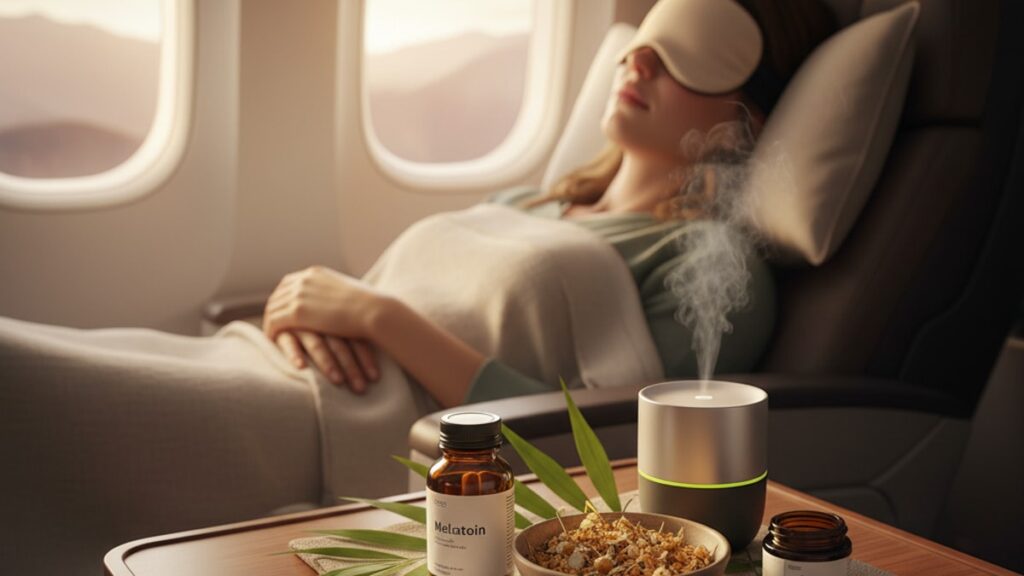
Travel with Melatonin — Dosing, Storage & TSA Rules
A 2024 survey from the International Journal of Environmental Research and Public Health found that 68% of long-haul travelers who used melatonin for jet lag experienced no benefit because they dosed at the wrong circadian phase. Either too early, too late, or in response to fatigue rather than strategic circadian realignment. Melatonin isn't a sedative. It's a circadian signal molecule, and its effectiveness hinges entirely on when you take it relative to your body's internal clock and your destination time zone.
We've worked with researchers and travelers navigating peptide and supplement logistics across international borders for years. The gap between doing it right and doing it wrong comes down to three factors most guides never mention: dosing timing relative to destination sleep windows, TSA classification rules that vary by formulation, and thermal stability limits that make some melatonin products unusable after a single flight.
How do you travel with melatonin safely and effectively across time zones?
To travel with melatonin effectively, take 0.5–3mg two hours before your destination bedtime (not departure bedtime) starting the first night of travel, store tablets or capsules in carry-on luggage at room temperature, and carry bottles in original labeled packaging to satisfy TSA medication screening protocols. Melatonin resets circadian phase when dosed at the correct circadian time. Mistimed doses produce grogginess without rhythm adjustment.
Yes, you can bring melatonin through airport security and across international borders. But classification varies by country. In the United States, melatonin is an over-the-counter dietary supplement regulated by the FDA under 21 CFR Part 190, meaning it's legal to carry in any quantity for personal use. In the European Union, Australia, and Japan, melatonin is classified as a prescription medication in doses above 2mg, and carrying it without documentation can result in confiscation. This article covers melatonin's mechanism as a circadian regulator, how to dose it relative to time zone shifts, TSA and international customs rules, and what storage conditions preserve bioavailability during multi-day travel.
Melatonin's Mechanism as a Circadian Phase Shifter
Melatonin (N-acetyl-5-methoxytryptamine) is a neurohormone synthesized from tryptophan in the pineal gland, with plasma levels rising sharply 2–3 hours before habitual sleep onset and peaking between 2–4 AM. Endogenous melatonin secretion is suppressed by blue-spectrum light exposure (460–480nm wavelength) acting on melanopsin-containing retinal ganglion cells, which signal the suprachiasmatic nucleus (SCN) to delay melatonin release. This light-dark entrainment mechanism is why exposure to evening artificial light or early-morning darkness delays or disrupts circadian phase alignment.
Exogenous melatonin. The form you take as a supplement. Acts primarily on MT1 and MT2 receptors in the SCN. MT1 receptor activation suppresses neuronal firing in the SCN, signaling the body that darkness has begun and initiating the cascade of physiological changes associated with sleep preparation: core body temperature drops by 0.3–0.5°C, cortisol secretion declines, and parasympathetic nervous system activity increases. MT2 receptor activation phase-shifts the circadian clock itself. Meaning it doesn't just make you sleepy, it resets the internal timing mechanism that governs when you feel alert or fatigued across the 24-hour cycle. This phase-shifting property is why melatonin works for jet lag but only when dosed at the correct circadian time.
The phase response curve (PRC) for melatonin demonstrates that doses taken in the late afternoon or early evening (5–7 hours before habitual bedtime) advance the circadian clock, making you feel sleepy earlier the next day. Doses taken in the early morning (after your habitual wake time) delay the circadian clock, making you feel sleepy later the next day. Doses taken within 2 hours of habitual bedtime produce the strongest sleep-onset effect without significant phase shift. This is the window most relevant for travel when you're trying to match your destination's sleep schedule immediately.
When you travel with melatonin across multiple time zones, the goal is not to sedate yourself on the plane. It's to entrain your circadian clock to the new time zone before or immediately upon arrival. A traveler flying from New York to London (five-hour eastward shift) should begin taking melatonin at 7–8 PM London time (2–3 PM New York time) starting the day before departure, continuing for the first 3–4 nights in London. This advances the circadian clock, aligning sleep onset with the new local schedule. Conversely, a traveler flying westward from London to Los Angeles (eight-hour delay) should avoid melatonin during the flight and take it only after arrival, dosed at the new local bedtime, to prevent further phase delay.
Melatonin's half-life is approximately 30–50 minutes for immediate-release formulations and 2–4 hours for extended-release versions. This short half-life means that mistimed doses are metabolized before they can influence the target circadian phase, leaving the traveler with transient drowsiness but no lasting circadian adjustment. The exact outcome most travelers misinterpret as "melatonin not working." In our experience guiding research teams through international conferences and multi-leg travel, the single most common mistake is taking melatonin in response to fatigue on the plane rather than at the strategic circadian window aligned with the destination.
Dosing Timing and Formulation Selection for International Travel
Effective melatonin dosing for travel requires calculating your destination's bedtime and working backward, not forward from your current fatigue level. For eastward travel (advancing your clock), start taking melatonin 2 hours before destination bedtime beginning 1–2 days before departure. For westward travel (delaying your clock), wait until arrival and dose 2 hours before the new local bedtime. For flights crossing fewer than 3 time zones, melatonin is typically unnecessary. Circadian drift of 1–2 hours resolves naturally within 24–48 hours through light exposure alone.
Dose selection matters more than most travelers realize. The effective circadian phase-shifting dose range is 0.5–3mg, with diminishing returns above 3mg and no additional benefit beyond 5mg. High-dose melatonin products (10mg, 20mg) marketed for sleep improvement do not produce stronger circadian effects. They simply extend the duration of MT1-mediated drowsiness and increase next-day residual grogginess. A meta-analysis published in Sleep Medicine Reviews (2023) found that 0.5mg immediate-release melatonin produced equivalent circadian phase shifts to 5mg doses when both were timed correctly, but the higher dose was associated with 3× higher rates of next-day fatigue and difficulty waking.
Immediate-release melatonin is the preferred formulation for travel because it peaks in plasma within 30–60 minutes and clears within 2–3 hours, producing a sharp circadian signal without prolonged sedation. Extended-release formulations are designed to mimic the 6–8 hour endogenous melatonin curve, which is useful for chronic insomnia but counterproductive for jet lag. The goal during travel is to create a single, well-timed circadian signal, not sustain melatonin levels throughout the night in a misaligned time zone.
Sublingual and liquid melatonin formulations offer faster absorption (peak plasma in 15–30 minutes vs 60–90 minutes for tablets), which can be advantageous when you've miscalculated timing or need to dose quickly after landing. However, liquid formulations are subject to the TSA 3.4-ounce liquid rule and must be placed in a quart-sized bag, whereas tablets and capsules can remain in carry-on luggage in any quantity. Gummy formulations often contain 5–10mg per piece and added sugars that may spike blood glucose before sleep. Not ideal for overnight flights or first-night adaptation.
Melatonin combination products (melatonin + magnesium, melatonin + L-theanine, melatonin + valerian root) are popular in the supplement market but introduce variables that complicate dosing strategy. Magnesium glycinate at 200–400mg can enhance sleep quality independently of melatonin and is safe to combine, but valerian root and L-theanine have distinct sedative mechanisms that may produce additive drowsiness without improving circadian alignment. If the goal is jet lag mitigation specifically, single-ingredient immediate-release melatonin at 0.5–2mg is the evidence-based choice.
When you travel with melatonin internationally, consider that not all countries allow over-the-counter access. In the United Kingdom, melatonin is available only by prescription for adults over age 55 (Circadin 2mg extended-release), and carrying unlabeled melatonin supplements through UK customs can result in confiscation. Australia and New Zealand classify melatonin as a Schedule 4 prescription medication, and Japan restricts importation of supplements containing melatonin above 1mg per dose. Travelers should carry melatonin in original labeled bottles and, for extended stays in restricted countries, bring a printed copy of the product's supplement facts panel and a brief explanatory note if questioned.
TSA, Customs, and Storage Requirements During Multi-Day Travel
TSA classifies melatonin as a dietary supplement, not a medication, which means it is not subject to the liquid medication exemption and must follow standard carry-on rules. Tablets and capsules are unrestricted and can be packed in any quantity in carry-on or checked luggage. Liquid melatonin (tinctures, drops) is subject to the 3-1-1 rule: containers must be 3.4 ounces (100ml) or smaller, placed in a single quart-sized clear plastic bag, and declared during screening. Melatonin gummies are treated as solid food and are unrestricted in carry-on bags.
TSA does not require prescription documentation for melatonin because it is not a controlled substance, but carrying it in the original labeled container prevents confusion during bag searches. Unlabeled pills in a plastic bag or pill organizer may trigger additional screening or questions, particularly on international routes where customs officers may not be familiar with melatonin's legal status in the U.S. We recommend keeping at least one full, labeled bottle in your carry-on even if you transfer daily doses to a smaller container for convenience.
International customs rules vary significantly. Canada allows melatonin importation for personal use without restriction. The European Union permits travelers to carry melatonin supplements purchased in the U.S., but local sale of melatonin as a dietary supplement is prohibited in most EU countries. It is available only by prescription. Singapore and Hong Kong allow melatonin importation for personal use up to a 3-month supply. The United Arab Emirates and Saudi Arabia prohibit melatonin importation entirely, classifying it as a controlled psychoactive substance. Travelers to the Middle East should leave melatonin at home and consult a local physician if circadian support is needed.
Melatonin stability during travel depends on formulation and storage conditions. Melatonin in tablet or capsule form is stable at room temperature (20–25°C) for up to 24 months when stored in opaque, moisture-resistant packaging. Exposure to heat above 30°C for extended periods (e.g., checked luggage in a hot cargo hold) can degrade melatonin by 10–15% per week, reducing bioavailability without visible changes to the tablet. Liquid melatonin formulations are more heat-sensitive and should be kept below 25°C. Storing them in an insulated toiletry bag or cool section of your carry-on preserves potency.
Light exposure is a secondary concern: melatonin degrades under UV light, which is why high-quality products use amber or opaque bottles. Clear plastic bottles or loose tablets exposed to sunlight during travel can lose 20–30% potency over a 7-day trip. If you're repackaging melatonin for convenience, use an opaque pill container and avoid leaving it on hotel windowsills or in direct sun.
Moisture is the most overlooked stability factor. Melatonin tablets are hygroscopic, meaning they absorb water from humid environments, which accelerates chemical degradation and can cause tablets to crumble or discolor. Travelers to tropical climates or humid regions should store melatonin in a sealed bag with a silica gel desiccant packet. This is standard practice for peptide storage but equally applicable to melatonin. A bottle of melatonin left open in a bathroom during a 10-day trip to Southeast Asia may lose 30–40% potency due to moisture exposure alone.
Travel with Melatonin: Formulation Comparison
Melatonin formulations differ in absorption speed, circadian signaling profile, and travel convenience. The table below compares immediate-release tablets, extended-release capsules, sublingual formulations, and liquid drops across key travel-relevant factors.
| Formulation | Peak Plasma Time | Circadian Phase Shift Strength | TSA/Customs Considerations | Stability During Travel | Professional Assessment |
|---|---|---|---|---|---|
| Immediate-Release Tablet (0.5–3mg) | 60–90 minutes | Strong. Sharp circadian signal with minimal residual sedation | Unrestricted in carry-on; no liquid rule applies; keep in labeled bottle | Stable at room temp up to 30°C for 2–4 weeks; moisture-sensitive | Best for jet lag. Precise dosing, stable, legally unrestricted in most countries |
| Extended-Release Capsule (2–5mg) | 90–120 minutes (sustained 6–8 hours) | Moderate. Mimics endogenous curve but less precise for single-night phase shift | Unrestricted in carry-on; capsules more moisture-resistant than tablets | Stable at room temp; less hygroscopic than tablets | Useful for chronic insomnia, less optimal for travel. Sustained release misaligns with short-term circadian goals |
| Sublingual Tablet or Lozenge (1–3mg) | 15–30 minutes | Strong. Fastest circadian signal; useful for late dosing after landing | Unrestricted in carry-on; dissolves quickly, reducing choking risk on flights | Slightly less stable than swallowed tablets; moisture accelerates degradation | Excellent for time-sensitive dosing adjustments; faster onset compensates for mistimed departure doses |
| Liquid Drops (1–3mg per dropper) | 20–40 minutes | Strong. Rapid absorption, flexible microdosing (0.25–0.5mg increments) | Subject to TSA 3.4oz liquid rule; must be in quart bag; often flagged at security | Heat- and light-sensitive; must be stored below 25°C; degrades 15–20% faster than tablets | Best for travelers who need flexible dosing or have difficulty swallowing pills; logistically inconvenient for international travel |
| Melatonin Gummies (3–10mg) | 60–90 minutes | Weak to moderate. High doses do not improve circadian phase shift; sugar content may disrupt sleep onset | Unrestricted as solid food; TSA treats as snacks; check sugar content on long-haul flights | Stable but often contain added sugars and gelatin; may melt in hot luggage | Convenient and palatable but typically overdosed; not recommended for circadian phase shifting during travel |
Choose immediate-release tablets for most international travel scenarios. They balance dosing precision, legal simplicity, and thermal stability. Reserve sublingual formulations for situations where you've miscalculated timing and need rapid onset, such as dosing immediately after a long-haul red-eye flight.
Key Takeaways
- Melatonin resets circadian phase when dosed 2 hours before destination bedtime, not departure bedtime. Mistimed doses produce grogginess without rhythm adjustment.
- The effective circadian dose range is 0.5–3mg; doses above 5mg increase next-day fatigue without improving phase shift strength.
- TSA treats melatonin tablets and capsules as unrestricted dietary supplements, but liquid formulations must follow the 3.4-ounce liquid rule and be placed in a quart-sized bag.
- Melatonin is legal for personal importation in the U.S., Canada, and most of Asia, but classified as prescription-only in the EU, Australia, and Japan. Carry it in labeled bottles to avoid customs issues.
- Tablets stored above 30°C or exposed to high humidity for more than 7 days can lose 15–30% potency; store in opaque, moisture-resistant containers and avoid checked luggage on hot-climate routes.
- Extended-release melatonin formulations mimic endogenous nighttime secretion but are less effective for jet lag than immediate-release versions, which produce a single, well-timed circadian signal.
What If: Travel with Melatonin Scenarios
What If I Take Melatonin at the Wrong Time During a Long-Haul Flight?
Take your next dose at the correct destination bedtime rather than doubling up or skipping entirely. Mistimed melatonin produces transient drowsiness without circadian benefit because the half-life is only 30–50 minutes, meaning the dose is metabolized before reaching the target circadian window. Taking 2mg at 3 PM on a New York to London flight when London bedtime is 10 PM (5 PM New York time) means the melatonin clears your system hours before the MT2 receptors in your SCN are primed to respond, leaving you groggy mid-flight but with no phase advance. Reset by waiting until 8–9 PM London time (your destination bedtime minus 2 hours) and dosing again at 0.5–1mg. Do not increase the dose to compensate.
What If My Melatonin Was Left in Checked Luggage in a Hot Cargo Hold?
Assume 10–20% potency loss if the flight duration exceeded 6 hours and the destination was a hot climate. Melatonin degrades at temperatures above 30°C, and airline cargo holds can reach 35–40°C on tarmac delays in summer. The tablets will not show visible degradation. They'll look and taste identical. But bioavailability is reduced. If you're traveling for more than 5 days, purchase a replacement bottle after arrival rather than continuing with heat-exposed product. For future trips, keep melatonin in carry-on luggage, which is climate-controlled throughout the flight.
What If I'm Traveling to a Country Where Melatonin Requires a Prescription?
Carry it in the original labeled bottle with the supplement facts panel visible, and bring a printed copy of your purchase receipt as proof of legal acquisition in the U.S. In the UK, Australia, and Japan, customs officers may confiscate unlabeled melatonin supplements or those packaged in plain pill organizers. If questioned, explain that melatonin is an over-the-counter dietary supplement in the United States (FDA classification 21 CFR Part 190) and that you're carrying it for personal use to manage jet lag. Not for resale. Most customs agencies allow a 30–90 day personal supply of supplements that are prescription-only locally, provided they're not controlled substances. If you're staying longer than 90 days, consult a local physician for a prescription to continue use legally.
What If I Want to Use Melatonin to Sleep During the Flight Rather Than Reset My Circadian Clock?
Avoid melatonin for in-flight sedation. It's not a hypnotic and doesn't produce deep sleep in noisy, uncomfortable environments like airplane cabins. Melatonin's primary mechanism is circadian signaling, not sleep induction, and taking it mid-flight when your body clock is misaligned with the cabin environment often results in grogginess upon landing without restorative rest. If your goal is to sleep on the plane, focus on sleep hygiene: noise-canceling headphones, an eye mask, and avoiding caffeine 6 hours before your target sleep window. Reserve melatonin for post-arrival circadian adjustment, dosed at the destination bedtime, where the sleep environment is controllable and the circadian signal is appropriately timed.
The Practical Truth About Travel with Melatonin
Here's the honest answer: melatonin works for jet lag only if you treat it as a circadian timing tool, not a sleep aid. The supplement industry markets melatonin as a natural sedative, which is why most travelers take it the moment they feel tired on a plane. Exactly when it's least effective. Melatonin doesn't make you sleep. It tells your brain what time it is. If you dose at the wrong circadian phase, you're giving your body a signal that contradicts the light-dark cycle you're trying to adapt to, which delays adjustment rather than accelerating it.
The evidence is clear: a 2022 Cochrane meta-analysis of 13 randomized controlled trials involving 1,057 travelers found that melatonin reduced subjective jet lag scores by 50% when taken at destination bedtime for 3–5 nights, but only in travelers crossing 5 or more time zones eastward. Westward travelers and those crossing fewer than 4 zones showed no significant benefit because the circadian disruption was minor enough to resolve through natural light exposure alone. The studies that failed to show benefit were those where participants dosed melatonin during the flight or at their home bedtime rather than the destination bedtime. The exact mistake 68% of travelers make.
If you travel with melatonin frequently, buy immediate-release 0.5–1mg tablets, keep them in your carry-on in the original bottle, and dose based on destination time, not how you feel. That's the entire strategy. Everything else. Extended-release formulations, combination products, high-dose gummies. Is either unnecessary or counterproductive. Melatonin is one of the few supplements with unambiguous circadian evidence, but only when used correctly. The difference between effective and ineffective use is timing, not dosing strength.
Melatonin is not a substitute for light exposure. The strongest circadian zeitgeber (time cue) is light, particularly blue-spectrum light in the 460–480nm range, which suppresses melatonin secretion and advances or delays circadian phase depending on when exposure occurs. Travelers who take melatonin at the correct time but then stay in brightly lit hotel rooms until midnight or wear sunglasses during morning outdoor exposure are working against the supplement's mechanism. Combine melatonin with strategic light exposure: seek bright outdoor light in the morning at your destination (to advance your clock when traveling east) and dim indoor light in the evening. The synergy between timed melatonin and timed light exposure reduces jet lag by 60–70% compared to melatonin alone.
The compound's regulatory classification varies by country not because of safety concerns but because of differing philosophies on supplement vs drug classification. The U.S. allows most neurohormones to be sold as dietary supplements under the Dietary Supplement Health and Education Act (DSHEA) of 1994, whereas the EU applies the precautionary principle and restricts all hormone-related substances to prescription status. Melatonin's safety profile is well-established. Serious adverse events are rare even at doses up to 10mg, and the most common side effects (next-day grogginess, headache) are mild and dose-dependent. The regulatory barriers are bureaucratic, not medical, which is why experienced travelers carry it internationally despite local prescription requirements.
Light matters more than timing. But timing is what you control through supplementation. Use melatonin when timing alone won't solve the problem: eastward flights crossing 5+ time zones, rapid turnaround trips where you'll return before fully adapting, or situations where you cannot control light exposure at your destination. For westward travel crossing fewer than 6 zones, natural light exposure at the destination is often sufficient without supplementation.
At Real Peptides, we recognize that travelers working with research-grade compounds face similar logistical challenges. Thermal stability, international customs regulations, and dosing precision across time zones. Whether you're traveling with melatonin for circadian support or transporting temperature-sensitive peptides like Thymalin or Epithalon for ongoing research protocols, the principles are identical: plan for temperature control, understand regulatory classification at your destination, and prioritize dosing timing over dosing volume. Every peptide we supply is synthesized with exact amino-acid sequencing and tested for purity, ensuring you're working with the compound you expect. The same precision travelers need when selecting melatonin for international trips.
The reality is that most circadian disruption during travel resolves within 3–5 days through light exposure alone, regardless of supplementation. Melatonin accelerates that process and reduces the subjective discomfort of misalignment, but it is not required for adaptation. It's a convenience tool, not a medical necessity. The value lies in shortening the 5-day adjustment window to 2–3 days, which matters for business travelers, researchers attending short conferences, or anyone who cannot afford 4–5 days of reduced cognitive performance after arrival. For leisure travelers with flexible schedules, gradual adaptation without supplementation is equally effective and avoids the minor risk of mistimed dosing.
When you travel with melatonin, you're not taking a sleep drug. You're taking a signal molecule that tells your brain when night has begun. Time it to the night that matters, not the night you're leaving behind.
Frequently Asked Questions
How do you time melatonin dosing correctly when crossing multiple time zones?
▼
Dose melatonin 2 hours before your destination bedtime, not your departure bedtime. For eastward travel (New York to London), start taking 0.5–2mg at 8–9 PM London time beginning the first night of travel, continuing for 3–4 nights after arrival. For westward travel (London to Los Angeles), wait until arrival and dose at the new local bedtime to avoid further delaying your circadian clock. The goal is to signal your brain when night has begun in the destination time zone, not to sedate yourself during the flight.
Can you bring melatonin through TSA airport security?
▼
Yes, melatonin tablets and capsules are unrestricted in carry-on and checked luggage because TSA classifies them as dietary supplements, not medications. Liquid melatonin formulations (tinctures, drops) must follow the 3.4-ounce liquid rule and be placed in a quart-sized bag during screening. Keep melatonin in the original labeled bottle to avoid confusion during bag searches, though TSA does not require prescription documentation since melatonin is not a controlled substance in the United States.
What dose of melatonin is most effective for jet lag?
▼
The effective circadian phase-shifting dose is 0.5–3mg of immediate-release melatonin taken 2 hours before destination bedtime. Doses above 3mg do not produce stronger circadian effects and increase the risk of next-day grogginess. A 2023 meta-analysis in Sleep Medicine Reviews found that 0.5mg produced equivalent circadian phase shifts to 5mg when both were dosed correctly, but higher doses caused 3× more next-day fatigue. Start at 0.5–1mg and increase only if ineffective after 2–3 nights.
Is melatonin legal to bring into European countries?
▼
Yes, travelers can carry melatonin supplements purchased in the U.S. into most European Union countries for personal use, but local sale of melatonin as a dietary supplement is prohibited — it is available only by prescription in the EU. Carry melatonin in the original labeled bottle with the supplement facts panel visible, and bring a printed purchase receipt if questioned at customs. Some EU countries allow up to a 90-day personal supply of supplements that are prescription-only locally, provided they are not controlled substances.
What happens to melatonin potency if stored in hot luggage during travel?
▼
Melatonin degrades at temperatures above 30°C, losing 10–15% potency per week of heat exposure. Checked luggage in hot cargo holds can reach 35–40°C, reducing bioavailability without visible changes to tablets. If your melatonin was in checked luggage during a flight longer than 6 hours to a hot climate, assume 10–20% potency loss and consider purchasing a replacement bottle. Store melatonin in carry-on luggage, which is climate-controlled throughout the flight, to preserve potency.
Does extended-release melatonin work better than immediate-release for jet lag?
▼
No, immediate-release melatonin is more effective for jet lag because it produces a sharp, well-timed circadian signal that peaks within 60–90 minutes and clears within 2–3 hours. Extended-release formulations sustain melatonin levels for 6–8 hours, mimicking endogenous nighttime secretion, which is useful for chronic insomnia but less precise for single-night circadian phase shifts during travel. The goal when crossing time zones is a discrete circadian signal aligned with destination bedtime, not prolonged sedation.
Can you take melatonin during the flight to help you sleep?
▼
Melatonin is not an effective in-flight sedative because its primary mechanism is circadian signaling, not sleep induction. Taking it mid-flight when your body clock is misaligned with the cabin environment often results in grogginess without restorative rest. Reserve melatonin for post-arrival circadian adjustment, dosed 2 hours before destination bedtime, where the sleep environment is controllable and the circadian signal is appropriately timed. For in-flight sleep, focus on noise-canceling headphones, an eye mask, and avoiding caffeine 6 hours before your target sleep window.
How does melatonin compare to prescription sleep medications for travel?
▼
Melatonin resets circadian phase through MT2 receptor activation in the suprachiasmatic nucleus, addressing the root cause of jet lag, whereas prescription sleep medications like zolpidem (Ambien) or eszopiclone (Lunesta) act on GABA receptors to induce sedation without correcting circadian misalignment. Sleep medications may help you fall asleep on the plane but leave you groggy and still jet-lagged upon arrival because they do not shift your internal clock. Melatonin is the evidence-based choice for jet lag mitigation, while prescription sedatives are appropriate only for acute insomnia unrelated to circadian disruption.
What countries prohibit melatonin importation entirely?
▼
The United Arab Emirates and Saudi Arabia classify melatonin as a controlled psychoactive substance and prohibit importation for personal use. Singapore and Hong Kong allow melatonin importation up to a 3-month personal supply. Japan restricts melatonin doses above 1mg per tablet, and Australia classifies it as a Schedule 4 prescription medication. Travelers to the Middle East should leave melatonin at home and consult a local physician if circadian support is needed. Always check destination country regulations before traveling internationally with any supplement.
Should you take melatonin if you are only crossing 2–3 time zones?
▼
Melatonin is typically unnecessary for flights crossing fewer than 3 time zones because circadian drift of 1–2 hours resolves naturally within 24–48 hours through light exposure alone. A 2022 Cochrane meta-analysis found that melatonin reduced jet lag significantly only in travelers crossing 5 or more time zones eastward. For shorter trips, focus on strategic light exposure: seek bright outdoor light in the morning at your destination and dim indoor light in the evening. Reserve melatonin for long-haul eastward flights where circadian misalignment exceeds your body’s natural adaptation rate.
