


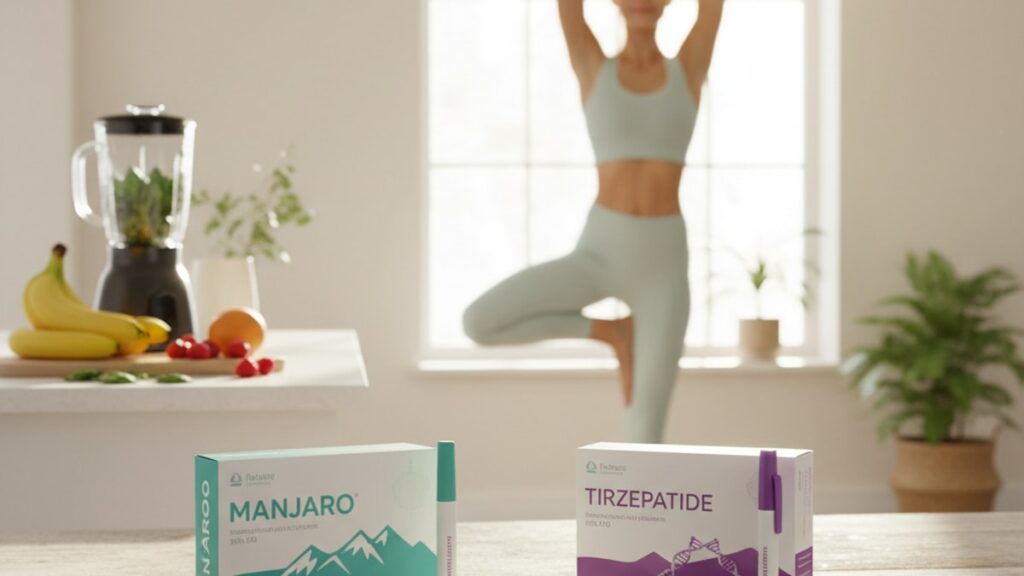
It's a question our team hears almost daily. It echoes in forums, appears in search queries, and comes up in conversations with labs across the country. Is Mounjaro and Tirzepatide the same thing? The amount of confusion swirling around these two names in 2026 is staggering, and frankly, it's completely understandable. You see one name in commercials and another in research papers, and they're often discussed in the same breath.
Let’s be honest, this is crucial. For researchers, clinicians, and the scientifically curious, the distinction isn't just academic—it's foundational. Getting it wrong can lead to flawed experiments, misinterpreted data, and wasted resources. As a company dedicated to the painstaking, small-batch synthesis of high-purity research peptides, we believe clarity is non-negotiable. We're here to cut through the noise and give you the definitive, expert answer, grounded in the biochemical reality and the practical landscape of 2026.
The Short Answer (That You're Probably Looking For)
Yes. And no.
Frustrating, right? But it’s the most accurate way to start. The active pharmaceutical ingredient (API) in the prescription drug Mounjaro is a molecule called tirzepatide. They are, at a chemical level, the same compound. Think of it like Tylenol and its active ingredient, acetaminophen. One is a brand name you buy at a pharmacy; the other is the scientific name for the chemical doing the work.
So, when someone asks, "is Mounjaro and Tirzepatide the same?" the simple answer is that Mounjaro is the commercial brand name for the drug product containing tirzepatide. But—and this is a massive but—that's where the similarities end. The context, formulation, intended use, and regulatory status are worlds apart. And for a researcher, that difference is everything. It's the chasm between a finished pharmaceutical product and a pure raw material for scientific inquiry.
So, What Exactly Is Tirzepatide? A Deeper Dive
Tirzepatide is the star of the show here. It's a synthetic peptide, a marvel of modern biochemistry. Our team has an immense appreciation for its elegant design. At its core, Tirzepatide is a dual-agonist. This means it's engineered to activate two different types of receptors in the body: the glucagon-like peptide-1 (GLP-1) receptor and the glucose-dependent insulinotropic polypeptide (GIP) receptor.
This dual-action mechanism is what makes it so powerful and a subject of intense scientific interest. For years, researchers focused heavily on GLP-1 agonists alone (like semaglutide). Tirzepatide represents a significant evolutionary step. By engaging both GIP and GLP-1 pathways, it creates a synergistic effect on glucose control, insulin sensitivity, and appetite regulation. It's a truly sophisticated approach to metabolic modulation.
Here’s a quick breakdown of its mechanism:
- GLP-1 Activation: This helps the body release more insulin when blood sugar is high, slows down digestion (making you feel full longer), and signals to the brain to reduce appetite.
- GIP Activation: This also enhances insulin release in response to glucose. But it plays a more nuanced role in fat metabolism and energy storage, contributing to the compound's overall efficacy.
The combined effect is a potent, multi-pronged attack on metabolic dysregulation. This is why the research community is electric with possibilities. For scientists studying diabetes, obesity, and related cardiometabolic conditions, having access to a precisely synthesized compound is absolutely critical. The integrity of any study—whether it's an in vitro cell assay or another preclinical model—depends entirely on the quality of the materials used. That's why we produce our research-grade Tirzepatide under the strictest quality controls, ensuring the exact amino-acid sequence and purity needed for reproducible results.
And Where Does Mounjaro Fit In? The Commercial Side
Now, let's talk about Mounjaro. Mounjaro is the brand name chosen by the pharmaceutical giant Eli Lilly for its tirzepatide-based medication, specifically approved by the FDA for the management of type 2 diabetes. A few years ago, they also introduced Zepbound, which contains the exact same active ingredient (tirzepatide) but is branded and approved specifically for chronic weight management.
This is a critical distinction. Mounjaro and Zepbound are not raw tirzepatide. They are finished, FDA-regulated pharmaceutical products. They come in a proprietary, pre-filled, single-use injection pen (like the KwikPen) designed for patient self-administration. Each pen contains a precise dose of tirzepatide, but it also contains a host of other inactive ingredients, known as excipients. These can include things like sodium chloride, sodium phosphate dibasic, and water, which are necessary to stabilize the molecule, ensure its correct pH, and make it suitable for injection into the human body.
When you get a prescription for Mounjaro, you're getting a complete, ready-to-use medical delivery system. Its development involved billions of dollars in clinical trials, regulatory submissions, and manufacturing scale-up. It's designed for one purpose and one purpose only: therapeutic use in humans under the guidance of a healthcare professional.
The Critical Difference: Research vs. Pharmaceutical Grade
This is the absolute heart of the matter. We can't stress this enough. While the core molecule is identical, the product you hold in your hand is fundamentally different. It's a classic case of context being king.
Our experience shows that this is the point of greatest confusion. A lab might need tirzepatide for a study on pancreatic beta cells, and they'll see Mounjaro being discussed online, leading them to believe they're interchangeable. They are not. Using a pharmaceutical product for bench research is often impractical, incredibly expensive, and scientifically unsound due to the presence of those excipients, which could interfere with the experiment.
Conversely, and this is a serious safety warning, research-grade tirzepatide is absolutely not for human use. It's sold as a lyophilized (freeze-dried) powder in a vial. It requires careful handling, reconstitution with a solvent like Bacteriostatic Water, and precise measurement in a controlled laboratory environment. It has not been approved by the FDA for any therapeutic purpose and is intended strictly for scientific investigation.
To make this crystal clear, we've put together a simple table.
| Feature | Mounjaro® / Zepbound® (Pharmaceutical Grade) | Research-Grade Tirzepatide (from Real Peptides) |
|---|---|---|
| Active Ingredient | Tirzepatide | Tirzepatide |
| Form | Liquid solution in a pre-filled injection pen | Lyophilized (freeze-dried) powder in a vial |
| Intended Use | FDA-approved for therapeutic use in humans (diabetes/weight management) | Strictly for in vitro and laboratory research purposes only |
| Regulation | Heavily regulated by the FDA as a prescription drug | Not regulated as a drug; sold as a chemical for research |
| Source | Requires a prescription from a licensed healthcare provider | Purchased from specialized suppliers like Real Peptides |
| Other Ingredients | Contains excipients for stability, pH balance, and delivery | High-purity active compound with minimal to no other substances |
| Legal Status | Legal to possess and use with a valid prescription | Legal to purchase and use for legitimate scientific research |
Why Purity and Precision Matter in Peptide Research
Now, let's talk about our world. In the field of peptide synthesis, precision isn't just a goal; it's the only thing that matters. When a research team invests months, or even years, into a study, the last thing they need is for their foundational materials to be the source of failure. This is not a theoretical problem; it's a catastrophic reality we've seen plague labs that source from less reputable suppliers.
A peptide is a chain of amino acids, and the sequence has to be perfect. One incorrect amino acid in the chain can render the entire molecule inert or, worse, give it an entirely different biological activity. This is why our small-batch synthesis process is so rigorous. We build each peptide with the exact, verified amino-acid sequence. Then, we subject it to stringent quality control, including High-Performance Liquid Chromatography (HPLC) and Mass Spectrometry (MS) analysis, to confirm its purity and identity.
This unflinching commitment to quality is what allows for reproducibility—the bedrock of all good science. If you run an experiment in January with a batch of tirzepatide and repeat it in June with a new batch, the results should be consistent. That's only possible if the compound itself is consistent. Contaminants, incorrectly folded proteins, or fragments of the wrong peptide sequence can introduce confounding variables that make your data completely worthless. It's a grueling road warrior hustle to get research funded and published; starting with impure compounds is like trying to run a marathon with your shoes tied together.
The research landscape is exploding with new possibilities beyond just tirzepatide. We're seeing incredible interest in next-generation molecules like Retatrutide (a triple-agonist) and other compounds like Survodutide. The potential for discovery is immense. This commitment to verifiable purity is why so many labs choose to Explore High-Purity Research Peptides with us. They know that their work is too important to leave to chance.
The Evolving Landscape in 2026: What Researchers Need to Know
As of 2026, the world of metabolic research is moving at a breakneck pace. The success of dual-agonists like tirzepatide has opened the floodgates for innovation. We're now in an era of multi-agonists and novel peptide constructs designed to tackle metabolic disease from multiple angles simultaneously. It's an incredibly exciting time.
However, this rapid growth has also created a sprawling, often confusing market for research chemicals. With high demand comes a flood of suppliers, and not all of them adhere to the same quality standards. It's become a formidable challenge for lab managers and principal investigators to sift through the options and find a partner they can trust. Our team has seen it firsthand: labs receiving products with questionable purity reports, or worse, no quality documentation at all.
Our advice is simple: demand transparency. A reputable supplier will always provide comprehensive data on the purity and identity of their products. They will be open about their synthesis and quality control processes. They will also be crystal clear about the intended use of their products—for research only. Any company that hints at or encourages human use of research chemicals is a massive red flag. Find the Right Peptide Tools for Your Lab starts with a partner whose ethics and commitment to science are as strong as their chemistry.
Avoiding Common Pitfalls When Sourcing Tirzepatide for Research
To help your research efforts, we've compiled a few key things to look for when sourcing tirzepatide or any other peptide for your lab:
- Demand Third-Party Testing: Don't just take a company's word for it. Look for recent, verifiable HPLC and MS reports that confirm the purity of the specific batch you're purchasing.
- Understand the Product's Form: Ensure you're buying lyophilized powder for research, not a pre-mixed liquid of unknown stability or origin. The lyophilization process is key to ensuring long-term stability for storage.
- Check for Clear Use Disclaimers: A responsible supplier will have prominent disclaimers stating their products are for research purposes only and not for human or veterinary use. This isn't just legal boilerplate; it's a sign of an ethical company that understands the boundaries.
- Evaluate the Company's Reputation: Look for companies that are established and trusted within the scientific community. Do they present themselves as scientific partners, or as just another online storefront? The language they use and the resources they provide can tell you a lot.
Ultimately, the question of "is Mounjaro and Tirzepatide the same" has a simple chemical answer but a deeply complex practical one. They share a molecule, but they exist in different universes. One is a tool for medicine, the other a tool for discovery. Recognizing and respecting that boundary is essential for patient safety and for the integrity of scientific progress.
The future of metabolic research is incredibly bright, and it all rests on a foundation of quality. The breakthroughs of tomorrow depend on the reliability of the materials we use in our labs today. Ensuring you're working with the highest-purity compounds isn't just best practice; it's the only way forward. Discover Premium Peptides for Research and see the difference that uncompromising precision makes in your work.
Frequently Asked Questions
So, is Mounjaro just a brand name for Tirzepatide?
▼
Essentially, yes. Mounjaro® is the commercial brand name under which the pharmaceutical company Eli Lilly markets its FDA-approved drug product whose active ingredient is the molecule tirzepatide.
Can I use research-grade Tirzepatide for weight loss or diabetes?
▼
Absolutely not. Our research-grade Tirzepatide is intended strictly for laboratory and scientific research purposes only. It is not sterile, not approved by the FDA for human use, and should never be injected or consumed.
What’s the difference between Mounjaro and Zepbound?
▼
There is no difference in the active ingredient; both contain tirzepatide. Mounjaro is the brand name for the FDA approval for type 2 diabetes, while Zepbound is the brand name for the FDA approval for chronic weight management. They are the same drug marketed for different indications.
Why is research Tirzepatide sold as a powder?
▼
It is sold in a lyophilized (freeze-dried) powder form to ensure maximum stability and shelf-life. Peptides in liquid solution can degrade over time, so providing them as a powder allows researchers to reconstitute them freshly for experiments, ensuring potency.
Does Real Peptides test the purity of its Tirzepatide?
▼
Yes, absolutely. Every batch of our Tirzepatide undergoes rigorous quality control, including HPLC and MS testing, to verify its purity, identity, and exact amino-acid sequence. We believe in complete transparency for our research clients.
What exactly is a dual GIP and GLP-1 receptor agonist?
▼
It’s a molecule designed to activate two different hormone receptors: GIP (glucose-dependent insulinotropic polypeptide) and GLP-1 (glucagon-like peptide-1). This dual-action allows it to influence blood sugar, appetite, and metabolism through multiple biological pathways simultaneously.
How is Tirzepatide different from Semaglutide (Ozempic/Wegovy)?
▼
The main difference is their mechanism of action. Semaglutide is a single-agonist that only targets the GLP-1 receptor. Tirzepatide is a dual-agonist, targeting both the GLP-1 and GIP receptors, which can lead to different and sometimes more potent metabolic effects.
Are there other research peptides similar to Tirzepatide?
▼
Yes, the field is rapidly advancing. Researchers are now studying triple-agonists like Retatrutide, which targets GLP-1, GIP, and glucagon receptors. Our team keeps a close eye on these cutting-edge compounds for the research community.
How should research-grade Tirzepatide be stored?
▼
Lyophilized peptide powder should be stored in a freezer at -20°C or colder for long-term stability. Once reconstituted into a liquid solution, it should be kept refrigerated and used within the timeframe recommended for that specific peptide to prevent degradation.
What does ‘for research purposes only’ actually mean?
▼
It means the product is sold as a chemical for use in controlled laboratory settings for scientific investigation, such as in cell cultures or other non-human experimental models. It is not intended to diagnose, treat, cure, or prevent any disease in humans or animals.
What kind of research is done with Tirzepatide?
▼
Scientists use research-grade Tirzepatide to study a wide range of metabolic processes. This includes investigating its effects on pancreatic cells, fat cells, neuronal pathways related to appetite, and its potential impact on cardiovascular and kidney function in preclinical models.
Why can’t researchers just use Mounjaro for their experiments?
▼
Mounjaro contains various excipients (inactive ingredients) to make it a stable drug product, and these could interfere with sensitive laboratory assays. Furthermore, it comes in fixed doses in a pen, making it impractical and extremely costly for the variable concentrations needed in research.
