
In Stock, Ready to Ship!
$500.00
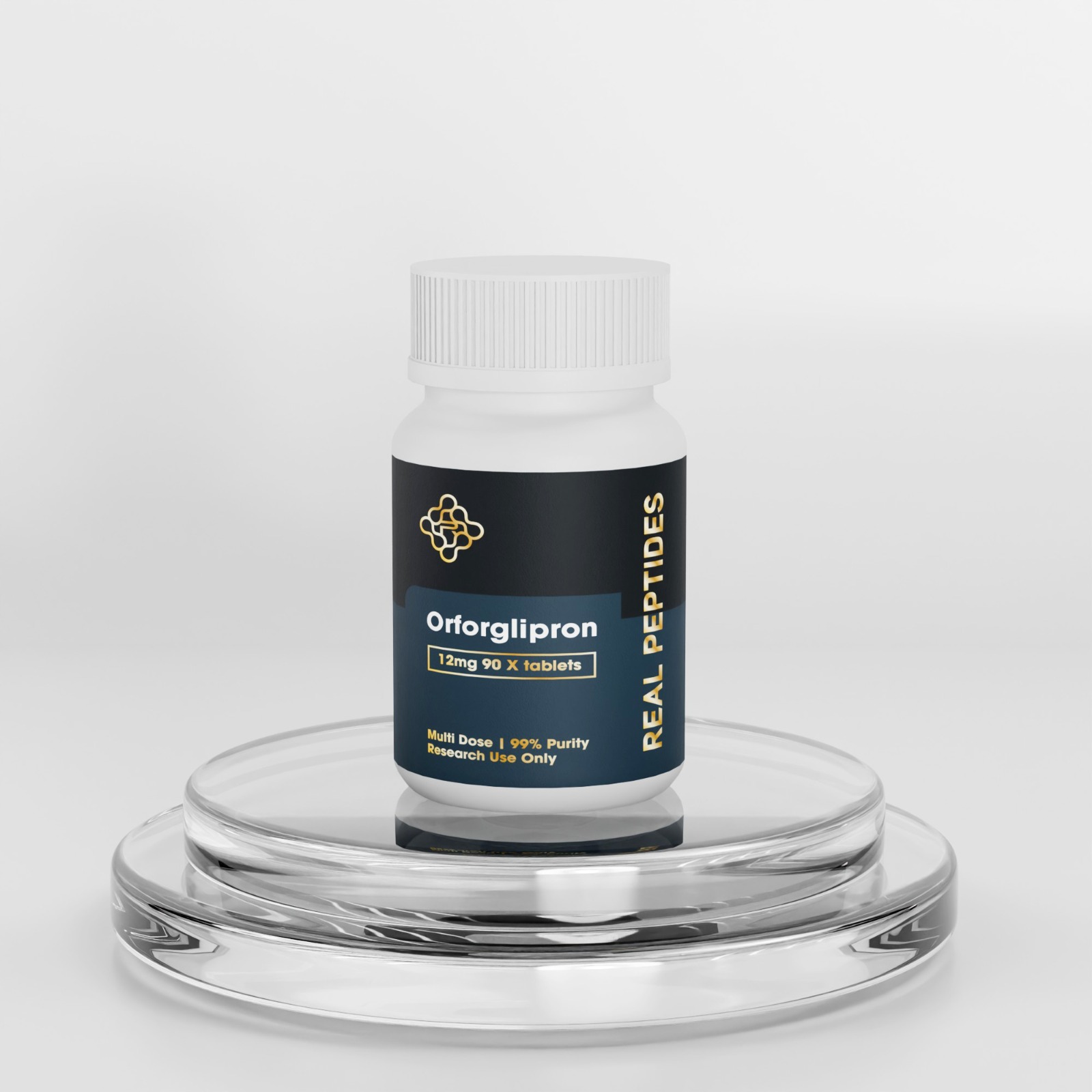
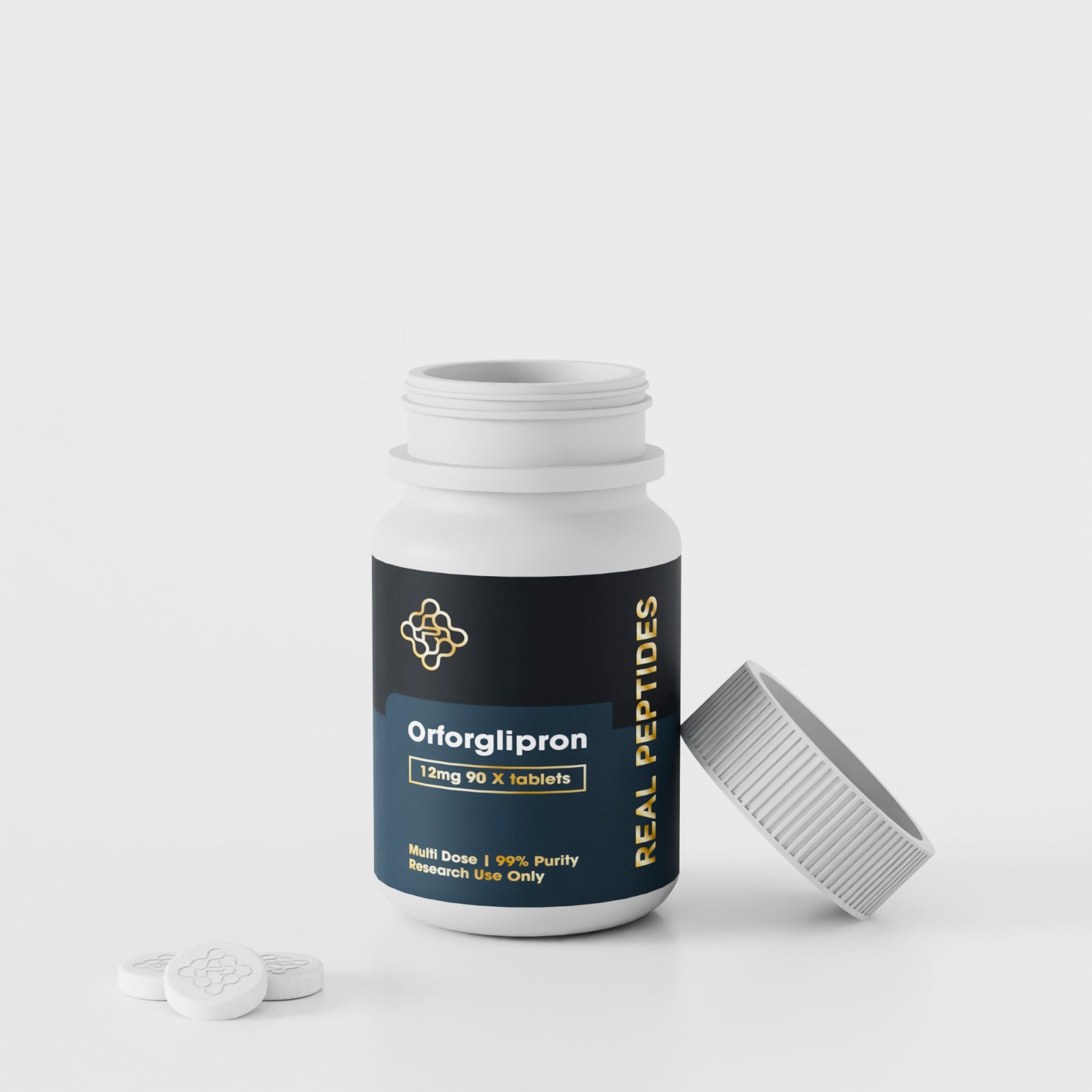
Orforglipron is an orally bioavailable GLP-1 receptor agonist studied for its impact on appetite regulation, metabolic pathways, glucose control, and long-term energy balance. Unlike traditional GLP-1 peptides that require injection, Orforglipron delivers systemic GLP-1 activation through a capsule-based format—offering researchers a groundbreaking opportunity to examine incretin biology, adherence modeling, and metabolic control in a simplified delivery system. Each capsule contains 12mg of high-purity material for controlled, reproducible dosing across diverse study designs.

In Stock, Ready to Ship!
Peptides are not ready to use. Must purchase BAC water for reconstitution.
Orforglipron binds to GLP-1R in pancreatic, neural, hepatic, and GI tissues, triggering downstream effects on food intake, glucose response, and satiety-dependent neural pathways.
Unlike peptides like Semaglutide and Tirzepatide, Orforglipron is engineered as a small-molecule agonist resistant to proteolytic breakdown, enabling absorption through intestinal epithelium.
GLP-1R activation modulates POMC/CART neuronal pathways linked to satiety, reducing food-seeking and caloric intake in preclinical models.
Activation of GLP-1R in vagal pathways slows gastric emptying, reducing post-prandial glycemic spikes and prolonging fullness.
Emulates GLP-1 peptide activity by:
– Enhancing glucose-stimulated insulin secretion
– Reducing hepatic gluconeogenesis
– Improving peripheral insulin response
Rodent models show reductions in hepatic fat content, circulating triglycerides, and dyslipidemic markers.
GLP-1 pathways influence dopaminergic reward circuits, potentially reducing compulsive eating behaviors.
Allows investigation of incretin signaling without injection variables, ideal for adherence modeling and translational metabolic studies.
Reduces caloric intake through central and peripheral satiety modulation, supporting body composition research.
Studies show downstream effects on lipid metabolism, energy expenditure, and body-mass management.
Enables modeling of insulin responsiveness and post-prandial glucose stabilization.
Preclinical data suggests improvements in lipids, liver fat, and inflammatory markers associated with metabolic dysfunction.
Ideal for research groups exploring oral incretin replacements or long-term adherence models relevant to metabolic disease research.
Impacts POMC/CART neurons, vagal pathways, gut-brain communication, and reward regulation.
Relevant in rodent obesity models evaluating caloric restriction, adipose response, and metabolic decline.
Each capsule delivers precise, reproducible GLP-1 agonist exposure.
Combines well with mitochondrial, GH, and GLP-pathway research molecules for comprehensive metabolic analysis.
Orforglipron is an orally active, small-molecule GLP-1 receptor agonist engineered to replicate key metabolic effects of GLP-1 peptides without requiring subcutaneous injection. Its bioavailable structure allows direct gastrointestinal absorption, systemic distribution, and sustained activation of metabolic, appetite, and glucose-control pathways. Researchers use Orforglipron to study incretin activity, satiety mechanisms, metabolic decline, and obesity-related physiology through a simplified oral delivery format.
Because it does not require reconstitution or injection, Orforglipron uniquely enables studies involving long-term adherence, dosing-frequency models, and comparative oral vs. injectable incretin biology.

Orforglipron stands out as one of the first viable oral GLP-1 agonist research compounds, giving researchers unprecedented flexibility. Oral delivery allows studies to investigate real-world metabolic behavior, adherence patterns, and translational relevance in ways injectable GLP-1s cannot replicate. Its pharmacokinetic structure enables predictable daily plasma levels ideal for longitudinal metabolic studies, appetite suppression work, preclinical obesity modeling, and glucose-regulation mechanism analysis.
Researchers needing GLP-1 activity without invasive delivery consider Orforglipron essential for expanding incretin science into new formats. Its compatibility with other metabolic molecules broadens the scope of multi-pathway research.
While peptides like Semaglutide, Retatrutide, and Tirzepatide offer strong GLP-1 activity, all require subcutaneous injection and reconstitution. Orforglipron eliminates these technical factors entirely, giving researchers direct access to incretin pathways via oral capsule.
Its unique profile allows studies of:
– Daily GLP-1 exposure
– Long-term metabolic change
– Oral adherence patterns
– GI absorption impact
– Neuroendocrine signaling differences
– Combination therapy with other metabolic agents
For researchers exploring metabolic dysfunction, obesity, lipid metabolism, or appetite modulation, Orforglipron fills a critical gap in GLP-1 research.
Orforglipron is an orally active GLP-1 receptor agonist studied for its impact on appetite, energy intake, and metabolic pathways. Unlike injectable GLP-1 peptides, it allows researchers to study incretin dynamics through capsule-based delivery.
No. It is a small-molecule GLP-1 agonist but often studied alongside peptides such as Semaglutide, Tirzepatide, and Retatrutide.
It is orally bioavailable, allowing researchers to examine GLP-1 activity without injections—ideal for long-term metabolic studies.
Capsules offer controlled, reproducible dosing models useful for studying appetite suppression, metabolic decline, or glucose regulation.
Yes. Studies show significant reductions in food intake and increased satiety.
Mechanistically to Semaglutide, though it differs structurally and is orally active.
Orforglipron activates GLP-1R, influencing insulin response and glucose tolerance in metabolic models.
Benefits include appetite suppression, metabolic pathway activation, lipid modulation, and glucose-stabilization modeling.
It is designed for daily oral administration, allowing consistent GLP-1R activation over 24 hours.
Yes. Common stacks include Cagrilintide, 5-Amino-1MQ, and MOTS-c.
Survodutide is a dual GLP-1/glucagon agonist; Orforglipron is GLP-1 exclusive.
Mazdutide is injectable and dual-agonist; Orforglipron is oral and single-pathway.
Capsules offer superior shelf stability compared to reconstituted peptides.
Varies based on study protocol; Orforglipron is for research use only.
Yes. Oral delivery makes it useful for long-duration protocols.
Don't hestitate to contact us
End of Content.