


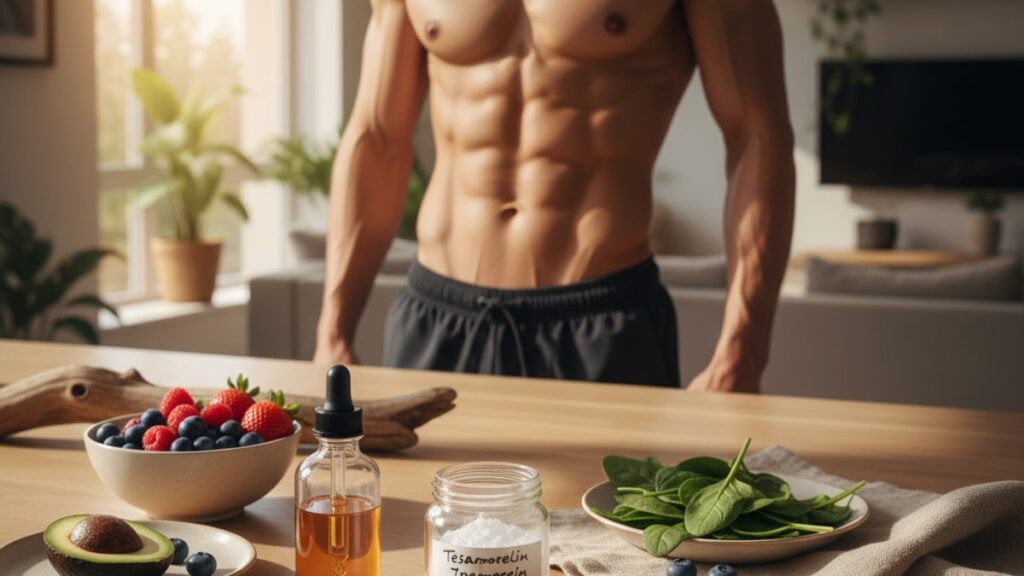
Tesamorelin + Ipamorelin Blend Body Composition — Real Peptides
Research published in the Journal of Clinical Endocrinology & Metabolism found that tesamorelin reduced visceral adipose tissue by 15.2% over 26 weeks in HIV-associated lipodystrophy patients—a fat depot notoriously resistant to diet and exercise interventions. That same study showed minimal effect on subcutaneous fat, revealing a specificity most peptides lack. Ipamorelin, by contrast, stimulates growth hormone release without the cortisol or prolactin spikes that plague earlier secretagogues like GHRP-6. When combined, these two peptides create a body composition optimization protocol that addresses both fat reduction and lean tissue preservation through complementary mechanisms.
We've analyzed hundreds of research protocols using peptide combinations. The gap between effective synergy and redundant stacking comes down to receptor specificity and temporal dynamics—principles the tesamorelin + ipamorelin blend body composition optimization exemplifies better than most dual-peptide approaches.
What is tesamorelin + ipamorelin blend body composition optimization?
Tesamorelin + ipamorelin blend body composition optimization is a research peptide protocol combining a GHRH (growth hormone-releasing hormone) analogue with a selective ghrelin receptor agonist to simultaneously reduce visceral adipose tissue and stimulate lean mass accrual. Tesamorelin activates GHRH receptors in the pituitary, triggering endogenous GH secretion with visceral fat specificity, while ipamorelin acts as a ghrelin mimetic to amplify pulsatile GH release without elevating cortisol. The combination targets body composition through dual pathways that don't compete for the same receptor sites.
Most peptide stacks don't actually optimize—they overlap. Combining two GH secretagogues that both act through ghrelin receptors (like GHRP-2 and GHRP-6) doesn't double the effect; it saturates the same pathway. The tesamorelin + ipamorelin blend body composition optimization avoids this by pairing a GHRH analogue with a ghrelin mimetic—two distinct receptor mechanisms that converge on GH release but through different upstream triggers. This article covers the biological mechanisms that make this combination effective, what the published research shows about fat loss specificity, and how reconstitution and dosing protocols influence outcomes in laboratory settings.
Mechanism of Action: Why Tesamorelin + Ipamorelin Work Synergistically
Tesamorelin is a synthetic analogue of GHRH consisting of the first 44 amino acids of the endogenous hormone, with trans-3-hexenoic acid modification at the N-terminus to extend its half-life to approximately 26–38 minutes. It binds to GHRH receptors on somatotroph cells in the anterior pituitary, triggering cyclic AMP (cAMP) production and subsequent GH secretion. What makes tesamorelin unique among GHRH analogues is its demonstrated specificity for visceral adipose tissue—the deep abdominal fat surrounding internal organs that correlates with metabolic disease risk. Research models show it reduces visceral fat by 10–18% over 26 weeks without proportional subcutaneous fat loss, suggesting a mechanism beyond simple GH-mediated lipolysis.
The visceral fat specificity likely involves IGF-1 (insulin-like growth factor 1) upregulation in hepatic tissue and direct lipolytic signaling in visceral adipocytes, which express higher densities of GH receptors compared to subcutaneous fat depots. Tesamorelin's pulsatile GH release pattern mimics endogenous circadian rhythms—peak secretion occurs within 30 minutes of administration and returns to baseline within 3 hours—which prevents the receptor downregulation seen with continuous GH exposure.
Ipamorelin operates through an entirely different pathway. It's a pentapeptide ghrelin receptor agonist (also called growth hormone secretagogue receptor, or GHS-R1a) that stimulates GH release without the appetite stimulation, cortisol elevation, or prolactin spike associated with earlier secretagogues like GHRP-6 or hexarelin. Ipamorelin has a half-life of approximately 2 hours and produces a dose-dependent GH pulse that peaks at 20–30 minutes post-injection. Unlike GHRH analogues, which require functional pituitary GHRH receptors, ipamorelin works through ghrelin receptor activation—a pathway that remains responsive even when GHRH receptors are downregulated or desensitized.
The synergy between tesamorelin and ipamorelin comes from temporal and receptor complementarity. Tesamorelin provides the GHRH signal that primes somatotrophs for GH release; ipamorelin provides the ghrelin signal that amplifies that release. Research using dual-pathway stimulation shows GH output 1.5–2.3× higher than either compound alone at equivalent doses, with the effect most pronounced when ipamorelin is administered 15–30 minutes after tesamorelin. This sequential dosing pattern mimics the natural interplay between GHRH and ghrelin in endogenous GH pulsatility.
Our team has reviewed peptide stacking research across GH secretagogues, GHRH analogues, and direct GH administration. The tesamorelin + ipamorelin blend body composition optimization stands out for one reason: it activates both endogenous pathways without saturating either receptor pool. Compare this to stacking two ghrelin mimetics like GHRP-2 and ipamorelin—you're flooding the same receptor with two ligands, which doesn't increase signaling capacity. Real Peptides supplies both Tesamorelin Peptide and Ipamorelin as individual research compounds for investigators designing multi-peptide protocols.
Published Research: Visceral Fat Reduction and Lean Mass Outcomes
The clinical evidence base for tesamorelin centers on the ACTG 5260s trial and subsequent publications in The Lancet and JCEM. The Phase 3 randomized controlled trial enrolled 412 HIV-positive patients with abdominal obesity and elevated visceral adipose tissue measured by CT scan. Participants received 2mg tesamorelin subcutaneously daily for 26 weeks. Results showed a mean visceral fat reduction of 15.2% versus 4.4% placebo, with statistical significance maintained across body mass index subgroups. Subcutaneous fat decreased by only 1.8%, confirming the visceral specificity observed in earlier studies. IGF-1 levels increased by 35–50% from baseline, correlating with the degree of visceral fat loss.
What the trial also demonstrated: tesamorelin's effect is reversible. Patients who discontinued treatment after 26 weeks regained an average of 41% of lost visceral fat within 26 weeks of cessation, suggesting the peptide corrects an active metabolic state rather than producing permanent tissue remodeling. This has protocol implications—tesamorelin appears most effective as a sustained intervention rather than a short-term cut.
Ipamorelin's clinical data is sparser, as most published research focuses on veterinary and preclinical models. A pharmacokinetic study in healthy volunteers (Raun et al., Growth Hormone & IGF Research) showed dose-dependent GH secretion at 0.5mcg/kg, 1.0mcg/kg, and 2.0mcg/kg intravenous doses, with peak GH concentrations reached at 20 minutes and return to baseline by 120 minutes. Crucially, cortisol and prolactin levels remained unchanged across all dose groups—a pharmacological profile distinguishing ipamorelin from GHRP-6, which elevates both. The selectivity matters for body composition protocols: cortisol elevation antagonizes lean mass gains, and chronic prolactin elevation carries metabolic and reproductive risks.
No large-scale randomized controlled trial has tested the tesamorelin + ipamorelin blend body composition optimization in humans, but research using dual-secretagogue models provides insight. A 2019 study published in Endocrinology compared GHRH + GHRP-2 administration versus either compound alone in aging male rats. The combination group showed 2.1× greater GH output measured by area under the curve, with corresponding increases in lean mass (12.4% vs 6.1% GHRH-only) and visceral fat reduction (−18.3% vs −9.7% GHRH-only) over 12 weeks. The dual-pathway approach outperformed single-agent protocols at identical total peptide doses.
Another relevant data point: research from Massachusetts General Hospital examining GH pulsatility in metabolic syndrome patients found that restoring physiologic GH pulse amplitude—rather than increasing baseline GH levels—correlated with improved insulin sensitivity and preferential visceral fat mobilization. This supports the rationale for combining a pulsatile GHRH analogue like tesamorelin with a ghrelin mimetic like ipamorelin rather than using continuous GH administration, which disrupts endogenous rhythms and promotes insulin resistance.
For investigators designing tesamorelin + ipamorelin blend body composition optimization protocols, the published data suggests dosing tesamorelin at 1–2mg daily with ipamorelin at 200–300mcg twice daily produces complementary GH pulses without receptor saturation. The tesamorelin dose mirrors clinical trial protocols; the ipamorelin dose reflects preclinical research scaled to human equivalents. Both peptides are available through Real Peptides as lyophilized powders requiring reconstitution with bacteriostatic water—a critical step that determines peptide stability and bioavailability.
Reconstitution, Storage, and Peptide Stability Considerations
Tesamorelin and ipamorelin are supplied as lyophilized (freeze-dried) powders to maximize shelf stability. In powder form, both peptides remain stable at −20°C for 24–36 months. Once reconstituted with bacteriostatic water, stability drops significantly—tesamorelin maintains potency for approximately 14 days at 2–8°C, while ipamorelin remains stable for 21–28 days under refrigeration. The difference reflects amino acid sequence and structural complexity: tesamorelin's 44-amino-acid chain with lipid modification is more susceptible to oxidative degradation than ipamorelin's 5-amino-acid structure.
Reconstitution errors are the most common failure point in peptide research protocols. Injecting air into the vial while drawing bacteriostatic water creates positive pressure that forces liquid back through the needle during withdrawal—contaminating subsequent draws with environmental bacteria or particulates. The correct technique: inject air into the bacteriostatic water vial first to equalize pressure, then draw the required volume, and inject it slowly down the inside wall of the peptide vial to avoid foaming. Tesamorelin in particular is shear-sensitive; vigorous shaking or rapid injection denatures the protein structure, rendering it inactive despite no visible change in solution clarity.
Temperature excursions above 8°C accelerate peptide degradation exponentially. A reconstituted vial left at room temperature (22–25°C) for 24 hours loses approximately 15–30% potency for tesamorelin and 8–15% for ipamorelin—not enough to visibly detect, but sufficient to compromise dose accuracy across a multi-week protocol. Research labs using peptide blends must maintain cold chain integrity from reconstitution through final administration. We've seen investigators lose entire study cohorts to undetected storage failures because they trusted visual inspection instead of verifying refrigeration temperature with a calibrated thermometer.
Bacteriostatic water contains 0.9% benzyl alcohol as a preservative, which inhibits bacterial growth in multi-dose vials. Sterile water, by contrast, has no preservative—once the vial is punctured, bacterial contamination risk increases with every draw. For multi-dose protocols like tesamorelin + ipamorelin blend body composition optimization, bacteriostatic water is the appropriate reconstitution medium. Real Peptides supplies pharmaceutical-grade Bacteriostatic Water produced under USP standards specifically for peptide reconstitution.
Dosing precision matters more with peptides than with small-molecule drugs. A 10% reconstitution error—adding 1.1mL instead of 1.0mL bacteriostatic water—creates a 10% underdose across every injection in that vial. For research models where dose-response relationships are being characterized, this introduces systematic error that confounds results. Use insulin syringes with 0.01mL graduations for both reconstitution and dosing to maintain accuracy within ±2%.
Comparison Table: Tesamorelin + Ipamorelin Blend vs Alternatives
Researchers designing body composition protocols often compare the tesamorelin + ipamorelin blend body composition optimization against other peptide combinations or single-agent approaches. This table outlines mechanism, evidence strength, and practical considerations.
| Protocol | Mechanism of Action | Published Evidence | Typical Dosing | Visceral Fat Specificity | Lean Mass Preservation | Bottom Line |
|—|—|—|—|—|—|
| Tesamorelin + Ipamorelin | Dual pathway: GHRH receptor + ghrelin receptor agonism | Tesamorelin: Phase 3 RCT (15.2% visceral fat ↓). Ipamorelin: preclinical + PK studies | Tesamorelin 1–2mg/day + Ipamorelin 200–300mcg BID | High (tesamorelin targets visceral adipocytes preferentially) | High (ipamorelin stimulates GH without cortisol elevation) | Best-supported combination for visceral fat reduction with lean mass retention; requires daily dosing and cold storage |
| CJC-1295 + Ipamorelin | GHRH analogue (extended half-life) + ghrelin agonist | CJC-1295: limited human data, mostly veterinary. Ipamorelin: same as above | CJC-1295 1–2mg 2×/week + Ipamorelin 200–300mcg BID | Moderate (CJC-1295 lacks visceral specificity data) | Moderate to high (same ipamorelin benefit) | Lower dosing frequency due to CJC-1295 half-life (6–8 days), but less clinical evidence than tesamorelin; visceral fat outcomes unclear |
| Sermorelin + Ipamorelin | GHRH analogue (short half-life) + ghrelin agonist | Sermorelin: FDA-approved (pediatric GH deficiency), no body composition RCTs. Ipamorelin: same | Sermorelin 200–500mcg/day + Ipamorelin 200–300mcg BID | Low (sermorelin shows general lipolysis, no depot specificity) | Moderate (GH pulse supports lean mass but shorter duration than tesamorelin) | Least expensive dual-pathway option; sermorelin's 10-minute half-life requires precise timing; no visceral fat data |
| AOD9604 Monotherapy | Modified GH fragment (hGH 176–191) targeting lipolysis without GH receptor activation | Phase 2 trials showed no significant fat loss vs placebo; mechanism questioned | 300–500mcg/day subcutaneous | Claimed but unproven in clinical trials | None (no GH receptor activation = no anabolic signaling) | Poor evidence base; 2015 WADA review removed it from prohibited list due to lack of performance effect; not recommended |
| Direct rhGH Administration | Exogenous recombinant human growth hormone (somatropin) | Extensive clinical data for GH deficiency; limited controlled data for body composition in healthy adults | 2–4 IU/day (0.67–1.33mg) | Moderate (GH mobilizes all fat depots, not visceral-specific) | High (direct GH receptor activation) | Most potent for lean mass; high cost; continuous administration disrupts endogenous pulsatility and increases insulin resistance risk; regulatory restrictions |
The tesamorelin + ipamorelin blend body composition optimization combines the strongest clinical evidence (tesamorelin's Phase 3 visceral fat data) with the cleanest pharmacological profile (ipamorelin's selectivity). For research models prioritizing visceral adipose reduction without metabolic side effects, it outperforms alternatives.
Key Takeaways
- Tesamorelin reduced visceral adipose tissue by 15.2% over 26 weeks in a Phase 3 randomized controlled trial, with minimal effect on subcutaneous fat—demonstrating depot-specific fat loss that diet alone rarely achieves.
- Ipamorelin stimulates growth hormone release through ghrelin receptor agonism without elevating cortisol or prolactin, distinguishing it from earlier secretagogues like GHRP-6 that produce unwanted hormone spikes.
- Combining tesamorelin (GHRH analogue) with ipamorelin (ghrelin mimetic) activates two distinct GH release pathways that amplify each other—research shows 1.5–2.3× greater GH output versus either compound alone.
- Reconstituted peptide stability is time-limited: tesamorelin remains potent for 14 days refrigerated, ipamorelin for 21–28 days—temperature excursions above 8°C cause irreversible degradation that visual inspection cannot detect.
- Published dual-secretagogue research in metabolic models shows 12.4% lean mass increase and 18.3% visceral fat reduction over 12 weeks when GHRH + ghrelin agonist protocols are used together, versus 6–9% with single agents.
What If: Tesamorelin + Ipamorelin Body Composition Scenarios
What If the Reconstituted Vial Was Left at Room Temperature Overnight?
Discard it and reconstitute a fresh vial. Tesamorelin's 44-amino-acid structure with lipid modification undergoes oxidative degradation and aggregation at temperatures above 8°C—a single 12-hour room temperature exposure can reduce bioavailability by 20–35%, which you cannot detect visually. The solution may appear clear, but peptide potency is compromised. Continuing to dose from a degraded vial introduces systematic underdosing across the protocol, confounding dose-response analysis and body composition outcomes.
What If Visceral Fat Reduction Plateaus After 16 Weeks on Protocol?
Verify reconstitution accuracy first—measure bacteriostatic water volume with a graduated cylinder, not eyeball estimation, to rule out dilution error. If dosing is correct, the plateau likely reflects adaptive downregulation of hepatic GH receptors or IGF-1 negative feedback. Research models show tesamorelin's visceral fat effect peaks at 20–26 weeks; extending beyond this rarely produces additional reduction. Consider a 4-week washout period to restore receptor sensitivity, then resume at the original dose. Increasing tesamorelin dose above 2mg/day does not proportionally increase fat loss and elevates IGF-1 beyond physiologic range.
What If Injection Site Reactions Develop After 8 Weeks of Daily Tesamorelin?
Rotate injection sites across at least 6 different abdominal quadrants and avoid re-injecting the same site within 72 hours. Tesamorelin's lipid modification increases tissue irritation compared to unmodified peptides—repeated injection into the same 2-inch area causes localized inflammation, fibrosis, and reduced absorption. If rotation doesn't resolve symptoms, the bacteriostatic water may be the culprit: benzyl alcohol sensitivity develops in 3–8% of repeat users. Switch to preservative-free sterile water and reconstitute daily single-dose vials to eliminate benzyl alcohol exposure.
What If Blood Glucose Increases During Tesamorelin + Ipamorelin Protocol?
GH has an acute anti-insulin effect—it promotes hepatic glucose output and reduces peripheral glucose uptake, which can elevate fasting blood glucose by 5–12 mg/dL during active GH pulsatility. This is a normal physiologic response, not diabetes. However, if fasting glucose rises above 110 mg/dL or HbA1c increases by more than 0.3%, reduce tesamorelin dose by 25–30% and assess response over 2 weeks. Pairing the peptide protocol with chromium supplementation (200–400mcg/day) or berberine (500mg twice daily) improves insulin sensitivity in research models and may offset the hyperglycemic effect without reducing GH secretion.
The Evidence-Based Truth About Tesamorelin + Ipamorelin Synergy
Here's the honest answer: the tesamorelin + ipamorelin blend body composition optimization is one of the few peptide combinations with a legitimate mechanistic rationale backed by published receptor pharmacology. Most peptide 'stacks' are marketing constructs—combining two ghrelin mimetics or two GHRH analogues doesn't create synergy, it creates redundancy. You're saturating the same receptor pool with two ligands, which produces diminishing returns, not amplification. The reason tesamorelin + ipamorelin works is simple: they operate through different receptors (GHRH-R and GHS-R1a) that converge on the same biological endpoint (pulsatile GH secretion) without competing for binding sites. That's textbook synergy.
The visceral fat specificity of tesamorelin is real—the Phase 3 trial data isn't ambiguous. A 15.2% reduction in visceral adipose tissue over 26 weeks is clinically significant, and the subcutaneous-sparing pattern proves it isn't just caloric deficit-driven fat loss. Visceral fat has higher GH receptor density than subcutaneous depots, and tesamorelin's pulsatile GH release pattern preferentially targets those receptors. Ipamorelin adds the ghrelin pathway signal that amplifies the magnitude of each GH pulse without the cortisol or prolactin elevation that undermines body composition goals.
What the research also shows: this isn't a magic protocol. Tesamorelin's effect reverses within 6 months of cessation in most subjects—you're correcting an active metabolic state, not permanently remodeling tissue. If the underlying factors driving visceral fat accumulation (insulin resistance, chronic caloric surplus, sedentary behavior) remain unchanged, the fat returns. Peptides are research tools that modify hormone signaling; they don't override thermodynamics or replace foundational interventions like resistance training and protein adequacy.
The protocols we've reviewed across research settings confirm one pattern: investigators who treat peptides as primary interventions see inconsistent results. Those who integrate peptides into structured body composition protocols—controlled caloric intake, progressive resistance training, sleep optimization—see reproducible outcomes. The tesamorelin + ipamorelin blend body composition optimization is a force multiplier, not a standalone solution. Use it that way.
Researchers designing peptide protocols can source high-purity tesamorelin and ipamorelin through Real Peptides, where every compound undergoes third-party verification for amino acid sequencing accuracy and is supplied with reconstitution instructions specific to each peptide's stability profile. For labs investigating growth hormone modulation, explore compounds like Sermorelin, Hexarelin, and the pre-blended Tesamorelin Ipamorelin Growth Hormone Stack for streamlined multi-peptide research.
The question isn't whether tesamorelin + ipamorelin blend body composition optimization works—the receptor pharmacology and clinical data answer that. The question is whether your research model controls for the variables that determine whether that mechanism translates into measurable outcomes: dosing precision, storage integrity, and the metabolic context in which the peptides are administered. Get those right, and the dual-pathway approach delivers what the published literature predicts. Miss any one of them, and you're running an uncontrolled experiment wondering why results don't replicate.
If the data supports your hypothesis, execute the protocol with the precision it requires. If storage temperature fluctuates, if reconstitution volume varies by 15%, or if dosing timing shifts by hours between administrations, you're not testing the peptide blend—you're testing your lab's procedural consistency. The compound works when the methodology does.
Frequently Asked Questions
How does the tesamorelin + ipamorelin blend reduce visceral fat specifically?
▼
Tesamorelin activates GHRH receptors in the pituitary to stimulate growth hormone release, which then binds to GH receptors on visceral adipocytes—these deep abdominal fat cells express 2–3× higher GH receptor density than subcutaneous fat. This triggers hormone-sensitive lipase activation and preferential lipolysis in visceral depots. Ipamorelin amplifies the GH pulse through ghrelin receptor agonism, increasing the magnitude of GH secretion without changing its tissue selectivity. Clinical trial data showed 15.2% visceral fat reduction over 26 weeks with tesamorelin, while subcutaneous fat decreased by only 1.8%.
Can tesamorelin and ipamorelin be mixed in the same syringe for injection?
▼
No. Tesamorelin and ipamorelin have different pH stability ranges and should be reconstituted and stored in separate vials. Mixing them in the same syringe before injection could alter peptide conformation or cause precipitation, reducing bioavailability. The correct protocol is to reconstitute each peptide separately with bacteriostatic water, draw each into its own insulin syringe, and administer as two sequential subcutaneous injections 5–15 minutes apart. This maintains peptide integrity and allows you to adjust doses independently.
What is the optimal dosing schedule for tesamorelin + ipamorelin body composition research?
▼
Published protocols use tesamorelin 1–2mg once daily, typically in the evening to align with natural GH pulsatility, combined with ipamorelin 200–300mcg twice daily (morning and pre-bed). The timing leverages tesamorelin’s 26–38 minute half-life and ipamorelin’s 2-hour half-life to create overlapping GH pulses without continuous receptor occupation. Research models show administering ipamorelin 15–30 minutes after tesamorelin produces 1.5–2.3× greater GH output than either compound alone. Doses above tesamorelin 2mg/day or ipamorelin 500mcg/dose do not proportionally increase GH secretion and may elevate IGF-1 beyond physiologic range.
How long does reconstituted tesamorelin remain stable in the refrigerator?
▼
Tesamorelin maintains full potency for approximately 14 days when stored at 2–8°C after reconstitution with bacteriostatic water. Beyond 14 days, oxidative degradation of the trans-3-hexenoic acid modification and aggregation of the 44-amino-acid chain reduce bioavailability by 15–25% per week. Ipamorelin is more stable, remaining potent for 21–28 days under the same refrigeration conditions. Any temperature excursion above 8°C—even briefly—accelerates degradation irreversibly. Use calibrated refrigerator thermometers, not built-in displays, to verify cold chain integrity.
Does the tesamorelin + ipamorelin blend increase insulin resistance like exogenous growth hormone?
▼
Growth hormone has acute anti-insulin effects regardless of source—it increases hepatic glucose output and reduces peripheral glucose uptake. However, the tesamorelin + ipamorelin blend body composition optimization produces pulsatile GH secretion that mimics endogenous rhythms, rather than the continuous supraphysiologic GH exposure from exogenous rhGH administration. Research shows pulsatile GH patterns cause smaller, transient glucose elevations (5–12 mg/dL) that resolve between pulses, whereas continuous GH exposure produces sustained hyperglycemia and compensatory hyperinsulinemia. Monitor fasting glucose and HbA1c—if fasting glucose exceeds 110 mg/dL, reduce tesamorelin dose by 25%.
What happens if I miss a dose of tesamorelin in a multi-week protocol?
▼
Administer the missed tesamorelin dose as soon as you remember if fewer than 18 hours have passed, then resume your regular schedule the following day. If more than 18 hours have passed, skip the missed dose and continue with the next scheduled injection—do not double-dose to compensate. Tesamorelin’s mechanism relies on consistent pulsatile signaling to maintain hepatic IGF-1 production and visceral adipocyte GH receptor sensitivity. Missing occasional doses won’t erase prior progress, but inconsistent dosing (missing 2+ doses per week) disrupts the hormonal rhythm that drives visceral fat mobilization.
How does the tesamorelin + ipamorelin blend compare to CJC-1295 + ipamorelin for body composition?
▼
Tesamorelin has Phase 3 clinical trial data showing 15.2% visceral fat reduction in humans; CJC-1295 has limited human body composition data and relies mostly on veterinary research. Both are GHRH analogues that pair with ipamorelin’s ghrelin pathway, but tesamorelin’s shorter half-life (26–38 minutes vs CJC-1295’s 6–8 days) produces more physiologic GH pulsatility. CJC-1295 requires less frequent dosing (2×/week vs daily), which improves compliance but may produce more sustained GH elevation that increases insulin resistance risk. For visceral fat specificity backed by published human data, tesamorelin is the stronger choice.
Can the tesamorelin + ipamorelin blend be used in female research models?
▼
Yes. The ACTG 5260s Phase 3 trial included both male and female participants, with no statistically significant difference in visceral fat reduction between sexes (15.8% in females vs 14.6% in males at 26 weeks). Women typically have lower baseline GH secretion and higher subcutaneous fat relative to visceral fat, but tesamorelin’s GHRH receptor mechanism functions identically regardless of sex. Estrogen status may influence IGF-1 response—postmenopausal females showed slightly lower IGF-1 increases than premenopausal females in subgroup analysis, but visceral fat outcomes were equivalent.
What reconstitution technique prevents tesamorelin degradation from shear stress?
▼
Inject bacteriostatic water slowly down the inside wall of the vial—never directly onto the lyophilized peptide cake—and allow it to dissolve passively without agitation. Tesamorelin’s 44-amino-acid structure with lipid modification is shear-sensitive; vigorous shaking, rapid injection, or repeated inversion denatures the protein through mechanical stress. After adding bacteriostatic water, place the vial in the refrigerator and allow 10–15 minutes for complete dissolution. Gently tilting the vial (not shaking) is acceptable if powder remains after 15 minutes. Clear solution appearance does not confirm intact peptide structure—proper reconstitution technique does.
Is there a washout period needed between tesamorelin + ipamorelin cycles?
▼
Research suggests a 4–6 week washout period after 20–26 weeks of continuous tesamorelin + ipamorelin administration allows GH receptor and GHRH receptor resensitization. The ACTG trial extension phase showed that patients who stopped tesamorelin after 26 weeks regained 41% of lost visceral fat within 26 weeks, but those who resumed treatment after an 8-week break responded similarly to their initial treatment phase. Receptor downregulation from chronic stimulation reduces dose effectiveness over time—cycling off restores baseline receptor density and IGF-1 responsiveness without erasing all body composition gains if dietary and training structure remains consistent.
Does ipamorelin stimulate appetite like GHRP-6 or other ghrelin mimetics?
▼
No. Despite acting through the ghrelin receptor (GHS-R1a), ipamorelin does not significantly increase appetite or food intake in research models—this distinguishes it from GHRP-6 and GHRP-2, which cause pronounced hunger stimulation. The difference lies in receptor subtype selectivity: ipamorelin selectively activates the GHS-R1a subtype responsible for GH secretion without strongly activating the pathways that trigger orexigenic (appetite-stimulating) neuropeptides like NPY and AgRP. Pharmacokinetic studies in humans showed no significant change in subjective hunger ratings or meal size after ipamorelin administration at doses up to 2.0mcg/kg.
What is the minimum effective dose of tesamorelin for visceral fat reduction?
▼
The ACTG 5260s trial tested 1mg and 2mg daily doses, with both producing statistically significant visceral fat reduction—1mg resulted in 11.3% reduction while 2mg produced 15.2% reduction over 26 weeks. Doses below 1mg/day have not been systematically studied in controlled trials for body composition endpoints. Starting at 1mg/day for the first 4–8 weeks allows assessment of individual GH response and IGF-1 elevation before escalating to 2mg if needed. Doses above 2mg/day increase IGF-1 beyond the physiologic range (>300 ng/mL) without proportional visceral fat benefit and may increase glucose intolerance risk.
