


You’ve probably heard the term “glutathione” floating around. It's often called the “master antioxidant,” and honestly, that’s not an exaggeration. It’s a critical, non-negotiable element of your body’s defense system, a frontline warrior against cellular damage. But here’s the thing: understanding its importance is one thing. Knowing how to support your body's natural levels is another entirely.
At Real Peptides, our world revolves around the intricate mechanisms of cellular health. We work with high-purity peptides every single day, so we have a deep appreciation for the body's internal architecture. We've seen firsthand in countless research applications how crucial these molecules are. So when it comes to a foundational tripeptide like glutathione, we want to cut through the noise and share what our experience shows truly matters. It’s not just about a simple list of foods; it's about a strategic approach to bolstering your body's own formidable production capabilities.
First, What Exactly Is This 'Master Antioxidant'?
Before we dive into a grocery list, let's get on the same page. What is glutathione? It’s a surprisingly simple molecule with a profoundly complex job. At its core, glutathione (often abbreviated as GSH) is a tripeptide, which means it’s made up of three amino acids: cysteine, glutamine, and glycine. Your body produces it in every single cell, with the highest concentrations found in the liver—your primary detoxification organ.
Think of it as your body's master of ceremonies for cellular cleanup. Its main jobs include:
- Neutralizing Oxidative Stress: It directly quenches free radicals, those unstable molecules that wreak havoc on cells, proteins, and DNA. This isn't a minor task; it's the constant, relentless battle against aging and cellular decline.
- Detoxification: It binds to toxins, heavy metals, and other harmful compounds, making them water-soluble so your body can excrete them. It’s a sophisticated, built-in purification system.
- Immune System Regulation: It’s essential for the proper function of lymphocytes, the white blood cells that are central to your adaptive immune response.
- Regenerating Other Antioxidants: Glutathione also helps recycle and restore other key antioxidants, like vitamins C and E, bringing them back into the fight.
Our bodies are designed to produce all the glutathione we need. But modern life throws a lot at us. Poor diet, chronic stress, environmental toxins, and even just the natural aging process can deplete our stores faster than we can replenish them. This is where a strategic dietary approach becomes not just helpful, but essential.
The Two-Pronged Strategy: Direct Sources vs. Building Blocks
Here’s a critical distinction our team always emphasizes. When people ask what foods are naturally rich in glutathione, they're usually thinking about foods that contain the pre-formed molecule itself. And those foods exist. But that's only half the story, and arguably, it's the less effective half.
The more powerful strategy is to eat foods rich in the precursors or building blocks of glutathione. Why? Because when you eat foods containing actual glutathione, much of it can be broken down by enzymes in your digestive system before it ever reaches your cells. It’s a bit of a biological bottleneck.
However, by providing your body with an abundant supply of the raw materials—cysteine, glutamine, and glycine—along with key co-factors, you empower your cells to ramp up their own production. This is a far more efficient and sustainable approach. It’s the difference between giving someone a fish and teaching them how to fish. We're big fans of teaching the body how to fish.
So, our approach is twofold:
- Consume foods with pre-formed glutathione for a modest, direct contribution.
- Prioritize foods that provide the necessary building blocks and co-factors to supercharge your internal manufacturing plant.
Let's break down both.
Foods That Directly Contain Glutathione
While we believe the precursor strategy is superior, it's still useful to know the direct sources. Our team has found that incorporating these can be a good complementary tactic. The key here is that cooking methods matter—a lot. Heat can destroy glutathione, so consuming these foods raw or lightly cooked is often best.
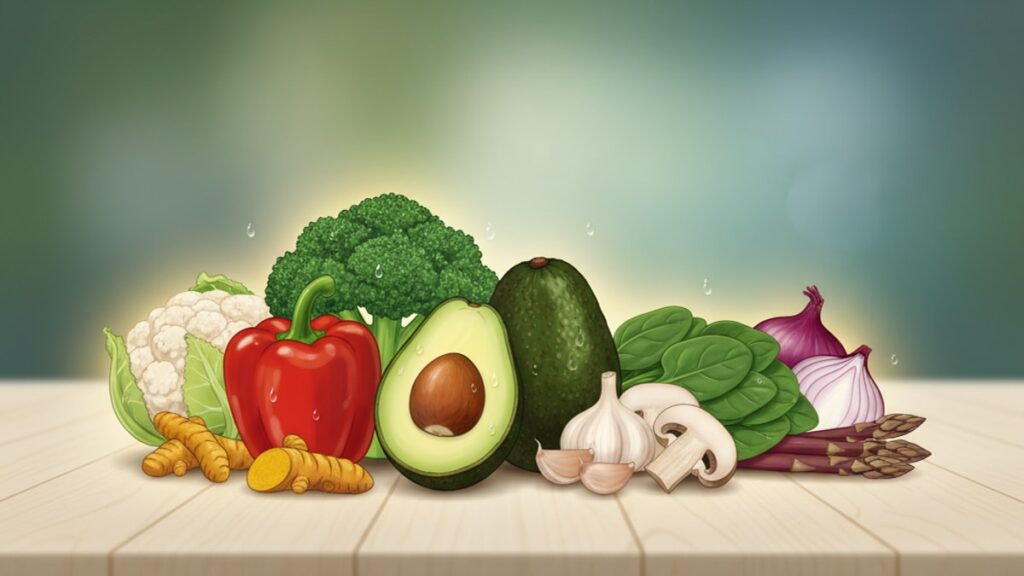
- Asparagus: This is one of the richest dietary sources of pre-formed glutathione. Enjoy it lightly steamed or raw in salads to preserve its content.
- Avocado: Another powerhouse, packed with healthy fats and a significant amount of GSH. It's a fantastic addition to almost any meal.
- Spinach and Okra: Leafy greens like spinach are a great source, but again, raw is better. Okra is another top contender, though its unique texture isn't for everyone.
- Cucumbers and Green Beans: These common vegetables provide a decent amount, especially when fresh and crisp.
- Walnuts: While many nuts contain precursors, walnuts stand out for also containing some pre-formed glutathione.
Remember the catch we mentioned? The bioavailability of glutathione from food is debated in the scientific community precisely because of digestive breakdown. So, while these foods are incredibly healthy for countless reasons, don't rely on them as your sole strategy for boosting GSH levels. Think of them as a helpful bonus.
Now, this is where it gets interesting.
The Real Play: Foods That Fuel Your Body's Production
This is the core of an effective glutathione-boosting diet. By focusing on these foods, you're providing your cellular machinery with everything it needs to synthesize this master antioxidant on demand. We can't stress this enough: this is the most impactful, long-term approach.
Sulfur-Rich Superstars
Sulfur is a critical mineral for this process because it's a central component of the amino acid cysteine—the rate-limiting factor in glutathione synthesis. Simply put, if you don't have enough cysteine, your production line grinds to a halt. Sulfur-rich foods are your ticket to an ample supply.
- Cruciferous Vegetables: This family is your best friend. We're talking about broccoli, Brussels sprouts, cauliflower, kale, cabbage, and bok choy. They contain compounds called glucosinolates, which, when chopped or chewed, convert into sulforaphane—a potent activator of genes that increase glutathione production.
- Allium Vegetables: Garlic, onions, shallots, and leeks are packed with organosulfur compounds like allicin. These compounds not only provide sulfur but also have powerful antioxidant and anti-inflammatory properties of their own.
Our team recommends trying to get at least one serving of a cruciferous vegetable and one allium into your diet every single day. It's a foundational habit for robust cellular health.
Cysteine and Its Precursors
Since cysteine is the most important building block, getting it directly is a game-changer.
- High-Quality Whey Protein: This is perhaps the most potent dietary tool for boosting glutathione. Whey is exceptionally rich in cysteine and other glutathione precursors. When selecting whey, opt for a cold-processed, undenatured product from grass-fed cows if possible, as high heat can damage the delicate proteins that make it so effective.
- Lean Meats and Poultry: Chicken, turkey, and lean cuts of beef are excellent sources of all three amino acids needed for glutathione synthesis.
- Eggs: Another complete protein source that delivers a healthy dose of cysteine.
Don't Forget the Co-factors and Helpers
Your body can have all the building blocks in the world, but without the right tools and helpers, the production factory can't run efficiently. Several micronutrients play indispensable supporting roles.
- Selenium: This mineral is a critical co-factor for the enzyme glutathione peroxidase, which uses glutathione to neutralize damaging free radicals. Without selenium, your glutathione is far less effective. Just one or two Brazil nuts a day can provide your full daily requirement. Other great sources include sardines, tuna, halibut, and eggs.
- Vitamin C: This well-known antioxidant plays a crucial role in maintaining glutathione levels. It helps regenerate oxidized glutathione (GSSG) back to its active, reduced form (GSH). So, pairing your sulfur-rich foods with sources of Vitamin C like bell peppers, citrus fruits, and berries creates a powerful synergy.
- Milk Thistle: The active compound in milk thistle, silymarin, has been shown in numerous studies to prevent glutathione depletion and even increase its levels in the liver. It's a powerful hepatoprotective herb.
| Approach | Key Foods | Mechanism of Action | Our Team's Observation |
|---|---|---|---|
| Direct Glutathione Intake | Asparagus, Avocado, Spinach, Okra, Walnuts | Provides the pre-formed glutathione molecule directly to the body. | A helpful but secondary strategy. Bioavailability can be limited due to digestive breakdown. Best when foods are consumed raw or lightly cooked. |
| Precursor & Co-factor Strategy | Cruciferous Veggies, Garlic, Onions, Whey Protein, Brazil Nuts, Berries | Supplies the raw materials (cysteine, glycine, glutamine) and co-factors (sulfur, selenium) for the body to synthesize its own glutathione. | This is the most effective and sustainable long-term approach. It empowers the body's natural production pathways, leading to more significant and lasting results. |
The Real Peptides Perspective: When Diet Isn't Enough
Let’s be honest. We live in a world of demanding schedules and high expectations. While a perfect diet is the goal, it's not always achievable. Furthermore, for researchers in the biotechnology space, dietary intake is an impossible variable to control in a lab setting. When you need to study the direct, quantifiable effects of a specific peptide, you can't leave it to chance.
This is where our work at Real Peptides becomes so critical. We specialize in synthesizing high-purity, research-grade peptides with exact amino-acid sequencing. For researchers studying the profound impact of this tripeptide on cellular function, mitochondrial health, or detoxification pathways, having a reliable, pure source is non-negotiable. That's why we offer lab-ready Glutathione for scientific investigation. It removes the guesswork and provides the consistency that rigorous research demands.
Our commitment to precision ensures that every batch meets the highest standards, allowing for reproducible and reliable results. Understanding how these foundational molecules work is the first step toward groundbreaking discoveries. If you're in the research field, we encourage you to Find the Right Peptide Tools for Your Lab and see how quality sourcing makes a difference.
Practical Lifestyle Tips to Protect Your Glutathione
Diet is the cornerstone, but a holistic approach yields the best results. Here are some lifestyle factors our team always highlights because they can either build up or drain your precious glutathione reserves.
- Get Quality Sleep: This is huge. Your body does most of its repair work while you sleep. Chronic sleep deprivation is a massive drain on glutathione levels as your body struggles to keep up with cellular cleanup.
- Manage Your Stress: Relentless psychological stress creates a physiological cascade of inflammation and oxidative stress, forcing your body to burn through its antioxidant stores. Practices like meditation, deep breathing, or even just spending time in nature can make a measurable difference.
- Engage in Regular Exercise: Both cardio and strength training have been shown to boost glutathione levels. Exercise creates a short-term oxidative stress that signals your body to upregulate its own antioxidant defense systems. It’s a classic example of what doesn't kill you makes you stronger, at a cellular level.
- Limit Alcohol Intake: Your liver is the primary site of both glutathione production and alcohol detoxification. Excessive alcohol consumption places a tremendous burden on the liver, rapidly depleting its glutathione stores. It's a direct hit to your antioxidant reserves.
Building a lifestyle that supports your body's natural defenses is just as important as the food you put on your plate. It's an integrated system. Neglecting one area will inevitably undermine your efforts in another. We've seen it time and time again.
Ultimately, supporting your body's glutathione levels isn't about a single magic food or supplement. It’s about creating a comprehensive internal and external environment that reduces the antioxidant burden and provides all the necessary resources for your cells to thrive. It’s a commitment to the foundational principles of health—a strategy that pays dividends in vitality and resilience for years to come. For those pushing the boundaries of science, we invite you to Explore High-Purity Research Peptides and equip your lab with the quality it deserves.
Frequently Asked Questions
What is the single best food for boosting glutathione?
▼
There isn’t one ‘single best’ food, but a high-quality, cold-processed whey protein is arguably one of the most potent dietary tools because it’s exceptionally rich in cysteine, the key building block for glutathione production.
Does cooking destroy the glutathione in foods?
▼
Yes, heat can significantly degrade pre-formed glutathione. For foods like spinach or asparagus, consuming them raw or lightly steamed is far better for preserving their glutathione content than boiling or roasting.
Can I get enough glutathione precursors on a vegan diet?
▼
Absolutely. Vegans can focus on sulfur-rich vegetables like broccoli and garlic, legumes, seeds, and nuts like walnuts. It’s entirely possible to support robust glutathione production with a well-planned, plant-based diet.
How does alcohol consumption affect my glutathione levels?
▼
Alcohol is a significant drain on glutathione. The liver, your primary site of GSH synthesis, has to work overtime to detoxify alcohol, a process that rapidly depletes its glutathione stores.
Is there a difference between eating glutathione-rich foods and taking a supplement?
▼
Yes. Glutathione from food and oral supplements can be broken down by stomach acid, limiting bioavailability. A more effective strategy is eating foods rich in precursors like cysteine and selenium, which allows your body to produce its own glutathione directly in the cells.
How quickly can I increase my glutathione levels through diet?
▼
While you won’t see changes overnight, consistent dietary improvements can start to impact your body’s antioxidant capacity within a few weeks. The key is consistency with precursor-rich foods and a supportive lifestyle.
Why is selenium so important for glutathione?
▼
Selenium is a critical co-factor for the enzyme glutathione peroxidase. This enzyme uses glutathione to neutralize harmful free radicals. Without enough selenium, your body can’t effectively use the glutathione it produces.
Do fruits contain glutathione?
▼
Some fruits, like avocados, cantaloupe, and watermelon, contain modest amounts of pre-formed glutathione. However, fruits rich in Vitamin C, like berries and citrus, are more important for helping regenerate and recycle existing glutathione.
What lifestyle factors deplete glutathione the most?
▼
In our experience, the biggest drains are chronic stress, poor sleep, excessive alcohol intake, and a diet high in processed foods. These factors create a state of high oxidative stress that forces your body to constantly use up its antioxidant reserves.
Why is purity so critical for research-grade glutathione?
▼
In a scientific setting, any impurity can act as a confounding variable, compromising the results of an experiment. High-purity peptides, like those we produce at Real Peptides, ensure that researchers are studying the effects of the target molecule alone, leading to reliable and reproducible data.
Is it better to eat broccoli raw or cooked for its glutathione-boosting effects?
▼
Lightly steaming broccoli is often considered ideal. This method helps break down the plant’s cell walls to release the beneficial compounds like sulforaphane, which boosts GSH production, without destroying them with excessive heat.
