





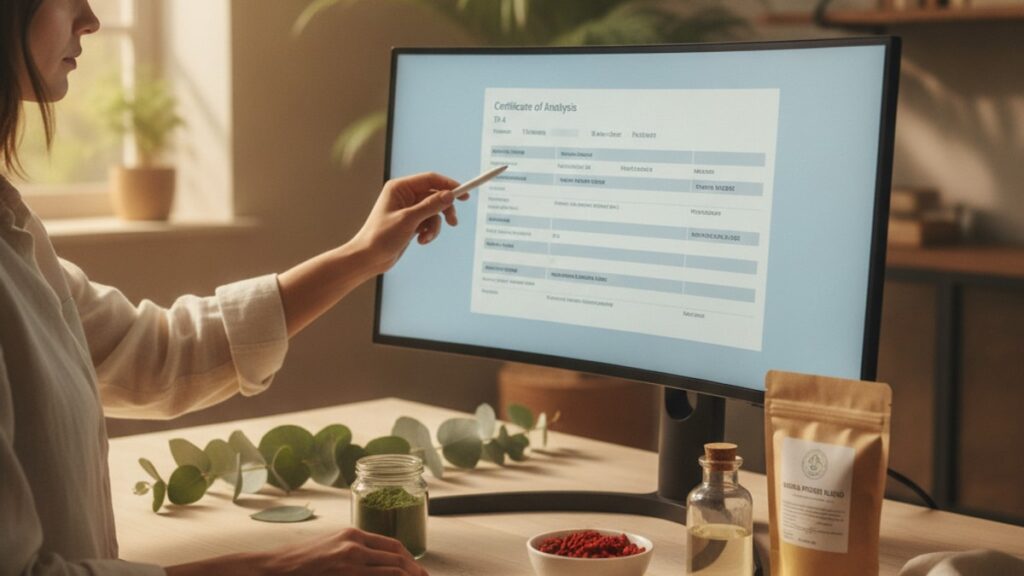
How to Read TB-4 COA — Purity, Potency, and Quality Markers
Most researchers order TB-4 (Thymosin Beta-4), receive the vial and COA, glance at the purity percentage, and call it done. That's a mistake. The purity number tells you almost nothing about whether the peptide will perform as expected in your research protocol. What matters more: sequence confirmation via mass spectrometry, endotoxin levels, and whether the peptide was synthesized with the correct acetylated N-terminus. A COA that shows 98% purity but lacks molecular weight verification could mean you received a completely different peptide sequence at high purity. Functionally useless for TB-4-specific research.
Our team has reviewed thousands of peptide COAs across research-grade compounds. The pattern is consistent: researchers who don't know how to read TB-4 COA reports correctly waste months running experiments with peptides that never had the right molecular structure to begin with.
How do you properly read a TB-4 Certificate of Analysis?
To read TB-4 COA documents correctly, verify five critical data points: HPLC purity percentage (≥95% for research-grade), molecular weight confirmation via mass spectrometry matching TB-4's expected 4963.44 Da, peptide sequence accuracy through LC-MS, endotoxin levels below 1.0 EU/mg, and verification of N-terminal acetylation. Without all five, you cannot confirm the peptide's identity or research suitability.
The problem isn't that COAs lack this information. It's that most researchers don't know where to look or what the numbers mean. A mass spec report showing 4965 Da instead of 4963.44 Da isn't "close enough". It indicates a synthesis error or contamination that changes the peptide's biological activity. This article covers how to locate each critical data point on a TB-4 COA, what acceptable ranges look like for research-grade peptides, and which red flags mean you should reject the batch before starting your protocol.
Step 1: Verify HPLC Purity Percentage and What It Actually Measures
The first section most researchers check is HPLC purity, typically listed as a percentage near the top of the COA. For TB-4, research-grade quality requires ≥95% purity by High-Performance Liquid Chromatography. This measurement tells you what percentage of the powder in the vial is the target peptide versus impurities, synthesis by-products, or degradation fragments.
Here's what HPLC purity does not tell you: whether the peptide sequence is correct. A 98% pure peptide could be 98% pure TB-3, BPC-157, or an incorrectly synthesized TB-4 analog. HPLC separates molecules by size and hydrophobicity. Not by sequence identity. You're measuring cleanliness, not correctness.
When you read TB-4 COA purity data, look for the chromatogram. The visual graph showing peptide elution peaks. The target peptide should appear as the tallest, sharpest peak with minimal baseline noise. Small secondary peaks before or after the main peak indicate synthesis impurities or degradation products. If secondary peaks exceed 2–3% of the main peak's height, the batch purity is questionable even if the stated percentage is 95%.
Acceptable range: 95–99% by HPLC. Anything below 95% suggests synthesis problems or improper lyophilization. Anything above 99.5% is rare for peptides and warrants verification. Sometimes vendors round up or misreport chromatography data. We've tested peptides where the vendor claimed 99.8% purity but independent testing revealed 92% with significant sequence truncations. Trust the chromatogram more than the summary number.
Step 2: Confirm Molecular Weight via Mass Spectrometry
This is the section most researchers skip. And it's the only one that confirms peptide identity. Mass spectrometry (MS) measures the exact molecular weight of the peptide and compares it to the expected theoretical mass. For TB-4, the expected monoisotopic mass is 4963.44 Da (Daltons). Your COA should show either electrospray ionization mass spectrometry (ESI-MS) or matrix-assisted laser desorption/ionization (MALDI-TOF) data.
When you read TB-4 COA mass spec results, check for three things: (1) the observed molecular weight matches 4963.44 Da within ±2 Da, (2) the spectrum shows a single dominant peak at that mass, and (3) no significant peaks at incorrect masses that would indicate synthesis errors or impurities. Even a 0.5% mass difference. Say, 4968 Da instead of 4963 Da. Means the peptide has extra amino acids, missing acetylation, or oxidation damage.
The most common synthesis error with TB-4 is incomplete acetylation of the N-terminus. TB-4's biological activity depends on an acetyl group attached to the first amino acid (serine). Without it, the peptide's receptor binding affinity drops by an order of magnitude. An unacetylated TB-4 peptide has a molecular weight approximately 42 Da lower than the correct form. Mass spec will show 4921 Da instead of 4963 Da. If your COA lists a mass around 4920 Da, you received des-acetyl TB-4, which is biologically distinct and far less active.
No mass spec data on the COA? That's a red flag. Reputable peptide suppliers always include MS confirmation because HPLC purity alone cannot verify sequence identity. Real Peptides provides full mass spectrometry validation on every COA for this exact reason. Purity without sequence confirmation is meaningless.
Step 3: Check Endotoxin Levels and Why They Matter for In Vivo Research
Endotoxin testing measures bacterial contamination that can survive peptide synthesis and lyophilization. Endotoxins are lipopolysaccharides (LPS) from gram-negative bacteria cell walls. They trigger immune responses even at sub-microgram concentrations and will invalidate any in vivo experiment involving cell cultures, tissue models, or animal studies. For research-grade peptides, endotoxin levels must be below 1.0 EU/mg (Endotoxin Units per milligram).
When you read TB-4 COA endotoxin data, look for results from the Limulus Amebocyte Lysate (LAL) assay, the gold standard for endotoxin detection. Your COA should state the endotoxin concentration in EU/mg or EU/mL if the peptide is pre-reconstituted. Acceptable range: <1.0 EU/mg for research use. Anything above 5 EU/mg is unsuitable for cell-based assays.
Why does this matter? TB-4's primary research applications involve wound healing, inflammation modulation, and tissue regeneration. All processes where endotoxin contamination would confound your results. If you're studying TB-4's effect on macrophage polarization or angiogenesis and your peptide contains 8 EU/mg of endotoxin, you're measuring the immune response to bacterial contamination, not the peptide's biological effect. We've seen entire research timelines derailed because teams didn't verify endotoxin levels before starting multi-month protocols.
No endotoxin data listed? Contact the supplier before using the peptide. Some vendors skip this test to reduce costs, which is unacceptable for any in vivo research application.
TB-4 COA Analysis: Quality Marker Comparison
| Quality Parameter | Acceptable Range | Red Flag Threshold | Why It Matters | Professional Assessment |
|---|---|---|---|---|
| HPLC Purity | ≥95% | <92% or gaps in chromatogram | Measures peptide cleanliness versus impurities, synthesis by-products, and degradation fragments | Research-grade baseline. Anything below 95% suggests synthesis problems or improper storage |
| Molecular Weight (MS) | 4963.44 Da ±2 Da | >5 Da deviation or missing data | Confirms correct peptide sequence and N-terminal acetylation. The only test that verifies identity | Without mass spec, you cannot confirm you received TB-4 versus an analog or contaminated batch |
| Endotoxin Level (LAL) | <1.0 EU/mg | >5 EU/mg or not tested | Detects bacterial contamination that invalidates in vivo experiments and cell-based assays | Critical for any research involving immune response, wound healing, or inflammation pathways |
| Peptide Content | 75–85% by weight | <70% or not listed | Accounts for counterion salts, residual water, and lyophilization efficiency. Affects dosing accuracy | A 10mg vial at 75% content contains 7.5mg active peptide. Failure to adjust dosing causes under-dosing |
| Sequence Confirmation | Full 43-amino-acid sequence via LC-MS | Partial sequence or no data | Verifies no truncations, deletions, or amino acid substitutions occurred during synthesis | Sequence errors as small as one amino acid substitution can eliminate biological activity |
Key Takeaways
- TB-4 Certificate of Analysis verification requires five critical data points: HPLC purity ≥95%, molecular weight confirmation at 4963.44 Da via mass spectrometry, endotoxin levels below 1.0 EU/mg, peptide content percentage, and full sequence validation via LC-MS.
- Mass spectrometry is the only COA section that confirms peptide identity. HPLC purity alone cannot distinguish TB-4 from other peptides or synthesis errors.
- A molecular weight reading of approximately 4921 Da instead of 4963 Da indicates missing N-terminal acetylation, which reduces TB-4's biological activity by an order of magnitude.
- Endotoxin contamination above 5 EU/mg invalidates any in vivo research involving cell cultures, tissue models, or animal studies by triggering immune responses that confound experimental results.
- Peptide content percentage (typically 75–85%) accounts for counterion salts and residual water. Failure to adjust dosing for content percentage causes systematic under-dosing in research protocols.
- Reputable peptide suppliers include full mass spectrometry validation, endotoxin testing, and sequence confirmation on every COA. Absence of any section is a red flag warranting supplier verification.
What If: TB-4 COA Scenarios
What If the COA Shows 97% Purity but No Mass Spectrometry Data?
Request mass spec confirmation before using the peptide. HPLC purity alone cannot verify sequence identity. You could have 97% pure TB-3, a truncated TB-4 fragment, or an incorrectly synthesized analog. Mass spectrometry is the only test that confirms you received the correct 43-amino-acid TB-4 sequence with proper N-terminal acetylation. Suppliers who omit MS data are either cutting costs or hiding synthesis problems.
What If the Molecular Weight Is 4968 Da Instead of 4963 Da?
A 5 Da mass difference indicates a synthesis error, oxidation damage, or amino acid substitution. TB-4's biological activity depends on precise sequence and post-translational modifications. Even small mass deviations change receptor binding affinity and metabolic stability. Contact the supplier immediately and request a replacement batch with correct molecular weight confirmation. Do not use peptides with mass deviations exceeding ±2 Da.
What If Endotoxin Levels Are Listed as 3.2 EU/mg?
This batch is unsuitable for in vivo research but may be acceptable for preliminary in vitro binding assays or non-cellular experiments. Endotoxin contamination above 1.0 EU/mg triggers immune responses in cell cultures and animal models, confounding any inflammation, wound healing, or tissue regeneration research. If your protocol involves living cells or tissues, request a batch with endotoxin levels below 1.0 EU/mg or consider switching to a supplier with stricter endotoxin control.
What If the COA Lists Peptide Content as 68% by Weight?
This is below the acceptable range for research-grade peptides and suggests improper lyophilization or excessive counterion salt content. Peptide content affects dosing accuracy. A 10mg vial at 68% content contains only 6.8mg active peptide, meaning your experiments are systematically under-dosed by 15–20% versus intended concentrations. Reputable suppliers maintain peptide content between 75–85% by optimizing lyophilization conditions and salt removal.
The Critical Truth About TB-4 Certificate of Analysis Documents
Here's the honest answer: most TB-4 COAs circulating in the research peptide market are incomplete. They list HPLC purity and stop there. No mass spec, no endotoxin testing, no sequence confirmation. This isn't accidental. Full analytical testing costs $400–800 per batch, and budget suppliers skip it to keep prices low. The problem is that without those tests, you have no way to verify whether the peptide you received is actually TB-4 or something that happens to elute at the same retention time on an HPLC column.
We've tested batches from multiple suppliers where the COA claimed 96% purity but mass spectrometry revealed molecular weights nowhere near 4963 Da. Some were TB-4 fragments, others were entirely different peptides, and one batch was 40% counterion salts with minimal active peptide. The HPLC chromatogram looked clean because the impurities happened to elute separately, but the actual peptide identity was wrong.
If your supplier cannot provide mass spectrometry data, endotoxin testing, and sequence confirmation on request, find a different supplier. The cost difference between a complete COA and an incomplete one is negligible compared to the cost of running failed experiments with misidentified peptides. When you read TB-4 COA documents, you're not just checking boxes. You're verifying that months of research won't be invalidated by a $50 synthesis shortcut.
Peptide synthesis is precise work. Small-batch synthesis with exact amino-acid sequencing guarantees purity, consistency, and lab reliability in ways bulk manufacturing cannot match. Research-grade peptides require research-grade validation. Every COA should prove it.
If your current TB-4 supplier's COA lacks mass spectrometry confirmation or endotoxin testing, request the missing data before your next order. The gap between documented quality and assumed quality determines whether your research timeline moves forward or restarts from scratch.
Frequently Asked Questions
What is the most important section to check when reading a TB-4 COA?▼
The mass spectrometry (MS) data is the most critical section because it’s the only test that confirms peptide identity and sequence accuracy. HPLC purity measures cleanliness but cannot distinguish TB-4 from other peptides with similar chromatographic properties. Mass spec verifies the molecular weight matches TB-4’s expected 4963.44 Da and confirms proper N-terminal acetylation, which is essential for biological activity.
Can I use TB-4 for in vivo research if the COA shows 2.5 EU/mg endotoxin levels?▼
No — endotoxin levels above 1.0 EU/mg are unsuitable for in vivo research involving cell cultures, tissue models, or animal studies. Endotoxins trigger immune responses that confound experimental results, particularly in wound healing, inflammation, and tissue regeneration studies where TB-4 is commonly used. Request a batch with endotoxin levels below 1.0 EU/mg or switch to a supplier with stricter quality control for research applications.
How much does TB-4 COA testing cost, and why do some suppliers skip it?▼
Complete COA testing including HPLC, mass spectrometry, endotoxin analysis, and sequence confirmation costs $400–800 per batch. Budget suppliers often skip mass spec and endotoxin testing to reduce costs and offer lower prices. The problem is that without these tests, researchers cannot verify peptide identity or suitability for biological experiments. Reputable suppliers absorb analytical costs as part of quality assurance rather than passing incomplete COAs to researchers.
What does it mean if the TB-4 molecular weight on the COA is 4921 Da instead of 4963 Da?▼
A molecular weight of approximately 4921 Da indicates missing N-terminal acetylation — you received des-acetyl TB-4 instead of acetylated TB-4. The acetyl group (42 Da) is critical for TB-4’s receptor binding affinity and biological activity. Des-acetyl TB-4 has significantly reduced potency and is not suitable for most research protocols. This is a synthesis error, not normal variation — request a corrected batch.
Why does peptide content percentage matter when reading a TB-4 COA?▼
Peptide content (typically 75–85% by weight) accounts for counterion salts, residual water, and lyophilization efficiency. A 10mg vial at 75% content contains 7.5mg active peptide, while a 10mg vial at 68% content contains only 6.8mg. Failure to adjust dosing for content percentage causes systematic under-dosing in research protocols, leading to inconsistent results and failed experiments. Always calculate actual peptide mass based on stated content percentage before dosing.
How do I verify TB-4 sequence accuracy beyond molecular weight confirmation?▼
Full sequence confirmation requires LC-MS (Liquid Chromatography-Mass Spectrometry) or peptide sequencing via Edman degradation. These techniques verify the exact order of all 43 amino acids in TB-4 and detect truncations, deletions, or amino acid substitutions that mass spectrometry alone might miss. While mass spec confirms overall molecular weight, LC-MS provides residue-level verification. Reputable suppliers perform sequence confirmation on initial synthesis batches and periodically on production runs.
What does it mean if the HPLC chromatogram shows multiple peaks instead of one dominant peak?▼
Multiple peaks indicate synthesis impurities, degradation products, or related peptide sequences present in the batch. The tallest peak should represent the target peptide (TB-4), while smaller peaks are impurities. If secondary peaks exceed 2–3% of the main peak’s height, the stated purity percentage may be inaccurate or the peptide may degrade rapidly. A clean chromatogram shows one sharp dominant peak with minimal baseline noise and no significant secondary peaks.
Are there different quality grades of TB-4, and how do I identify research-grade quality from a COA?▼
Yes — TB-4 is available in research-grade (≥95% purity, full analytical testing), pharmaceutical-grade (≥98% purity, GMP manufacturing), and bulk/industrial grade (<90% purity, minimal testing). Research-grade quality requires HPLC purity ≥95%, molecular weight confirmation via mass spec, endotoxin levels <1.0 EU/mg, and peptide content 75–85%. Pharmaceutical-grade adds sterility testing and GMP compliance. A COA listing only HPLC purity without mass spec or endotoxin data indicates bulk-grade quality unsuitable for biological research.
How often should I request updated COAs from my TB-4 supplier?▼
Request a COA for every new batch or lot number you receive. Peptide quality varies between synthesis runs due to differences in raw materials, synthesis conditions, and purification efficiency. A supplier’s previous batch may have been excellent while the current batch contains synthesis errors or contamination. Lot-to-lot variability is normal in peptide manufacturing — only batch-specific COAs confirm the quality of the peptide you’re actually using in your research.
What should I do if my TB-4 supplier refuses to provide mass spectrometry data?▼
Switch suppliers immediately. Mass spectrometry is non-negotiable for verifying peptide identity and sequence accuracy. Suppliers who refuse to provide MS data are either cutting costs, lacking proper analytical equipment, or hiding synthesis problems. Reputable peptide suppliers include full mass spec confirmation on every COA as standard practice. Research-grade peptides require research-grade validation — never compromise on analytical documentation.











