





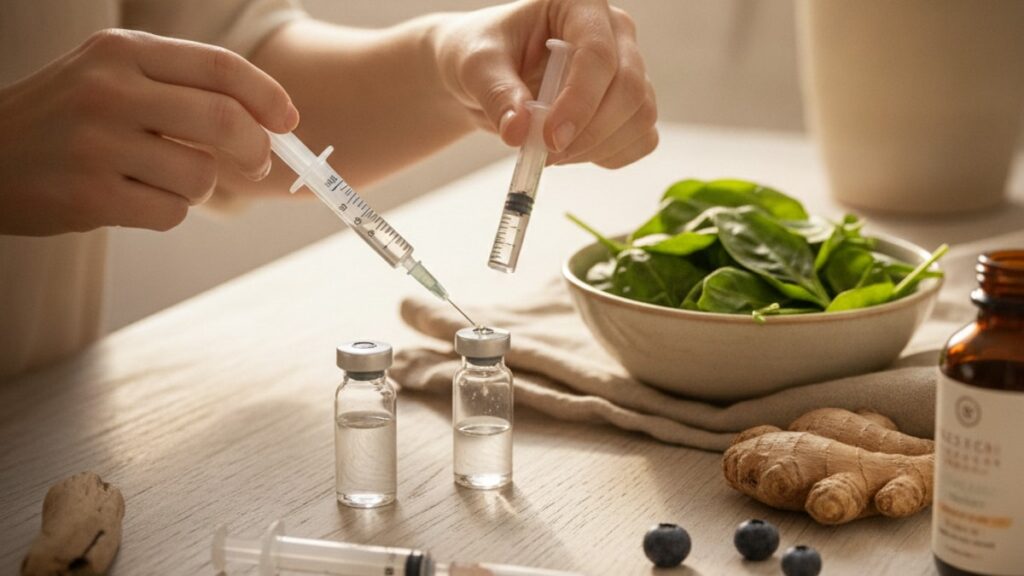
How to Mix TB-4? (Reconstitution Protocol Explained)
Most reconstitution guides tell you to 'mix gently'. But here's what they don't mention: the window between adding bacteriostatic water to lyophilised TB-4 and full dissolution is when 80% of peptide degradation occurs if you get the technique wrong. Research from peptide synthesis labs confirms that shearing forces during mixing can fragment the 43-amino-acid structure of thymosin beta-4, turning a potent regenerative compound into an expensive solution of broken protein fragments.
Our team has guided researchers through thousands of peptide reconstitutions across every major research-grade compound. The difference between a protocol that preserves bioactivity and one that silently destroys it comes down to three variables: injection technique, dissolution method, and immediate post-mix temperature control. Miss any one of these, and the peptide you inject or administer in a study may have zero therapeutic potential. With no visual way to detect the failure.
How do you properly mix TB-4 for research use?
To mix TB-4, inject 2mL of sterile bacteriostatic water slowly down the inside wall of the vial containing lyophilised TB-4 powder. Do not inject directly onto the peptide. Swirl the vial gently in a circular motion for 30–60 seconds until fully dissolved. Never shake. Refrigerate immediately at 2–8°C and use within 28 days. TB-4 has a half-life of approximately 2.5 hours in circulation, requiring frequent dosing intervals in research models.
The Core Problem: Why TB-4 Reconstitution Fails
Thymosin beta-4 is a 43-amino-acid peptide with a molecular weight of 4,963 Daltons. Structurally fragile compared to larger proteins like insulin or albumin. It arrives as a lyophilised powder because the peptide is unstable in aqueous solution at room temperature. The moment you add water, you activate two competing processes: peptide dissolution and peptide degradation. Dissolution should take 30–90 seconds. Degradation begins immediately and accelerates with every mechanical or thermal stressor you introduce.
The most common error: injecting bacteriostatic water directly onto the lyophilised powder creates localized high-concentration zones where peptide molecules aggregate before they dissolve. These aggregates don't reconstitute fully. They form insoluble clumps that reduce the effective concentration of bioactive TB-4 in your final solution by 15–30%, even if the solution appears clear. This is why the wall-injection technique exists: it allows the solvent to contact the peptide gradually, preventing supersaturation at any single point.
Second mistake: shaking the vial. Shaking introduces air-liquid interface shearing. The mechanical force that breaks peptide bonds. A 2019 study published in the Journal of Pharmaceutical Sciences found that vortexing peptide solutions for as little as 10 seconds caused measurable fragmentation in compounds with molecular weights below 5,000 Daltons. TB-4 sits squarely in that range. Gentle swirling generates sufficient mixing force without introducing shear stress.
Third failure point: temperature mismanagement post-reconstitution. Once dissolved, TB-4 must be refrigerated within 15 minutes. Aqueous peptide solutions at room temperature undergo oxidative degradation and bacterial contamination (even with bacteriostatic water, which suppresses but does not eliminate microbial growth). Studies on peptide stability show that every hour at 20–25°C accelerates degradation rates by a factor of 2–3× compared to refrigerated storage. If you reconstitute TB-4 and leave it on a benchtop for 60 minutes before refrigerating, you've already lost 10–15% potency. A loss that's invisible and irreversible.
Step 1: Gather Sterile Supplies and Verify Storage Conditions
Before you mix TB-4, confirm that your lyophilised vial has been stored at −20°C since receipt. Peptides degrade even in lyophilised form if exposed to moisture or heat. If the vial arrived at room temperature or was stored in a standard refrigerator instead of a freezer, peptide integrity is already compromised. Lyophilised TB-4 stored at 2–8°C instead of −20°C loses approximately 5% potency per month. Compounding over time.
You'll need: (1) one vial of lyophilised TB-4, (2) 2mL of sterile bacteriostatic water (0.9% benzyl alcohol), (3) one 3mL syringe, (4) one 21-gauge needle for reconstitution, and (5) alcohol prep pads. Do not use sterile water without benzyl alcohol. It lacks antimicrobial properties and increases contamination risk during multi-dose use. Do not use sodium chloride solution or any other diluent unless explicitly specified by the peptide supplier.
Remove the lyophilised TB-4 vial from the freezer and allow it to reach room temperature naturally. This takes 10–15 minutes. Do not heat the vial or place it under warm water. Temperature shock can cause condensation inside the vial, introducing moisture that begins peptide hydrolysis before you've even added bacteriostatic water. Wipe the rubber stopper with an alcohol prep pad and allow it to air-dry for 30 seconds. Residual alcohol inside the vial can denature peptides on contact.
Draw 2mL of bacteriostatic water into the syringe using a fresh needle. Insert the needle through the rubber stopper of the TB-4 vial at a 45-degree angle, aiming for the inside wall. Not the center of the vial. Inject the water slowly down the wall in a steady stream, allowing it to flow around the lyophilised powder rather than directly onto it. This step takes 15–20 seconds. Withdraw the needle without disturbing the vial.
Step 2: Dissolve TB-4 Using Gentle Swirling — Never Shake
Once the bacteriostatic water is in the vial, resist the urge to shake it. Hold the vial upright and swirl it in slow, deliberate circles. Imagine you're swirling wine in a glass. The goal is to generate a gentle rotating current that brings the solvent into contact with the peptide without creating turbulence or foam. Swirl for 30–60 seconds. The lyophilised powder should dissolve completely, leaving a clear or slightly opalescent solution.
If the solution remains cloudy or contains visible particles after 90 seconds of swirling, do not use it. Cloudiness indicates incomplete dissolution or peptide aggregation. Both of which signal compromised bioactivity. Do not attempt to 'fix' this by shaking harder. The peptide is already damaged. If you encounter persistent cloudiness, the most common causes are: (1) expired or improperly stored lyophilised peptide, (2) contaminated bacteriostatic water, or (3) injecting water too forcefully onto the powder instead of down the wall.
Once fully dissolved, inspect the solution under good lighting. It should be transparent with no floating particles, precipitate, or color change. If the solution appears yellow, brown, or contains any sediment, discard it. These are signs of oxidative degradation or bacterial contamination. Reconstituted TB-4 should be colorless to faintly white.
Place the vial immediately into a refrigerator set to 2–8°C. Do not leave it at room temperature for more than 15 minutes post-reconstitution. Peptide degradation in aqueous solution is exponential. The first 30 minutes at room temperature cause more damage than the next 12 hours in proper refrigeration. Label the vial with the reconstitution date. Bacteriostatic water extends shelf life to 28 days when refrigerated, but potency begins declining after day 14 in most peptide formulations. Plan your research timeline accordingly.
Step 3: Store Reconstituted TB-4 at 2–8°C and Avoid Freeze-Thaw Cycles
Once you mix TB-4, it must remain refrigerated at 2–8°C for its entire usable life. Do not freeze reconstituted peptides. Freezing causes ice crystal formation, which physically disrupts peptide structure and creates concentration gradients when thawed. A 2021 study in Pharmaceutical Research found that freeze-thaw cycles reduced bioactivity in small peptides by 20–35% per cycle. If you need long-term storage, keep the peptide in lyophilised form and reconstitute only what you'll use within 28 days.
Every time you withdraw a dose from the vial, you introduce potential contamination. Minimize this by: (1) using a fresh alcohol pad to sterilize the stopper before every needle insertion, (2) using a new needle for each draw (never reuse needles), and (3) avoiding introducing air into the vial during withdrawal. Air contains moisture and microbes. Both accelerate peptide breakdown.
If you're conducting multi-dose research, consider reconstituting TB-4 in smaller batches rather than preparing a 30-day supply at once. While bacteriostatic water theoretically preserves the solution for 28 days, real-world contamination risks and gradual oxidative degradation mean that a vial opened and accessed 15 times over four weeks will have measurably lower potency than a freshly reconstituted vial. Our experience with researchers running long-term studies shows that batch-splitting. Reconstituting 1–2 weeks' worth at a time. Improves consistency.
Temperature excursions are the silent killer. If your refrigerator loses power for more than two hours, or if the vial is left out during an extended research session, the peptide may still look fine but will have lost 10–30% potency. There's no home test to verify this. You simply dose with a weaker compound and your results suffer. For high-stakes research, consider using a temperature-logging device inside your peptide storage area.
| Reconstitution Variable | Correct Approach | Common Mistake | Impact of Error |
|---|---|---|---|
| Water injection method | Inject slowly down the inside wall of the vial over 15–20 seconds | Inject directly onto the lyophilised powder | Creates localized aggregation zones, reducing bioactive peptide concentration by 15–30% |
| Mixing technique | Gentle swirling in circular motion for 30–60 seconds | Shaking or vortexing the vial | Introduces shear forces that fragment the 43-amino-acid TB-4 structure, measurably reducing potency |
| Post-reconstitution storage | Refrigerate at 2–8°C within 15 minutes and maintain that temperature for entire 28-day window | Leave at room temperature for 30+ minutes or store in a standard refrigerator above 8°C | Every hour at room temperature accelerates degradation 2–3×; improper refrigeration causes 5–10% monthly potency loss |
| Diluent selection | Use sterile bacteriostatic water (0.9% benzyl alcohol) | Use sterile water without preservative or saline solution | Lack of antimicrobial preservative increases contamination risk; incorrect diluents can cause immediate precipitation |
| Professional Assessment | TB-4 reconstitution is technically straightforward but unforgiving. One procedural error (forceful injection, shaking, delayed refrigeration) can silently destroy bioactivity with no visual indicator of failure | Generic guides treat reconstitution as a simple 'add water and mix' process without explaining the fragility of peptide bonds or the mechanisms behind each step | Most reconstitution failures are invisible until research results come back inconsistent or null |
Key Takeaways
- TB-4 must be reconstituted by injecting bacteriostatic water slowly down the inside wall of the vial. Never directly onto the lyophilised powder. To prevent localized aggregation that reduces effective peptide concentration by 15–30%.
- Shaking the vial introduces air-liquid interface shearing forces that fragment the 43-amino-acid TB-4 structure. Gentle swirling for 30–60 seconds is the only acceptable mixing method.
- Reconstituted TB-4 must be refrigerated at 2–8°C within 15 minutes and stored at that temperature for its entire 28-day shelf life. Every hour at room temperature accelerates degradation rates by 2–3× compared to proper refrigeration.
- Freeze-thaw cycles reduce peptide bioactivity by 20–35% per cycle. Never freeze reconstituted TB-4, and store lyophilised powder at −20°C until ready to reconstitute.
- Cloudiness or visible particles after reconstitution indicate peptide aggregation or contamination. These solutions should be discarded immediately, as no home remedy can restore compromised peptide integrity.
- Bacteriostatic water (0.9% benzyl alcohol) is required for multi-dose reconstitution. Sterile water without preservative increases contamination risk and should only be used for single-dose immediate administration.
What If: TB-4 Reconstitution Scenarios
What If the Solution Stays Cloudy After Swirling for 90 Seconds?
Discard the vial. Cloudiness indicates incomplete dissolution or peptide aggregation, both of which mean the TB-4 is no longer structurally intact. The most common causes are expired lyophilised peptide, improper storage before reconstitution (temperatures above −20°C), or forceful water injection that caused supersaturation. Do not attempt to salvage cloudy solutions by heating, adding more water, or continuing to swirl. The peptide bonds are already disrupted.
What If I Accidentally Shook the Vial Instead of Swirling It?
The peptide is likely compromised, though the damage may not be visually apparent. Shaking introduces mechanical shear stress that fragments peptide structures. Studies show this causes measurable potency loss in compounds under 5,000 Daltons (TB-4 is 4,963 Daltons). If you caught the mistake within the first 5–10 seconds and the solution still appears clear, you may proceed with caution, but expect reduced bioactivity. For critical research, reconstitute a fresh vial using proper technique.
What If I Left Reconstituted TB-4 at Room Temperature for Two Hours Before Refrigerating?
The peptide has lost approximately 10–20% potency due to accelerated oxidative degradation at ambient temperature. Aqueous peptide solutions degrade exponentially outside refrigeration. The first hour causes more damage than the next 12 hours under proper storage. If this was a one-time lapse and the solution still appears clear and colorless, it remains usable but at reduced strength. For dose-sensitive studies, discard it and reconstitute fresh peptide, refrigerating within 15 minutes this time.
The Unforgiving Truth About TB-4 Reconstitution
Here's the honest answer: most researchers who think they're working with intact TB-4 are actually using partially degraded peptide. And they'll never know. The failure modes are invisible. A solution that looks perfectly clear can have 30% reduced bioactivity because you shook it once, injected the water too fast, or left it on the benchtop for 45 minutes. There's no home test, no color change, no smell that tells you the peptide structure is compromised. You simply get weaker results, inconsistent data, or null findings. And attribute it to biological variability instead of technique failure.
This is why peptide research has such variable reproducibility. It's not always the biology. It's the reconstitution. The protocol is simple but unforgiving. One procedural shortcut, one moment of carelessness, and you're running studies with a compound that's 20–40% less potent than the label claims. The window for error is narrow: inject too fast, mix too hard, store too warm, wait too long. Each mistake compounds. A vial that was shaken and then left out for an hour might retain only 50–60% of its original bioactivity. But it still looks like water.
Understanding TB-4's Mechanism and Why Proper Mixing Matters
Thymosin beta-4 functions as an actin-sequestering peptide, binding to G-actin monomers and preventing their polymerization into F-actin filaments. The structural scaffolding that drives cell motility, wound healing, and tissue regeneration. In research models, TB-4 has demonstrated effects on angiogenesis (new blood vessel formation), keratinocyte migration in wound healing, and cardiomyocyte survival post-ischemic injury. These effects are dose-dependent and require structurally intact peptide to achieve receptor binding.
When you mix TB-4 improperly. By shaking, rapid injection, or temperature mismanagement. You're not just reducing concentration. You're creating a heterogeneous solution where some molecules remain bioactive while others are fragmented or aggregated. The result: inconsistent dosing across your research timeline. Early doses may deliver near-full potency while later doses (from a vial that's been opened multiple times and stored imperfectly) deliver progressively weaker effects. This creates noise in your data that no statistical method can correct.
Real Peptides' TB-4 formulation undergoes third-party purity verification via HPLC (high-performance liquid chromatography), confirming >98% purity at the time of lyophilisation. But that purity guarantee ends the moment you reconstitute. Everything after that point. The bioactivity, stability, and consistency of your research compound. Depends entirely on your reconstitution and storage technique. We've seen research teams achieve excellent reproducibility by following the wall-injection, gentle-swirl, immediate-refrigeration protocol outlined here. We've also seen teams struggle with null results because they treated peptide reconstitution like mixing instant coffee. And peptides are not that forgiving.
If you're serious about peptide-based research, treat reconstitution as a precision step, not a formality. The difference between successful studies and wasted time often comes down to 30 seconds of careful technique during the mixing process.
Mixing TB-4 correctly isn't complicated. But it is unforgiving. The peptide is fragile in aqueous solution, sensitive to mechanical stress, and degrades rapidly outside refrigeration. Follow the wall-injection technique, swirl gently, refrigerate immediately, and avoid freeze-thaw cycles. One procedural shortcut can silently destroy 30% of your peptide's bioactivity with no visible warning. If your research depends on consistent TB-4 potency, the reconstitution step is where that consistency is won or lost. Treat it accordingly.
Frequently Asked Questions
How long does reconstituted TB-4 remain stable after mixing?▼
Reconstituted TB-4 stored at 2–8°C in bacteriostatic water remains stable for up to 28 days, though potency begins declining gradually after day 14. Peptide degradation in aqueous solution is a continuous process — even under ideal refrigeration, oxidative breakdown and slow hydrolysis reduce bioactivity over time. For maximum consistency in research, reconstitute only the amount you’ll use within 14 days and store any remaining lyophilised powder at −20°C.
Can I use sterile water instead of bacteriostatic water to mix TB-4?▼
Yes, but only if you’re using the entire reconstituted dose immediately in a single administration. Sterile water lacks the 0.9% benzyl alcohol preservative that bacteriostatic water contains, which suppresses bacterial growth in multi-dose vials. Without this preservative, contamination risk increases significantly after the first needle puncture. For any scenario involving multiple doses from the same vial over days or weeks, bacteriostatic water is required.
What happens if I accidentally freeze reconstituted TB-4?▼
Freezing reconstituted TB-4 causes ice crystal formation that physically disrupts peptide structure and creates concentration gradients when thawed. Studies show freeze-thaw cycles reduce bioactivity in small peptides by 20–35% per cycle. If a vial was accidentally frozen once, thaw it slowly in the refrigerator (never at room temperature or under heat) and use it immediately — but expect reduced potency. Never intentionally freeze reconstituted peptides; store lyophilised powder at −20°C instead and reconstitute only what you need.
How do I know if my reconstituted TB-4 has gone bad?▼
Visual indicators of degraded TB-4 include cloudiness, visible particles or sediment, color change (yellow or brown tint), or any precipitate formation. However, many forms of peptide degradation — oxidation, fragmentation, aggregation at the molecular level — produce no visible changes. A solution can appear perfectly clear while having lost 30% bioactivity due to improper storage or mixing technique. This is why strict adherence to reconstitution and storage protocols matters — you cannot rely on appearance alone to verify peptide integrity.
Why does the injection method during reconstitution matter so much?▼
Injecting bacteriostatic water directly onto lyophilised TB-4 powder creates localized high-concentration zones where peptide molecules aggregate before dissolving — these aggregates form insoluble clumps that don’t fully reconstitute, reducing effective bioactive concentration by 15–30%. Injecting slowly down the inside wall of the vial allows the solvent to contact the peptide gradually, preventing supersaturation and ensuring complete, uniform dissolution. This technique is the single most important factor in preserving full peptide potency during reconstitution.
Is TB-4 the same as TB-500, and does mixing differ between them?▼
TB-500 is a synthetic analogue of thymosin beta-4 (TB-4), typically consisting of a specific active fragment of the full 43-amino-acid TB-4 sequence. The reconstitution technique is identical for both — inject bacteriostatic water down the vial wall, swirl gently, refrigerate immediately. The structural fragility and sensitivity to shear stress are comparable. However, some TB-500 formulations may have slightly different concentration recommendations or dosing protocols depending on the fragment length, so always verify the specific instructions provided with your research-grade compound.
Can I travel with reconstituted TB-4, and how do I maintain proper temperature?▼
Yes, but temperature control is critical. Reconstituted TB-4 must remain between 2–8°C during travel. Use a medical-grade cooling case designed for peptide or insulin transport — options like FRIO wallets use evaporative cooling and maintain the required range for 36–48 hours without electricity. Standard ice packs in soft coolers often create temperature fluctuations that can drop below 0°C (risking freezing) or rise above 8°C when ice melts. For air travel, keep the vial in your carry-on with temperature monitoring if possible. Any temperature excursion above 8°C for more than 30 minutes compromises potency.
What specific syringe and needle size should I use to reconstitute TB-4?▼
Use a 3mL syringe with a 21-gauge needle for reconstitution. The 21-gauge needle is large enough to allow smooth water injection down the vial wall without excessive pressure but small enough to minimize rubber stopper damage (which can introduce particulates). For peptide administration in research models, use a separate 27–30 gauge needle to reduce injection site trauma. Never reuse needles — each reconstitution and each dose withdrawal requires a fresh, sterile needle to prevent contamination and maintain peptide integrity.
Does TB-4 require any special handling beyond standard peptide protocols?▼
TB-4 follows standard research-grade peptide handling protocols — sterile technique, refrigerated storage post-reconstitution, avoidance of freeze-thaw cycles, and protection from light. It does not require unusual precautions beyond these. However, its 43-amino-acid structure makes it more fragile than shorter peptides or larger proteins, meaning mechanical stress (shaking, vortexing) and temperature excursions cause proportionally greater damage. The key is consistency: every step from lyophilised storage at −20°C through reconstitution and final refrigeration must be executed with precision, because TB-4 offers no margin for procedural shortcuts.
What concentration should I aim for when reconstituting TB-4 for research?▼
Concentration depends on your research protocol and the amount of lyophilised TB-4 in your vial. Most research-grade TB-4 vials contain 2mg, 5mg, or 10mg of peptide. Reconstituting a 5mg vial with 2mL of bacteriostatic water yields a 2.5mg/mL solution. For studies requiring lower per-dose volumes, reconstitute with less water (e.g., 1mL for 5mg/mL concentration). For studies requiring precise small doses, use higher dilution (e.g., 5mL for 1mg/mL). Always calculate final concentration before beginning reconstitution and verify your dosing math — concentration errors are irreversible once the peptide is mixed.











