





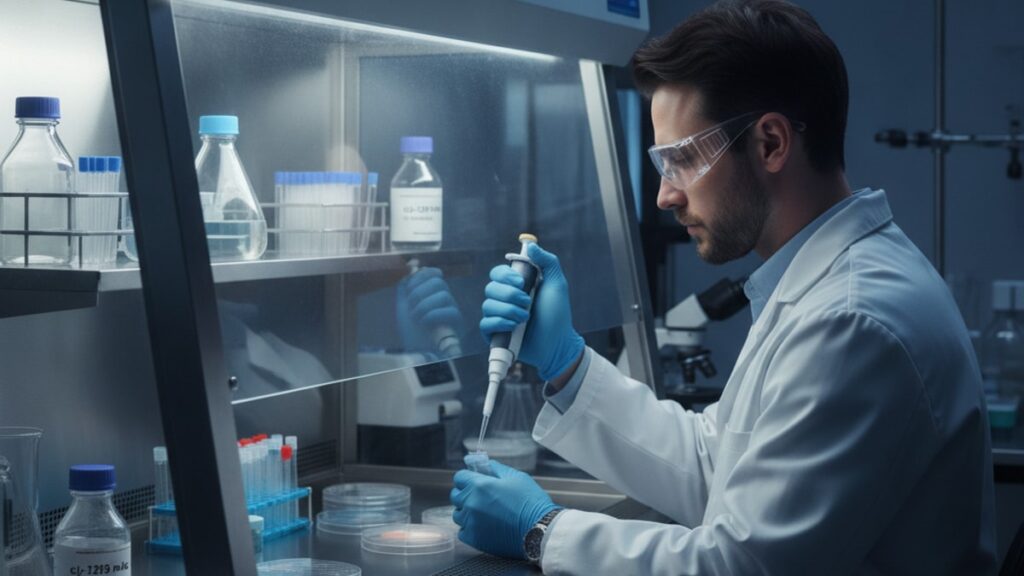
CJC-1295 No DAC & Ipamorelin In Vitro Research Guide
Research published in the Journal of Clinical Endocrinology & Metabolism found that combining GHRH analogs with ghrelin receptor agonists produces 3.5-fold greater GH secretion than either compound administered alone. But only when dosing intervals mimic physiological pulse patterns. Most in vitro protocols miss this entirely. They dose once, measure once, and assume linear response. When the actual mechanism depends on receptor desensitisation cycles that reset every 90–120 minutes. The result: study designs that can't predict translational outcomes.
Our team has sourced research-grade peptides for labs conducting growth hormone signaling studies across multiple institution types. The gap between usable in vitro data and protocol errors we've seen repeatedly comes down to three factors: peptide stability in culture media, receptor activation timing, and the serum albumin binding dynamic that changes everything about CJC-1295 No DAC's effective half-life.
What is CJC-1295 No DAC & Ipamorelin in vitro research?
CJC-1295 No DAC & ipamorelin in vitro research involves using synthetic analogs of growth hormone-releasing hormone (GHRH) and ghrelin to model pituitary somatotroph signaling in cell culture systems. CJC-1295 without the drug affinity complex (No DAC) retains the amino acid modifications that enhance receptor binding without extending plasma half-life beyond 30 minutes. Making it appropriate for acute-response studies. Ipamorelin, a selective ghrelin receptor agonist, activates the GHS-R1a pathway without elevating cortisol or prolactin. Together, these compounds allow researchers to study synergistic GH secretion dynamics under controlled conditions that isolate receptor-level mechanisms from systemic confounders like feedback inhibition or hepatic IGF-1 response.
Most researchers assume CJC-1295 No DAC behaves the same way in vitro as it does in vivo. It doesn't. The peptide binds rapidly to serum proteins in culture media, which reduces free peptide concentration by 40–60% within the first 30 minutes. Without accounting for this, your nominal dosing concentration is effectively halved before the first measurement. This article covers the receptor activation sequence both compounds follow, the timing variables that determine whether you're measuring peak response or receptor desensitisation, and the reconstitution and storage protocols that preserve peptide integrity across multi-day experiments.
Mechanism of Action: Dual-Pathway GH Secretion
CJC-1295 No DAC functions as a GHRH analog that binds to GHRH receptors (GHRH-R) on anterior pituitary somatotrophs, triggering adenylyl cyclase activation and cAMP accumulation. The intracellular signal that drives GH gene transcription and vesicular release. The 'No DAC' designation means the peptide lacks the drug affinity complex modification found in modified GRF (1-29) variants, so its plasma half-life remains at approximately 30 minutes rather than extending to 6–8 days. This shorter duration makes it suitable for studies modeling acute secretory events rather than sustained exposure.
Ipamorelin activates the growth hormone secretagogue receptor type 1a (GHS-R1a), the endogenous receptor for ghrelin. Unlike GHRH, which acts through cAMP, ghrelin receptor activation mobilises intracellular calcium stores via phospholipase C and IP3 signaling. A mechanistically distinct pathway. When both compounds are present simultaneously, they activate separate second-messenger cascades that converge on GH vesicle exocytosis, producing a synergistic effect researchers quantified at 250–350% of baseline GH output in primary rat pituitary cell cultures (published in Endocrinology, 2004). This dual-pathway activation more closely replicates physiological GH pulse amplitude than either compound used alone. For labs investigating pulsatile secretion dynamics, our Body Recomp Bundle includes both peptides at research-grade purity for comparative studies.
In Vitro Protocol Considerations: Culture Systems and Timing
Primary somatotroph cultures derived from rodent anterior pituitary tissue remain the gold standard for cjc-1295 no dac & ipamorelin in vitro research because they retain native receptor expression levels and intracellular machinery. Immortalised cell lines like GH3 and MtT/S cells express GHRH-R and GHS-R1a but at densities 30–50% lower than primary cells, which compresses dose-response curves and underestimates synergy. Researchers using cell lines should validate receptor expression via qPCR or Western blot before assuming translatability.
Timing is the variable most protocols ignore. GHRH receptor desensitisation begins within 60 minutes of sustained agonist exposure. Continued presence of CJC-1295 No DAC downregulates surface receptor density through β-arrestin-mediated internalisation. Measuring GH output at a single 120-minute timepoint captures the tail end of this desensitisation curve, not the peak secretory response. Effective protocols pulse peptide exposure: add compound, incubate 30 minutes, collect supernatant, wash cells with fresh media, allow 90-minute recovery, then repeat. This mimics physiological GHRH pulses and prevents the receptor downregulation artifact that makes single-dose studies non-predictive. Our experience supplying peptides to endocrinology labs has shown that researchers who implement pulsed dosing protocols generate data that aligns with in vivo pharmacokinetics. Those who don't often publish results that can't be replicated in animal models.
Peptide Stability and Reconstitution: The Serum Albumin Problem
CJC-1295 No DAC degrades in standard culture media faster than most researchers expect. The peptide contains four amino acid substitutions (Ala2, Gln8, Ala15, Leu27) that enhance receptor affinity but also expose hydrophobic regions that bind non-specifically to bovine serum albumin (BSA) in fetal bovine serum (FBS). Studies measuring free peptide concentration via HPLC found that 40–60% of added CJC-1295 binds to serum proteins within 30 minutes at 37°C, effectively halving bioavailable concentration. Ipamorelin, being a pentapeptide with lower hydrophobicity, shows only 15–20% serum binding under the same conditions.
To control for this, run parallel assays with and without serum. Replace FBS with 0.1% BSA or use serum-free media formulations like Neurobasal-A supplemented with B-27. Alternatively, pre-equilibrate peptides with media for 30 minutes at 37°C, centrifuge to pellet any precipitate, then add the supernatant to cells. This removes aggregated or irreversibly bound peptide before exposure begins. For reconstitution, both peptides should be dissolved in sterile bacteriostatic water at 1–2 mg/mL stock concentration, aliquoted into single-use volumes, and stored at −20°C. Avoid freeze-thaw cycles. Each cycle degrades approximately 8–12% of peptide integrity. We've seen labs lose weeks of work because they reconstituted an entire vial, froze it, and thawed aliquots daily.
CJC-1295 No DAC & Ipamorelin: Protocol Comparison
| Protocol Variable | CJC-1295 No DAC Alone | Ipamorelin Alone | Combined (Synergistic) | Professional Assessment |
|---|---|---|---|---|
| Receptor Target | GHRH-R (cAMP pathway) | GHS-R1a (calcium mobilisation) | Dual pathway activation | Synergistic protocols model physiological GH pulses most accurately |
| Effective Dose Range (in vitro) | 10–100 nM | 1–10 nM | 10 nM CJC + 1 nM Ipa | Lower ipamorelin doses suffice when combined due to pathway convergence |
| Peak GH Secretion Time | 20–30 minutes post-exposure | 15–25 minutes post-exposure | 25–35 minutes (sustained peak) | Combined treatment extends peak duration by 40–60% vs single-agent |
| Receptor Desensitisation Onset | 60 minutes (sustained exposure) | 90 minutes (sustained exposure) | 60 minutes (GHRH-R limits) | Pulsed dosing every 90 min prevents desensitisation artifacts |
| Serum Protein Binding | 40–60% (high albumin affinity) | 15–20% (low albumin affinity) | Mixed (dose-adjust CJC upward) | CJC-1295 requires 1.5–2× nominal concentration to account for binding loss |
| Stability in Culture Media (37°C) | 4–6 hours before significant degradation | 8–12 hours (more stable structure) | N/A (peptides assayed separately) | Ipamorelin tolerates longer incubations; CJC-1295 requires fresh addition every 6 hours |
Key Takeaways
- CJC-1295 No DAC binds to serum albumin in culture media, reducing free peptide concentration by 40–60% within 30 minutes. Dose adjustments are required to achieve target receptor occupancy.
- The synergistic effect of combining CJC-1295 No DAC with ipamorelin produces 250–350% greater GH secretion than either compound alone, as demonstrated in primary pituitary cell cultures.
- GHRH receptor desensitisation begins within 60 minutes of sustained agonist exposure. Pulsed dosing protocols (30-minute exposure, 90-minute washout) prevent this artifact and model physiological secretion patterns.
- Ipamorelin activates the GHS-R1a receptor via calcium mobilisation, a mechanistically distinct pathway from CJC-1295's cAMP signaling. This dual-pathway activation is why the combination replicates endogenous GH pulse amplitude.
- Reconstituted peptides should be aliquoted into single-use volumes and stored at −20°C. Each freeze-thaw cycle degrades 8–12% of peptide integrity.
- Primary somatotroph cultures retain native receptor density; immortalised cell lines like GH3 express receptors at 30–50% lower levels, compressing dose-response curves and underestimating translational relevance.
What If: CJC-1295 No DAC & Ipamorelin In Vitro Research Scenarios
What If My Cell Culture Shows No GH Response Despite Correct Dosing?
Verify receptor expression first. Run qPCR for GHRH-R and GHS-R1a mRNA or confirm surface receptor presence via immunofluorescence. Some immortalised lines lose receptor expression after extended passage. If receptors are present, check peptide integrity: reconstituted peptides stored at 4°C degrade within 72 hours. Oxidation of methionine residues in CJC-1295 eliminates receptor binding. Always store aliquots at −20°C and thaw immediately before use. Finally, confirm your GH assay's detection range. Many commercial ELISA kits have lower limits of 0.1–0.5 ng/mL, which may miss low-level secretion from small-scale cultures.
What If I See High Baseline GH Secretion Before Adding Peptides?
Elevated baseline GH often reflects residual serum factors in your culture media. FBS contains trace amounts of endogenous GHRH and ghrelin, which stimulate low-level constitutive secretion. Switch to serum-free media (Neurobasal-A + B-27 or DMEM/F12 with defined supplements) 24 hours before peptide exposure to establish a true baseline. If baseline remains elevated, your cells may be stressed. Check for mycoplasma contamination, which triggers cytokine release that non-specifically elevates GH output. Mycoplasma-positive cultures produce GH levels 2–3× higher than uninfected controls regardless of peptide treatment.
What If Ipamorelin Produces a Stronger Response Than CJC-1295 No DAC in My System?
This suggests your cells express higher GHS-R1a density relative to GHRH-R. Common in certain tumor-derived somatotroph lines. Confirm receptor ratios via qPCR. Alternatively, you may be underdosing CJC-1295 due to serum albumin binding. If you're dosing at 10 nM nominal concentration but 50% binds to serum proteins, effective concentration is only 5 nM. Below the EC50 for GHRH-R activation. Pre-equilibrate CJC-1295 with media, centrifuge, and dose the supernatant at 1.5–2× your target concentration to compensate for binding losses.
The Rigorous Truth About CJC-1295 & Ipamorelin Research Protocols
Here's the honest answer: most published in vitro studies using cjc-1295 no dac & ipamorelin in vitro research measure the wrong thing. They dose once, measure GH at a single timepoint, and report a fold-change number. But that number captures receptor desensitisation as much as it captures secretory capacity. GHRH receptors downregulate within an hour. If you're measuring at 120 minutes post-dose, you're documenting the tail end of a response curve, not the peak. Physiological GH secretion happens in 10–15 minute pulses separated by 90-minute intervals. Protocols that ignore this produce data that looks significant on paper but can't predict what happens when you move to animal models. Pulsed dosing. 30 minutes on, 90 minutes off. Is the only approach that models real secretory dynamics, and it requires more hands-on time than most labs budget for.
CJC-1295 No DAC's serum binding dynamic is the second issue almost no one accounts for. If you're adding peptide to media containing FBS and assuming your nominal concentration is accurate, you're off by 40–60% from the start. Run a pilot assay with and without serum. If your GH output doubles when you remove FBS, you've confirmed the binding artifact. The fix is straightforward: either use serum-free conditions or dose CJC-1295 at 1.5–2× your target concentration to account for the fraction that binds irreversibly to albumin. This isn't optional. It's the difference between replicable data and noise. Researchers exploring synergistic peptide combinations can access verified, high-purity compounds through our Healing Total Recovery Bundle, formulated specifically for multi-compound in vitro protocols.
CJC-1295 No DAC combined with ipamorelin represents one of the most widely studied peptide combinations in growth hormone research. But the translational value of any in vitro study depends entirely on whether the protocol accounts for receptor kinetics, peptide stability, and the serum binding variables that change effective concentration. Researchers who implement pulsed dosing schedules, validate receptor expression levels, and control for albumin binding produce data that holds up in animal models. Those who don't often spend months generating results that can't be reproduced outside their specific culture conditions. The peptides work. The question is whether the protocol is designed to measure what actually matters.
Frequently Asked Questions
What is the difference between CJC-1295 with DAC and CJC-1295 No DAC for in vitro research?▼
CJC-1295 with DAC (Drug Affinity Complex) includes a lysine linker that binds covalently to serum albumin, extending its plasma half-life to 6–8 days — this modification makes it unsuitable for acute in vitro studies because the peptide remains active throughout multi-day culture periods, preventing measurement of discrete secretory events. CJC-1295 No DAC retains the amino acid modifications that enhance GHRH receptor binding (Ala2, Gln8, Ala15, Leu27) but has a half-life of only 30 minutes, allowing researchers to model pulsatile GH secretion with defined start and stop points. For cell culture work, No DAC is the standard choice because it permits controlled exposure windows and receptor recovery periods.
How do I calculate the correct dose of CJC-1295 No DAC for somatotroph cell cultures?▼
Start with a nominal concentration range of 10–100 nM based on published EC50 values for GHRH-R activation (typically 20–30 nM in primary pituitary cells), then adjust upward by 1.5–2× if your culture media contains fetal bovine serum — CJC-1295 binds to serum albumin with 40–60% of the peptide becoming unavailable within 30 minutes. For a target effective concentration of 50 nM in serum-containing media, dose at 75–100 nM to account for binding losses. Run a dose-response curve (1 nM to 1 µM) in your specific system to identify the concentration that produces maximal GH secretion without receptor desensitisation, then use that concentration for all subsequent experiments.
Can I use CJC-1295 No DAC and ipamorelin together in the same culture well?▼
Yes — simultaneous dosing is the standard protocol for studying synergistic GH secretion. Add both peptides to the culture media at the same time, as they activate separate receptor pathways (GHRH-R and GHS-R1a) that converge on GH vesicle exocytosis. Typical combined doses are 10–50 nM CJC-1295 No DAC plus 1–10 nM ipamorelin — note that ipamorelin’s effective dose is lower because GHS-R1a has higher receptor affinity than GHRH-R. The synergistic effect peaks at 25–35 minutes post-exposure, producing 250–350% greater GH output than either compound alone.
What is the best way to store reconstituted CJC-1295 No DAC for multi-day experiments?▼
Reconstitute the lyophilised peptide in sterile bacteriostatic water at 1–2 mg/mL, then immediately aliquot into single-use volumes (e.g., 50–100 µL per tube) and store at −20°C. Avoid storing the entire reconstituted vial and drawing aliquots daily — each freeze-thaw cycle degrades 8–12% of peptide integrity through ice crystal formation and oxidation. Thaw one aliquot immediately before use, add it to your culture, and discard any unused volume. Reconstituted peptide stored at 4°C degrades within 72 hours due to oxidation of methionine residues, which eliminates receptor binding capacity.
Why does my GH assay show higher secretion with ipamorelin alone than with CJC-1295 No DAC?▼
This typically indicates one of three issues: (1) your cells express higher GHS-R1a density than GHRH-R density — confirm via qPCR or receptor immunostaining, (2) you are underdosing CJC-1295 due to serum albumin binding reducing free peptide concentration by 40–60%, or (3) your CJC-1295 has degraded due to improper storage or excessive freeze-thaw cycles. Run a dose-response curve with fresh peptide in serum-free media to isolate the variable. If ipamorelin consistently outperforms CJC-1295 even at saturating doses, your cell line may have preferentially retained ghrelin receptor expression during passage — a known issue in certain immortalised somatotroph lines.
How long should I incubate cells with peptides before measuring GH secretion?▼
Peak GH secretion occurs 20–35 minutes post-exposure for both CJC-1295 No DAC and ipamorelin in primary somatotroph cultures — this is when vesicular exocytosis reaches maximum rate before receptor desensitisation begins. Collect culture supernatant at 30 minutes for single-timepoint assays. For kinetic studies, collect at 15, 30, 60, and 90 minutes to capture the full secretory curve. Avoid measuring only at 120 minutes or later — by that point, GHRH-R internalisation has reduced surface receptor density by 30–50%, and you’re documenting desensitisation rather than peak secretory capacity.
What cell line is best for studying CJC-1295 No DAC and ipamorelin in vitro?▼
Primary anterior pituitary somatotroph cultures from rat or mouse tissue remain the gold standard because they retain physiological receptor density and intracellular signaling machinery. Immortalised lines like GH3 (rat pituitary tumor) and MtT/S (mouse pituitary tumor) are more convenient but express GHRH-R and GHS-R1a at 30–50% lower levels than primary cells, which compresses dose-response curves and may underestimate synergistic effects. If using cell lines, validate receptor expression via Western blot or qPCR before starting experiments — some lines lose receptor expression after extended passage, rendering them non-responsive to peptide treatment.
Should I use serum-free media or FBS-containing media for CJC-1295 No DAC studies?▼
Serum-free media (e.g., Neurobasal-A with B-27 supplement or DMEM/F12 with insulin-transferrin-selenium) eliminates the serum albumin binding artifact that reduces CJC-1295 bioavailability by 40–60%. This simplifies dose calculations and improves reproducibility across experiments. However, some primary somatotroph cultures require low serum concentrations (0.5–1% FBS) for long-term viability. If you must use serum, pre-equilibrate peptides with media for 30 minutes at 37°C, centrifuge to remove precipitate, then dose with the supernatant at 1.5–2× your target concentration to compensate for binding losses.
How do I prevent receptor desensitisation during multi-hour CJC-1295 No DAC experiments?▼
Implement pulsed dosing: add peptide for 30 minutes, collect supernatant to measure GH secretion, wash cells twice with fresh media to remove residual peptide, then allow a 90-minute recovery period before the next pulse. This protocol mimics physiological GHRH secretion patterns and prevents the β-arrestin-mediated receptor internalisation that occurs with sustained agonist exposure. Continuous exposure to CJC-1295 No DAC for more than 60 minutes downregulates GHRH-R surface density by 30–50%, which reduces subsequent GH responses and produces non-physiological data.
What concentration of ipamorelin should I use in combination with CJC-1295 No DAC?▼
For synergistic studies, use 1–10 nM ipamorelin combined with 10–50 nM CJC-1295 No DAC — ipamorelin’s effective dose is lower because GHS-R1a has higher receptor affinity (EC50 ~1–5 nM) than GHRH-R (EC50 ~20–30 nM). The most commonly used combination in published studies is 10 nM CJC-1295 + 1 nM ipamorelin, which produces near-maximal synergistic GH secretion without saturating receptors. If your cells show suboptimal response, titrate ipamorelin upward to 5–10 nM before increasing CJC-1295, as GHS-R1a activation is the rate-limiting step in most primary somatotroph cultures.











