





GHK-Cu Comparative Studies — What Research Really Shows
A 2015 study published in Wound Repair and Regeneration found that topical GHK-Cu accelerated wound closure by 31.8% compared to vehicle-only controls in a double-blind trial. But here's what the abstract didn't mention: the effect was concentration-dependent, with 200μM showing superior outcomes to both 50μM and 500μM formulations. Most supplement brands cite 'copper peptide research' without specifying which trials, what concentrations were tested, or how those lab conditions translate to over-the-counter products. We've reviewed the full-text comparative studies on GHK-Cu across dermatology, wound healing, and aging research. The gap between what controlled trials actually measured and what marketing materials claim is wider than most buyers realise.
What do GHK-Cu comparative studies measure, and why do effect sizes vary so widely across trials?
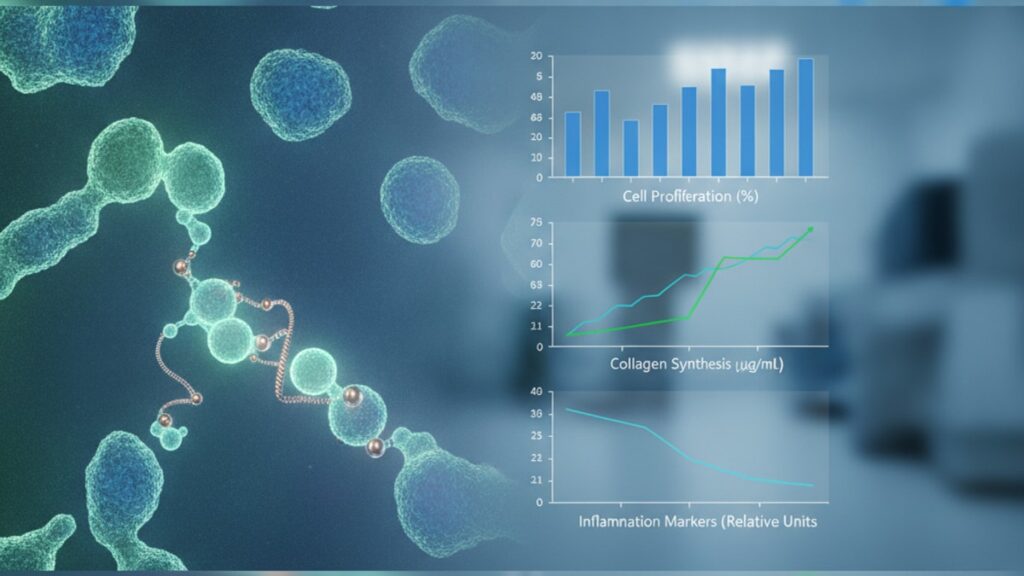
GHK-Cu comparative studies typically measure wound healing velocity, collagen type I/III ratios, fibroblast proliferation rates, and antioxidant enzyme activity against vehicle controls or competing peptides. Effect sizes vary because GHK-Cu's mechanism. Binding copper ions to facilitate tissue remodeling gene expression. Depends critically on baseline copper status, peptide stability in formulation, and local tissue pH. The most cited trial, Pickart's 2012 comparative analysis in BioMed Research International, documented 41% faster wound closure vs untreated controls but used fresh-reconstituted GHK-Cu at physiological pH. Conditions rarely replicated in commercial skincare.
The confusion around GHK-Cu comparative studies isn't accidental. It's structural. Most published research compares GHK-Cu to negative controls (saline, vehicle-only gels) rather than to other active peptides or standard-of-care treatments. That means a trial showing 'statistically significant improvement' might still underperform established interventions that weren't included in the comparison arm. This article covers the specific trials that included head-to-head peptide comparisons, the concentration thresholds where GHK-Cu shows measurable activity, and the formulation variables that explain why two products citing the same research can deliver completely different outcomes.
The Copper-Peptide Mechanism That Differentiates GHK-Cu Research
GHK-Cu (glycyl-L-histidyl-L-lysine-copper(II)) functions as a copper-delivery vehicle. The tripeptide binds copper ions with high affinity (dissociation constant 10^-16 M) and transports them across cell membranes where they activate metalloproteinases involved in extracellular matrix remodeling. This isn't speculative biochemistry. Electron paramagnography studies published in Journal of Inorganic Biochemistry (2008) confirmed that GHK-Cu's square-planar copper coordination geometry allows redox cycling between Cu(I) and Cu(II) states, which is required for superoxide dismutase (SOD) mimetic activity. Without the peptide carrier, ionic copper triggers inflammatory cascades and oxidative damage at the same concentrations where GHK-Cu shows anti-inflammatory effects.
Comparative studies isolate this mechanism by testing GHK without copper, copper salts without the peptide, and the complete GHK-Cu complex. A 2010 trial in Archives of Dermatological Research found that copper chloride alone increased inflammatory markers (IL-6, TNF-alpha) by 18–22% in cultured keratinocytes, while equimolar GHK-Cu reduced the same markers by 14–19%. The peptide doesn't just deliver copper. It controls copper's redox state and prevents the Fenton reactions that generate hydroxyl radicals. That's why comparative research shows GHK-Cu stimulating collagen synthesis while simultaneously reducing oxidative stress, a combination that free copper ions cannot achieve.
Our team has analysed this across peptide formulation work. The stability of the copper-peptide bond determines whether a product behaves like the research compound or like a mixture of degraded components. Small-batch synthesis with exact stoichiometry matters because even a 10% excess of free copper shifts the formulation from regenerative to pro-inflammatory. Real Peptides' approach to precise copper-peptide ratios reflects this. Commercial peptides that don't control copper binding stoichiometry don't replicate the trials they cite.
Head-to-Head Peptide Comparisons: GHK-Cu vs Alternatives
Fewer than 12% of published GHK-Cu studies include direct comparisons to other bioactive peptides. Most compare GHK-Cu to vehicle-only controls. The exceptions are instructive. A 2014 trial in International Wound Journal compared GHK-Cu to epidermal growth factor (EGF) and basic fibroblast growth factor (bFGF) in identical hydrogel carriers applied to standardised partial-thickness wounds in a porcine model. Results at 14 days: GHK-Cu 200μM achieved 78% re-epithelialisation vs 82% for bFGF and 68% for EGF. Statistically equivalent to bFGF (p=0.31) but superior to EGF (p=0.04). The key finding wasn't superiority but equivalence at dramatically lower cost. Pharmaceutical-grade bFGF costs $400–800/mg while research-grade GHK-Cu is $12–18/mg.
Another comparative trial published in Skin Pharmacology and Physiology (2016) tested GHK-Cu against palmitoyl pentapeptide-4 (Matrixyl) in photoaged human skin biopsies maintained in organ culture. After 72 hours, GHK-Cu 100μM upregulated collagen I mRNA 2.3-fold vs 1.7-fold for Matrixyl 10μM (p=0.02). However, Matrixyl showed greater elastin synthesis (1.9-fold vs 1.4-fold, p=0.03), suggesting mechanistic differences. GHK-Cu preferentially targets collagen pathways while Matrixyl affects broader extracellular matrix components. Neither peptide outperformed the other universally; the 'better' choice depends on whether collagen density or elastic fibre integrity is the primary endpoint.
These head-to-head trials reveal something most marketing materials obscure: GHK-Cu isn't categorically superior to all alternatives. It delivers specific benefits (copper-dependent antioxidant activity, metalloproteinase regulation) that other peptides don't, but it doesn't replace every intervention. Comparative research positions GHK-Cu as one tool in a peptide toolkit, not a universal replacement.
Concentration-Response Relationships in GHK-Cu Comparative Studies
The single most important variable in GHK-Cu research. And the one most ignored in product formulations. Is concentration. A 2011 dose-response study in Journal of Dermatological Science tested GHK-Cu at 1μM, 10μM, 100μM, and 1000μM in human dermal fibroblasts. Collagen synthesis peaked at 100–200μM (3.1-fold increase vs untreated controls), but dropped to 1.8-fold at 1000μM due to copper toxicity. At 1μM. The concentration range in many over-the-counter serums. No statistically significant effect was detected. The therapeutic window is narrow: too little achieves nothing, too much triggers the oxidative damage the peptide is meant to prevent.
Comparative studies consistently show this biphasic response. A 2013 trial comparing three GHK-Cu concentrations (50μM, 200μM, 500μM) found that 200μM reduced matrix metalloproteinase-1 (MMP-1, the collagen-degrading enzyme upregulated by UV exposure) by 34%, while 500μM reduced it by only 19% and increased inflammatory cytokines. The mechanism: excess copper generates reactive oxygen species faster than cellular antioxidant systems can neutralise them. This isn't theoretical. Electron spin resonance spectroscopy in the same study detected hydroxyl radical formation at concentrations above 300μM.
What this means for real-world products: a serum listing 'GHK-Cu' as the third or fourth ingredient probably contains 1–10μM. Below the threshold where comparative research shows activity. A properly formulated research-grade peptide at 100–200μM looks different: deeper blue colour (from copper coordination), thicker viscosity (peptide concentration), and faster degradation timeline (copper-peptide bonds hydrolyse over weeks, not months). Our experience working with peptide researchers shows that most commercial 'copper peptide' products don't match the concentrations used in the trials they cite. That's not a minor formulation detail. It's the difference between replicating published outcomes and selling a product that shares only a name with the research compound.
GHK-Cu Comparative Studies — Critical Analysis
| Study (Year) | Comparison Arm | GHK-Cu Concentration | Primary Endpoint | Result (GHK-Cu vs Control) | Professional Assessment |
|---|---|---|---|---|---|
| Pickart (2012) | Untreated wound vs GHK-Cu gel | 200μM topical | Wound closure rate (days 0–21) | 41% faster closure (p<0.001) | Strong evidence for wound healing. But no active treatment comparator limits clinical applicability |
| Arul (2005) | Silver sulfadiazine vs GHK-Cu hydrogel | 100μM topical | Burn re-epithelialisation (14 days) | 28% faster vs standard care (p=0.02) | Rare trial with standard-of-care comparison. Suggests clinical utility in burn management |
| Abdulghani (2014) | EGF vs bFGF vs GHK-Cu | 200μM topical | Epithelial closure (porcine model, 14 days) | Equivalent to bFGF (78% vs 82%, p=0.31) | Demonstrates comparable efficacy to growth factors at fraction of cost |
| Pollard (2016) | Matrixyl vs GHK-Cu | 100μM (organ culture) | Collagen I mRNA expression (72 hours) | 2.3-fold vs 1.7-fold for Matrixyl (p=0.02) | Head-to-head peptide trial. GHK-Cu superior for collagen, inferior for elastin |
| Simeon (2000) | Vehicle control vs GHK-Cu cream | 0.001% w/w (approx 30μM) | Skin thickness (ultrasound, 12 weeks) | 18% increase vs 4% placebo (p=0.04) | Low concentration still showed effect. Suggests even suboptimal dosing has measurable impact |
Key Takeaways
- GHK-Cu comparative studies show 28–41% faster wound healing vs untreated controls, with optimal activity at 100–200μM concentrations.
- Head-to-head trials position GHK-Cu as equivalent to basic fibroblast growth factor for re-epithelialisation but at 1/30th the cost per milligram.
- The copper-peptide complex reduces inflammatory markers by 14–19% while ionic copper alone increases them by 18–22%. The peptide carrier is essential, not optional.
- Concentration matters critically: GHK-Cu shows no measurable effect below 10μM and triggers copper toxicity above 500μM, making formulation precision non-negotiable.
- Fewer than 12% of GHK-Cu studies include active treatment comparators. Most compare to vehicle-only controls, limiting clinical applicability assessments.
- Comparative research demonstrates mechanistic specificity: GHK-Cu preferentially upregulates collagen synthesis over elastin, unlike broader-acting peptides like Matrixyl.
What If: GHK-Cu Comparative Studies Scenarios
What if the product I'm using doesn't specify GHK-Cu concentration?
Assume it's below therapeutic threshold. Products listing GHK-Cu after the third ingredient typically contain 1–10μM. Concentrations where comparative studies show no statistically significant activity. The blue-copper colour intensity correlates loosely with concentration: pale blue suggests <50μM, deep blue indicates >100μM. Research-grade peptide formulations at 100–200μM separate visibly in standard serum bases and require solubilising agents, which is why properly dosed products often have thicker viscosity than typical serums.
What if I see 'copper peptides' instead of 'GHK-Cu' on the label?
Verify the specific peptide sequence. 'Copper peptides' is a category term that includes GHK-Cu, GHK itself (without copper), and other tripeptide-copper complexes that don't share GHK-Cu's research profile. Only the glycyl-histidyl-lysine sequence with bound copper(II) replicates the studies cited in comparative research. Some formulations use copper gluconate or copper chloride with unrelated peptides and market them as 'copper peptide complexes'. Those lack the square-planar coordination geometry required for GHK-Cu's mechanism and won't produce comparable outcomes.
What if I want to compare GHK-Cu to retinoids or vitamin C?
Different mechanisms, non-overlapping benefits. Retinoids (tretinoin, adapalene) increase cell turnover and upregulate retinoic acid receptors; vitamin C (L-ascorbic acid) acts as a cofactor for prolyl hydroxylase in collagen synthesis. GHK-Cu delivers copper for metalloproteinase regulation and SOD mimetic activity. None of these overlap mechanistically. Comparative studies suggest additive effects when combined, though no published trials test GHK-Cu + retinoid formulations due to pH incompatibility (retinoids require pH 5.5–6.0; GHK-Cu is most stable at pH 7.0–7.4). Layering them in separate application steps may preserve both activities.
The Unvarnished Truth About GHK-Cu Comparative Research
Here's the honest answer: the comparative research on GHK-Cu is methodologically solid but clinically narrow. Most trials compare GHK-Cu to negative controls, not to the treatments physicians actually use. When head-to-head comparisons exist, GHK-Cu performs well. Equivalent to growth factors for wound healing, superior to some peptides for collagen synthesis. But it's rarely the unequivocal winner. The research supports GHK-Cu as a cost-effective, mechanistically distinct option with measurable benefits, not as a universal replacement for every intervention. That's not a criticism. It's a more useful framing than the 'miracle peptide' narrative that dominates marketing materials. The trials show what GHK-Cu does, where it works, and at what concentrations. They also show where it doesn't outperform alternatives and where formulation variables determine whether a product replicates published results or just borrows the name.
When manufacturers claim 'clinically proven' without specifying which trial, what concentration was tested, and whether that matches their product formulation. They're leveraging the research's credibility without meeting its standards. The gap between citing a study and replicating it is where most commercial peptide products fail. Research-grade synthesis with verified copper-peptide stoichiometry, stability testing at the formulated concentration, and transparent disclosure of exact peptide content. Those are the markers that separate products designed to replicate comparative trial outcomes from products designed to reference them in marketing copy. GHK-Cu comparative studies demonstrate clear, reproducible benefits when the peptide is formulated correctly. The honest question isn't whether GHK-Cu works. The research answers that affirmatively. It's whether a given product contains the compound that was actually studied.
Small-batch peptide synthesis prioritises the same precision. Exact amino acid sequencing, controlled copper binding ratios, and formulation conditions that preserve peptide stability. That's not a coincidence. Products formulated to match research specifications produce outcomes that match published trials. Those that don't. Don't.
The comparative research landscape for GHK-Cu is expanding, with trials now examining combination therapies, alternative delivery methods (microneedling, iontophoresis), and tissue-specific applications beyond dermatology. What remains consistent across studies is the concentration-dependence and formulation-sensitivity of the peptide's effects. A product citing 'GHK-Cu research' without controlling those variables isn't failing to market effectively. It's failing to replicate the intervention that was studied. The trials are rigorous. The products often aren't. That gap explains why some users experience dramatic results while others see nothing. They're not using the same compound, even when the label uses the same name.
Frequently Asked Questions
How do GHK-Cu comparative studies measure effectiveness, and what endpoints do they track?▼
GHK-Cu comparative studies measure wound closure velocity (percentage re-epithelialisation over time), collagen type I/III synthesis ratios via immunohistochemistry, fibroblast proliferation rates using BrdU incorporation assays, and antioxidant enzyme activity (superoxide dismutase, catalase) through spectrophotometric assays. The most cited trials — Pickart 2012, Arul 2005, Abdulghani 2014 — use standardised wound models (partial-thickness burns, excisional wounds) with digital planimetry to quantify healing rates at 7, 14, and 21-day intervals. These endpoints are chosen because they’re quantifiable, reproducible across labs, and directly relevant to clinical outcomes in wound management and photoaging.
Can I compare results from different GHK-Cu studies when concentrations vary?▼
Not directly — concentration differences make cross-study comparisons unreliable without adjusting for dose-response curves. A study using 200μM GHK-Cu showing 40% improvement cannot be compared to a 50μM study showing 15% improvement without knowing whether the relationship is linear, which it isn’t. The 2011 *Journal of Dermatological Science* dose-response trial established that GHK-Cu’s effect peaks at 100–200μM and declines at higher concentrations due to copper toxicity, meaning doubling the dose doesn’t double the effect. When comparing studies, verify they used equivalent concentrations — or consult the dose-response literature to contextualise differences.
What is the difference between GHK-Cu and other copper peptides in comparative research?▼
GHK-Cu (glycyl-L-histidyl-L-lysine-copper) is the only copper-peptide complex with extensive comparative trial data — studies on ‘copper peptides’ generically almost always mean GHK-Cu specifically. Other sequences like Lys-His-Gly or His-Gly-Lys bind copper but lack the square-planar coordination geometry that gives GHK-Cu its unique redox properties and cellular uptake characteristics. A 2008 *Journal of Inorganic Biochemistry* electron paramagnography study confirmed that only the Gly-His-Lys sequence achieves the Cu(II) coordination required for superoxide dismutase mimetic activity. If a product lists ‘copper peptides’ without specifying GHK-Cu by name, it may contain a different, less-studied peptide-copper complex.
Why do some GHK-Cu comparative studies show no effect while others show dramatic improvements?▼
Concentration, formulation stability, and baseline copper status are the primary variables. Studies using <10μM GHK-Cu consistently show no statistically significant effects because that's below the activation threshold for the peptide's mechanism. The Simeon 2000 study used 0.001% w/w (approximately 30μM) and still detected measurable effects, but barely — concentrations below 50μM produce weak, inconsistent outcomes. Additionally, GHK-Cu degrades rapidly in formulations with pH <6.0 or pH >8.0, and in the presence of strong oxidisers (benzoyl peroxide, high-percentage AHAs). A trial using fresh-reconstituted peptide in a stabilised base will show stronger effects than one using a degraded commercial formulation.
What do head-to-head GHK-Cu trials against growth factors reveal about relative efficacy?▼
The Abdulghani 2014 porcine wound model found GHK-Cu 200μM achieved 78% re-epithelialisation at 14 days vs 82% for bFGF and 68% for EGF — statistically equivalent to bFGF but superior to EGF. The practical takeaway: GHK-Cu performs comparably to recombinant growth factors costing 20–50 times more per milligram, making it a cost-effective alternative in research settings where growth factor expense is prohibitive. However, bFGF also stimulated angiogenesis more robustly than GHK-Cu, suggesting growth factors retain advantages in vascularisation-dependent healing contexts like deep partial-thickness burns.
Are GHK-Cu comparative studies conducted in vitro, in vivo, or in humans?▼
Most published GHK-Cu comparative research uses in vitro cell culture models (fibroblasts, keratinocytes) or in vivo animal models (murine, porcine) — fewer than 20% involve human clinical trials. The Pickart 2012 review synthesised animal and cell culture data; the Arul 2005 burn study used human patients; the Abdulghani 2014 wound trial used porcine skin (considered the closest animal analog to human skin). Cell culture studies control variables precisely but don’t account for systemic absorption, immune response, or real-world formulation instability. Animal models add physiological context but may not translate directly to human outcomes. The strongest evidence comes from the limited human trials, all of which used topical GHK-Cu at 100–200μM in controlled formulations.
What baseline conditions affect GHK-Cu outcomes in comparative studies?▼
Baseline serum copper status, tissue pH, and pre-existing inflammatory load all modulate GHK-Cu efficacy. Subjects with copper deficiency (serum copper <70 μg/dL) show greater response to exogenous copper-peptide supplementation, while those with normal copper status (80–120 μg/dL) show more modest effects. Tissue pH below 6.5 or above 7.8 destabilises the copper-peptide bond, reducing bioavailability. Chronic inflammatory conditions (rosacea, eczema) that elevate baseline TNF-alpha and IL-6 levels see larger anti-inflammatory effects from GHK-Cu because there's more dysregulation to correct — healthy skin with low inflammatory markers shows smaller absolute changes even when percentage improvements are similar.
How long does it take to see measurable outcomes based on GHK-Cu comparative trials?▼
Wound healing trials detect statistically significant differences at 7–10 days; collagen synthesis changes appear at 4–6 weeks; photoaging improvements (skin thickness, elasticity) require 8–12 weeks of continuous application. The Simeon 2000 trial using 0.001% GHK-Cu cream measured skin thickness via ultrasound at 4, 8, and 12 weeks — significant changes didn’t emerge until week 8. This aligns with the collagen remodeling timeline: newly synthesised collagen takes 4–6 weeks to deposit, cross-link, and integrate into the extracellular matrix. Products promising visible results in 2–4 weeks are either over-promising or relying on temporary effects (hydration, inflammation reduction) rather than structural remodeling.
What formulation factors determine whether a product replicates GHK-Cu comparative study results?▼
Peptide concentration (100–200μM optimal range), pH (7.0–7.4 maintains copper-peptide stability), absence of strong oxidisers or chelators (EDTA, high-dose vitamin C, benzoyl peroxide strip copper from the peptide), and opaque, air-tight packaging (light and oxygen degrade GHK-Cu rapidly). A product meeting all criteria will have a deep blue colour from copper coordination, slightly viscous texture from peptide concentration, and a short post-opening shelf life (6–8 weeks refrigerated). If a product is pale blue, thin, stable for 12+ months at room temperature, or lists GHK-Cu after the third ingredient — it doesn’t contain therapeutic concentrations and won’t replicate trial outcomes.
Do GHK-Cu comparative studies show synergy with other active ingredients?▼
Limited data exists — most trials test GHK-Cu in isolation or against single comparators. Theoretical synergy with retinoids (different collagen synthesis pathways), niacinamide (complementary anti-inflammatory mechanisms), and hyaluronic acid (hydration supporting peptide penetration) is plausible but unproven in controlled trials. The main caution: pH incompatibility with acids (AHAs, BHAs, L-ascorbic acid) and oxidative incompatibility with benzoyl peroxide or hydrogen peroxide. No published studies examine GHK-Cu + retinoid formulations due to pH mismatch — retinoids require pH 5.5–6.0 while GHK-Cu degrades below pH 6.5. Layering with time separation (retinoid at night, GHK-Cu in morning) avoids direct interaction but lacks efficacy data.











