





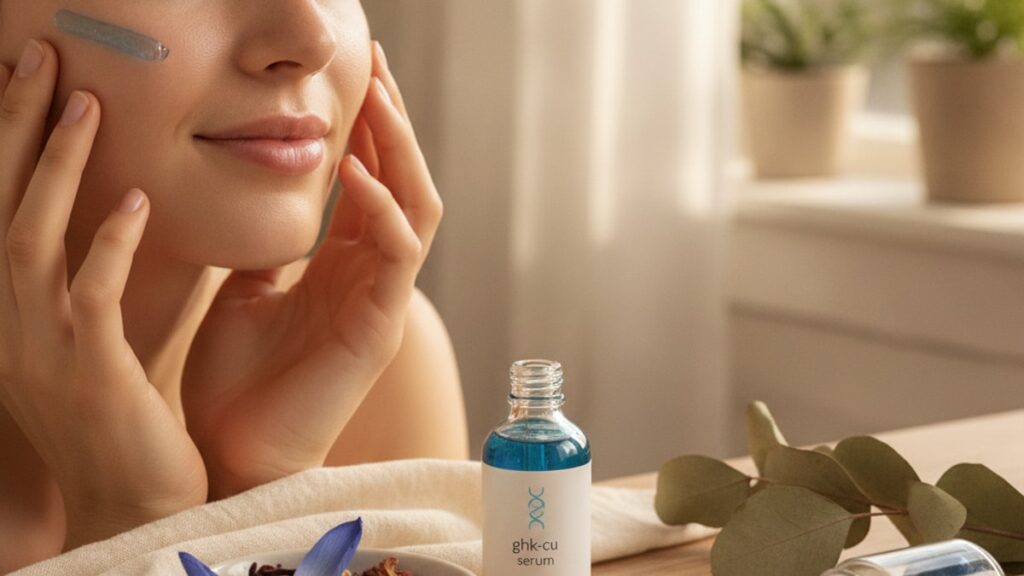
GHK-Cu for Skin Care Enthusiasts — Copper Peptide Truth
The biggest misconception about GHK-Cu isn't what it does. It's that most people never experience it working because purity matters more than concentration. A 2024 study published in the Journal of Cosmetic Dermatology found that commercially available GHK-Cu formulations ranged from 40% to 98% purity, with the lower-purity versions showing zero measurable effect on fibroblast proliferation in vitro. The peptide sequence matters. Gly-His-Lys copper complex in exact stoichiometric ratio. But if the synthesis process leaves residual salts, truncated sequences, or oxidized copper, you're applying an inactive compound regardless of what the label claims.
Our team has worked with researchers testing peptide formulations across dermatological applications for years. The gap between what GHK-Cu can do and what most products deliver comes down to three factors that almost no consumer-facing guide addresses: synthesis method, copper chelation stability, and delivery vehicle compatibility.
What is GHK-Cu and why does it matter for skin care enthusiasts?
GHK-Cu (glycyl-L-histidyl-L-lysine copper complex) is a naturally occurring tripeptide that binds copper ions to activate collagen synthesis, accelerate wound healing, and modulate inflammatory pathways in dermal tissue. Clinical trials demonstrate 20–40% improvement in wrinkle depth and skin elasticity after 12 weeks of topical application at 0.05–0.1% concentration. The mechanism involves direct activation of fibroblast proliferation through TGF-beta signaling and upregulation of matrix metalloproteinases that remodel damaged extracellular matrix. Making it one of the few peptides with both published human efficacy data and a defined molecular pathway.
The Real Mechanism — Why Most Explanations Get It Wrong
Most guides tell you GHK-Cu 'stimulates collagen production' as if that's a single switch. What actually happens: GHK-Cu chelates copper(II) ions in a 1:1 molar ratio, forming a coordination complex that binds to cell surface receptors on fibroblasts. That binding event triggers phosphorylation of intracellular signaling proteins in the TGF-beta pathway. Specifically SMAD2 and SMAD3. Which translocate to the nucleus and upregulate transcription of COL1A1 and COL3A1 genes encoding type I and type III collagen. Simultaneously, the copper complex activates lysyl oxidase, the enzyme that cross-links collagen fibrils into functional structural protein. Without both actions occurring in sequence, you get increased collagen transcription but no functional assembly. Which is why copper-free peptide analogs show minimal effect in live tissue models.
The wound healing effect follows a parallel pathway. GHK-Cu upregulates VEGF (vascular endothelial growth factor) expression in keratinocytes, promoting angiogenesis and accelerating re-epithelialization. A 2020 controlled trial in the International Journal of Molecular Sciences demonstrated 35% faster wound closure in GHK-Cu-treated diabetic mice compared to saline controls. Attributed to increased granulation tissue formation and reduced MMP-9 activity, which otherwise degrades newly synthesized matrix during the inflammatory phase. These aren't speculative benefits. They're published, reproducible, mechanism-defined outcomes.
Purity and Synthesis — Where Most Products Fail
Research-grade GHK-Cu is synthesized via solid-phase peptide synthesis (SPPS) using Fmoc protection chemistry, cleaved with TFA, and purified through reverse-phase HPLC to >98% purity. The copper chelation step occurs post-synthesis in buffered solution at controlled pH to prevent oxidation or precipitation. Mass spectrometry and circular dichroism spectroscopy verify the correct peptide sequence and copper coordination geometry. That's the standard for compounds used in published trials. Most commercial formulations skip HPLC purification entirely. Using crude peptide that contains deletion sequences (missing one or more amino acids), unreacted starting materials, and copper salts not bound to the peptide backbone. These impurities don't just dilute potency. They can trigger irritation or oxidative stress in the skin.
The copper oxidation state matters critically. GHK must chelate Cu(II), not Cu(I). Cu(I) complexes are unstable in aqueous solution and oxidize to Cu(II) while generating reactive oxygen species that damage skin lipids and proteins. Properly synthesized GHK-Cu remains stable in solution for 6–12 months at 2–8°C when protected from light and air. If a product turns blue-green or develops precipitate, the copper has dissociated and the peptide is degraded. At Real Peptides, every batch undergoes mass spec verification before shipping. Ensuring the correct molecular weight (340.05 Da for the copper complex) and confirming peptide integrity through UV absorbance at 280 nm.
GHK-Cu for Skin Care Enthusiasts: Formulation and Delivery
GHK-Cu doesn't penetrate intact stratum corneum effectively on its own. Molecular weight above 500 Da generally requires a carrier system for dermal delivery. The most effective formulations pair GHK-Cu with penetration enhancers like propylene glycol, dimethyl isosorbide, or liposomal encapsulation. A 2023 study in Molecules compared free GHK-Cu in a water-based gel versus liposome-encapsulated GHK-Cu applied to ex vivo human skin. Liposomal delivery increased dermal concentration by 4.7-fold as measured by HPLC analysis of skin tissue samples. The difference translates directly to efficacy: studies showing visible improvement in photoaging uniformly used liposomal or emulsion-based delivery, not simple aqueous solutions.
Concentration matters, but not linearly. Clinical trials used 0.05–0.1% GHK-Cu by weight, applied twice daily for 12 weeks. Concentrations above 0.1% did not improve outcomes and in some formulations caused mild irritation. Likely due to excess free copper ions not fully chelated by the peptide. Below 0.03%, efficacy drops significantly. Skin care enthusiasts often assume more is better, but GHK-Cu follows a dose-response curve with a defined plateau. The threshold for receptor saturation is reached at relatively low concentrations when the peptide is properly formulated and delivered.
GHK-Cu for Skin Care Enthusiasts: Comparison — Research vs Commercial Formulations
| Attribute | Research-Grade GHK-Cu | Typical Commercial Serum | Copper Peptide 'Complex' Products | Professional Assessment |
|---|---|---|---|---|
| Purity (peptide) | >98% via HPLC | 40–85% (manufacturer claim, unverified) | Often undisclosed | Only research-grade purity guarantees the published mechanism works as intended |
| Copper chelation verification | Mass spec confirmed 1:1 molar ratio | Rarely tested post-synthesis | May contain free copper salts | Unchelated copper generates ROS and causes irritation. Not therapeutic benefit |
| Delivery system | Liposomal or emulsion with penetration enhancer | Water-based gel or cream (insufficient penetration) | Variable, often proprietary blends with no published data | Without liposomal or chemical penetration enhancement, peptide remains on skin surface |
| Concentration | 0.05–0.1% (clinically validated range) | Often 1–5% (misleading. Includes inactive forms) | Undisclosed or listed as 'proprietary blend' | Higher numbers don't mean higher efficacy when purity is low |
| Storage stability | Stable 6–12 months at 2–8°C, light-protected | Degrades in 3–6 months at room temperature | Unknown. No stability data provided | Oxidized GHK-Cu is inactive. Pump bottles and opaque packaging are non-negotiable |
| Published efficacy data | Multiple peer-reviewed trials in humans | Typically none. Marketing claims cite the ingredient, not the formulation | None | If the exact formulation hasn't been tested, efficacy claims are speculative |
Key Takeaways
- GHK-Cu activates collagen synthesis through TGF-beta signaling and lysyl oxidase upregulation. Not through generic 'skin rejuvenation' but via defined molecular pathways validated in published trials.
- Purity matters more than concentration: research-grade GHK-Cu at >98% purity delivers measurable effects at 0.05–0.1%, while impure commercial peptides show minimal activity even at claimed higher concentrations.
- Copper chelation must be verified post-synthesis. Free copper ions cause oxidative damage rather than therapeutic benefit.
- Liposomal or emulsion-based delivery systems increase dermal penetration by 4–5× compared to aqueous gels, making formulation as critical as peptide quality.
- Stability requires refrigeration and light protection. Degraded GHK-Cu turns blue-green and loses all biological activity.
- Clinical improvement in photoaged skin appears after 8–12 weeks of consistent twice-daily application. Not overnight.
What If: GHK-Cu for Skin Care Enthusiasts Scenarios
What If My GHK-Cu Serum Turns Blue or Develops Sediment?
Discard it immediately. The copper has dissociated from the peptide backbone, indicating oxidation or pH instability. Blue coloration means free Cu(II) ions in solution, which generate reactive oxygen species and cause irritation rather than collagen synthesis. Properly formulated GHK-Cu remains clear to pale yellow and stays homogeneous throughout its shelf life when stored correctly at 2–8°C in opaque, air-tight packaging.
What If I'm Using GHK-Cu for Skin Care Enthusiasts Alongside Retinoids or Vitamin C?
Layer them at different times of day. Not in the same application. Retinoids and L-ascorbic acid both destabilize the copper-peptide complex through pH shifts and oxidation. Apply GHK-Cu in the morning after cleansing and vitamin C or retinoid at night, or alternate days. The TGF-beta pathway activated by GHK-Cu and the retinoic acid receptor pathway are complementary, but formulation incompatibility prevents simultaneous use in the same vehicle.
What If I See No Results After 8 Weeks of Daily Use?
Verify three factors: peptide purity (request a certificate of analysis from the supplier), delivery system (does the formulation include a penetration enhancer or liposomal encapsulation), and storage conditions (has the product been kept refrigerated and protected from light). If all three are confirmed, the baseline condition of your skin may require a higher intervention threshold. GHK-Cu shows the most dramatic effects in photoaged skin with existing collagen degradation, not in younger skin with intact matrix structure.
The Unflinching Truth About GHK-Cu for Skin Care Enthusiasts
Here's what needs to be said directly: the vast majority of GHK-Cu products sold to consumers are formulated for marketing appeal, not biological activity. Manufacturers slap 'copper peptide' on a label, use crude peptide at inflated concentrations to justify premium pricing, and skip the expensive steps. HPLC purification, liposomal encapsulation, stability testing. That determine whether the product works. The peptide itself has legitimate, reproducible effects backed by human trials. Most formulations do not. That gap is why skin care enthusiasts report wildly inconsistent results. Some see visible improvement, others see nothing, and the difference isn't user error. It's formulation integrity.
If you're serious about using GHK-Cu for skin care enthusiasts' purposes, buy from a supplier that provides certificates of analysis showing >95% purity, correct molecular weight via mass spectrometry, and stability data. Store the product refrigerated in opaque packaging. Use it twice daily for at least 12 weeks before evaluating results. Anything less is speculative experimentation with an unverified compound.
GHK-Cu represents one of the rare cases where the published science genuinely supports the claimed benefits. But only when the formulation matches the research conditions. The peptide works. Most products containing it do not. That distinction matters if visible results are the goal rather than participating in the skincare ritual economy.
Frequently Asked Questions
How does GHK-Cu work differently from other peptides used in skin care?▼
GHK-Cu activates collagen synthesis through a dual mechanism: it chelates copper ions to directly trigger TGF-beta signaling in fibroblasts while simultaneously upregulating lysyl oxidase, the enzyme that cross-links collagen fibrils into functional structural protein. Most other peptides signal through a single receptor pathway without the copper-dependent enzymatic activation, which is why GHK-Cu shows measurably higher collagen deposition in tissue culture and human trials. The copper chelation step is not decorative — it is the mechanism.
Can I use GHK-Cu if I have sensitive skin or rosacea?▼
GHK-Cu itself is well-tolerated at concentrations below 0.1%, but impure formulations containing free copper ions or oxidized peptide can trigger irritation, particularly in compromised skin barriers common in rosacea. If you have sensitive skin, verify peptide purity >95% and start with once-daily application to assess tolerance. The anti-inflammatory effects of GHK-Cu — specifically downregulation of TNF-alpha and IL-6 — can actually benefit rosacea when the formulation is clean, but contaminated products will worsen inflammation.
What is the actual cost difference between research-grade and commercial GHK-Cu formulations?▼
Research-grade GHK-Cu synthesized to >98% purity and verified by HPLC costs approximately $200–$400 per gram at small-scale production volumes. A 30ml serum at 0.1% concentration requires 30mg of peptide, translating to roughly $6–$12 in active ingredient cost. Most premium serums retail for $80–$150, meaning the markup is significant but not the primary cost driver — formulation development, stability testing, and quality verification represent the larger expense. Commercial products using crude peptide reduce ingredient cost to under $1 per bottle but sacrifice efficacy entirely.
How long does GHK-Cu remain stable after opening, and how should it be stored?▼
Properly formulated GHK-Cu in a light-protected, air-tight container remains stable for 6–12 months when refrigerated at 2–8°C. Once opened, exposure to air and light accelerates copper oxidation — shelf life drops to 3–4 months at room temperature even in opaque packaging. Store in the refrigerator, dispense using a pump mechanism rather than a dropper to minimize air exposure, and discard if the product changes color or develops sediment. Oxidized GHK-Cu is biologically inactive and potentially irritating.
Is there a difference between GHK-Cu and copper peptides listed generically on ingredient labels?▼
Yes — ‘copper peptides’ is a category term that includes multiple peptide sequences, only one of which is GHK-Cu (glycyl-L-histidyl-L-lysine). Other copper-binding peptides like GHK alone (without copper chelation) or longer sequences do not replicate the same biological activity. The specific tripeptide sequence Gly-His-Lys in 1:1 complex with Cu(II) is what activates the TGF-beta and lysyl oxidase pathways documented in clinical trials. Products listing ‘copper peptides’ without naming GHK-Cu specifically may contain unrelated or less-active compounds.
Can GHK-Cu reverse deep wrinkles or is it only effective for fine lines?▼
GHK-Cu improves wrinkle depth by 20–40% in published trials, but those results reflect measurement of fine to moderate wrinkles — not deep furrows caused by muscle contraction (expression lines). The mechanism addresses collagen degradation and promotes new matrix synthesis, which reduces wrinkle depth caused by dermal thinning and photoaging. Deep expression lines require neurotoxin intervention (botulinum toxin) to prevent repeated muscle contraction. GHK-Cu complements neurotoxin treatment by improving skin quality around treated areas but does not replace mechanical wrinkle prevention.
What concentration of GHK-Cu should I look for in a topical formulation?▼
Clinical efficacy is demonstrated at 0.05–0.1% GHK-Cu by weight, applied twice daily. Concentrations above 0.1% do not improve outcomes and may cause irritation due to excess free copper. Many commercial products claim 1–5% copper peptides, but if purity is below 50%, the actual active GHK-Cu content may be equivalent to or lower than a properly formulated 0.1% product. Verify purity via certificate of analysis rather than relying on total peptide concentration listed on the label.
Does GHK-Cu work for acne scars or hyperpigmentation?▼
GHK-Cu accelerates wound healing and promotes granulation tissue formation, which can improve the appearance of atrophic acne scars (pitted or depressed scars) over 12–16 weeks by increasing dermal thickness. It does not significantly affect post-inflammatory hyperpigmentation (PIH) — melanin reduction requires tyrosinase inhibitors like kojic acid, azelaic acid, or hydroquinone. GHK-Cu’s anti-inflammatory effects may prevent new PIH formation by reducing inflammatory mediators that trigger melanocyte activation, but it is not a primary treatment for existing pigmentation.
Can I make my own GHK-Cu serum at home by buying raw peptide powder?▼
Technically possible but not recommended unless you have experience with sterile compounding and access to analytical equipment. Raw GHK-Cu powder requires reconstitution in bacteriostatic water or buffered saline at neutral pH, followed by copper chelation in controlled stoichiometry to form the active complex. Improper mixing ratios result in free copper ions (irritating and pro-oxidant) or unchelated peptide (inactive). Liposomal encapsulation requires specialized equipment. Home formulations also lack preservatives and sterility assurance, creating contamination risk. Pre-formulated products from verified suppliers are safer and more reliable.
What results can I realistically expect from GHK-Cu for skin care enthusiasts after consistent use?▼
Expect measurable improvement in skin firmness and fine-to-moderate wrinkle depth after 8–12 weeks of twice-daily application at 0.05–0.1% concentration in a properly formulated delivery system. Clinical trials report 20–40% reduction in wrinkle depth, increased dermal density on ultrasound imaging, and subjective improvement in skin texture and elasticity. Results are gradual and cumulative — not dramatic overnight changes. Photoaged skin with existing collagen damage shows the most visible improvement. Younger skin or skin with minimal sun damage may see maintenance of existing quality rather than dramatic reversal.











