



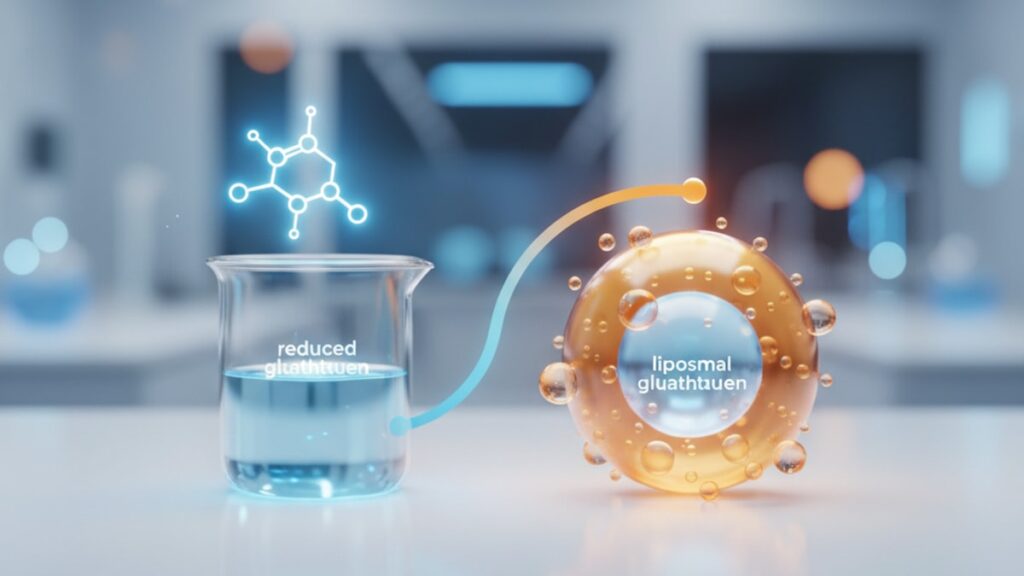
Glutathione. It’s a word that comes up constantly in conversations about cellular health, detoxification, and antioxidant defense. Our team fields questions about it all the time. Dubbed the ‘master antioxidant,’ this small but formidable tripeptide (composed of cysteine, glycine, and glutamic acid) is one of the most critical molecules your body produces. It’s on the front lines, neutralizing free radicals, recycling other antioxidants like vitamins C and E, and playing a pivotal role in detoxifying everything from environmental pollutants to metabolic waste. When levels are optimal, the body’s defense systems run like a well-oiled machine. When they’re depleted, things start to break down. Fast.
But here’s where the conversation gets incredibly nuanced, and frankly, where a lot of confusion arises. You’ve probably seen different forms available—most commonly, reduced glutathione and liposomal glutathione. It's not just marketing jargon. The distinction between them is monumental, and understanding what is the difference between reduced glutathione and liposomal glutathione is the key to unlocking its true potential, especially in a research setting. It’s the difference between a water pistol and a fire hose when it comes to cellular delivery. Let’s be honest, this is crucial. For us at Real Peptides, where precision and efficacy are the cornerstones of everything we do, this isn't just an academic detail; it's the whole game.
First, What Exactly is 'Reduced' Glutathione?
Before we can compare, we need to set the baseline. When you see the term “reduced glutathione,” it’s not referring to a lesser or diluted version. Quite the opposite. “Reduced” is the scientific term for the stable, active form of the molecule, often abbreviated as GSH. This is the hero form of glutathione, the one that’s ready to go to work.
Think of it as a charged-up battery. GSH has a spare electron on its sulfur group that it can generously donate to neutralize unstable, cell-damaging molecules (free radicals). Once it donates that electron, it becomes oxidized, turning into glutathione disulfide, or GSSG. It's now a 'used' battery. A healthy cell has mechanisms to recycle GSSG back into the active GSH form, but this process requires energy and can become overwhelmed under high levels of oxidative stress. The ratio of GSH to GSSG is actually a key biomarker of cellular health. You want a high ratio of reduced (GSH) to oxidized (GSSG). A low ratio is a red flag for significant cellular stress.
So, when you’re looking at a product like our research-grade Glutathione, you’re looking at the active, reduced GSH form. This is the only form you want. The problem, however, has never been the molecule itself. The problem is getting it where it needs to go.
The Achilles' heel of standard, reduced glutathione has always been its dismal oral bioavailability. When you ingest it, the delicate peptide bonds are mercilessly attacked by enzymes in the digestive tract, particularly in the stomach and intestines. It gets broken down into its constituent amino acids before it ever has a chance to reach the bloodstream in its whole, active form. Some studies suggest that as little as 10% (or even less) of an oral dose of standard GSH makes it into circulation intact. That’s a catastrophic loss of potency. For researchers, this presents a formidable challenge. How can you study the effects of a compound if you can't ensure it's being effectively absorbed? You can't. It makes dosing a nightmare and reproducibility nearly impossible.
Now, What Is Liposomal Glutathione?
This is where modern science provides a truly elegant solution. Liposomal technology isn't new—it's been used in pharmacology for decades to improve drug delivery—but its application to supplements and research compounds has been a complete game-changer. So, what is a liposome?
Imagine a microscopic, hollow sphere made from phospholipids. These are the very same molecules that make up your own cell membranes. It’s a biocompatible, protective bubble. In liposomal glutathione, millions of active GSH molecules are encapsulated inside these tiny phospholipid spheres. Think of it like putting the glutathione inside a biological armored car.
This armored car does two incredible things.
First, it protects the glutathione from the harsh, destructive environment of the gut. Stomach acid and digestive enzymes can't break it down because it’s shielded by the liposomal layer. The payload remains intact.
Second, and this is the really brilliant part, it dramatically enhances absorption. Because the liposome is made of the same material as your cells, it can bypass the normal absorption channels. The liposomes travel from the gut into the bloodstream and can then fuse directly with the membranes of your cells, delivering the glutathione payload directly inside. It’s like a Trojan horse for cellular wellness, smuggling the active GSH right where it’s needed most.
This delivery system circumvents the entire bioavailability problem. Studies on liposomal delivery have shown absorption rates that are orders of magnitude higher than standard oral forms. We're talking about bioavailability that starts to rival even intravenous (IV) administration, without the need for needles or clinical supervision. It’s a profound leap forward.
The Head-to-Head: A Clear Comparison
To really understand what is the difference between reduced glutathione and liposomal glutathione, it helps to see the key attributes side-by-side. Our team put together this table to break it down clearly, based on what we know matters most in a laboratory setting.
| Feature | Reduced Glutathione (Standard Oral) | Liposomal Glutathione |
|---|---|---|
| Bioavailability | Very low (often <10%). Degraded by gut enzymes and stomach acid. | Very high. Protects GSH through the gut and facilitates direct cellular absorption. |
| Delivery Mechanism | Relies on traditional, inefficient absorption pathways in the small intestine. | Utilizes phospholipid spheres to fuse with cell membranes for direct intracellular delivery. |
| Efficacy at Lower Doses | Requires much larger doses to achieve a therapeutic effect due to poor absorption. | Effective at significantly lower doses because a much higher percentage reaches the cells. |
| Cost | Generally lower cost to manufacture and purchase. | Higher cost due to the complex manufacturing process of creating stable liposomes. |
| Purity & Formulation | Simpler formulation. Purity depends entirely on the manufacturer's synthesis process. | More complex formulation. Can contain excipients like emulsifiers or preservatives. Quality is paramount. |
| Primary Use Case | Research where cost is a major factor and precise systemic delivery is not critical. | Clinical and research applications requiring maximum cellular uptake and reliable, reproducible results. |
It’s an unflinching comparison. While standard GSH is the correct active molecule, its delivery method is fundamentally flawed for oral use. Liposomal technology doesn't change the molecule; it perfects the delivery. It ensures the investment you make in a premium compound actually pays off at the cellular level. We've seen it work.
Why This Difference is a Non-Negotiable for Researchers
In a clinical or personal wellness context, the choice might come down to budget versus benefit. But in a research lab? The stakes are entirely different. Our experience shows that consistency and reproducibility are the twin pillars of sound science. If you can't rely on your inputs, you can't trust your outputs. Period.
Here’s what our team has learned over years of synthesizing high-purity peptides: using a compound with poor and variable bioavailability is a recipe for disaster. It introduces a massive, uncontrolled variable into your experiment.
Imagine two identical studies. One uses standard GSH, the other uses liposomal GSH. The lab using standard GSH might see negligible or inconsistent results, leading them to conclude (incorrectly) that glutathione had no effect in their model. The lab using liposomal GSH, however, ensures high cellular uptake and sees a significant, measurable effect. They arrive at a completely different, and far more accurate, conclusion. The compound was the same; the delivery changed everything.
This is why we can't stress this enough: for serious research, you must account for bioavailability. It dictates your dosing protocols, impacts your budget (as you need less of a highly bioavailable compound), and ultimately determines the validity of your data. It’s about ensuring that the effects you observe are actually due to the molecule you're studying, not the random chance of how much happened to survive the digestive tract on a given day.
This is the philosophy that drives our entire operation at Real Peptides. From our fat loss research compounds like Survodutide Peptide to cognitive enhancers like Dihexa, we focus on providing compounds with impeccable purity and stability. Because we know that’s what it takes to get reliable data. When you're trying to [Find the Right Peptide Tools for Your Lab], starting with the most effective and reliable form is the only path to success.
Are There Any Downsides to Liposomal Technology?
It’s a fair question. The primary drawback is cost. The technology required to create stable, correctly sized liposomes and ensure the glutathione remains encapsulated is sophisticated and expensive. This is why you'll see a significant price difference between the two forms. You're not just paying for the glutathione; you're paying for the advanced delivery vehicle.
Another consideration is the quality of the liposomal formulation itself. Not all liposomes are created equal. Poorly manufactured products can have liposomes that are too large for effective absorption, have low encapsulation efficiency (meaning much of the glutathione is outside the protective bubble), or use low-quality phospholipids that can go rancid. It’s a field where quality control is absolutely critical. You need to trust your supplier implicitly.
This is why, when our clients ask us about sourcing compounds, we always steer them toward a focus on quality over cost. It's the same principle we apply to our own catalog. Whether it's a foundational molecule like GSH or a complex peptide stack, the integrity of the final product is everything. The goal is to [Explore High-Purity Research Peptides], not just find the cheapest option available.
Making the Right Choice for Your Objectives
So, how do you decide? It really comes down to your specific goals.
If your research is purely academic, perhaps looking at the chemical properties of GSH in vitro (in a test tube), then a standard, high-purity reduced glutathione is perfectly sufficient. You don’t need a delivery system because you’re not dealing with a biological organism’s digestive tract.
However, if your work involves in vivo models (live organisms) and your goal is to study the systemic or intracellular effects of glutathione, then a liposomal form is almost certainly the superior choice. It's the only way to guarantee reliable, high-level absorption from oral administration. The clean data, the ability to use lower and more precise doses, and the reproducibility of your results will more than justify the additional cost.
This isn't just about glutathione, either. This principle of optimizing delivery is a sprawling frontier in biotechnology. The same logic applies across the board, from delivering nootropics across the blood-brain barrier to ensuring muscle-repair peptides like BPC 157 reach their target tissues effectively. The molecule is only half the story; the delivery is the other, equally important half.
The world of peptides and biological research is moving incredibly fast. The difference between reduced glutathione and liposomal glutathione is a perfect example of how innovation isn't just about discovering new molecules, but also about perfecting how we use the ones we already have. It’s a shift from brute force to elegant precision. As a company dedicated to providing the tools for that cutting-edge research, we believe that understanding these distinctions is what separates good science from groundbreaking science. It’s this commitment to precision that drives every small-batch synthesis in our lab. We invite you to [Discover Premium Peptides for Research] and see the difference for yourself when you shop all peptides.
Frequently Asked Questions
What is the key difference between reduced and liposomal glutathione?
▼
The main difference is the delivery system and resulting bioavailability. Reduced glutathione (GSH) is the active form, but it’s poorly absorbed orally. Liposomal glutathione encases GSH in a protective lipid layer, dramatically increasing its absorption and delivery directly into cells.
Is ‘reduced’ glutathione a weaker form?
▼
No, quite the opposite. ‘Reduced’ is the scientific term for the stable, active, antioxidant form of glutathione (GSH). The oxidized form (GSSG) is the ‘used’ or inactive state. You always want the reduced form.
Why is oral reduced glutathione not effective?
▼
Standard oral GSH is largely destroyed by stomach acid and digestive enzymes. Its delicate peptide structure is broken down before it can be absorbed into the bloodstream intact, leading to very low bioavailability.
How does a liposome work?
▼
A liposome is a microscopic sphere made of phospholipids, the same material as cell membranes. It protects its contents (like glutathione) from digestion and can merge with cells to deliver its payload directly inside, ensuring maximum impact.
Is liposomal glutathione better than IV glutathione?
▼
IV administration provides 100% bioavailability and is the clinical gold standard. However, liposomal glutathione offers extremely high oral bioavailability that approaches IV levels, making it a powerful and more convenient alternative for non-clinical settings.
Are there any downsides to liposomal glutathione?
▼
The primary drawbacks are higher cost due to the complex manufacturing process and the importance of quality control. A low-quality liposomal product may not be effective, so sourcing from a reputable supplier is critical.
Can the body recycle oxidized glutathione (GSSG)?
▼
Yes, healthy cells have an enzyme called glutathione reductase that converts the oxidized form (GSSG) back into the active, reduced form (GSH). However, this process can be overwhelmed by high levels of oxidative stress.
Does Real Peptides sell liposomal glutathione?
▼
We specialize in synthesizing ultra-high purity, research-grade peptides. Currently, we offer the foundational reduced [Glutathione](https://www.realpeptides.co/products/glutathione/) for research applications where purity and stability are the primary concerns, such as in-vitro studies.
How important is the GSH to GSSG ratio?
▼
It’s a critical indicator of cellular health. A high ratio of reduced (GSH) to oxidized (GSSG) signifies a healthy cell with low oxidative stress. A low ratio indicates the cell’s antioxidant defenses are overwhelmed.
Can I just take the amino acids that make up glutathione instead?
▼
You can supplement with precursors like N-acetylcysteine (NAC), glycine, and glutamine to support your body’s own production of glutathione. However, this relies on your body’s ability to synthesize it, which can be limited by age or health status.
For research purposes, which form is better?
▼
For in-vitro studies, standard high-purity reduced GSH is excellent. For any in-vivo research involving oral administration, liposomal glutathione is vastly superior because it provides reliable and reproducible absorption, leading to more accurate data.











