





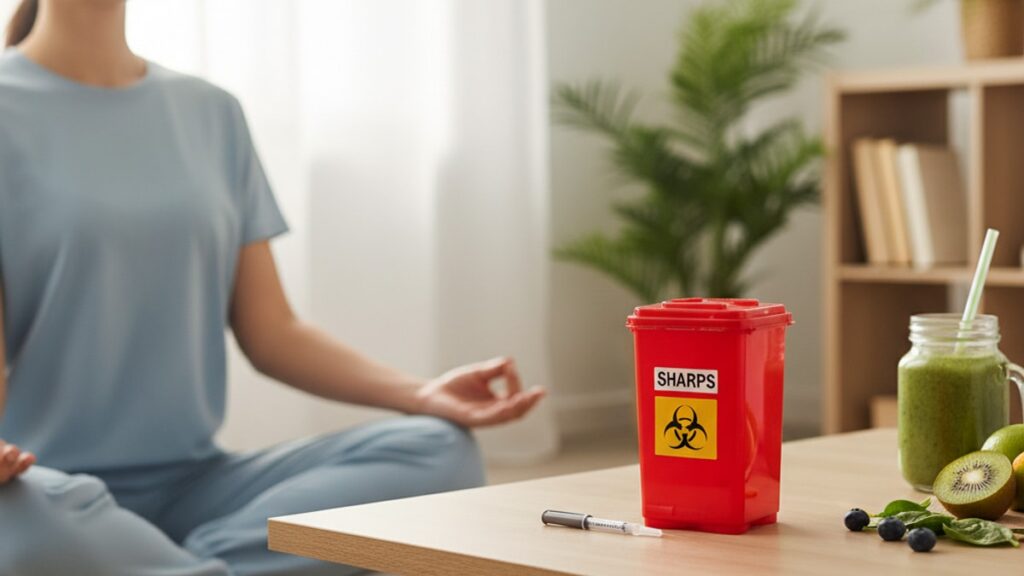
You've completed your research protocol with a high-purity peptide like our research-grade Tirzepatide. The data is promising, the work is done for the day. But now you’re left holding a used needle and syringe. What's next? It's a question that, honestly, doesn't get enough attention. The focus is always on the cutting-edge science—as it should be—but the follow-through is just as critical.
Here at Real Peptides, our commitment to precision doesn't end when a product leaves our lab. We're dedicated to supporting the entire research lifecycle, and that includes ensuring every component, down to the last needle, is handled with impeccable professionalism. Understanding how to dispose of tirzepatide needles isn't just a matter of tidiness; it’s a fundamental issue of safety, environmental responsibility, and legal compliance. It’s a crucial, non-negotiable element of any serious research endeavor. This guide is our definitive take for 2026 on doing it right.
Why This Is So Incredibly Important
Let's be blunt. Tossing a used needle in the trash is a catastrophic mistake waiting to happen. It's not just bad practice; it's dangerous. Our team has heard horror stories over the years, and they all stem from a simple lack of information on how to dispose of tirzepatide needles correctly. The risks are profound, touching on public health, environmental integrity, and even your own legal standing. You simply can't afford to get this wrong.
First and foremost is the risk of needlestick injuries. Sanitation workers, janitors, housekeepers, family members, or even pets can be accidentally pricked by a needle that was improperly discarded. These injuries can transmit serious infections. It’s a completely avoidable risk that carries devastating potential consequences. The core principle of any scientific work is to do no harm, and that principle extends far beyond the lab bench. Knowing how to dispose of tirzepatide needles is the first line of defense against these accidental injuries. Then there's the environmental impact. Medical waste, especially sharps, can pollute soil and water systems if not managed through designated channels. They don't biodegrade in a landfill. They just sit there, a perpetual hazard. Finally, there are the rules. Regulations around medical waste disposal are strict for a reason. Non-compliance can lead to significant fines and penalties. For any research professional, adhering to these standards is part of maintaining your credibility. It shows a commitment to the entire process, not just the exciting parts.
The Absolute Don'ts: Common Mistakes We See All The Time
Before we dive into the correct procedures, it’s crucial to highlight what not to do. Our experience shows that most errors come from a few common misconceptions. Getting clarity on how to dispose of tirzepatide needles means first eliminating these dangerous habits from your workflow.
Never, ever throw loose needles into the household trash. Not even if you try to recap them (which, by the way, is a leading cause of accidental needlesticks). Once a needle punctures a trash bag, it becomes a hidden threat to anyone who handles that bag down the line. It's a recipe for disaster. Along the same lines, don't put them in the recycling bin. Sharps are considered biohazardous waste, not recyclable material. They will contaminate the entire recycling stream, posing a risk to workers at the sorting facility and potentially causing expensive machinery damage. It's a huge problem. Flushing them is another absolute no. Needles can cause severe damage to plumbing systems and wastewater treatment facilities. They are not designed to be processed as sewage. We can't stress this enough: the toilet is not a disposal unit for medical sharps. This is a critical point in understanding how to dispose of tirzepatide needles properly. And finally, don’t use just any old container. A glass jar can shatter. A milk jug or soda bottle is made of thin plastic that can be easily punctured. The proper procedure demands a specific type of container designed for this exact purpose.
Your Step-by-Step Guide on How to Dispose of Tirzepatide Needles
Alright, now for the constructive part. The process isn't complicated, but it does require attention to detail. We've broken it down into a clear, repeatable workflow that aligns with best practices for 2026. Following these steps is the most reliable way to know how to dispose of tirzepatide needles with confidence.
Step 1: Immediate Containment is Key
The very moment you are finished with a needle, it must go directly into an appropriate sharps disposal container. Do not set it down on a counter. Do not try to recap it. The needle should go from its point of use immediately into a sealed, secure, and safe container. This single habit minimizes the window for accidents more than any other action. It's simple. It's effective. This is the foundational step for anyone serious about learning how to dispose of tirzepatide needles safely.
Step 2: Secure a Proper Sharps Container
You need a dedicated container. The gold standard is an FDA-cleared sharps container, which you can purchase at pharmacies or online. They are made of puncture-resistant plastic, have a leak-resistant design, and feature a secure lid to prevent spills. If an official container isn't immediately available, you can use a strong, heavy-duty plastic household container as a temporary measure. Think of a laundry detergent bottle or a bleach jug—something with thick, opaque walls that a needle cannot easily puncture. It must have a tight-fitting, screw-on lid. Clearly label it “Sharps Waste” or “Biohazard” with a permanent marker. This is a crucial distinction when considering how to dispose of tirzepatide needles without an official container.
Step 3: Keep Your Container Secure
Once you have your container, store it in a safe place, out of reach of children and pets. When it's about three-quarters (3/4) full, it's time to prepare it for final disposal. Don't overfill it. Overfilling makes it difficult to close the lid securely and increases the risk of punctures and spills. Once it’s full, screw the lid on tightly and reinforce it with heavy-duty tape (like duct tape) for extra security. This ensures the contents remain contained during transport. The proper method for how to dispose of tirzepatide needles involves securing the container long before it leaves your possession.
Step 4: Find a Disposal Location or Program
This is where local regulations come into play, and they can vary. You can't just leave your sealed container out for the regular trash collection. You need to find a designated collection site or program. Common options in 2026 include:
- Drop-off Collection Sites: Many pharmacies, hospitals, clinics, and health departments offer sharps disposal drop-off boxes. You can simply bring your sealed container to them. It's often a free service.
- Mail-Back Programs: This is an incredibly convenient option. You order a specialized sharps container that comes with a prepaid shipping box. When it's full, you seal it up and mail it to a licensed medical waste facility for proper destruction. This is often the simplest solution for how to dispose of tirzepatide needles correctly.
- Special Waste Pick-Up Services: In some areas, you can arrange for a special waste collection service to pick up the container directly from your home or lab. This may involve a fee but offers a high level of convenience.
Always call ahead to any potential drop-off site to confirm they accept sharps from the public and to ask about their specific procedures. This forethought is a hallmark of a professional approach to figuring out how to dispose of tirzepatide needles.
Choosing the Right Sharps Container: A Comparison
Not all containers are created equal. While an FDA-cleared container is always our top recommendation, we understand the need for practical alternatives. Knowing the pros and cons helps you make an informed decision. The challenge of how to dispose of tirzepatide needles often begins with selecting the right temporary storage.
| Container Type | Puncture Resistance | Compliance Level | Cost | Convenience | Best For… |
|---|---|---|---|---|---|
| FDA-Cleared Sharps Container | Highest | Fully Compliant | Low to Moderate | High | The gold standard for any regular, long-term research protocol. |
| Approved Household Container | Moderate to High | Varies by Location | Very Low (Free) | Low | An acceptable temporary solution if an official container is unavailable. Must be heavy-duty plastic (e.g., detergent bottle). |
| Mail-Back Kit | Highest | Fully Compliant | Moderate | Highest | Researchers seeking maximum convenience and a documented disposal trail. |
Our team strongly advises investing in an FDA-cleared container or a mail-back program. The peace of mind and guaranteed compliance are well worth the small cost. It removes all the guesswork from the process of how to dispose of tirzepatide needles and demonstrates a commitment to safety that reflects the high standards of your research. This is one area where you absolutely shouldn't cut corners.
A Deeper Look at 2026 Disposal Methods
Let's expand on the disposal options available today. The landscape has evolved, and in 2026, there are more accessible solutions than ever before. The best choice for you will depend on your location, volume, and personal preference. The core question of how to dispose of tirzepatide needles is ultimately answered by choosing one of these responsible pathways.
Mail-Back Programs: We're big fans of these programs for their sheer simplicity and reliability. Companies provide you with everything you need: the container, a shipping box with prepaid postage, and all the necessary tracking documentation. You fill it, seal it, and drop it off with the designated mail carrier. That's it. The waste is sent to a certified facility for disposal by incineration, which is the safest method. This creates a documented, compliant trail from start to finish. For researchers handling sensitive materials, this level of accountability is invaluable. It’s a seamless way to manage how to dispose of tirzepatide needles without having to locate a physical drop-off center.
Community Drop-Off Sites: This is a fantastic, often free, option. The key is to find them. A quick search online for “sharps disposal near me” or checking with your local public health department is the best starting point. Pharmacies (both large chains and local independents), hospitals, and even some fire stations or police precincts have secure drop-off kiosks. Remember to always call first. Don't just show up with a container. Confirm their hours, their policies, and what types of containers they accept. This method requires a bit more legwork but is highly effective for solving the problem of how to dispose of tirzepatide needles.
Household Hazardous Waste (HHW) Facilities: Many municipal waste management services have dedicated HHW facilities that accept a range of dangerous materials, including medical sharps. They might have specific collection days or permanent drop-off locations. Check your local government's website for details. This is a reliable and highly regulated option, ensuring that your used sharps are handled by trained professionals. This is a key resource when you need to know how to dispose of tirzepatide needles in bulk.
Traveling? Here’s How to Handle Disposal on the Go
Research doesn't always happen in a single, controlled environment. If your work requires travel, you need a plan for managing your used sharps. The principles remain the same, but the logistics change. The question of how to dispose of tirzepatide needles while traveling is a common one we hear from the research community.
First, invest in a small, portable travel sharps container. They are compact, durable, and designed to fit easily into luggage or a carry-on bag. Never pack loose needles. Always keep them in their secure travel container. Before you travel, do a little research on your destination. Are there known drop-off locations near where you'll be staying? If you're staying at a hotel, you can inquire with the front desk—many have procedures for handling medical waste for guests. However, the most foolproof method is to simply bring your sealed travel container back with you for disposal through your usual program at home. Don't leave it behind in a hotel trash can. Ever. Taking responsibility for your research materials, including their disposal, is part of the job, no matter where you are. This proactive approach is the only way to manage how to dispose of tirzepatide needles responsibly when you're away from your primary lab or home base.
Purity, Precision, and Professional Responsibility
At Real Peptides, our entire operation is built on a foundation of unflinching quality. From the small-batch synthesis of compounds like Tirzepatide to our rigorous third-party testing, every step is about ensuring purity and reliability for the research community. This mindset, this relentless focus on getting every detail right, has to extend to every aspect of the research process.
It’s why we care so much about this topic. The same precision required to reconstitute a peptide with Bacteriostatic Water is required to handle its disposal. It’s all part of the same professional continuum. A commitment to excellence in research is incomplete without a parallel commitment to safety and responsibility. When you [Explore High-Purity Research Peptides] from our full collection, you're not just buying a product; you're investing in a standard of quality that we believe should permeate everything you do. Knowing how to dispose of tirzepatide needles is a direct reflection of that professional standard.
This isn't just about following rules. It’s about embodying the principles of good science. It’s about protecting the community, respecting the environment, and upholding the integrity of the research field. It's about seeing the process through, from the most complex scientific discovery to the simple, vital act of safely clipping and containing a used needle. Your dedication to this final step is what closes the loop on a truly professional workflow. When you need to [Find the Right Peptide Tools for Your Lab], remember that a sharps container is one of the most important tools you'll own. The meticulous process of how to dispose of tirzepatide needles is as important as any other part of your protocol.
Frequently Asked Questions
Can I really use a laundry detergent bottle to dispose of tirzepatide needles?
▼
Yes, but only as an alternative if an FDA-cleared sharps container isn’t available. It must be a heavy-duty, puncture-resistant plastic bottle with a secure, screw-on cap. Be sure to label it clearly as ‘Sharps Waste’.
What do I do if my sharps container is completely full?
▼
Once your container is about three-quarters full, you should stop adding needles, securely seal the lid with tape, and dispose of it through a proper channel. Never overfill the container, as it poses a significant safety risk.
Is it legal to mail my used needles for disposal?
▼
Yes, it is perfectly legal and safe when done through an approved mail-back program. These programs provide you with compliant containers and packaging to ensure they are handled correctly by the postal service and disposal facility.
Can I bring my sharps container to any pharmacy?
▼
Not all pharmacies accept sharps containers. It’s critical to call your local pharmacy ahead of time to confirm if they have a disposal kiosk and to understand their specific policies before you go.
What is the most significant risk of improper needle disposal?
▼
The single greatest risk is an accidental needlestick injury. These injuries can transmit bloodborne diseases and pose a serious threat to sanitation workers, family members, and anyone else who might come into contact with the waste.
How do I find a sharps disposal location near me in 2026?
▼
We recommend checking with your local health department’s website, searching online for ‘sharps drop-off locations,’ or calling local hospitals and pharmacies. Many communities have accessible and free options available.
Do I need to separate the needle from the syringe before disposal?
▼
No, you should not try to remove, bend, or break the needle from the syringe. The entire unit should be placed directly into the sharps container immediately after use to minimize handling and risk.
Are there any needle-clipping devices that are safe to use?
▼
Yes, there are FDA-cleared needle clippers that can shear off the needle, allowing it to be stored in the device itself. The remaining plastic syringe can then be disposed of in the regular trash, but check local regulations first.
What makes a container ‘puncture-resistant’?
▼
A puncture-resistant container is made from a thick, rigid plastic that a needle cannot easily poke through. This is why thin-walled containers like water bottles or milk jugs are considered unsafe and should never be used.
Is it okay to recap the needle before putting it in the container?
▼
We strongly advise against recapping needles, as this is a common cause of accidental sticks. The safest practice for anyone learning how to dispose of tirzepatide needles is to move the needle directly from use into the sharps container without recapping.
What happens to the needles after they are collected?
▼
In most certified disposal facilities, sharps waste is destroyed through high-temperature incineration. This process completely sterilizes and eliminates the waste, converting it into inert ash, which is the safest final outcome.











