


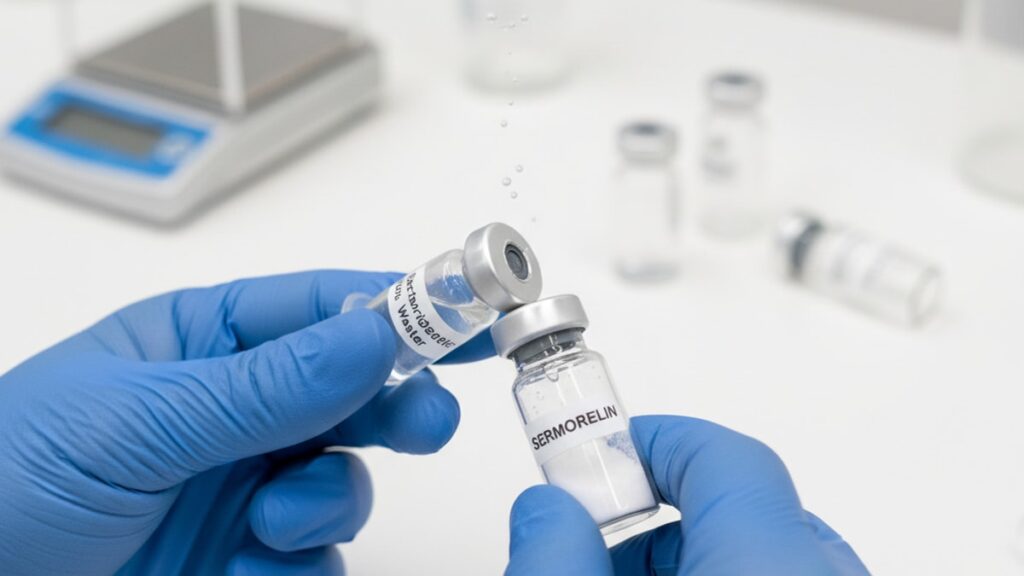
In the exacting world of biological research, precision isn't just a preference; it's an absolute, non-negotiable requirement. Especially when working with delicate compounds like peptides, every step, from storage to handling, impacts the integrity and efficacy of your study. We've seen firsthand how even minor deviations can skew results, leading to wasted time and resources. That's why understanding exactly how to reconstitute Sermorelin is paramount.
Here at Real Peptides, our team has dedicated years to ensuring the highest purity in every batch, from our specialized Sermorelin to complex blends like CJC-1295 + Ipamorelin (5mg/5mg). We understand the critical nature of proper preparation, and we're here to guide you through the process of reconstitution with the same meticulous attention to detail that goes into our small-batch synthesis. This isn't just about mixing; it's about preserving the very essence of the compound for meaningful research outcomes. Anyway, let's get into the specifics of how to reconstitute Sermorelin correctly, ensuring your research starts on the firmest possible footing in 2026.
Why Understanding Sermorelin is Crucial Before Reconstitution
Before we dive into the 'how-to,' let's briefly touch upon what Sermorelin is and why its careful handling is so critical. Sermorelin is a growth hormone-releasing hormone (GHRH) analogue, a synthetic peptide that stimulates the pituitary gland to produce and release growth hormone (GH). Its structure is delicate, a lyophilized powder, which means it's freeze-dried to maintain stability during storage and transport. This powdered form is incredibly stable, yes, but once you introduce a liquid – the reconstitution process – you're initiating a chemical transformation. It's a significant, sometimes dramatic shift, and doing it wrong can compromise the peptide's integrity, rendering it ineffective for your research objectives.
Our experience shows that researchers sometimes underestimate this initial step. They rush it, perhaps, or use subpar materials. But think about it: if you're investing in high-purity Sermorelin for your Hormone & Gh Research, doesn't it make sense to protect that investment through impeccable reconstitution? That's precisely why mastering how to reconstitute Sermorelin is so vital. It's the gatekeeper to successful experimentation.
The Absolute Essentials: What You'll Need to Reconstitute Sermorelin
Starting with the right tools is half the battle, honestly. You wouldn't build a house with a screwdriver and a hammer, right? The same principle applies here. When you're ready to learn how to reconstitute Sermorelin, gather everything meticulously. Our team recommends compiling all your supplies before you even uncap the vial. This minimizes contamination risks and ensures a smooth, uninterrupted process.
Here's your indispensable checklist:
- Your Sermorelin Vial: Obviously! Ensure it's sealed, undamaged, and from a trusted source like Real Peptides, where we prioritize small-batch synthesis and exact amino-acid sequencing.
- Sterile Diluent: This is critical. You'll need Bacteriostatic Reconstitution Water (bac). Bacteriostatic water contains a small percentage of benzyl alcohol, which inhibits bacterial growth, extending the shelf life of your reconstituted peptide. We can't stress this enough: do not use plain sterile water for long-term storage, as it lacks the antimicrobial properties needed.
- Sterile Syringes: Typically, insulin syringes with fixed needles (e.g., 0.5ml or 1ml capacity, 29-31 gauge) are ideal for drawing and mixing. They're precise. You'll need one for drawing the diluent and another for any subsequent transfers, depending on your protocol.
- Alcohol Wipes: For sterilizing vial tops and injection sites. Cleanliness is paramount.
- Sterile Gloves: Essential for maintaining an aseptic environment and preventing contamination from your hands.
- Sharps Container: A safe place to dispose of used needles and syringes. Safety first, always.
Having these items laid out and ready makes the actual process of how to reconstitute Sermorelin significantly less prone to error. It's about creating a controlled environment, after all.
Step-by-Step Guide: How to Reconstitute Sermorelin Flawlessly
Alright, let's get down to the brass tacks. This is where the magic (or meticulous science, rather) happens. Follow these steps precisely to ensure optimal reconstitution of your Sermorelin peptide.
-
Hygiene is Non-Negotiable: Begin by thoroughly washing your hands with soap and water. Then, put on your sterile gloves. Your work area should be clean, clutter-free, and ideally, sterilized with an alcohol solution.
-
Prepare the Vials: Take your Sermorelin vial and your Bacteriostatic Reconstitution Water (bac) vial. Using an alcohol wipe, firmly swab the rubber stopper on top of both vials. Let them air dry completely. Don't blow on them; that defeats the purpose.
-
Draw the Diluent: Uncap a sterile syringe. Draw air into the syringe equal to the amount of bacteriostatic water you intend to add to the Sermorelin. Now, insert the needle through the center of the rubber stopper on the bacteriostatic water vial. Invert the vial and slowly inject the air. This equalizes the pressure, making it easier to draw the liquid. Then, draw the precise amount of Bacteriostatic Reconstitution Water (bac) needed into the syringe. Remove any air bubbles by gently flicking the syringe and expelling the air.
-
Introduce Diluent to Sermorelin: This is a delicate part of how to reconstitute Sermorelin. Carefully insert the needle of the syringe containing the bacteriostatic water into the Sermorelin vial. Angle the needle so that the water flows down the inside wall of the vial, not directly onto the freeze-dried powder. Inject the water slowly and steadily. You'll see the powder dissolve, but resist the urge to shake it vigorously.
-
Gentle Mixing is Key: Once the bacteriostatic water is in, remove the syringe. Do not shake the vial. Seriously, don't. Aggressive shaking can damage the delicate peptide structure. Instead, gently roll the vial between your palms for a few minutes, or allow it to sit undisturbed in the refrigerator for 15-30 minutes. The Sermorelin will dissolve completely, resulting in a clear solution. This passive dissolution is crucial for maintaining peptide integrity. This subtle approach defines the proper technique for how to reconstitute Sermorelin effectively.
-
Inspection and Storage: Once fully dissolved, inspect the solution for any particulate matter. It should be perfectly clear. If everything looks good, your Sermorelin is now reconstituted and ready for use in your research protocols. Immediately store it in the refrigerator, as we'll discuss next.
Dilution Ratios and Calculations: Getting It Exactly Right
Understanding dilution ratios is foundational to accurately determining your dosage. It's often where researchers face the most uncertainty when learning how to reconstitute Sermorelin. Our team has seen countless questions regarding this, and it's simpler than you might think, but precision is paramount. Let's break it down.
Most Sermorelin vials come in concentrations like 2mg, 5mg, or 10mg. The amount of Bacteriostatic Reconstitution Water (bac) you add determines the final concentration of the solution. Our rule of thumb? Always aim for a concentration that makes your desired research dose easy to measure with an insulin syringe.
Example Calculation:
Let's say you have a 5mg vial of Sermorelin and you want a concentration where 10 units (0.1ml) on an insulin syringe equals 500mcg (0.5mg) of Sermorelin. Simple arithmetic helps you figure out how to reconstitute Sermorelin to this specific strength.
- You have 5mg (5000mcg) of Sermorelin.
- You want 500mcg per 0.1ml.
- To find total volume: (Total mg in vial / Desired mg per 0.1ml) * 0.1ml
- (5000mcg / 500mcg) * 0.1ml = 10 * 0.1ml = 1ml
So, you would add 1ml of bacteriostatic water to your 5mg Sermorelin vial. This calculation ensures that when you draw 0.1ml (10 units) from the reconstituted solution, you are indeed getting 500mcg of Sermorelin. We recommend writing down your calculations and labelling your vials meticulously. This isn't just a good practice; it's a critical, non-negotiable element of rigorous research, especially when learning how to reconstitute Sermorelin for precise studies.
Comparison Table: Common Diluents for Peptide Reconstitution
While we strongly advocate for Bacteriostatic Reconstitution Water (bac) when learning how to reconstitute Sermorelin for longevity, it's helpful to understand the landscape of diluents. Each has its specific applications and limitations.
| Diluent Type | Key Component | Primary Use Case | Recommended for Sermorelin? | Shelf Life (Reconstituted) |
|---|---|---|---|---|
| Bacteriostatic Water (BW) | Sterile Water + Benzyl Alcohol (0.9%) | Peptides requiring extended storage | Yes, highly recommended | Up to 3-4 weeks |
| Sterile Water for Injection | Purified, sterile water | Immediate use, short-term stability | No, not for extended storage | 24-72 hours |
| Saline (0.9% NaCl) | Sterile Water + Sodium Chloride | Some specific peptide types, IV solutions | Generally not recommended | 24-72 hours |
| Acetic Acid 0.6% | Sterile Water + Acetic Acid | Peptides with solubility issues | No | Varies |
| Glycine | Sterile Water + Glycine | Specific research peptides | No | Varies |
As you can see, for the long-term stability needed in most research protocols after you how to reconstitute Sermorelin, bacteriostatic water remains the gold standard. Our commitment to providing premium research materials extends to offering the right accompanying tools, ensuring you can always Find the Right Peptide Tools for Your Lab.
Common Pitfalls and How to Avoid Them When Reconstituting Sermorelin
Even with the best intentions, mistakes can happen. It's an unfortunate reality, but recognizing potential pitfalls is a crucial part of truly understanding how to reconstitute Sermorelin without error. Our team has observed certain patterns over the years, and we've compiled this list to help you sidestep these common, often frustrating, issues.
- Aggressive Shaking: We already touched on this, but it bears repeating. Shaking the vial vigorously is a catastrophic error. The force can denature the delicate peptide bonds, rendering your expensive Sermorelin useless. Always opt for gentle rolling or passive dissolution.
- Using the Wrong Diluent: As our table highlights, not all waters are created equal. Using plain sterile water for a peptide like Sermorelin, especially if you plan to use it over several days or weeks, is a recipe for bacterial growth and degradation. Always use Bacteriostatic Reconstitution Water (bac).
- Contamination: This is the silent killer of research integrity. Unwashed hands, unsterilized surfaces, touching the needle, or not wiping vial tops with alcohol are all avenues for contamination. Remember, maintaining an aseptic environment is crucial when learning how to reconstitute Sermorelin and handle any research-grade peptide.
- Incorrect Dilution: Miscalculating the amount of diluent can lead to an incorrect final concentration. This means your perceived dosage will be wrong, invalidating your research results. Always double-check your math, and consider having a colleague verify it if you're feeling unsure. Precision here is paramount.
- Rushing the Process: When you're dealing with sensitive compounds, patience is a virtue. Rushing can lead to dropped vials, improper mixing, or errors in measurement. Take your time. Dedicate a specific block of uninterrupted time to the reconstitution process. Honestly, though, this isn't a task to multitask.
Avoiding these common missteps will dramatically increase the reliability and accuracy of your research outcomes. It's not just about knowing how to reconstitute Sermorelin, but how to do it without compromise.
Storage and Longevity of Reconstituted Sermorelin
Once you've mastered how to reconstitute Sermorelin, the next critical step is proper storage. The stability of your peptide solution after reconstitution is finite, and incorrect storage can accelerate degradation, wasting your valuable research material. Our collective experience underscores the importance of a strict storage protocol.
Reconstituted Sermorelin should always be stored in the refrigerator, typically at temperatures between 2°C to 8°C (36°F to 46°F). Keep it in the original vial, away from direct light. Light exposure, especially UV, can degrade peptides. While Bacteriostatic Reconstitution Water (bac) helps, it doesn't make the peptide immortal.
Generally, reconstituted Sermorelin remains stable for up to 3-4 weeks when stored correctly. However, this is a guideline, not a guarantee. The exact stability can vary based on factors like ambient temperature fluctuations, how often the vial is accessed, and even the specific batch. We recommend monitoring your solutions. If you notice any cloudiness, discoloration, or particulate matter that wasn't present immediately after reconstitution, it's a strong indicator of degradation. In such cases, it's safer to discard the solution and reconstitute a fresh vial. This conservative approach protects the integrity of your research. This is another facet of truly understanding how to reconstitute Sermorelin and manage it post-preparation.
Why Precision Matters: The Real Peptides Difference
At Real Peptides, our entire ethos revolves around precision and quality. We believe that groundbreaking research demands uncompromising purity from its foundational components. That's why we meticulously craft every peptide through small-batch synthesis with exact amino-acid sequencing. Our rigorous quality control processes guarantee purity, consistency, and lab reliability for every product, whether it's Thymosin Alpha 1 for immune research or BPC-157 10mg for regenerative studies.
When you're engaged in complex Hormone & Gh Research, the last thing you need is uncertainty about your starting materials. Our commitment extends beyond the product itself; we aim to empower researchers with the knowledge and tools needed for success. Understanding how to reconstitute Sermorelin isn't just a procedural step; it's an extension of that commitment to quality. A peptide's potential can only be realized if it's handled correctly at every stage.
In 2026, as research continues to push boundaries, the demand for reliable, high-purity peptides will only intensify. We're here to meet that demand, offering not just products, but a partnership in scientific discovery. We encourage you to Explore High-Purity Research Peptides on our website and see the difference that true dedication to quality makes. Every detail matters, from synthesis to the final, gentle swirl of diluent when you how to reconstitute Sermorelin.
We've found that researchers who prioritize proper handling, from acquisition to administration, consistently achieve more reliable and reproducible results. It's a holistic approach, where the quality of the peptide meets the quality of its preparation. Discover Premium Peptides for Research, and let's advance science together, one precisely reconstituted vial at a time. This approach (which we've refined over years) delivers real results. We mean this sincerely: your research deserves nothing less than the best, handled with the utmost care.
FAQs About Reconstituting Sermorelin
Frequently Asked Questions
What is the best diluent for Sermorelin?
▼
We consistently recommend using Bacteriostatic Water (BW) for Sermorelin reconstitution. Its benzyl alcohol content helps inhibit bacterial growth, significantly extending the shelf life of the reconstituted peptide solution in refrigerated storage.
Can I use plain sterile water instead of bacteriostatic water?
▼
While sterile water can be used for immediate reconstitution, we strongly advise against it for long-term storage. Without the bacteriostatic agent, the solution becomes highly susceptible to bacterial contamination, making it unsuitable for extended use.
How much bacteriostatic water should I add to my Sermorelin vial?
▼
The amount depends on the milligram strength of your Sermorelin vial and your desired final concentration. Use our calculation example in the guide to determine the precise volume needed to achieve an easily measurable dose per unit of volume.
How do I ensure the Sermorelin dissolves completely without damaging it?
▼
After adding the diluent slowly down the side of the vial, avoid shaking. Instead, gently roll the vial between your palms or let it sit in the refrigerator for 15-30 minutes. This passive dissolution method preserves the peptide’s delicate structure.
How long does reconstituted Sermorelin last?
▼
When properly reconstituted with bacteriostatic water and stored refrigerated between 2°C to 8°C, Sermorelin typically maintains stability for up to 3-4 weeks. Always monitor for signs of degradation like cloudiness or discoloration.
What kind of syringes should I use for reconstitution?
▼
Insulin syringes, usually 0.5ml or 1ml capacity with a fine gauge needle (29-31G), are ideal. Their small volume and precise markings make accurate measurement and delicate handling much easier.
What are the signs that my reconstituted Sermorelin has gone bad?
▼
Look for any changes in the solution’s appearance. If it becomes cloudy, discolored, or if you notice visible particles that weren’t there initially, it’s a strong indicator of degradation or contamination. Discard it immediately.
Is it important to sterilize my workspace before reconstitution?
▼
Absolutely. Maintaining an aseptic environment is crucial to prevent contamination. Wash your hands thoroughly, wear sterile gloves, and wipe down all surfaces and vial stoppers with alcohol wipes before you begin the process.
Can I pre-mix a large batch of Sermorelin for future use?
▼
We don’t recommend pre-mixing excessively large batches. While bacteriostatic water extends shelf life, peptides are most stable in their lyophilized form. Reconstitute only what you anticipate using within a 3-4 week timeframe to ensure optimal potency.
What if I accidentally shake the Sermorelin vial vigorously during reconstitution?
▼
Unfortunately, aggressive shaking can denature the peptide’s delicate structure, potentially rendering it ineffective. While some activity might remain, its integrity for accurate research could be compromised. We generally advise discarding the vial if this occurs.
Why is exact amino-acid sequencing important for peptides?
▼
Exact amino-acid sequencing, which our small-batch synthesis prioritizes, ensures the peptide’s intended biological function and purity. Any deviation can lead to an inactive or improperly functioning compound, compromising research results.
Where can I find high-purity Sermorelin for my research?
▼
Real Peptides specializes in providing high-purity, research-grade peptides like Sermorelin. We ensure every product meets stringent quality standards for reliability in your studies. You can [Explore High-Purity Research Peptides](https://www.realpeptides.co/shop/) on our website.
Do I need to store the lyophilized Sermorelin vial in the refrigerator before reconstitution?
▼
Yes, lyophilized (freeze-dried) Sermorelin vials should typically be stored in a cool, dry place, often refrigerated, to maintain their stability over the long term. Always refer to the specific storage instructions provided with your peptide.
Are there any specific safety precautions I should take when handling reconstituted Sermorelin?
▼
Beyond maintaining sterility, always handle reconstituted peptides with care. Dispose of all sharps safely in a designated container and ensure the product is clearly labeled and stored out of reach of unauthorized personnel. Safety is a collective responsibility in the lab.
