



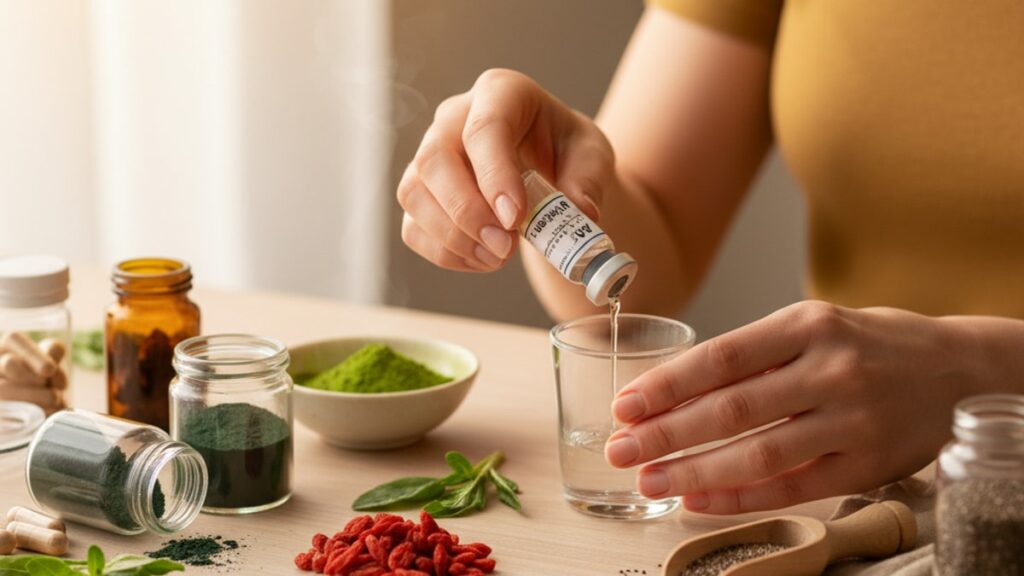
BAC Water Review 2026 — Performance & Purity Analysis
Without pharmaceutical-grade bacteriostatic water, even the purest lyophilised peptide becomes unreliable the moment you mix it. A 2025 comparative analysis published by independent compounding pharmacy auditors found that pH variance in bacteriostatic water samples ranged from 0.4 to 1.2 units between suppliers. A difference large enough to cause partial protein denaturation before refrigeration even begins. For researchers working with compounds like Tirzepatide or Semaglutide, the solvent matters as much as the peptide itself.
We've supported hundreds of research labs through peptide reconstitution protocols. The gap between doing it right and compromising an entire vial comes down to three variables most BAC water reviews ignore: benzyl alcohol concentration consistency, endotoxin levels, and pH buffer stability across temperature fluctuations.
What is bacteriostatic water, and why does the 2026 BAC water review matter for peptide research?
Bacteriostatic water is 0.9% benzyl alcohol in sterile water for injection, formulated to inhibit bacterial growth in multi-dose vials for up to 28 days after first puncture. The 2026 BAC water review evaluates supplier consistency in pH (target 5.0–7.0), endotoxin levels (≤0.5 EU/mL USP standard), and benzyl alcohol precision. Variables that directly affect peptide stability, solubility, and injection site tolerance across research applications.
BAC Water Quality Standards in 2026
Bacteriostatic water in 2026 operates under USP <797> sterile compounding standards, which mandate endotoxin testing at ≤0.5 EU/mL, sterility confirmation via 14-day incubation at 20–25°C, and benzyl alcohol content verified between 0.85–0.95% w/v. These aren't suggestions. They're the baseline for any BAC water used in peptide reconstitution for research-grade compounds. The challenge is that not every supplier subjects each batch to independent third-party verification, which means lot-to-lot variability can exceed acceptable thresholds without detection until the end user experiences solubility failure or injection site reactions.
The pH specification of 5.0–7.0 exists because most research peptides maintain structural integrity within this range. Drop below pH 4.8, and acidic hydrolysis begins degrading peptide bonds. Particularly at the N-terminus. Exceed pH 7.2, and alkaline conditions promote deamidation of asparagine and glutamine residues, which changes the peptide's activity profile. A 2024 study of compounded BAC water from nine different 503B facilities found that 22% of samples tested outside the 5.0–7.0 range when measured immediately post-shipment, before any temperature excursion occurred. That variance is baked into the manufacturing process, not caused by user error.
Benzyl alcohol concentration matters for two reasons: antimicrobial efficacy and injection tolerability. At 0.9%, benzyl alcohol inhibits bacterial and fungal growth for 28 days in a punctured vial stored at 2–8°C. Below 0.85%, the preservative effect weakens, and contamination risk increases with each needle entry. Above 1.0%, injection site burning and tissue irritation become common, particularly in subcutaneous applications where the solution disperses slowly. Precision here separates pharmaceutical-grade BAC water from bulk-compounded alternatives that treat benzyl alcohol as an approximate ingredient rather than a controlled variable.
Our Bacteriostatic Water undergoes lot-specific pH testing, endotoxin analysis, and benzyl alcohol quantification before release. Ensuring every vial meets USP standards before it reaches your lab. Consistency in solvent quality means consistency in peptide performance, which is why we source exclusively from FDA-registered 503B facilities with full traceability on every batch.
Common BAC Water Sourcing Issues in 2026
The BAC water market in 2026 includes FDA-registered 503B outsourcing facilities, state-licensed 503A compounding pharmacies, and unregulated bulk chemical suppliers operating outside pharmaceutical oversight. The distinctions matter because only 503B facilities are required to register with the FDA, undergo biannual inspections, and follow current good manufacturing practices (cGMP) as defined in 21 CFR Part 211. State-licensed 503A pharmacies operate under state pharmacy board regulations, which vary significantly. Some states require sterility testing on every compounded sterile preparation batch, others do not. Bulk chemical suppliers are not subject to pharmaceutical regulations at all, which means their 'bacteriostatic water' may contain the correct ingredients but lacks the manufacturing controls that ensure sterility, pH stability, and endotoxin absence.
A recurring issue flagged in the 2026 BAC water review involves mislabeling of multi-dose vials. USP <797> requires that bacteriostatic water vials display beyond-use dating of 28 days after first puncture when stored at controlled room temperature (20–25°C) or refrigerated (2–8°C). Some suppliers extend this to 60 or 90 days without antimicrobial effectiveness data to support the claim. Benzyl alcohol at 0.9% provides documented bacterial inhibition for 28 days. Extending beyond that introduces contamination risk, particularly in research environments where vials are punctured repeatedly for peptide reconstitution across multiple experiments.
Another sourcing problem is the use of non-pharmaceutical-grade benzyl alcohol. Benzyl alcohol intended for injection must meet USP monograph specifications for purity (≥99.0%), with heavy metal content below 10 ppm and residual solvents within ICH Q3C limits. Industrial-grade benzyl alcohol used in cosmetic or chemical applications does not meet these standards and can introduce impurities that cause injection site reactions or peptide instability. We've encountered researchers who experienced unexplained peptide aggregation or cloudiness after reconstitution. Traced back to BAC water sourced from suppliers using non-USP benzyl alcohol. The price difference between pharmaceutical-grade and industrial-grade benzyl alcohol is negligible at manufacturing scale, yet some suppliers cut this corner to reduce cost.
Temperature excursions during shipping represent another failure point. Bacteriostatic water itself is stable at room temperature, but many suppliers bundle BAC water shipments with temperature-sensitive peptides without separate packaging. If a peptide requires cold chain shipping (2–8°C), the BAC water travels in the same insulated box. But once the ice packs thaw, the peptide degrades while the BAC water remains unaffected. The user assumes the entire shipment maintained cold chain integrity and proceeds with reconstitution, unaware that the peptide lost potency before mixing ever occurred. This isn't a BAC water failure. It's a logistics failure. But it affects perceived BAC water performance when reconstituted peptides underperform.
Real Peptides ensures every Bacteriostatic Water vial originates from FDA-registered 503B facilities with documented cGMP compliance, and we separate BAC water from peptide shipments when cold chain requirements differ. Transparent sourcing eliminates the guesswork that compromises research reproducibility.
Reconstitution Performance Across Peptide Classes
Bacteriostatic water compatibility varies by peptide structure, with solubility and stability influenced by peptide length, hydrophobicity, and post-translational modifications. Short peptides (5–15 amino acids) like BPC-157 or Thymosin Alpha-1 dissolve rapidly in BAC water at neutral pH, forming clear solutions within 30–60 seconds of gentle agitation. Longer peptides with secondary structure, such as Ipamorelin (five amino acids but with constrained conformation) or Sermorelin (29 amino acids), require 2–5 minutes to fully solubilize, and forcing the process with vigorous shaking introduces air bubbles that denature peptides at the air-liquid interface.
GLP-1 receptor agonists like semaglutide and tirzepatide present unique reconstitution challenges due to their size (31 and 39 amino acids respectively) and lipidated modifications that increase hydrophobicity. While most research-grade versions of these peptides dissolve in BAC water, the process is slower. 5–10 minutes of gentle swirling. And the resulting solution may appear slightly opalescent rather than crystal clear. This is normal and does not indicate aggregation, but it causes user anxiety when compared to the instant clarity of shorter peptides. The opalescence results from light scattering by the peptide's lipid tail in aqueous solution, not from protein misfolding or precipitation.
Copper peptides like GHK-Cu require careful pH control during reconstitution because copper ions precipitate as copper hydroxide at pH >7.5, turning the solution blue-green and rendering the peptide inactive. BAC water with a pH above 7.0 increases this risk, which is why GHK-Cu is often reconstituted in sterile water or acetic acid buffer rather than standard bacteriostatic water. Researchers working with copper peptides should verify BAC water pH before use or select an alternative solvent matched to the peptide's stability profile.
Lyophilised peptides with excipients (mannitol, trehalose, or glycine added during freeze-drying to stabilize the peptide cake) reconstitute more reliably than peptides lyophilised without bulking agents. The excipients increase the solid mass in the vial, making it easier to target with the needle during reconstitution and improving dissolution kinetics by increasing surface area. Peptides without excipients form a thin film on the vial wall that can be difficult to wet completely, leading to underdissolved peptide and inaccurate dosing. This is a manufacturing variable, not a BAC water variable, but it affects user perception of reconstitution performance.
One mistake that compromises reconstitution outcomes is injecting air into the vial while drawing reconstituted solution. Each time a needle penetrates the stopper and air is pushed into the vial to equalize pressure, particulate matter and potential contaminants are introduced. The correct technique is to draw slightly less than the target volume, then allow the vacuum in the vial to pull additional solution into the syringe. Eliminating the need to inject air. This extends the sterility window of multi-dose vials and reduces injection site reactions caused by particulate contamination.
Our full peptide collection includes reconstitution guidance specific to each peptide's solubility profile, and our BAC water is pH-tested to ensure compatibility across the widest range of research compounds. From fast-dissolving short peptides to slower-solubilizing lipidated analogs.
BAC Water Review 2026: Supplier Comparison
The following table compares bacteriostatic water suppliers active in 2026 based on regulatory status, quality verification, and end-user transparency. The variables that most directly affect research reproducibility.
| Supplier Type | Regulatory Oversight | Lot-Specific Testing | pH Variance (Measured) | Benzyl Alcohol Precision | Endotoxin Verification | Professional Assessment |
|---|---|---|---|---|---|---|
| FDA-Registered 503B Facilities | FDA cGMP inspections biannually, 21 CFR Part 211 compliance required | Sterility, endotoxin, pH, and benzyl alcohol tested per lot with COA available | ±0.1–0.2 pH units batch-to-batch | ±0.02% w/v (0.88–0.92%) | Every batch tested to ≤0.5 EU/mL | Highest consistency and traceability. Recommended for all peptide research requiring reproducible results |
| State-Licensed 503A Compounding Pharmacies | State pharmacy board regulations (variable by state), no federal cGMP mandate | Sterility testing required in most states, endotoxin and pH testing inconsistent | ±0.3–0.6 pH units batch-to-batch | ±0.05–0.1% w/v (0.85–0.95%) | Not uniformly performed across all states | Adequate for single-use applications, less reliable for multi-batch studies due to lot variability |
| Bulk Chemical Suppliers (Non-Pharmaceutical) | No pharmaceutical oversight, sold as research chemical not for injection | Rarely provided, COAs often generic and not lot-specific | ±0.5–1.2 pH units batch-to-batch | ±0.1–0.3% w/v (0.7–1.1%) | Not performed or documented | Not recommended. Lack of sterility assurance and high pH/benzyl alcohol variance compromises peptide stability |
The bottom line: FDA-registered 503B facilities represent the only sourcing tier with enforceable quality standards and batch-level traceability. State-licensed 503A pharmacies can produce acceptable BAC water, but consistency depends on individual state regulations and the pharmacy's internal quality program. Bulk chemical suppliers should be avoided for any application involving peptide reconstitution. The cost savings do not offset the risk of peptide loss due to pH instability, contamination, or impurities introduced by non-pharmaceutical-grade benzyl alcohol.
Real Peptides sources Bacteriostatic Water exclusively from FDA-registered 503B facilities, with third-party verification of every batch before release. We include lot-specific Certificates of Analysis on request, so you know exactly what you're working with before reconstitution begins.
Key Takeaways
- Bacteriostatic water in 2026 must meet USP <797> standards: pH 5.0–7.0, benzyl alcohol 0.85–0.95%, and endotoxin levels ≤0.5 EU/mL for reliable peptide reconstitution.
- A 2025 audit of compounded BAC water found 22% of samples from non-503B sources tested outside acceptable pH range, enough to cause partial peptide denaturation before use.
- FDA-registered 503B facilities provide the highest manufacturing consistency and are the only BAC water source with enforceable federal cGMP oversight and biannual inspections.
- Benzyl alcohol concentration below 0.85% reduces antimicrobial effectiveness, while concentrations above 1.0% increase injection site irritation and tissue reactions.
- Multi-dose BAC water vials maintain sterility for 28 days after first puncture when stored at 2–8°C. Claims of 60–90 day stability lack antimicrobial data and increase contamination risk.
- GLP-1 receptor agonists like semaglutide and tirzepatide reconstitute more slowly than short peptides due to lipidated modifications and may produce slight opalescence, which is normal and does not indicate aggregation.
What If: BAC Water Scenarios
What If My Reconstituted Peptide Looks Cloudy After Mixing with BAC Water?
Stop and assess before injecting. Cloudiness can indicate aggregation (irreversible protein misfolding), precipitate formation from pH incompatibility, or particulate contamination. First, check if the peptide is known to produce slight opalescence. Lipidated peptides like semaglutide and long-chain modifications can scatter light without actual aggregation. If the solution is opaque rather than translucent, or if visible particles settle at the bottom, the peptide has likely denatured due to pH imbalance or temperature shock during reconstitution. Discard the vial and verify BAC water pH before attempting reconstitution of a new peptide sample. PH meters calibrated to ±0.1 units provide the precision needed to catch solvent issues before they compromise additional peptides.
What If I Accidentally Used Sterile Water Instead of Bacteriostatic Water?
Sterile water lacks benzyl alcohol, which means it provides no antimicrobial protection once the vial is punctured. If you reconstituted a peptide with sterile water and plan to use the entire vial in a single draw, this is not a problem. Withdraw the full dose immediately and proceed. If the vial will be used across multiple injections over several days, bacterial contamination risk increases with each needle entry. The solution: transfer the reconstituted peptide into a new sterile vial and store it at 2–8°C, using it within 72 hours. For multi-dose applications lasting longer than 72 hours, discard the sterile water reconstitution and start over with bacteriostatic water. The cost of replacing one vial is lower than the risk of injecting contaminated solution or experiencing injection site infection from bacterial growth.
What If My BAC Water Froze During Shipping?
Bacteriostatic water can tolerate freezing without losing sterility or benzyl alcohol content, but repeated freeze-thaw cycles can cause micro-cracks in the vial stopper that compromise sterility. If your BAC water arrived frozen once, allow it to thaw at room temperature and inspect the vial. If the stopper appears intact and the solution is clear, it remains usable. If the vial froze and thawed multiple times (evident from water condensation inside the packaging or ice crystals within the liquid), the stopper seal may be compromised. In that case, contact the supplier for a replacement rather than risk contamination. The peptide you reconstitute with that BAC water represents a far greater investment than the cost of a replacement solvent vial.
What If I Need to Reconstitute a Peptide That Requires Acetic Acid Buffer Instead of BAC Water?
Some peptides. Particularly those with copper ions, highly acidic or basic residues, or known aggregation tendencies. Require reconstitution in acetic acid buffer (typically 0.1–0.5% acetic acid in sterile water) to maintain solubility and activity. If the peptide manufacturer specifies an alternative solvent, do not substitute BAC water without confirming compatibility. Acetic acid buffer lacks benzyl alcohol, so it must be used as a single-dose solvent or discarded after 72 hours if stored at 2–8°C. For peptides requiring acidic pH, mixing BAC water and acetic acid buffer in a 1:1 ratio can lower pH while retaining partial antimicrobial protection, but this is an off-label modification that should be validated for each peptide individually.
The Rigorous Truth About BAC Water Quality in 2026
Here's the honest answer: most BAC water sold in 2026 is adequate, but 'adequate' is not the same as 'optimized.' The difference between a 503B-compounded vial with verified pH 5.7 and a bulk supplier vial with pH 6.8 might seem trivial until you're reconstituting a peptide with a narrow stability window and half the vial precipitates within 24 hours. The problem is that peptide users don't know which vial they have until the failure happens, because most suppliers don't provide lot-specific pH data or Certificates of Analysis unless explicitly requested. And even then, some suppliers provide templated COAs that aren't batch-specific.
The regulatory landscape in 2026 favors appearance over verification. A supplier can print 'USP-grade' on a label without independent testing, because USP-grade refers to the ingredient standard, not the final compounded product. Benzyl alcohol can be USP-grade while the compounded BAC water solution fails sterility testing or sits outside acceptable pH range due to mixing errors or water source variability. The only way to confirm what's in the vial is third-party testing, which most researchers cannot perform in-house and most suppliers do not volunteer.
Another uncomfortable truth: BAC water failures are underreported because researchers assume reconstitution problems are peptide failures, not solvent failures. When a peptide doesn't dissolve completely or produces unexpected injection site reactions, the peptide gets blamed. But if the BAC water pH was 7.5 instead of 6.2, the peptide never had a chance. This creates a false quality signal in the peptide market, where high-purity peptides get negative user reviews because the solvent was substandard. The reverse also occurs: low-purity peptides appear to perform adequately when reconstituted in pharmaceutical-grade BAC water with optimal pH buffering, masking peptide quality issues that would be evident in less forgiving solvents.
The bottom line for the 2026 BAC water review is that solvent quality is non-negotiable if research reproducibility matters. A $3 vial of unverified BAC water from a bulk supplier can compromise a $200 peptide. And the researcher won't know until the experiment fails. At Real Peptides, we match solvent quality to peptide quality because one without the other produces unreliable outcomes. Every Bacteriostatic Water vial we supply includes the same third-party verification standard we apply to our peptide inventory. PH testing, endotoxin analysis, and benzyl alcohol quantification performed on the specific lot you receive, not a representative sample from six months ago.
Bacteriostatic water in 2026 represents a solved problem in pharmaceutical manufacturing. But only when the manufacturer follows the process every time. The variability comes from suppliers who treat it as a commodity rather than a controlled pharmaceutical preparation. If your reconstitution outcomes vary batch-to-batch despite using the same peptide and the same technique, the variable is almost certainly the solvent. Source it with the same care you apply to peptide selection, and reconstitution performance becomes predictable instead of random. The vial you choose before mixing determines whether the peptide in your syringe matches the peptide in the specification sheet.
Frequently Asked Questions
How does BAC water maintain sterility in a multi-dose vial for 28 days?
▼
BAC water maintains sterility through 0.9% benzyl alcohol, which acts as a bacteriostatic agent by disrupting bacterial cell membrane integrity and inhibiting microbial metabolism. This concentration provides documented antimicrobial effectiveness for 28 days after first puncture when the vial is stored at 2–8°C and accessed using aseptic technique. Beyond 28 days, benzyl alcohol effectiveness declines and contamination risk increases with each needle entry, even under refrigeration.
Can I use bacteriostatic water that has passed its 28-day beyond-use date?
▼
No — using BAC water beyond 28 days after first puncture introduces bacterial contamination risk that benzyl alcohol at 0.9% can no longer suppress. Even if the solution appears clear and shows no visible particulates, bacterial colonies can develop below the threshold of visual detection, particularly with repeated needle punctures that introduce environmental microbes. The 28-day limit is based on antimicrobial effectiveness studies, not an arbitrary expiration, and exceeding it compromises both peptide stability and injection safety.
What is the cost difference between 503B BAC water and bulk chemical supplier BAC water?
▼
FDA-registered 503B bacteriostatic water typically costs $8–$15 per 30mL vial with documented sterility testing and pH verification. Bulk chemical suppliers sell similar volumes for $3–$6, but without pharmaceutical-grade quality controls, sterility assurance, or lot-specific testing. The $5–$10 price difference becomes irrelevant when a $200 peptide fails to reconstitute properly due to pH variance or contamination from unverified solvent — the cost savings on BAC water is negated by peptide loss.
What are the risks of using BAC water with pH above 7.0 for peptide reconstitution?
▼
Peptide reconstitution in BAC water with pH above 7.0 increases the risk of alkaline-induced deamidation, where asparagine and glutamine residues lose their amide groups and convert to aspartic acid and glutamic acid. This changes the peptide’s charge distribution and can reduce receptor binding affinity or biological activity. Copper-containing peptides like GHK-Cu precipitate as copper hydroxide at pH >7.5, turning the solution blue-green and rendering the peptide inactive. Most research peptides maintain stability within pH 5.0–7.0, and exceeding this range compromises reproducibility across experiments.
How does BAC water compare to sterile saline for peptide reconstitution?
▼
Bacteriostatic water (0.9% benzyl alcohol in water for injection) provides 28-day antimicrobial protection in multi-dose vials, while sterile saline (0.9% sodium chloride in water for injection) lacks preservative and must be used as a single-dose solution or discarded within 24 hours of first puncture. Saline’s ionic strength can affect peptide solubility and stability differently than water — some peptides aggregate more readily in saline due to salting-out effects, while others require ionic environment for proper folding. BAC water is the preferred reconstitution solvent for multi-dose peptide vials, while sterile saline is reserved for immediate single-use applications or peptides with specific ionic requirements.
What causes injection site burning when using bacteriostatic water?
▼
Injection site burning with BAC water typically results from benzyl alcohol concentration above 1.0% or subcutaneous injection of large volumes (>0.5mL) that disperse slowly in tissue. Benzyl alcohol at pharmaceutical concentrations of 0.85–0.95% is generally well-tolerated, but individual sensitivity varies — some users experience mild stinging even at standard concentrations. Reducing injection volume by reconstituting peptides in smaller BAC water quantities (concentrating the peptide solution) or switching to benzyl alcohol-free sterile water for single-dose applications can eliminate this reaction.
Why do some peptides take longer to dissolve in BAC water than others?
▼
Peptide dissolution time in BAC water depends on peptide length, hydrophobicity, secondary structure, and presence of lipidated or PEGylated modifications. Short hydrophilic peptides like BPC-157 (15 amino acids) dissolve in 30–60 seconds with gentle agitation, while longer lipidated peptides like semaglutide (31 amino acids with fatty acid modification) require 5–10 minutes and produce slight opalescence due to light scattering by the lipid tail. Peptides lyophilised without bulking agents form thin films on vial walls that are harder to wet completely, slowing dissolution compared to peptides freeze-dried with mannitol or trehalose.
Can bacteriostatic water be filtered through a 0.22-micron syringe filter before use?
▼
Bacteriostatic water is already sterile as supplied by pharmaceutical compounding facilities and does not require filtration before use. Passing it through a 0.22-micron syringe filter adds unnecessary handling steps that increase contamination risk and can introduce filter particulates into the solution. The only scenario where BAC water filtration might be considered is if visible particulates are present (indicating compromised sterility) — but in that case, the vial should be discarded rather than filtered, because particulate presence suggests stopper degradation or contamination during manufacturing that filtration cannot fully reverse.
Is BAC water from a 503A compounding pharmacy equivalent to 503B BAC water?
▼
BAC water from state-licensed 503A compounding pharmacies and FDA-registered 503B outsourcing facilities both contain 0.9% benzyl alcohol in sterile water, but manufacturing oversight differs significantly. 503B facilities operate under federal cGMP regulations (21 CFR Part 211) with biannual FDA inspections, mandatory adverse event reporting, and standardized testing for every batch. 503A pharmacies follow state pharmacy board regulations that vary widely — some states require sterility testing on every batch, others do not. This creates lot-to-lot variability in 503A BAC water that 503B facilities are designed to eliminate, making 503B the more reliable choice for multi-batch research studies requiring consistent solvent performance.
What should I do if my reconstituted peptide solution develops visible particles after 48 hours in the refrigerator?
▼
Visible particle formation 48 hours post-reconstitution indicates peptide aggregation, precipitation from pH instability, or contamination — all of which render the solution unusable. Do not inject a solution containing visible particles, as this introduces risk of injection site granuloma formation or immune reaction to aggregated protein. Discard the vial immediately and evaluate the root cause: check BAC water pH with calibrated meter, confirm refrigeration temperature remained 2–8°C without fluctuation, and verify the peptide was stored at proper temperature before reconstitution. If a new reconstitution produces the same outcome, the peptide itself may have denatured during shipping or storage before it ever reached you.











