




Tirzepatide vs Zepbound Comparison — Same Drug or Not?
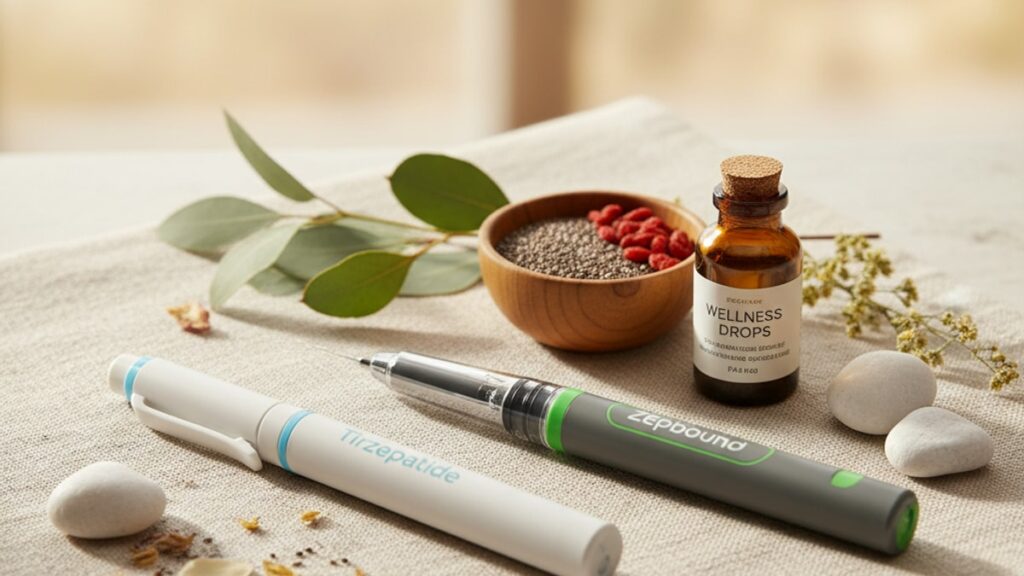
Here's what most tirzepatide vs Zepbound comparison articles won't tell you upfront: they're the same molecule. Zepbound is simply the brand name Eli Lilly assigned to tirzepatide when the FDA approved it specifically for chronic weight management in adults with obesity or overweight plus weight-related comorbidities. Tirzepatide. The generic name for the active pharmaceutical ingredient. Is also sold as Mounjaro when prescribed for type 2 diabetes management. The confusion isn't accidental. Brand differentiation creates pricing tiers and insurance coverage pathways that have nothing to do with the compound's pharmacology and everything to do with market positioning.
Our team has guided researchers and clinicians through peptide sourcing decisions for years. The gap between understanding brand names versus active molecules matters more than most people realize. Especially when cost, insurance coverage, and compounding pharmacy access all hinge on which label appears on the prescription.
What is the difference between tirzepatide and Zepbound?
Tirzepatide is the generic name for a dual GIP/GLP-1 receptor agonist developed by Eli Lilly. Zepbound is the FDA-approved brand name for tirzepatide when prescribed specifically for chronic weight management, approved in November 2023. Mounjaro is the same molecule approved in May 2022 for type 2 diabetes. The active compound, mechanism of action, pharmacokinetics, and side effect profile are identical across all three names. Only the FDA indication and insurance billing codes differ.
The real question isn't 'tirzepatide vs Zepbound'. It's understanding why the same molecule carries different labels and how that affects access, cost, and prescribing patterns. This article covers the FDA approval timeline differences, dosing protocol overlaps, cost structure comparisons, compounding pharmacy legality under current shortage designations, and what patients actually experience when switching between branded and compounded formulations.
How Tirzepatide and Zepbound Differ in FDA Approval and Indication
Tirzepatide received its first FDA approval as Mounjaro on May 13, 2022, for improving glycemic control in adults with type 2 diabetes as an adjunct to diet and exercise. The pivotal SURPASS clinical trial program demonstrated A1C reductions of up to 2.58% from baseline and secondary weight loss outcomes averaging 15–22% body weight reduction depending on dose. Eighteen months later, on November 8, 2023, the FDA approved the same molecule under the brand name Zepbound specifically for chronic weight management in adults with a BMI ≥30 kg/m² or ≥27 kg/m² with at least one weight-related comorbidity. The SURMOUNT trial series supported this approval, showing mean body weight reductions of 15–22.5% over 72 weeks.
The regulatory separation creates two billing pathways. Mounjaro falls under diabetes drug coverage with stricter prior authorization requirements tied to HbA1c thresholds and metformin failure documentation. Zepbound enters as an obesity medication, which many insurance plans exclude entirely or require separate obesity drug riders to cover. This is why patients with both diabetes and obesity often find Mounjaro easier to access through insurance despite Zepbound being the indication-matched product for weight management.
Off-label prescribing blurs these lines in practice. Physicians prescribe Mounjaro for weight loss and Zepbound for glycemic control regularly. The molecule doesn't know which label it's wearing. What matters legally is the prescriber's clinical justification and the pharmacy dispensing the correct branded product as written. Compounded tirzepatide, prepared by FDA-registered 503B facilities, sidesteps brand distinctions entirely by dispensing the base molecule without brand-specific packaging or indication labeling. Real Peptides supplies research-grade tirzepatide synthesized to the same molecular specifications as branded formulations, offering labs and researchers access to high-purity active compound outside the branded pharmaceutical supply chain.
Dosing Protocols and Titration Schedules for Both Formulations
Both Mounjaro and Zepbound follow identical dose escalation schedules because they're administering the same molecule at the same concentrations. The FDA-approved titration starts at 2.5mg subcutaneously once weekly for four weeks, then increases to 5mg weekly. Further dose increases to 7.5mg, 10mg, 12.5mg, and a maximum of 15mg occur at four-week intervals based on patient tolerance and clinical response. The slow titration exists to mitigate GI side effects. Nausea, vomiting, diarrhea. Which occur in 30–50% of patients during dose escalation as GLP-1 receptor density in the gut adjusts to sustained agonist stimulation.
Compounded tirzepatide preparations typically mirror this schedule, though prescribers have more flexibility to customize dose increments or hold at intermediate doses longer if side effects are persistent. The pharmacokinetic half-life of tirzepatide is approximately five days regardless of brand or compounded source, meaning steady-state plasma concentrations are reached after four to five weekly injections at any given dose. This long half-life allows once-weekly dosing and explains why missing a single injection doesn't immediately eliminate therapeutic effect. Plasma levels decay slowly over 7–10 days.
Patients switching between Mounjaro, Zepbound, or compounded tirzepatide at equivalent doses experience pharmacologically identical effects. The molecule binding to GIP and GLP-1 receptors in the hypothalamus, pancreas, and gut doesn't change based on brand label. What does change is delivery device. Branded products come in pre-filled auto-injector pens calibrated to specific doses, while compounded tirzepatide requires manual syringe draw from multi-dose vials. This introduces user technique variability that doesn't exist with pre-measured pens, but the active compound reaching systemic circulation remains chemically identical when dosed correctly.
Cost Structure and Insurance Coverage Realities Across Branded and Compounded Options
Branded Mounjaro and Zepbound list prices exceed $1,000 per month without insurance. Approximately $1,350–$1,400 for a four-week supply depending on dose and pharmacy markup. Manufacturer copay cards from Eli Lilly can reduce out-of-pocket costs to $25 per month for commercially insured patients, but these cards explicitly exclude government insurance (Medicare, Medicaid, Tricare) and patients paying cash. Insurance coverage remains the primary cost barrier. Diabetes medications like Mounjaro receive broader formulary inclusion than obesity drugs like Zepbound, which many plans categorize as lifestyle medications and exclude entirely from coverage.
Compounded tirzepatide pricing averages $250–$450 per month depending on dose, prepared by FDA-registered 503B outsourcing facilities under current tirzepatide shortage designations. The FDA added tirzepatide to the drug shortage list in late 2022 due to manufacturing capacity constraints at Eli Lilly, making compounded versions legally permissible under Section 503B of the Federal Food, Drug, and Cosmetic Act. Compounded formulations do not carry the same FDA approval as finished drug products. They undergo facility-level oversight but not batch-by-batch potency verification that branded pharmaceuticals require. This creates a traceability gap: if a compounded batch is impure or under-dosed, there's no formal recall mechanism equivalent to branded drug recalls.
For researchers and labs requiring high-purity tirzepatide for in vitro or preclinical work, peptide suppliers like Real Peptides provide lyophilized tirzepatide synthesized to ≥98% purity with third-party testing documentation. Research-grade peptides aren't FDA-approved for human use but serve critical roles in mechanistic studies, receptor binding assays, and pharmacokinetic modeling where branded pharmaceutical-grade material would be cost-prohibitive. Our experience shows labs prioritizing peptide sourcing for GLP-1 and GIP pathway research benefit from suppliers offering small-batch synthesis with exact amino acid sequencing and documented stability testing.
Tirzepatide vs Zepbound Comparison — Clinical Outcomes and Real-World Efficacy
| Feature | Mounjaro (Tirzepatide for T2D) | Zepbound (Tirzepatide for Weight Loss) | Compounded Tirzepatide | Professional Assessment |
|---|---|---|---|---|
| Active Molecule | Tirzepatide (dual GIP/GLP-1 agonist) | Tirzepatide (dual GIP/GLP-1 agonist) | Tirzepatide (dual GIP/GLP-1 agonist) | Identical pharmacology across all three |
| FDA Approval | May 2022 for type 2 diabetes | November 2023 for chronic weight management | Not FDA-approved as finished drug product | Brand differentiation creates insurance pathways, not clinical differences |
| Dosing Range | 2.5mg–15mg weekly, titrated every 4 weeks | 2.5mg–15mg weekly, titrated every 4 weeks | 2.5mg–15mg weekly, customizable titration | Protocols are interchangeable. Molecule dictates dosing, not brand |
| Mean Weight Loss (72 weeks) | 15–22% body weight (SURPASS secondary endpoint) | 15–22.5% body weight (SURMOUNT primary endpoint) | Clinical outcomes mirror branded when dosed equivalently | Efficacy is molecule-dependent, not brand-dependent |
| Cost (uninsured, per month) | $1,350–$1,400 list price | $1,350–$1,400 list price | $250–$450 depending on dose | Compounded versions cost 70–85% less without insurance |
| Insurance Coverage Pattern | Broader coverage under diabetes drug tiers | Frequently excluded or requires obesity rider | Not billed to insurance. Cash pay only | Mounjaro more likely to be covered despite off-label weight loss use |
| Delivery Method | Pre-filled auto-injector pen (single-dose) | Pre-filled auto-injector pen (single-dose) | Multi-dose vial requiring manual syringe draw | Pens reduce dosing errors but cost significantly more |
Key Takeaways
- Tirzepatide is the generic name for the active molecule sold as both Mounjaro (for type 2 diabetes) and Zepbound (for chronic weight management). The compound, mechanism, and pharmacokinetics are identical across all brand names.
- FDA approval dates and indication labels create separate insurance billing pathways, making Mounjaro easier to access through diabetes drug coverage despite being the same molecule as Zepbound.
- Compounded tirzepatide costs 70–85% less than branded options and remains legally available during the ongoing FDA-designated drug shortage, though it lacks the batch-level oversight that branded pharmaceuticals receive.
- Dose escalation protocols for branded and compounded tirzepatide are interchangeable. The 2.5mg starting dose titrated to 15mg maximum over 20–24 weeks applies regardless of formulation source.
- Research-grade tirzepatide from suppliers like Real Peptides serves labs conducting GLP-1 and GIP receptor studies where pharmaceutical-grade branded material would be prohibitively expensive.
- Clinical outcomes in weight loss and glycemic control depend on the molecule reaching target receptors, not the brand label on the packaging. Patients switching between Mounjaro, Zepbound, or compounded tirzepatide at equivalent doses experience pharmacologically identical effects.
What If: Tirzepatide vs Zepbound Comparison Scenarios
What If My Insurance Covers Mounjaro but Not Zepbound — Can I Use It for Weight Loss?
Yes, if your prescriber documents a clinical rationale. Off-label prescribing is legal and common. Mounjaro prescribed for weight management in patients without diabetes happens regularly when Zepbound isn't covered. The molecule is identical, so therapeutic outcomes won't differ. Your prescriber writes the indication as chronic weight management on the prescription, the pharmacy dispenses Mounjaro, and insurance processes it under diabetes drug coverage tiers if prior authorization criteria are met. Some payers audit off-label use and deny claims, but appeal success rates are high when documented appropriately.
What If I Start on Branded Zepbound and Need to Switch to Compounded Tirzepatide Due to Cost?
Maintain the same dose you were taking on Zepbound when transitioning to compounded tirzepatide. The molecule is identical, so no re-titration is needed. Expect a delivery method change: compounded formulations come in multi-dose vials requiring manual syringe draw instead of pre-filled pens. Storage requirements remain the same. Refrigerate at 2–8°C and use within 28 days after reconstitution if supplied as lyophilized powder. Clinical effects, side effect profile, and efficacy shouldn't change if the compounded product is accurately dosed and stored correctly.
What If I'm Conducting Research on GLP-1 Pathways — Is Pharmaceutical-Grade Tirzepatide Required?
No. Research-grade peptides synthesized to ≥98% purity with documented amino acid sequencing are sufficient for in vitro receptor binding studies, pharmacokinetic modeling, and preclinical work. Pharmaceutical-grade tirzepatide (Mounjaro, Zepbound) undergoes FDA-mandated manufacturing controls designed for human therapeutic use, not laboratory research. Suppliers like Real Peptides provide high-purity tirzepatide with third-party testing verification at a fraction of pharmaceutical pricing, making mechanistic GIP/GLP-1 studies economically feasible without sacrificing molecular integrity.
The Blunt Truth About Tirzepatide vs Zepbound Comparison
Here's the honest answer: comparing tirzepatide vs Zepbound is comparing a molecule to its own brand name. It's like asking whether ibuprofen differs from Advil. The active ingredient is identical, but marketing, packaging, and pricing create the illusion of distinct products. Zepbound exists because Eli Lilly wanted a dedicated obesity-focused brand separate from Mounjaro's diabetes association, which allows differential insurance billing and opens a second revenue stream from the same compound. Clinically, there's no difference. Pharmacologically, there's no difference. What differs is which prior authorization form your doctor fills out and whether your insurance plan categorizes the prescription under diabetes drugs or obesity drugs. The tirzepatide molecule binding to GIP and GLP-1 receptors in your hypothalamus doesn't care which label is printed on the box.
Compounded tirzepatide proves this point. Remove the brand entirely and patients still lose 15–20% body weight when dosed correctly. The mechanism works because the peptide structure activates the right receptors, not because Eli Lilly's logo appears on the pen.
Why Peptide Purity Matters More Than Brand Names for Research Applications
Laboratories studying incretin hormone pathways need tirzepatide that meets exact molecular specifications. The amino acid sequence must be correct, disulfide bonds must form properly, and contaminant peptides must be absent. Brand name relevance drops to zero in this context. What matters is synthesis quality, purity percentage (≥98% by HPLC), and third-party verification that the peptide matches its intended structure. Research-grade tirzepatide from Real Peptides undergoes small-batch synthesis with mass spectrometry confirmation and is supplied lyophilized to preserve stability during shipping and storage.
Pharmaceutical-grade branded tirzepatide includes excipients, preservatives, and stabilizers optimized for subcutaneous injection in humans. These additives can interfere with in vitro assays or complicate downstream analysis in mechanistic studies. Research-grade formulations supply the base peptide without pharmaceutical additives, giving researchers control over buffer composition, solvent choice, and experimental conditions. For receptor binding studies, signaling pathway analysis, or structural biology work, this flexibility matters more than FDA approval status. Our experience working with peptide researchers shows that molecular integrity and documented purity outweigh brand recognition when the application is scientific inquiry rather than clinical use.
The tirzepatide vs Zepbound comparison collapses entirely in the research context. Both are pharmaceutical products designed for patient use, not laboratory investigation. Researchers source the molecule itself, not the branded finished product, because the science depends on the peptide sequence, not the delivery device or insurance billing code.
The market will keep generating new brand names as patents expire and biosimilars enter. What won't change is the underlying pharmacology. Tirzepatide's dual GIP/GLP-1 agonism produces weight loss and glycemic improvement because of how the molecule interacts with incretin receptors, not because of what name appears on the prescription label. If cost, access, or research application is driving your decision, focus on molecular purity and dosing accuracy. The brand distinction is a commercial artifact, not a clinical one.
Frequently Asked Questions
Is tirzepatide the same as Zepbound?
▼
Yes. Tirzepatide is the generic name for the active molecule, and Zepbound is the brand name Eli Lilly uses when that molecule is prescribed for chronic weight management. The compound, mechanism of action, pharmacokinetics, and side effect profile are identical. Mounjaro is the same molecule branded for type 2 diabetes treatment.
Can I switch from Zepbound to compounded tirzepatide without losing efficacy?
▼
Yes, if you maintain the same dose and the compounded formulation is accurately prepared. The active molecule is identical, so therapeutic outcomes shouldn’t change. The primary difference is delivery method — compounded versions require manual syringe draw from vials instead of pre-filled pens. Storage and injection technique matter more than brand label for maintaining efficacy.
Why does Mounjaro cost the same as Zepbound if they’re the same drug?
▼
Brand differentiation allows Eli Lilly to maintain premium pricing across both diabetes and obesity markets. List prices for Mounjaro and Zepbound are nearly identical ($1,350–$1,400 per month) despite being the same molecule. Insurance coverage pathways differ based on indication, which creates access barriers unrelated to manufacturing cost or clinical efficacy.
Is compounded tirzepatide legal to prescribe and dispense?
▼
Yes, under current FDA drug shortage designations. The FDA added tirzepatide to the shortage list in late 2022, which permits FDA-registered 503B facilities to compound the medication legally. Compounded tirzepatide is not FDA-approved as a finished drug product but is prepared under state pharmacy board oversight and federal facility registration requirements.
What happens if I use Mounjaro for weight loss instead of Zepbound?
▼
Clinically, nothing changes — the molecule is identical. Off-label prescribing of Mounjaro for weight management is legal and common, especially when insurance covers Mounjaro under diabetes drug tiers but excludes Zepbound as an obesity medication. Your prescriber documents chronic weight management as the indication, and the pharmacy dispenses Mounjaro accordingly.
Does branded tirzepatide work better than compounded versions?
▼
Not if the compounded version is accurately dosed and stored correctly. The active molecule is identical, so receptor binding, gastric emptying effects, and appetite suppression mechanisms function the same way. The primary difference is traceability — branded products undergo batch-level FDA oversight that compounded formulations don’t receive, creating a quality assurance gap if a compounded batch is impure or under-dosed.
Can researchers use Mounjaro or Zepbound for lab studies on GLP-1 pathways?
▼
They can, but it’s cost-prohibitive and includes pharmaceutical excipients that may interfere with in vitro assays. Research-grade tirzepatide synthesized to ≥98% purity without additives is the standard for mechanistic studies, receptor binding experiments, and pharmacokinetic modeling. Suppliers like Real Peptides provide high-purity tirzepatide suitable for laboratory use at a fraction of pharmaceutical pricing.
How long does tirzepatide stay in your system after stopping?
▼
Tirzepatide has a half-life of approximately five days, meaning it takes four to five half-lives — roughly 20–25 days — for the medication to be more than 95% cleared from plasma. Receptor occupancy and therapeutic effects decline gradually over this period, so appetite suppression and glycemic control don’t disappear immediately upon stopping.
What is the maximum dose of tirzepatide approved by the FDA?
▼
The FDA-approved maximum dose for both Mounjaro and Zepbound is 15mg administered subcutaneously once weekly. Clinical trials tested doses up to 15mg with dose-dependent weight loss and A1C reductions, but higher doses increased gastrointestinal side effects without proportional efficacy gains. Most patients reach therapeutic goals at 10–12.5mg weekly.
Can I take tirzepatide if I do not have diabetes or obesity?
▼
FDA approval restricts tirzepatide to type 2 diabetes (Mounjaro) or chronic weight management with BMI ≥30 or ≥27 with comorbidities (Zepbound). Off-label use for metabolic optimization or preventive purposes occurs but lacks clinical trial data supporting safety and efficacy in non-indicated populations. Prescribers evaluate risk-benefit ratios individually based on patient-specific factors.











