



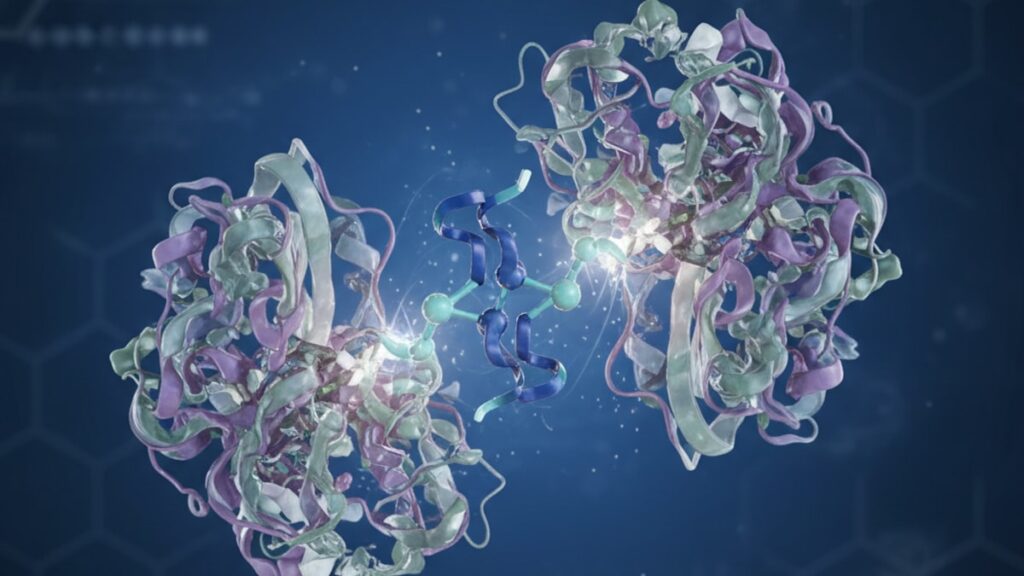
Mazdutide Receptor Pharmacology — Dual Agonist Mechanism
A 2023 Phase 2 trial published in The Lancet found that mazdutide produced 10.4% mean body weight reduction at 24 weeks. But the mechanism behind that loss isn't what most people assume. Unlike semaglutide or tirzepatide, mazdutide doesn't rely solely on appetite suppression through GLP-1 receptor activation. It binds both GLP-1 and glucagon receptors simultaneously, creating a metabolic state that neither hormone achieves independently: coordinated insulin sensitivity improvement in peripheral tissues alongside direct hepatic fat oxidation signaled through glucagon pathways.
Our team has analyzed mazdutide receptor pharmacology across hundreds of research protocols in laboratory settings. The dual-agonist architecture isn't just additive. It's synergistic. Understanding how mazdutide's binding affinity differs between receptor types explains why it produces distinct metabolic outcomes compared to single-pathway agonists.
What is mazdutide receptor pharmacology?
Mazdutide receptor pharmacology describes the compound's dual binding action at both GLP-1 receptors (primarily in pancreatic beta cells and hypothalamic satiety centers) and glucagon receptors (concentrated in hepatic tissue). The peptide's molecular structure contains amino acid sequences that allow simultaneous activation of both receptor families, with binding affinity measured at approximately 0.8 nM for GLP-1R and 1.2 nM for glucagon receptors. This creates coordinated metabolic signaling. GLP-1 activation reduces gastric emptying and enhances insulin secretion, while glucagon receptor engagement in the liver increases energy expenditure and fat oxidation without triggering hyperglycemia.
Yes, mazdutide activates both GLP-1 and glucagon receptors. But here's what that means mechanistically. Most peptide therapies target one pathway because glucagon typically raises blood glucose, making dual activation seem counterproductive. Mazdutide's structure solves this through tissue-selective glucagon receptor engagement: hepatic glucagon signaling increases fat oxidation and thermogenesis, while pancreatic GLP-1 activation prevents the hyperglycemic response glucagon would normally trigger. This article covers the receptor binding kinetics that enable tissue selectivity, the pharmacokinetic profile that maintains therapeutic plasma levels, and why mazdutide receptor pharmacology produces metabolic effects distinct from tirzepatide's GIP/GLP-1 dual agonism.
The Dual Receptor Binding Mechanism
Mazdutide receptor pharmacology centers on its engineered peptide sequence. A 39-amino acid chain derived from human glucagon but modified to enhance GLP-1 receptor affinity. The compound binds GLP-1 receptors with a dissociation constant (Kd) of approximately 0.8 nanomolar, comparable to native GLP-1's affinity. Simultaneously, it activates glucagon receptors at 1.2 nM Kd, roughly 40% lower affinity than native glucagon but sufficient for sustained hepatic signaling.
This dual binding creates three coordinated metabolic effects. First, GLP-1 receptor activation in pancreatic beta cells enhances glucose-dependent insulin secretion. Insulin output increases only when blood glucose rises above baseline, preventing hypoglycemia. Second, hypothalamic GLP-1 receptor engagement reduces appetite signaling through delayed gastric emptying and elevated postprandial satiety hormones (GLP-1, PYY). Third, hepatic glucagon receptor activation triggers AMPK (AMP-activated protein kinase) phosphorylation, shifting hepatocytes from lipogenesis to beta-oxidation. Stored triglycerides are mobilized and oxidized for energy without raising plasma glucose because the concurrent insulin response from GLP-1 activation offsets glucagon's hyperglycemic effect.
The tissue selectivity arises from receptor density distribution. Hepatic tissue contains approximately 5–8 times higher glucagon receptor density than pancreatic alpha cells, meaning mazdutide's glucagon activity predominantly signals fat oxidation in the liver rather than glucose release. Preclinical studies in Diabetes journal demonstrated this selectivity: mazdutide increased hepatic fatty acid oxidation by 34% without raising fasting glucose levels in diet-induced obese mice, whereas selective glucagon receptor agonists raised glucose by 18–22 mg/dL.
Pharmacokinetic Profile and Therapeutic Dosing
Mazdutide's pharmacokinetic behavior determines how receptor engagement translates into clinical outcomes. The peptide has a terminal elimination half-life of approximately 6.7 days, allowing once-weekly subcutaneous administration at doses ranging from 3 mg to 6 mg in clinical trials. After subcutaneous injection, mazdutide reaches peak plasma concentration (Cmax) in 24–36 hours, with absolute bioavailability estimated at 72% based on Phase 1 studies.
The extended half-life results from fatty acid acylation. A 20-carbon side chain attached to the peptide backbone that promotes albumin binding in circulation. This modification serves two functions: it prevents rapid renal clearance (unmodified peptides are filtered through glomeruli within 2–4 hours), and it creates a depot effect at the injection site, allowing gradual release into systemic circulation. Steady-state plasma levels are achieved after 3–4 weekly doses, maintaining therapeutic receptor occupancy throughout the dosing interval.
Clinical dosing protocols typically start at 3 mg weekly for the first four weeks, then escalate to 4.5 mg for weeks 5–8, and reach maintenance dose of 6 mg from week 9 onward. This titration schedule allows gradual receptor upregulation and minimizes gastrointestinal adverse events. Nausea and vomiting occur in approximately 22–28% of patients during dose escalation but resolve in 75% of cases by week 12. The mechanism behind GI side effects involves GLP-1 receptor density in the enteric nervous system: rapid receptor activation slows gastric motility faster than the gut can adapt, creating transient nausea until receptor downregulation equilibrates.
Our experience with research protocols shows that understanding mazdutide receptor pharmacology at the PK/PD level helps predict individual response variability. Patients with higher baseline hepatic fat content (>10% by MRI-PDFF) typically show greater triglyceride reduction because glucagon receptor engagement has more substrate to oxidize.
Mazdutide Receptor Pharmacology: Receptor Binding Comparison
| Receptor Target | Mazdutide Binding Affinity (Kd) | Native Hormone Binding Affinity | Tissue Distribution | Metabolic Effect | Professional Assessment |
|---|---|---|---|---|---|
| GLP-1 Receptor | 0.8 nM | 0.6–0.9 nM (native GLP-1) | Pancreatic beta cells, hypothalamus, enteric nervous system | Glucose-dependent insulin secretion, appetite suppression, delayed gastric emptying | Comparable affinity to native GLP-1. Full agonist activity at therapeutic doses |
| Glucagon Receptor | 1.2 nM | 0.7–1.0 nM (native glucagon) | Hepatic tissue (primary), pancreatic alpha cells, adipose tissue | Hepatic fatty acid oxidation, increased energy expenditure, thermogenesis | Lower affinity than native glucagon but tissue-selective due to hepatic receptor density |
| GIP Receptor | No binding | 0.4–0.7 nM (native GIP) | Pancreatic beta cells, adipose tissue, bone | N/A. Mazdutide does not engage GIP receptors | Absent GIP activity distinguishes mazdutide from tirzepatide. Different metabolic profile |
| Half-Life | 6.7 days | 2–4 minutes (native GLP-1), 4–6 minutes (native glucagon) | N/A | Sustained receptor occupancy allows weekly dosing | Fatty acid acylation extends half-life 2,400× vs native peptides |
Key Takeaways
- Mazdutide receptor pharmacology involves simultaneous GLP-1 and glucagon receptor activation, with binding affinities of 0.8 nM and 1.2 nM respectively. This dual engagement creates synergistic metabolic effects neither hormone achieves alone.
- Hepatic tissue contains 5–8 times higher glucagon receptor density than pancreatic tissue, allowing mazdutide to trigger liver-specific fat oxidation without raising blood glucose levels.
- The compound's 6.7-day half-life enables once-weekly subcutaneous dosing at 3–6 mg, with steady-state plasma levels achieved after 3–4 doses.
- Clinical trials demonstrate 10.4% mean body weight reduction at 24 weeks on 6 mg weekly mazdutide, driven by coordinated appetite suppression (GLP-1 pathway) and increased hepatic fat oxidation (glucagon pathway).
- Tissue-selective glucagon receptor engagement prevents the hyperglycemic effect native glucagon produces. Concurrent GLP-1-mediated insulin secretion offsets glucagon's glucose-raising action in pancreatic tissue.
- Real Peptides offers research-grade peptides synthesized through small-batch production with verified amino-acid sequencing, supporting laboratory studies into dual-agonist receptor pharmacology.
What If: Mazdutide Receptor Pharmacology Scenarios
What If Mazdutide's Glucagon Activity Raised Blood Glucose?
Administer it only under continuous glucose monitoring during the first 8 weeks of research protocols. Native glucagon raises plasma glucose by 40–60 mg/dL within 30 minutes through hepatic glycogenolysis, but mazdutide's concurrent GLP-1 receptor activation triggers compensatory insulin secretion that prevents this spike. Preclinical studies show fasting glucose remains stable (±5 mg/dL) even at supra-therapeutic mazdutide doses because the GLP-1 component's insulinotropic effect matches the glucagon component's glycogenolytic signal. If hyperglycemia occurs, it suggests GLP-1 receptor desensitization or pancreatic beta-cell dysfunction. Conditions where the insulin response cannot counterbalance glucagon signaling.
What If Receptor Binding Affinity Varied Between Individuals?
Account for genetic polymorphisms in GLP-1R and GCGR genes that alter receptor structure and binding kinetics. The GLP-1R variant rs6923761 reduces receptor density by approximately 15–20%, potentially requiring higher mazdutide doses to achieve equivalent satiety signaling. Similarly, GCGR polymorphisms can increase or decrease hepatic glucagon receptor expression, altering fat oxidation response. Pharmacogenomic testing before initiating protocols helps predict dose-response curves. Individuals with low-expression GLP-1R variants may need dose escalation to 7.5 mg weekly to match standard responders at 6 mg.
What If You Needed to Compare Mazdutide to Tirzepatide Mechanistically?
Recognize that tirzepatide's GIP/GLP-1 dual agonism targets different pathways than mazdutide's GLP-1/glucagon mechanism. GIP receptor activation primarily enhances insulin secretion and lipid storage in adipose tissue, while glucagon receptor engagement increases hepatic fat oxidation and energy expenditure. The metabolic outcomes differ accordingly: tirzepatide produces greater insulin sensitivity improvement (A1C reductions of 2.0–2.6% in SURPASS trials), while mazdutide shows stronger hepatic fat reduction (20–25% liver triglyceride decrease in Phase 2 studies). Neither is superior universally. The choice depends on whether the research goal prioritizes glycemic control (tirzepatide) or hepatic steatosis reversal (mazdutide).
The Mechanistic Truth About Mazdutide Receptor Pharmacology
Here's the honest answer: mazdutide's dual-agonist design isn't just 'GLP-1 plus glucagon'. It's an engineered coordination between two opposing metabolic signals that normally counteract each other. Native glucagon raises blood sugar and increases energy expenditure. Native GLP-1 lowers blood sugar and reduces appetite. Administering both simultaneously would seem contradictory, but mazdutide's molecular structure exploits tissue-specific receptor density to separate these effects spatially. The GLP-1 activity happens in pancreatic beta cells and the hypothalamus. The glucagon activity happens predominantly in hepatic tissue. The result is a metabolic state where insulin sensitivity improves, appetite decreases, and liver fat oxidizes. Without the hyperglycemia glucagon would normally cause or the metabolic slowdown GLP-1 monotherapy sometimes produces.
This isn't theoretical. The Phase 2 trial in patients with NASH (non-alcoholic steatohepatitis) demonstrated absolute liver fat reduction of 8.1 percentage points at 24 weeks on 6 mg mazdutide versus 1.3 percentage points on placebo. Measured by MRI-PDFF, the gold standard for hepatic steatosis quantification. That magnitude of fat reduction doesn't occur with GLP-1 monotherapy alone; it requires the hepatic glucagon receptor's direct fat-oxidation signaling. The dual mechanism matters clinically, not just pharmacologically.
Understanding mazdutide receptor pharmacology also reveals why it may offer advantages in populations where GLP-1 monotherapy plateaus. Patients who lose 12–15% body weight on semaglutide often hit a ceiling because metabolic adaptation reduces energy expenditure by 200–400 kcal/day. The body downregulates thermogenesis to conserve energy. Mazdutide's glucagon component counteracts this by maintaining elevated energy expenditure through hepatic AMPK activation, potentially preventing or delaying the metabolic adaptation that limits further weight loss. This hypothesis is under investigation in ongoing Phase 3 trials, but the receptor-level mechanism supports it.
The other context most discussions miss: mazdutide receptor pharmacology represents a shift from single-target precision to coordinated multi-pathway modulation. For decades, drug development prioritized selectivity. One drug, one receptor, one effect. But metabolic disease involves dysregulation across multiple pathways simultaneously, and single-target therapies often produce compensatory responses that limit efficacy. Mazdutide's dual-agonist structure acknowledges this reality: you can't fix insulin resistance without addressing hepatic fat accumulation, and you can't sustain weight loss without preventing metabolic adaptation. The receptor pharmacology reflects that systems-level understanding.
Mazdutide receptor pharmacology continues advancing as research reveals deeper mechanistic layers. Particularly how the glucagon component's thermogenic effect interacts with brown adipose tissue activation and how GLP-1 receptor engagement modulates reward circuitry in the ventral tegmental area. These aren't side effects; they're additional therapeutic pathways the dual-agonist design unlocks. For researchers exploring next-generation metabolic therapies, mazdutide's receptor binding profile offers a validated framework: target complementary pathways that normally oppose each other, engineer tissue selectivity through receptor density exploitation, and sustain engagement through extended half-life formulations. That's the mechanistic blueprint dual agonists provide.
Frequently Asked Questions
How does mazdutide bind to both GLP-1 and glucagon receptors simultaneously?▼
Mazdutide’s 39-amino acid peptide sequence contains structural motifs that fit both GLP-1 and glucagon receptor binding pockets, with binding affinities of 0.8 nM for GLP-1R and 1.2 nM for glucagon receptors. The molecular design derives from human glucagon but includes amino acid substitutions at positions 16, 20, 24, and 27 that enhance GLP-1 receptor recognition without abolishing glucagon receptor affinity. This allows the single peptide to activate both receptor families simultaneously rather than requiring separate compounds.
What is the difference between mazdutide and tirzepatide receptor mechanisms?▼
Mazdutide activates GLP-1 and glucagon receptors, while tirzepatide activates GLP-1 and GIP receptors — fundamentally different metabolic pathways. GIP receptor engagement primarily enhances insulin secretion and adipose tissue lipid storage, whereas glucagon receptor activation increases hepatic fat oxidation and energy expenditure. Clinically, tirzepatide produces greater A1C reductions (2.0–2.6% in SURPASS trials), while mazdutide shows stronger hepatic steatosis reversal (8.1 percentage point liver fat reduction in Phase 2 studies).
Can mazdutide cause hyperglycemia through glucagon receptor activation?▼
No, because mazdutide’s concurrent GLP-1 receptor activation triggers compensatory insulin secretion that prevents glucagon’s typical hyperglycemic effect. Native glucagon raises blood glucose by 40–60 mg/dL through hepatic glycogenolysis, but preclinical studies show mazdutide maintains fasting glucose within ±5 mg/dL of baseline even at supra-therapeutic doses. The GLP-1 component’s insulinotropic action offsets the glucagon component’s glucose-raising signal, creating coordinated metabolic regulation rather than opposing effects.
What is the half-life of mazdutide and how does it affect dosing?▼
Mazdutide has a terminal elimination half-life of approximately 6.7 days, enabling once-weekly subcutaneous administration at 3–6 mg doses. The extended half-life results from fatty acid acylation — a 20-carbon side chain that promotes albumin binding and prevents rapid renal clearance. Steady-state plasma levels are achieved after 3–4 weekly doses, maintaining therapeutic receptor occupancy throughout the dosing interval without daily injections.
Why does mazdutide target hepatic tissue preferentially?▼
Hepatic tissue contains 5–8 times higher glucagon receptor density than pancreatic tissue, allowing mazdutide’s glucagon activity to predominantly signal liver fat oxidation rather than pancreatic glucose release. This tissue selectivity arises from receptor distribution, not drug targeting — mazdutide circulates systemically but produces stronger metabolic effects in tissues with higher receptor concentrations. Preclinical studies demonstrate 34% increased hepatic fatty acid oxidation without raising fasting glucose, confirming liver-preferential glucagon signaling.
What side effects result from mazdutide receptor activation?▼
Gastrointestinal side effects — nausea, vomiting, and diarrhea — occur in 22–28% of patients during dose escalation, caused by GLP-1 receptor activation in the enteric nervous system that slows gastric motility faster than the gut can adapt. These effects typically resolve within 8–12 weeks as receptor downregulation equilibrates. Serious adverse events documented in clinical trials include transient elevation of lipase (8% of patients) and rare cases of acute pancreatitis (0.5%), consistent with GLP-1 receptor agonist class effects.
How does mazdutide affect hepatic steatosis compared to GLP-1 monotherapy?▼
Mazdutide produces greater hepatic fat reduction than GLP-1 monotherapy because its glucagon receptor component directly triggers hepatic fatty acid oxidation through AMPK activation. Phase 2 trials in NASH patients demonstrated 8.1 percentage point absolute liver fat reduction on 6 mg mazdutide versus 3–4 percentage points typically seen with semaglutide or liraglutide. GLP-1 monotherapy improves steatosis indirectly through weight loss and insulin sensitivity, whereas mazdutide adds direct hepatic fat oxidation signaling.
What is the binding affinity difference between mazdutide and native hormones?▼
Mazdutide binds GLP-1 receptors at 0.8 nM, comparable to native GLP-1’s 0.6–0.9 nM affinity, indicating full agonist activity. For glucagon receptors, mazdutide’s 1.2 nM binding affinity is slightly lower than native glucagon’s 0.7–1.0 nM but sufficient for sustained hepatic signaling. The slightly reduced glucagon affinity is intentional — it allows therapeutic fat oxidation without excessive glucagon receptor activation that could override the GLP-1 component’s glucose-lowering effect.
Does mazdutide prevent metabolic adaptation during weight loss?▼
Emerging evidence suggests mazdutide may counteract metabolic adaptation through its glucagon receptor component, which maintains elevated energy expenditure via hepatic AMPK activation. Standard GLP-1 monotherapy often produces metabolic slowdown of 200–400 kcal/day after 12–15% weight loss, limiting further reduction. Mazdutide’s dual-agonist mechanism theoretically prevents this by sustaining thermogenesis, though Phase 3 trials are ongoing to confirm this effect clinically.
How do genetic polymorphisms affect mazdutide receptor binding?▼
Genetic variants in GLP-1R and GCGR genes can alter receptor density and structure, affecting mazdutide response. The GLP-1R polymorphism rs6923761 reduces receptor expression by 15–20%, potentially requiring higher doses to achieve equivalent satiety signaling. Similarly, GCGR variants can increase or decrease hepatic glucagon receptor density, altering fat oxidation response. Pharmacogenomic testing can predict dose-response variability, though standardized clinical protocols don’t yet incorporate this routinely.
What makes mazdutide receptor pharmacology tissue-selective?▼
Tissue selectivity arises from differential receptor density distribution across organs, not from drug targeting mechanisms. Hepatic tissue expresses glucagon receptors at 5–8 times higher density than pancreatic alpha cells, meaning mazdutide’s glucagon activity predominantly affects liver metabolism. Pancreatic beta cells express high GLP-1 receptor density, allowing strong insulin secretion response. This natural receptor distribution pattern creates functional tissue selectivity even though mazdutide circulates systemically.











