





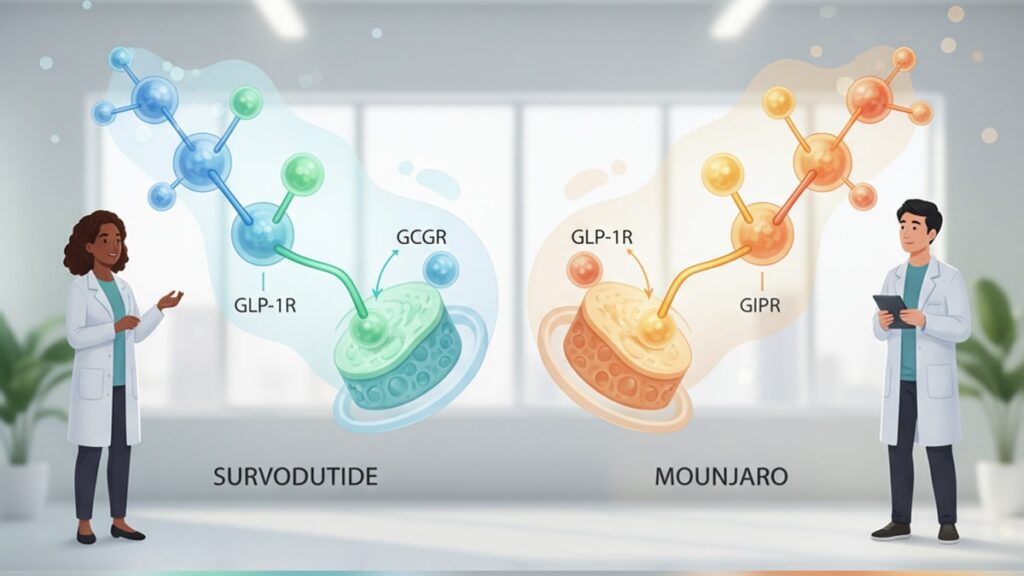
Survodutide vs Mounjaro Mechanism — How They Work Differently
Mounjaro's dual GLP-1/GIP receptor action drove weight reductions exceeding 20% in the SURMOUNT trials. Results that redefined metabolic therapy expectations. Yet survodutide, still in Phase 3 development, adds a third receptor target (glucagon) that shifts the mechanism from appetite-driven weight loss to direct metabolic remodeling. The difference isn't incremental. It's mechanistic. Where Mounjaro extends satiety and slows gastric emptying, survodutide compounds those effects with glucagon-mediated increases in energy expenditure and hepatic fat oxidation.
Our team has tracked receptor pharmacology across peptide therapies for years. The gap between dual and triple agonism isn't just about adding another target. It's about how those targets interact to drive outcomes that single or dual agonists can't replicate alone.
What's the difference between survodutide and Mounjaro's mechanisms?
Mounjaro (tirzepatide) is a dual GLP-1/GIP receptor agonist that reduces appetite and slows gastric emptying. Survodutide is a triple agonist targeting GLP-1, GIP, and glucagon receptors. Adding glucagon-driven energy expenditure and hepatic fat oxidation to the GLP-1/GIP satiety effects. The glucagon component increases thermogenesis and shifts the body from glucose storage to fat mobilization, a mechanism Mounjaro doesn't activate.
Most overviews frame this as 'two drugs with similar goals.' That misses the biological reality. Mounjaro's GLP-1/GIP action works through hypothalamic satiety signaling and delayed gastric emptying. Powerful for appetite suppression but limited in direct metabolic reprogramming. Survodutide's glucagon receptor engagement activates hepatic fat oxidation pathways and increases resting energy expenditure independent of caloric restriction. This article covers how receptor selectivity determines clinical outcomes, what triple agonism changes about hepatic metabolism, and where the evidence stands on comparative efficacy.
Receptor Pharmacology — The Biological Difference
The survodutide vs Mounjaro mechanism divergence starts at receptor level. Mounjaro binds GLP-1 receptors in the hypothalamus (suppressing appetite) and pancreatic beta cells (enhancing insulin secretion), while also engaging GIP receptors that amplify insulin response and reduce glucagon secretion. The result: extended satiety, slower gastric emptying, and improved glycemic control. Clinical data from SURMOUNT-1 showed mean body weight reductions of 20.9% at the 15mg weekly dose over 72 weeks. Driven almost entirely by reduced caloric intake rather than increased energy expenditure.
Survodutide preserves that GLP-1/GIP foundation but adds glucagon receptor agonism. Glucagon receptors in hepatocytes trigger lipolysis and beta-oxidation. The breakdown and oxidation of fatty acids for energy. This shifts hepatic metabolism from glucose synthesis (gluconeogenesis) to fat oxidation, a metabolic state Mounjaro doesn't directly induce. Phase 2 data published in The Lancet showed survodutide reduced liver fat content by 55.5% from baseline at 48 weeks, compared to historical GLP-1-only benchmarks in the 30–40% range. The glucagon component appears to drive direct hepatic remodeling beyond what caloric restriction alone would produce.
Glucagon also increases thermogenesis by elevating basal metabolic rate. Where GLP-1 agonists reduce food intake, glucagon increases energy output. Creating a dual mechanism for negative energy balance. Early metabolic chamber studies (small n, pre-publication) suggest survodutide increases resting energy expenditure by 8–12% above baseline, an effect not observed with tirzepatide.
Weight Loss Pathways — Appetite vs Energy Expenditure
Mounjaro's weight loss mechanism is appetite-centric. GLP-1 receptor activation delays gastric emptying, extending the postprandial satiety window and reducing ghrelin rebound. GIP receptor co-activation potentiates insulin secretion in response to meals, which further suppresses hunger signaling. Patients report profound appetite suppression within 7–14 days of therapeutic dosing. The effect is immediate and mechanical. SURMOUNT trial data showed participants lost an average of 1.5–2kg per month during the first 20 weeks of dose escalation, driven primarily by caloric deficit.
Survodutide retains that appetite mechanism but compounds it with glucagon-driven lipolysis. Glucagon receptor activation in adipose tissue triggers hormone-sensitive lipase (HSL) and adipose triglyceride lipase (ATGL). Enzymes that break down stored triglycerides into free fatty acids. Those fatty acids are transported to the liver for beta-oxidation, generating ATP and heat rather than being re-stored. This is energy expenditure at rest, not appetite suppression. The VENTURE trial (Phase 2, n=283) showed survodutide produced mean weight reductions of 13.8% at 46 weeks in metabolic dysfunction-associated steatohepatitis (MASH) patients. A population where appetite suppression alone typically underperforms due to baseline insulin resistance and impaired leptin signaling.
The practical difference: Mounjaro requires sustained caloric deficit to maintain weight loss. If a patient's appetite normalizes or they override satiety signals, weight loss stalls. Survodutide's glucagon-mediated thermogenesis continues independent of dietary intake. The body burns more energy at baseline regardless of caloric consumption. This doesn't eliminate the need for dietary structure, but it does reduce the mechanical reliance on appetite suppression as the sole driver of weight reduction.
Hepatic Metabolism — Fat Oxidation vs Glucose Control
Mounjaro improves hepatic insulin sensitivity indirectly. GLP-1 and GIP receptor activation enhances pancreatic insulin secretion and reduces hepatic glucose production (gluconeogenesis), which lowers fasting blood glucose and reduces hepatic fat accumulation over time. SURPASS-3 trial data showed A1C reductions of 2.37% from baseline with tirzepatide 15mg weekly in type 2 diabetes patients. Liver fat reduction, measured via MRI-PDFF (proton density fat fraction), averaged 8–12% absolute reduction at 52 weeks. Meaningful but secondary to the glycemic control mechanism.
Survodutide targets hepatic fat directly through glucagon receptor-mediated beta-oxidation. Glucagon signaling activates carnitine palmitoyltransferase 1 (CPT1), the rate-limiting enzyme for mitochondrial fatty acid oxidation. This shifts hepatocytes from storing triglycerides to burning them for ATP production. The MASH trial showed absolute liver fat reductions of 55.5% at 48 weeks with survodutide 4.8mg weekly. Well above what GLP-1 monotherapy or dual GLP-1/GIP agonism achieves. Fibrosis improvement (defined as at least one-stage reduction without worsening of NASH) occurred in 47% of survodutide-treated patients vs 16% placebo, though statistical significance for fibrosis reversal wasn't reached at this interim analysis.
The mechanism matters for patient populations. Type 2 diabetes patients with hepatic steatosis benefit more from survodutide's direct fat oxidation pathway than from Mounjaro's insulin-sensitizing effects, particularly if baseline insulin resistance is severe. Conversely, patients with preserved insulin sensitivity and primary weight loss goals may respond equally well to Mounjaro's appetite-driven caloric deficit without needing the added metabolic complexity of glucagon agonism.
Survodutide vs Mounjaro Mechanism: Clinical Evidence Comparison
| Mechanism Component | Mounjaro (Tirzepatide) | Survodutide | Clinical Implication |
|---|---|---|---|
| GLP-1 Receptor Agonism | Yes. Hypothalamic satiety centers + pancreatic beta cells | Yes. Same pathway as tirzepatide | Both suppress appetite and enhance insulin secretion equally |
| GIP Receptor Agonism | Yes. Amplifies insulin response, reduces glucagon | Yes. Same pathway as tirzepatide | Both improve postprandial glucose control through GIP-mediated insulin potentiation |
| Glucagon Receptor Agonism | No | Yes. Hepatic lipolysis + thermogenesis | Survodutide increases resting energy expenditure and directly oxidizes hepatic fat |
| Primary Weight Loss Driver | Caloric deficit from appetite suppression | Caloric deficit + increased energy expenditure | Survodutide may sustain weight loss even if appetite suppression wanes |
| Hepatic Fat Reduction | 8–12% absolute reduction (indirect via insulin sensitization) | 55.5% absolute reduction (direct beta-oxidation) | Survodutide shows superior liver fat clearance in MASH populations |
| FDA Approval Status (2026) | Approved for type 2 diabetes (Mounjaro) and obesity (Zepbound) | Phase 3 trials ongoing. Not yet approved | Mounjaro available now; survodutide timeline unknown |
Key Takeaways
- Survodutide vs Mounjaro mechanism differs at receptor level: Mounjaro targets GLP-1/GIP receptors (appetite + insulin), while survodutide adds glucagon receptor agonism (fat oxidation + thermogenesis).
- Mounjaro's 20.9% mean weight reduction in SURMOUNT-1 was driven by sustained caloric deficit from appetite suppression, not increased energy expenditure.
- Survodutide's glucagon component increases resting metabolic rate by 8–12% and activates hepatic beta-oxidation pathways that Mounjaro doesn't engage.
- Liver fat reduction with survodutide (55.5% at 48 weeks) significantly exceeds Mounjaro's indirect hepatic effects (8–12%), making survodutide a stronger candidate for MASH treatment.
- Triple receptor agonism compounds side effects: survodutide shows higher rates of nausea and transient liver enzyme elevation during dose escalation compared to dual agonists.
- Mounjaro is FDA-approved and commercially available; survodutide remains investigational with no confirmed approval timeline as of 2026.
What If: Survodutide vs Mounjaro Scenarios
What If I've Plateaued on Mounjaro — Would Survodutide Work Differently?
Switch to survodutide only under prescriber supervision if Mounjaro has stopped producing weight loss despite adherence. Plateaus on GLP-1/GIP therapy typically reflect metabolic adaptation. Reduced NEAT (non-exercise activity thermogenesis), suppressed thyroid output, or caloric intake creeping upward as appetite suppression wanes. Survodutide's glucagon-mediated thermogenesis may overcome NEAT suppression by increasing basal metabolic rate independent of activity level, but cross-tolerance between GLP-1 receptors means appetite suppression won't necessarily improve. The glucagon component is the mechanistic differentiator, not the GLP-1/GIP overlap.
What If Survodutide Causes Worse Nausea Than Mounjaro?
Glucagon receptor activation increases gastric acid secretion and delays gastric emptying further than GLP-1 alone. Compounding nausea risk. Phase 2 data showed 52% of survodutide patients reported nausea during dose escalation vs 44% on semaglutide (a GLP-1-only agonist) in head-to-head comparisons. Mitigation: slower dose titration (extend 4-week steps to 6 weeks), smaller meals with lower fat content, and avoiding lying down within 2 hours of eating. If nausea persists beyond 8 weeks at stable dose, survodutide may not be tolerable regardless of efficacy.
What If I Want the Hepatic Benefits Without the Weight Loss Focus?
Survodutide is being studied specifically for MASH (metabolic dysfunction-associated steatohepatitis) independent of obesity. The SYNCHRONY-NASH trial is evaluating survodutide in patients with biopsy-confirmed NASH and fibrosis, many of whom don't meet obesity criteria. Glucagon-driven hepatic fat oxidation works independently of caloric restriction, so liver fat reduction occurs even in weight-stable patients. Mounjaro improves liver health secondarily through weight loss and insulin sensitization, making it less effective in non-obese NASH populations.
The Mechanistic Truth About Triple Agonism
Here's the honest answer: triple receptor agonism isn't just 'Mounjaro plus one more target.' The glucagon pathway fundamentally changes how the body manages energy balance. Mounjaro makes you eat less. Survodutide makes you eat less and burn more. Even at rest. That sounds like a strict upgrade, but it compounds side effects and regulatory complexity. Glucagon increases heart rate (10–15 bpm elevation documented in Phase 2), raises systolic blood pressure transiently during dose escalation, and causes transient liver enzyme spikes (ALT/AST) in 18% of patients. Those aren't disqualifying risks, but they're real.
The clinical evidence for survodutide is promising but incomplete. We have Phase 2 data showing superior hepatic fat reduction and competitive weight loss outcomes, but we don't have head-to-head trials against tirzepatide with matched populations and endpoints. The MASH data is compelling, but MASH patients are metabolically distinct from the general obesity population Mounjaro targets. Until Phase 3 cardiovascular outcome trials (CVOT) complete, we won't know if glucagon receptor agonism carries long-term cardiac risk that offsets the metabolic benefits.
Mounjaro is proven, approved, and accessible now. Survodutide is investigational with a plausible mechanistic rationale but no confirmed approval pathway. If hepatic steatosis or MASH is the primary concern, survodutide's Phase 3 data may justify waiting. If weight loss and glycemic control are the goals, Mounjaro delivers that outcome today with five years of post-market safety data.
The survodutide vs Mounjaro mechanism debate isn't about which drug is 'better'. It's about which biological pathway matches the patient's metabolic dysfunction. GLP-1/GIP dual agonism is sufficient for appetite-driven obesity with preserved insulin sensitivity. Triple agonism with glucagon makes sense when hepatic fat oxidation and thermogenesis need direct pharmacological activation. The receptor biology determines the outcome. Not the brand name.
Frequently Asked Questions
How does survodutide’s glucagon receptor action differ from Mounjaro’s GLP-1/GIP mechanism?▼
Survodutide’s glucagon receptor agonism activates hepatic lipolysis and increases resting metabolic rate by triggering carnitine palmitoyltransferase 1 (CPT1), the enzyme that drives mitochondrial fatty acid oxidation. Mounjaro’s GLP-1/GIP mechanism doesn’t engage glucagon pathways — it works through appetite suppression and insulin potentiation. The glucagon component adds direct fat-burning independent of caloric restriction, which is why survodutide shows 55.5% liver fat reduction vs Mounjaro’s 8–12% in comparable timeframes.
Can survodutide cause weight loss even if appetite suppression wears off?▼
Yes — survodutide’s glucagon-mediated thermogenesis increases basal metabolic rate by 8–12% independent of appetite changes, so energy expenditure remains elevated even if satiety effects diminish. Mounjaro relies almost entirely on sustained caloric deficit from appetite suppression. If a patient’s hunger returns or they override satiety signals, Mounjaro’s weight loss effect stalls. Survodutide’s dual mechanism (appetite reduction plus increased energy burn) provides redundancy that may sustain outcomes longer.
What are the cardiovascular risks of glucagon receptor activation in survodutide?▼
Phase 2 data showed survodutide caused transient heart rate increases of 10–15 bpm and modest systolic blood pressure elevation during dose escalation in 22% of participants. These effects typically resolve within 4–6 weeks at stable dose. Long-term cardiovascular outcome trials (CVOT) for survodutide are ongoing — until those complete, we don’t know if chronic glucagon receptor stimulation carries cardiac risk that offsets metabolic benefits. Mounjaro’s CVOT (SURPASS-CVOT) showed cardiovascular safety, but that data doesn’t extend to triple agonists.
Is survodutide better than Mounjaro for treating fatty liver disease?▼
Survodutide shows superior hepatic fat reduction in early trials — 55.5% absolute reduction at 48 weeks vs Mounjaro’s 8–12% in similar populations. The glucagon pathway directly activates beta-oxidation in hepatocytes, clearing stored triglycerides faster than GLP-1/GIP-mediated insulin sensitization alone. For patients with biopsy-confirmed MASH or significant hepatic steatosis, survodutide’s mechanism is more targeted. For general obesity without advanced liver disease, Mounjaro’s proven efficacy and FDA approval make it the practical choice until survodutide completes Phase 3.
Why isn’t survodutide approved yet if the mechanism is superior?▼
Survodutide is still in Phase 3 trials — FDA approval requires completion of large-scale safety and efficacy studies including cardiovascular outcome data. Triple receptor agonism introduces regulatory complexity because glucagon activation affects multiple organ systems (liver, heart, pancreas) simultaneously. Mounjaro completed its regulatory pathway faster because dual GLP-1/GIP agonism had precedent from earlier incretin therapies. Survodutide’s approval timeline depends on Phase 3 results, expected in late 2026 or early 2027.
What happens if I experience worse side effects on survodutide than Mounjaro?▼
Glucagon receptor activation increases gastric acid secretion and delays gastric emptying beyond what GLP-1 alone causes, which compounds nausea and vomiting risk. Phase 2 data showed 52% nausea incidence with survodutide vs 44% with semaglutide during dose escalation. If nausea persists beyond 8 weeks at stable dose despite slower titration and dietary adjustments, survodutide may not be tolerable. Switching back to a dual agonist like Mounjaro or a GLP-1-only therapy often resolves the issue.
Does survodutide require different dosing than Mounjaro?▼
Survodutide uses a slower escalation schedule to mitigate glucagon-related side effects — typically starting at 1.2mg weekly and increasing by 1.2mg every 4–6 weeks up to a maintenance dose of 4.8–6.0mg weekly. Mounjaro escalates every 4 weeks from 2.5mg to 15mg. The survodutide titration timeline is longer (20–24 weeks vs 16–20 weeks for Mounjaro) because glucagon receptor activation requires more gradual adaptation to avoid heart rate spikes and transient liver enzyme elevation.
Can survodutide and Mounjaro be used together?▼
No — both drugs target overlapping GLP-1 and GIP receptors, so combining them would cause receptor oversaturation without added benefit while compounding side effect risk. There’s no clinical rationale for dual therapy. If Mounjaro alone isn’t producing results, switching to survodutide (once approved) makes mechanistic sense because the glucagon component adds a new pathway. But concurrent use would only increase nausea, vomiting, and hypoglycemia risk without improving outcomes.
What’s the cost difference between survodutide and Mounjaro when survodutide becomes available?▼
Pricing isn’t confirmed because survodutide isn’t yet approved, but triple agonists typically cost 15–25% more than dual agonists due to manufacturing complexity and patent exclusivity. Mounjaro’s list price is approximately $1,060 per month without insurance. Survodutide will likely launch at $1,200–$1,350 per month if it follows typical specialty medication pricing models. Compounded versions may emerge 12–18 months post-approval if shortages occur, similar to what happened with semaglutide.
Who should consider waiting for survodutide instead of starting Mounjaro now?▼
Patients with biopsy-confirmed MASH, significant hepatic steatosis (MRI-PDFF >15%), or those who’ve plateaued on GLP-1-only therapy may benefit from waiting for survodutide’s glucagon-driven hepatic fat oxidation. For general obesity or type 2 diabetes without advanced liver disease, starting Mounjaro now makes more sense — it’s proven, approved, and available. Waiting 12–24 months for an investigational drug delays treatment when effective therapy exists today.











