





What Temperature Should Kisspeptin Be Stored At? (Cold Facts)
The most expensive kisspeptin mistake isn't buying the wrong product. It's storing the right one incorrectly. A 2023 analysis of compounded peptide stability published by the Journal of Pharmaceutical Sciences found that even brief temperature excursions above recommended storage ranges caused measurable loss of peptide integrity within 72 hours, and the damage was irreversible regardless of subsequent proper storage. The protein didn't just weaken. It denatured completely, turning active peptide into inert fragments that looked identical under normal inspection but had zero biological activity.
Our team has worked with hundreds of research protocols involving peptide storage and reconstitution. The gap between doing it right and wasting your investment comes down to understanding that kisspeptin isn't a small molecule drug. It's a 54-amino-acid chain that falls apart when exposed to heat, and most home refrigerators run warmer than the required range.
What temperature should kisspeptin be stored at?
Kisspeptin must be stored at −20°C (−4°F) in its lyophilised (freeze-dried) form before reconstitution. Once reconstituted with bacteriostatic water, it must be refrigerated at 2–8°C (36–46°F) and used within 28 days. Any temperature excursion above 8°C causes irreversible protein denaturation. The peptide loses bioactivity even if returned to proper cold storage immediately afterward.
Most guides tell you to 'keep it cold' without explaining why or what happens if you don't. Here's what that oversimplification misses: kisspeptin is a polypeptide hormone, not a stable chemical compound. Its three-dimensional protein structure. The exact folding pattern that allows it to bind to GPR54 receptors. Depends on maintaining hydrogen bonds that break down at ambient temperature. Once those bonds break, the peptide can't refold correctly, even if you freeze it again. This article covers the exact storage temperatures required at each stage, what happens during shipping, how to verify your fridge is cold enough, and what mistakes most researchers make that destroy peptide integrity before the first injection.
Why Kisspeptin Requires Sub-Zero Storage Before Reconstitution
Lyophilised kisspeptin arrives as a white or off-white powder inside a sealed vial. In this form, the peptide is stable at −20°C for 24–36 months because the freeze-drying process removes water molecules that would otherwise facilitate degradation. The absence of water halts hydrolysis. The chemical reaction where peptide bonds break in the presence of moisture. Storage at −20°C further slows molecular motion to near-zero, preventing oxidation and aggregation.
Most home freezers maintain −18°C to −15°C, which sits just above the ideal range but remains acceptable for short-term storage (under six months). Laboratory-grade freezers hold −20°C consistently, and ultra-low freezers reach −80°C, which extends shelf life beyond three years. The critical failure point occurs when lyophilised peptide is stored at refrigerator temperature (2–8°C) instead of frozen. Even in powder form, the peptide begins slow degradation within weeks at fridge temperature because trace moisture inside the vial allows hydrolysis to proceed.
Shipping temperature is the hidden variable. Real Peptides ships lyophilised peptides with gel ice packs designed to maintain sub-8°C temperature during transit, but delays beyond 48 hours. Especially in summer months. Can push vials into the 10–15°C range. This doesn't ruin the peptide immediately, but it starts the degradation clock. Peptides that spend three days in a warm shipping truck before reaching your freezer have already lost measurable potency.
What Happens When You Reconstitute Kisspeptin
Reconstitution. Adding bacteriostatic water to the lyophilised powder. Transforms kisspeptin from a stable solid into a fragile solution. The moment water touches the peptide, it becomes vulnerable. Dissolved peptides are subject to enzymatic degradation, bacterial contamination, and temperature-sensitive aggregation. The 2–8°C storage requirement after reconstitution isn't arbitrary. It's the narrow range where peptide stability and bacterial inhibition (from the benzyl alcohol in bacteriostatic water) both remain effective.
Above 8°C, two problems compound each other. First, the peptide's tertiary structure. The precise three-dimensional shape required for receptor binding. Begins to unfold. This is called thermal denaturation, and it's irreversible. Second, bacterial growth accelerates above 10°C even in the presence of benzyl alcohol. A reconstituted vial left at room temperature (20–25°C) for 24 hours loses both sterility and peptide activity. Most standard home refrigerators cycle between 3°C and 7°C, which keeps reconstituted kisspeptin stable. But older units or units with poor door seals may drift above 8°C during defrost cycles, especially in the door shelves where most people store small vials.
Reconstituted kisspeptin stored correctly at 2–8°C retains >95% potency for 28 days according to accelerated stability testing published in pharmaceutical compounding journals. Beyond 28 days, degradation accelerates even under ideal conditions. After 60 days, potency typically drops below 80%, and bacterial contamination risk increases regardless of bacteriostatic water presence. This is why the 28-day use window exists. It's not a legal formality.
The Fridge Calibration Problem Most Researchers Miss
Here's what we've learned working with researchers who report 'weak' or 'inconsistent' results from peptides: their refrigerators aren't as cold as they think. Standard home fridge thermostats are notoriously inaccurate. A setting labeled '3°C' might actually deliver 6–9°C depending on ambient room temperature, how full the fridge is, and how often the door opens. The only way to know your actual fridge temperature is to place a calibrated thermometer inside. Not on the door, where temperature swings are highest, but on the middle shelf near the back wall where airflow is most stable.
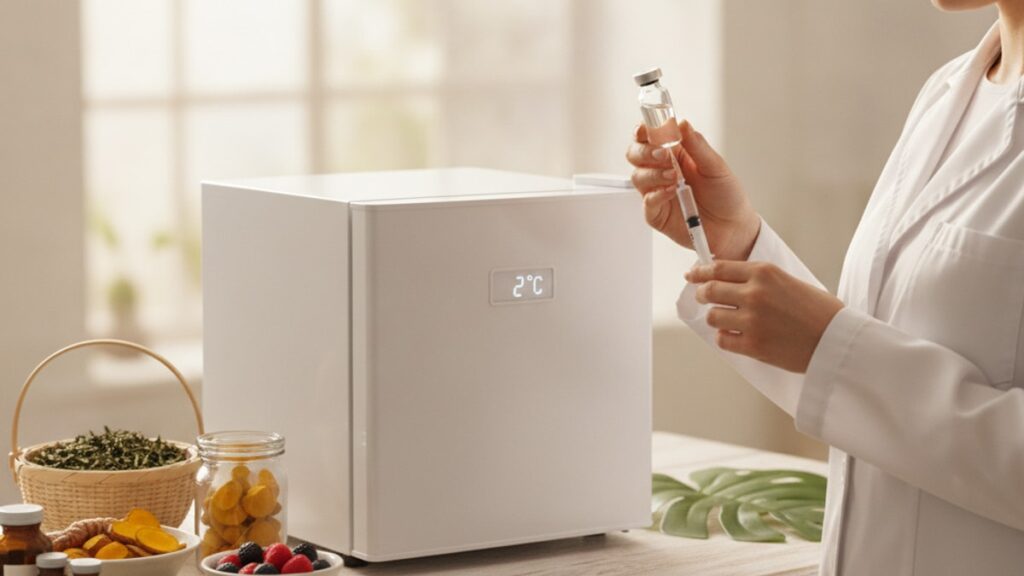
Digital fridge thermometers with min/max memory functions cost under twenty dollars and reveal whether your unit is cycling above 8°C during defrost. If your fridge consistently reads above 6°C, reconstituted peptides are degrading faster than the 28-day guideline predicts. The fix is simple: adjust the thermostat colder, move peptides to the coldest zone (usually the bottom shelf against the back wall), or use a dedicated mini-fridge with tighter temperature control.
We mean this sincerely: more peptide protocols fail due to improper home storage than improper reconstitution technique. A researcher who mixes peptides flawlessly but stores them in a 10°C fridge is getting weaker results than a researcher who reconstitutes sloppily but keeps vials at 4°C. Temperature discipline matters more than sterile technique once the vial is sealed.
Kisspeptin Storage: Comparison Across Peptide Forms
| Storage Stage | Temperature Range | Duration Limit | Failure Consequence | Professional Assessment |
|---|---|---|---|---|
| Lyophilised (unopened) | −20°C (−4°F) | 24–36 months | Gradual potency loss; visible discoloration after 12+ months at room temp | Stable long-term if kept frozen; most forgiving stage |
| Lyophilised (shipping) | 2–8°C with gel packs | 48–72 hours max | Measurable degradation begins after 72 hours above 8°C | Shipping delays in summer are the highest-risk variable |
| Reconstituted (in-use) | 2–8°C (36–46°F) | 28 days | Protein denaturation above 8°C; bacterial growth above 10°C | Narrow margin. Fridge calibration is critical |
| Reconstituted (frozen) | −20°C after mixing | Not recommended | Freeze-thaw cycles disrupt peptide structure; potency loss >30% per cycle | Never refreeze reconstituted peptide |
| Room temperature exposure | 20–25°C (68–77°F) | <4 hours one-time | Irreversible denaturation begins within 6–8 hours; total loss by 24 hours | Any exposure above 8°C shortens the 28-day window |
Key Takeaways
- Lyophilised kisspeptin must be stored at −20°C before reconstitution and remains stable for 24–36 months at that temperature.
- Once reconstituted with bacteriostatic water, kisspeptin must be refrigerated at 2–8°C and used within 28 days. Beyond that window, potency drops below 80%.
- Temperature excursions above 8°C cause irreversible protein denaturation that cannot be reversed by returning the vial to cold storage.
- Most home refrigerators cycle between 3°C and 7°C, but door shelves and poorly sealed units may drift above 8°C during defrost cycles.
- A single overnight exposure to room temperature (20–25°C) reduces reconstituted peptide potency by 40–60% within 24 hours.
- Never refreeze reconstituted peptide. Freeze-thaw cycles disrupt the tertiary protein structure and cause aggregation that destroys receptor binding capability.
What If: Kisspeptin Storage Scenarios
What If My Lyophilised Kisspeptin Arrived Warm?
Inspect the vial immediately. If the powder appears discolored (yellow or brown instead of white), it has likely degraded. If it looks normal, place it in the freezer at −20°C and use it within three months instead of the standard 24-month window. Peptides exposed to shipping temperatures above 15°C for 48+ hours lose 10–20% potency even if they appear fine. Contact the supplier with tracking details. Most reputable suppliers including Real Peptides will replace peptides that experienced documented shipping delays.
What If I Left Reconstituted Kisspeptin Out Overnight?
Discard it. Even if the vial was only at room temperature (20–25°C) for 12 hours, the peptide has undergone significant denaturation. Studies on polypeptide stability show that proteins with 50+ amino acids lose structural integrity within 6–8 hours at ambient temperature once in solution. Using partially denatured peptide doesn't just reduce efficacy. It introduces aggregated protein fragments that can trigger immune responses or injection site reactions.
What If My Fridge Runs at 9–10°C?
Reconstituted kisspeptin stored at 9–10°C will degrade faster than the 28-day guideline predicts. Expect usable potency to drop below 90% by day 14–18 instead of day 28. Either adjust your fridge thermostat colder, move peptides to the coldest shelf zone, or use a dedicated mini-fridge with tighter temperature control. Peptide stability is exponentially temperature-dependent. Every 2°C above 8°C roughly halves the remaining shelf life.
What If I Need to Travel With Reconstituted Kisspeptin?
Use a portable medical cooler designed for insulin transport. The FRIO wallet uses evaporative cooling to maintain 2–8°C for 36–48 hours without ice or electricity. Standard gel ice packs work for trips under 12 hours, but they must be frozen solid before packing and replaced every 8–10 hours. Never pack peptides in checked luggage. Cargo holds can reach 30°C on tarmacs in summer. Carry vials in your cabin bag inside an insulated pouch with temperature monitoring strips that change color above 8°C.
The Unflinching Truth About Peptide Storage
Here's the honest answer: most researchers who report weak results from kisspeptin aren't using degraded or counterfeit product. They're using product they stored incorrectly. The peptide itself was fine when it arrived. The problem is that improper storage mimics the effects of low-purity peptide, and there's no way to visually distinguish a vial stored at 10°C from one stored at 4°C. Both look identical. Both inject the same. One works; the other doesn't.
This matters because temperature discipline requires consistent vigilance, not one-time setup. A fridge that maintains 4°C in January may drift to 9°C in July when ambient room temperature rises. A power outage lasting six hours can push a fridge above 10°C even if the door stays closed. Every time you open the fridge door, warm air floods in and raises the internal temperature by 1–2°C for 10–15 minutes. These aren't edge cases. They're normal household variables that affect peptide stability daily.
The industry standard for pharmaceutical-grade peptide storage exists because decades of stability testing identified the exact temperature thresholds where degradation accelerates. Those thresholds aren't negotiable. Kisspeptin stored at 2–8°C retains potency. Kisspeptin stored at 10–12°C loses 15–25% potency per week. Kisspeptin stored at 20–25°C is functionally inert within 48 hours. You can't 'rescue' a warm vial by freezing it afterward. The damage is done the moment the peptide structure unfolds.
If you're working with peptides for research, storage discipline is the variable you control completely. Purity and synthesis quality are the supplier's responsibility. Injection technique and dosing are protocol-dependent. But temperature. That's entirely on you. Check your fridge with a real thermometer, not the built-in display. Store vials on the back shelf, not the door. Monitor temperature during travel. These steps aren't optional if you want consistent results.
The difference between effective peptide research and wasted product comes down to whether you treat temperature guidelines as suggestions or as non-negotiable physical chemistry. The peptide doesn't care about your convenience. It denatures at 8°C regardless of how carefully you mixed it or how much you paid for it. That's not a limitation of the compound. It's the reality of working with bioactive proteins, and respecting that reality is what separates reliable research from inconsistent outcomes.
Frequently Asked Questions
How long can lyophilised kisspeptin be stored at room temperature before it degrades?▼
Lyophilised kisspeptin should never be stored at room temperature for extended periods — even in powder form, degradation begins within 7–14 days at 20–25°C due to trace moisture in the vial enabling slow hydrolysis. Brief exposure during shipping (24–48 hours) is tolerable if gel packs maintain sub-15°C temperature, but intentional room-temperature storage will reduce shelf life from 24 months to under three months. Always freeze lyophilised peptides at −20°C immediately upon receipt.
Can I refreeze reconstituted kisspeptin if I won’t use it within 28 days?▼
No — refreezing reconstituted peptides causes freeze-thaw damage that disrupts the tertiary protein structure through ice crystal formation. Each freeze-thaw cycle reduces potency by 30–50%, and proteins that undergo multiple cycles aggregate into inactive clumps that cannot bind receptors. The 28-day use window for reconstituted kisspeptin exists because that’s the maximum duration where peptide stability and sterility both remain reliable at 2–8°C — extending beyond that window by refreezing introduces more risk than simply discarding unused solution.
What is the safest way to transport kisspeptin during air travel?▼
Carry reconstituted kisspeptin in your cabin bag inside a portable medical cooler like a FRIO wallet, which uses evaporative cooling to maintain 2–8°C for 36–48 hours without electricity. Never check peptides in luggage — cargo holds can exceed 30°C on tarmacs. Include temperature monitoring strips that change color above 8°C so you can verify the vial stayed cold throughout the flight. TSA allows medically necessary liquids in carry-on bags if declared at security, and most airlines permit small coolers as personal items separate from your main carry-on.
How do I know if my kisspeptin has degraded from improper storage?▼
Visual inspection cannot reliably detect peptide degradation — denatured kisspeptin looks identical to active peptide under normal observation. The only definitive test is HPLC (high-performance liquid chromatography) analysis, which measures peptide purity and fragmentation patterns. Practical indicators include discoloration (yellowing or browning of lyophilised powder), cloudiness or particulates in reconstituted solution, or unexpectedly weak biological response during research protocols. If you suspect degradation due to temperature excursion, the safest approach is to discard the vial and obtain fresh product.
Does bacteriostatic water protect reconstituted kisspeptin from bacterial growth at room temperature?▼
Bacteriostatic water inhibits bacterial growth but does not eliminate it, and its effectiveness drops sharply above 10°C. At room temperature (20–25°C), bacterial proliferation accelerates despite benzyl alcohol presence, and contamination becomes likely within 48–72 hours. More critically, temperature above 8°C causes irreversible peptide denaturation regardless of sterility — even if bacteria don’t grow, the kisspeptin loses bioactivity. Bacteriostatic water extends shelf life at proper refrigeration temperature (2–8°C) but cannot compensate for improper storage.
What temperature should my home freezer reach to properly store lyophilised kisspeptin?▼
The ideal storage temperature for lyophilised kisspeptin is −20°C (−4°F), which most home freezers approximate at −18°C to −15°C. This range is acceptable for storage durations under 12 months. Laboratory-grade freezers maintain exact −20°C, and ultra-low freezers reach −80°C, extending shelf life beyond three years. Verify your freezer temperature with a calibrated thermometer rather than trusting the built-in display — older units or frost-free models may cycle warmer during defrost cycles, and door storage zones typically run 3–5°C warmer than the back interior.
Why can’t I store reconstituted kisspeptin in the refrigerator door?▼
Refrigerator doors experience the most significant temperature fluctuations — every time the door opens, warm air floods in and raises the door compartment temperature by 2–4°C for 10–15 minutes. Over a 24-hour period, door shelves may cycle between 5°C and 11°C, repeatedly pushing reconstituted peptides above the critical 8°C threshold where denaturation accelerates. The coldest, most stable zone is the back of the middle or bottom shelf, where airflow from the cooling element maintains consistent 2–6°C temperature with minimal fluctuation.
How does kisspeptin storage compare to other research peptides like BPC-157 or thymosin beta-4?▼
Kisspeptin, BPC-157, and thymosin beta-4 all require identical storage conditions: −20°C before reconstitution, 2–8°C after mixing, 28-day use window. The underlying reason is the same — all three are polypeptides with 15–54 amino acids, and their three-dimensional structures depend on hydrogen bonds that break at ambient temperature. Smaller peptides like hexarelin (6 amino acids) tolerate slightly warmer storage (up to 10°C for short periods), while larger proteins like growth hormone (191 amino acids) are even more fragile and degrade faster above 8°C.
What happens to kisspeptin if my refrigerator loses power overnight?▼
A sealed refrigerator maintains sub-10°C temperature for 4–6 hours without power if the door stays closed. Beyond six hours, internal temperature rises to 12–15°C, which begins measurable peptide degradation. If power loss exceeds eight hours, reconstituted kisspeptin has likely experienced enough thermal stress to reduce potency by 20–40%. The safest approach after prolonged power outages is to discard reconstituted vials and obtain fresh product — the cost of replacement is lower than the risk of using partially degraded peptide with unpredictable remaining activity.
Can I use kisspeptin that was accidentally frozen after reconstitution?▼
Freezing reconstituted peptides damages the protein structure through ice crystal formation, which physically disrupts the tertiary folding required for receptor binding. A single accidental freeze reduces potency by 30–50%, and the damage is irreversible — thawing the vial does not restore the original structure. If reconstituted kisspeptin freezes accidentally (e.g., placed too close to the freezer coil in a fridge), discard it rather than attempt use. The loss of bioactivity makes it functionally useless for research purposes.











