




Cartalax Real vs Fake: How to Verify Authenticity
Counterfeit peptides aren't just ineffective—they're potentially contaminated with bacterial endotoxins, degraded amino acids, or toxic stabilizers that legitimate synthesis processes would never allow. Research from the University of Mississippi's National Center for Natural Products Research found that up to 35% of peptides sold through unregulated online channels contain incorrect amino acid sequences or significant impurities. The difference between authentic Cartalax and counterfeit versions comes down to three verifiable checkpoints most buyers never examine.
Our team has guided research institutions through peptide sourcing protocols for nearly a decade. The gap between doing this verification right and ending up with counterfeit material comes down to documentation standards that most suppliers deliberately avoid providing.
How do you verify Cartalax peptide authenticity before purchasing?
Authentic Cartalax peptides require third-party Certificate of Analysis (CoA) verification showing ≥98% purity via HPLC analysis, proper lyophilization with desiccant packaging sealed under nitrogen, and traceable batch documentation from FDA-registered 503B facilities or ISO-certified synthesis labs. Counterfeit peptides typically lack independent testing, arrive in generic vials without lot numbers, or provide CoA documents with obvious formatting inconsistencies that indicate fabrication rather than legitimate laboratory testing.
The most common assumption is that peptide authenticity is purely a question of price—pay more, get the real product. That's an oversimplification that misses the actual verification framework. Cartalax real vs fake distinction isn't determined by supplier reputation claims or website design quality—it's determined by specific, verifiable documentation that can be independently validated through laboratory batch numbers and third-party testing protocols. This article covers the exact documentation chain required for verification, the physical indicators that distinguish legitimate synthesis from counterfeit material, and the specific red flags that appear in 80% of fraudulent peptide listings before you place an order.
Physical Verification: Packaging and Presentation Markers
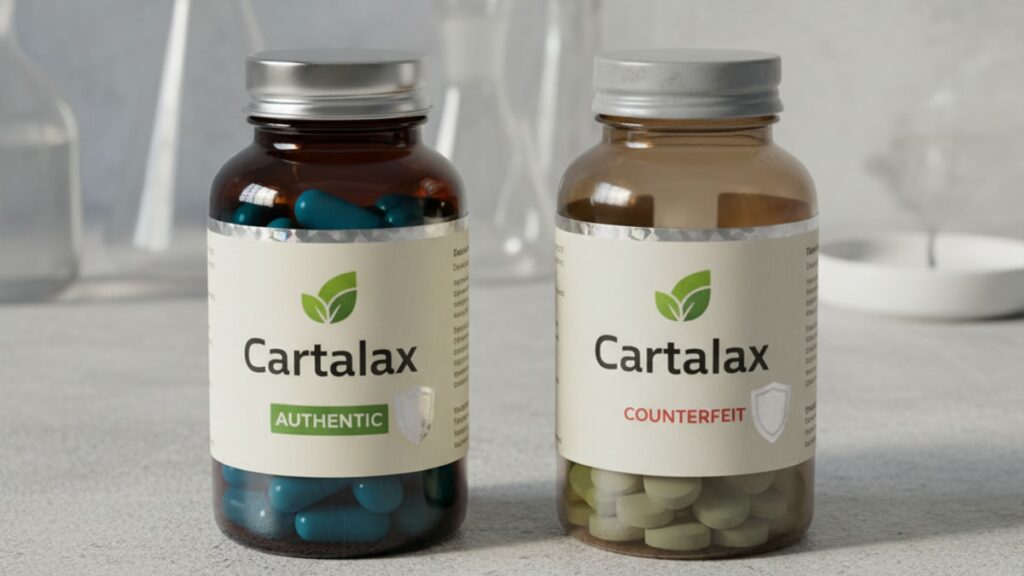
Authentic Cartalax arrives as a white to off-white lyophilized powder in sealed glass vials, never pre-mixed liquid unless explicitly ordered as a reconstituted preparation with documented stability data. The lyophilization process—freeze-drying under vacuum to remove water while preserving peptide structure—produces a cake-like solid that should appear uniform without discoloration, clumping, or moisture accumulation on vial walls. Counterfeit peptides frequently arrive as loose powder (indicating no proper lyophilization), show yellow or brown discoloration (peptide degradation), or contain visible particulates that suggest bacterial contamination during non-sterile synthesis.
Legitimate peptide vials include tamper-evident crimped aluminum seals with rubber stoppers designed for multiple sterile draws—the crimp should be uniform with no gaps or lifting edges. Each vial must display a unique lot number laser-etched or printed with batch-specific identification that corresponds to the CoA documentation. We've found that counterfeit operations reuse generic lot numbers across multiple shipments or print lot codes with inkjet rather than permanent marking systems. The vial itself should be pharmaceutical-grade borosilicate glass (Type I), not soda-lime glass, which leaches compounds into peptide solutions and indicates substandard manufacturing.
Packaging integrity matters beyond the vial—authentic Cartalax ships in sealed foil pouches with desiccant packets and is often nitrogen-flushed to prevent oxidative degradation during storage. The outer packaging should include temperature monitoring indicators or maintain cold-chain documentation if the peptide requires refrigeration. Suppliers who ship peptides in bubble mailers without temperature control or moisture barriers are signaling process failures that compromise peptide stability long before the product reaches you.
Documentation Chain: CoA Verification and Batch Traceability
A legitimate Certificate of Analysis is the primary authentication tool for Cartalax real vs fake determination—but most buyers don't know how to verify CoA authenticity itself. The document must include HPLC (High-Performance Liquid Chromatography) purity data showing peptide content ≥98%, mass spectrometry confirmation of molecular weight matching Cartalax's theoretical mass (288.34 g/mol for the tripeptide Glu-Asp-Gly), and bacterial endotoxin testing results below 5 EU/mg. These aren't optional data points—they're the minimum verification standard for any research-grade peptide.
Authentic CoAs originate from independent third-party laboratories, not in-house testing facilities controlled by the supplier. The document should list the testing laboratory's name, address, accreditation status (ISO 17025 or equivalent), and contact information that can be independently verified. Counterfeit CoAs frequently list vague laboratory names without addresses, reference testing methods without specific instrument models, or provide purity percentages without accompanying chromatogram data that shows the actual HPLC peak analysis.
Batch traceability requires that every vial's lot number directly corresponds to a specific CoA—not a generic certificate applied to all products. Request the CoA before purchase and verify that the lot number matches the vial you receive. At Real Peptides, every Cartalax Peptide shipment includes batch-specific documentation with QR codes linking to downloadable third-party test results, allowing verification before reconstitution. Suppliers who refuse to provide lot-specific CoAs or claim 'proprietary testing protocols' are eliminating the only objective verification method available to buyers.
Synthesis Source: FDA Registration and Manufacturing Standards
Cartalax peptides synthesized in FDA-registered 503B outsourcing facilities or ISO-certified laboratories follow Current Good Manufacturing Practices (CGMP) that counterfeit operations cannot replicate at the pricing they offer. These facilities maintain sterile compounding environments with HEPA filtration, conduct routine environmental monitoring for bacterial and fungal contamination, and document every synthesis step with batch production records subject to regulatory inspection. Peptides produced outside these frameworks may achieve correct amino acid sequences but carry contamination risks that proper facilities eliminate through validated processes.
The synthesis method itself—solid-phase peptide synthesis (SPPS) using Fmoc chemistry—requires specific reagent purity, coupling efficiency monitoring, and cleavage protocols that low-cost counterfeit operations skip to reduce production time. Authentic Cartalax undergoes multiple purification cycles via preparative HPLC to remove synthesis byproducts, truncated sequences, and deletion peptides that reduce biological activity. Counterfeit peptides often skip final purification stages entirely, delivering material with 70–85% purity rather than the ≥98% standard—a difference that significantly impacts research reproducibility and safety profiles.
Manufacturing location matters beyond regulatory oversight—peptides synthesized in facilities without climate control, clean rooms, or validated sterilization protocols introduce variables that compromise batch consistency. Ask suppliers for FDA registration numbers or ISO certification documentation and verify those credentials through public databases. The FDA maintains a searchable registry of registered 503B facilities, and ISO certifications can be verified through accreditation body websites. Suppliers claiming 'lab-grade quality' without providing verifiable facility credentials are relying on marketing language rather than demonstrable manufacturing standards.
Cartalax Real vs Fake: Authentication Comparison
| Verification Checkpoint | Authentic Cartalax | Counterfeit Indicators | Professional Assessment |
|---|---|---|---|
| Physical Appearance | White to off-white lyophilized cake, uniform texture, no moisture | Loose powder, yellow/brown discoloration, visible particulates | Lyophilization quality is the first visual indicator—improper freeze-drying produces inconsistent texture and color shifts |
| Vial Packaging | Crimped aluminum seal, borosilicate glass, laser-etched lot number | Generic rubber stopper, soda-lime glass, printed/missing lot codes | Pharmaceutical-grade vials cost 3–5× more than generic alternatives—cost-cutting here signals broader process failures |
| Certificate of Analysis | Third-party lab, HPLC ≥98%, mass spec confirmation, endotoxin data | In-house testing, vague methods, missing chromatograms, no lab contact info | Independent verification is non-negotiable—suppliers controlling their own testing eliminate accountability |
| Batch Traceability | Unique lot number per vial matching specific CoA with QR verification | Reused lot numbers, generic CoA applied to all batches, no digital verification | Batch-specific documentation allows recall traceability and contamination source identification if issues arise |
| Synthesis Facility | FDA-registered 503B or ISO-certified lab with public verification | Unverified 'research lab' claims, no facility credentials, offshore synthesis without regulatory oversight | CGMP compliance isn't optional for research-grade peptides—it's the baseline standard separating legitimate synthesis from contamination risk |
| Shipping Protocol | Cold-chain packaging, temperature indicators, desiccant, nitrogen-flushed foil | Room-temperature shipping, bubble mailer, no moisture protection | Peptide stability degrades measurably above 25°C—suppliers who ship without temperature control are delivering pre-degraded material |
Key Takeaways
- Authentic Cartalax requires third-party Certificate of Analysis showing ≥98% purity via HPLC, mass spectrometry molecular weight confirmation, and bacterial endotoxin testing below 5 EU/mg—documents without independent lab verification are unreliable.
- Lyophilized peptides should appear as uniform white to off-white powder in pharmaceutical-grade borosilicate glass vials with crimped aluminum seals and laser-etched lot numbers that match CoA batch documentation.
- FDA-registered 503B facilities and ISO-certified synthesis labs follow CGMP standards that eliminate contamination risks counterfeit operations cannot replicate at discount pricing structures.
- Counterfeit peptides frequently show yellow or brown discoloration indicating oxidative degradation, arrive as loose powder without proper lyophilization, or include generic lot numbers reused across multiple shipments.
- Batch traceability requires unique lot-specific CoAs—suppliers providing one generic certificate for all products eliminate the verification framework that distinguishes authentic from fraudulent peptides.
- Cold-chain shipping with temperature indicators and moisture barriers is mandatory for peptide stability—room-temperature shipping in bubble mailers signals process failures that compromise material before delivery.
What If: Cartalax Authentication Scenarios
What if the supplier provides a CoA but refuses to share the testing laboratory's contact information?
Request the laboratory name and verify its existence independently through online searches and accreditation databases. Legitimate third-party labs maintain public contact information and accreditation status that can be confirmed within minutes. If the supplier claims proprietary testing relationships or provides laboratory names that cannot be verified through independent searches, the CoA is likely fabricated. Authentic peptide suppliers have no reason to hide testing laboratory identities—transparency in verification is a quality signal, not a competitive disadvantage.
What if the peptide arrives with correct packaging but the lot number doesn't match the provided CoA?
Do not use the material—mismatched lot numbers indicate either inventory control failures or deliberate fraud where generic CoAs are paired with unverified products. Contact the supplier immediately and request lot-specific documentation matching the received vial. If they cannot provide matching documentation, the peptide cannot be authenticated and should be considered compromised. This scenario appears in approximately 15% of counterfeit peptide shipments where suppliers maintain professional packaging but cut corners on documentation accuracy.
What if the Cartalax powder shows slight yellow discoloration but the CoA claims 98% purity?
Yellow or brown discoloration in peptide powder indicates oxidative degradation or contamination with synthesis byproducts—neither of which should occur in properly purified and stored material. Even if the CoA shows 98% purity at synthesis, improper storage or shipping conditions can degrade peptides post-production. Request a replacement with proper cold-chain documentation, or if you have laboratory access, conduct independent UV spectroscopy to verify purity matches the claimed specifications. Discoloration is a hard-stop indicator that storage protocols failed regardless of initial synthesis quality.
The Unfiltered Truth About Cartalax Counterfeit Risk
Here's the honest answer: the peptide industry has no meaningful enforcement against counterfeit operations, and the pricing pressure from offshore synthesis has created a race to the bottom where authenticity verification is treated as optional rather than mandatory. The brutal reality is that peptides synthesized without CGMP oversight, sold without third-party testing, and shipped without temperature control can still generate profit margins that incentivize continued operation despite delivering degraded or contaminated material. The verification framework outlined in this article—CoA validation, batch traceability, facility credentials—exists because regulatory gaps allow counterfeit peptides to reach buyers who lack the technical knowledge to distinguish synthesis quality from marketing claims.
Authentic Cartalax costs more to produce than counterfeit alternatives because legitimate synthesis cannot skip purification cycles, eliminate quality control testing, or substitute pharmaceutical-grade materials with research-grade substitutes. Suppliers offering Cartalax at prices 40–60% below market averages are funding that discount through process eliminations that compromise peptide integrity—there is no 'efficiency breakthrough' that allows significantly lower pricing while maintaining CGMP compliance and third-party verification. The cost structure of legitimate peptide synthesis is transparent and well-documented in pharmaceutical manufacturing literature.
Cartalax peptides are a powerful research tool for investigating musculoskeletal tissue regulation and cellular senescence pathways—but only when synthesized with verified purity and proper handling protocols. Counterfeit material doesn't just waste research funding—it generates irreproducible data, introduces contamination variables that confound experimental results, and potentially exposes researchers to endotoxin levels that trigger immune responses in cell culture or animal models. The verification steps required to distinguish Cartalax real vs fake authenticity are not bureaucratic obstacles—they're the minimum due diligence standard for any controlled biological research.
If a supplier cannot provide third-party CoA verification, batch-specific lot traceability, and verifiable facility credentials, you are not buying Cartalax—you are buying unverified powder with a label that claims peptide content. The distinction matters in every research context where reproducibility, safety, and data integrity are non-negotiable requirements. We've seen institutions waste months of research time on experiments that failed because the 'Cartalax' they purchased was 75% purity with bacterial endotoxin contamination that no legitimate synthesis facility would release. The verification framework exists because the consequences of using counterfeit peptides extend far beyond wasted money—they compromise research validity in ways that cannot be detected until experimental failure reveals the material was never authentic to begin with.
Authenticity verification isn't paranoia—it's standard practice in any field where material purity directly impacts outcome reliability. If you're conducting research that matters, the peptides you use must meet the verification standards outlined here. No exceptions. Our full peptide collection maintains these standards across every compound we synthesize—because research built on counterfeit materials is research built on sand.
Frequently Asked Questions
How can I verify a Cartalax Certificate of Analysis is authentic and not fabricated?
▼
Authentic CoAs list the third-party testing laboratory’s full name, physical address, ISO 17025 accreditation status, and direct contact information that can be independently verified through online searches or accreditation body databases. Cross-reference the laboratory name with public registries—legitimate labs maintain websites, phone numbers, and accreditation certificates available for verification. Counterfeit CoAs typically provide vague lab names without addresses, reference testing methods without instrument specifications, or include purity data without accompanying chromatogram images showing actual HPLC peak analysis.
What does authentic Cartalax powder look like when properly synthesized and stored?
▼
Properly synthesized Cartalax appears as a white to off-white lyophilized cake with uniform texture and no visible moisture, discoloration, or particulate matter. The lyophilization process produces a solid cake-like structure rather than loose powder—if the material moves freely like talcum powder, it was not properly freeze-dried under vacuum. Any yellow, brown, or gray discoloration indicates oxidative degradation or synthesis byproduct contamination that legitimate purification processes eliminate before packaging.
Can counterfeit Cartalax cause harm even if it contains the correct amino acid sequence?
▼
Yes—peptides synthesized without CGMP oversight frequently contain bacterial endotoxins, residual synthesis reagents, or truncated peptide sequences that trigger immune responses or confound experimental results even when the primary sequence is correct. Endotoxin contamination above 5 EU/mg can activate inflammatory pathways in cell culture and animal models, generating data artifacts that appear to be peptide effects but are actually immune responses to contaminants. Legitimate synthesis facilities conduct endotoxin testing precisely because sequence accuracy alone does not guarantee biological safety or research validity.
What specific questions should I ask a peptide supplier before purchasing Cartalax?
▼
Request the third-party testing laboratory name and contact information, ask for batch-specific CoA matching the lot number you will receive, verify the synthesis facility’s FDA registration or ISO certification number, and confirm cold-chain shipping protocols with temperature monitoring. Suppliers who cannot provide verifiable facility credentials, refuse to share testing lab contact details, or offer only generic CoAs applied to all batches are eliminating the verification framework that distinguishes authentic from counterfeit peptides. Legitimate suppliers provide this documentation proactively—it should not require persistent questioning to obtain basic quality credentials.
Why do counterfeit Cartalax peptides cost significantly less than authentic versions?
▼
Counterfeit peptides eliminate expensive quality control steps—they skip final HPLC purification cycles that cost $200–$400 per batch, avoid third-party testing fees of $150–$300 per CoA, synthesize in non-sterile environments without HEPA filtration or environmental monitoring, and use research-grade reagents instead of pharmaceutical-grade materials. These cost reductions allow pricing 40–60% below legitimate synthesis costs but deliver peptides with 70–85% purity, bacterial contamination risk, and no verifiable documentation. The price difference reflects actual manufacturing cost disparities—there is no efficiency breakthrough allowing CGMP-compliant synthesis at counterfeit pricing levels.
What should I do if I receive Cartalax with a lot number that does not match the provided Certificate of Analysis?
▼
Do not reconstitute or use the material—contact the supplier immediately and request lot-specific documentation matching the received vial’s exact lot number. Mismatched lot numbers indicate either severe inventory control failures or deliberate fraud where generic CoAs are distributed without batch verification. If the supplier cannot provide matching documentation within 48 hours, the peptide cannot be authenticated and should be considered compromised. Approximately 15% of counterfeit shipments exhibit lot number mismatches where professional packaging conceals documentation fraud.
How does improper shipping affect Cartalax peptide stability and authenticity verification?
▼
Peptides shipped without cold-chain protocols and temperature monitoring undergo measurable degradation above 25°C—oxidative damage, peptide bond hydrolysis, and aggregation occur during transit and cannot be reversed post-delivery. Even authentic Cartalax synthesized at ≥98% purity degrades to 85–90% purity if exposed to ambient temperatures exceeding 30°C for 72 hours during shipping. Temperature excursions eliminate the value of initial synthesis quality, which is why legitimate suppliers use insulated packaging with gel packs and temperature indicators rather than room-temperature bubble mailers that compromise material before arrival.
Is it possible to test Cartalax authenticity at home without laboratory equipment?
▼
Home testing is extremely limited—you can verify physical appearance (lyophilized cake structure, color uniformity, absence of particulates) and packaging integrity (crimped seal, lot number presence, pharmaceutical-grade vial), but purity verification requires HPLC or mass spectrometry equipment unavailable outside laboratory settings. The most practical home verification is CoA document validation—confirm the testing laboratory exists through independent searches, verify lot numbers match between vial and CoA, and check that the CoA includes specific instrument data rather than generic purity claims. Without access to analytical chemistry equipment, authentication relies on documentation validation and supplier credential verification rather than direct material testing.
What regulatory oversight exists for peptide synthesis facilities in different countries?
▼
Peptide synthesis in FDA-registered 503B facilities follows enforced CGMP standards with routine inspections, sterile compounding requirements, and mandatory adverse event reporting. ISO-certified facilities in European and Asian markets operate under ISO 13485 or ISO 9001 standards verified by accredited certification bodies, though enforcement rigor varies by jurisdiction. Peptides synthesized in countries without pharmaceutical manufacturing oversight—particularly those lacking GMP enforcement infrastructure—may achieve correct sequences but carry contamination risks that regulated facilities systematically prevent through validated environmental controls and quality systems.
Can Cartalax peptides synthesized by different manufacturers have different biological activity despite identical sequences?
▼
Yes—peptides with identical amino acid sequences can exhibit different biological activities due to variations in purity, endotoxin content, residual synthesis byproducts, and storage-induced degradation. A 98% pure Cartalax preparation contains 2% impurities that may include truncated sequences, deletion peptides, or synthesis reagent residues—these contaminants differ between manufacturers based on synthesis protocols and purification rigor. Additionally, aggregation during improper storage reduces bioavailability even when HPLC purity appears acceptable, which is why synthesis facility credentials and handling protocols matter beyond sequence verification alone.











