
How to Inject Hexarelin Subq — Safe Technique Guide
Inject hexarelin subq safely with proper reconstitution, dose accuracy, and injection site rotation. Learn technique, timing, and common mistakes to avoid.





Your blog category
Inject hexarelin subq safely with proper reconstitution, dose accuracy, and injection site rotation. Learn technique, timing, and common mistakes to avoid.
Avoid hexarelin reconstitution errors by following precise bacteriostatic water ratios, aseptic technique, and storage protocols to preserve peptide
Hexarelin stored at −20°C in lyophilized form remains stable for 2+ years. Reconstituted vials last 28 days at 2–8°C — precise cold chain management is

Learn how to read hexarelin COA reports. Verify purity percentages, identify HPLC peaks, and confirm peptide authenticity before use. A clear 5-step

Hexarelin cycles require precise 4-week on/off timing to prevent receptor desensitization and maintain GH pulse amplitude throughout the protocol — here’s

Documenting hexarelin research requires precise peptide handling, temperature logs, reconstitution records, and dosage tracking to ensure reproducible

Verify hexarelin purity through HPLC testing, COA documentation, and third-party lab analysis. Research-grade peptides require 98%+ purity for reliable
Hexarelin pulsatile dosing at 200–300mcg three times daily maximizes GH secretion by avoiding receptor desensitization—timing intervals are the mechanism,
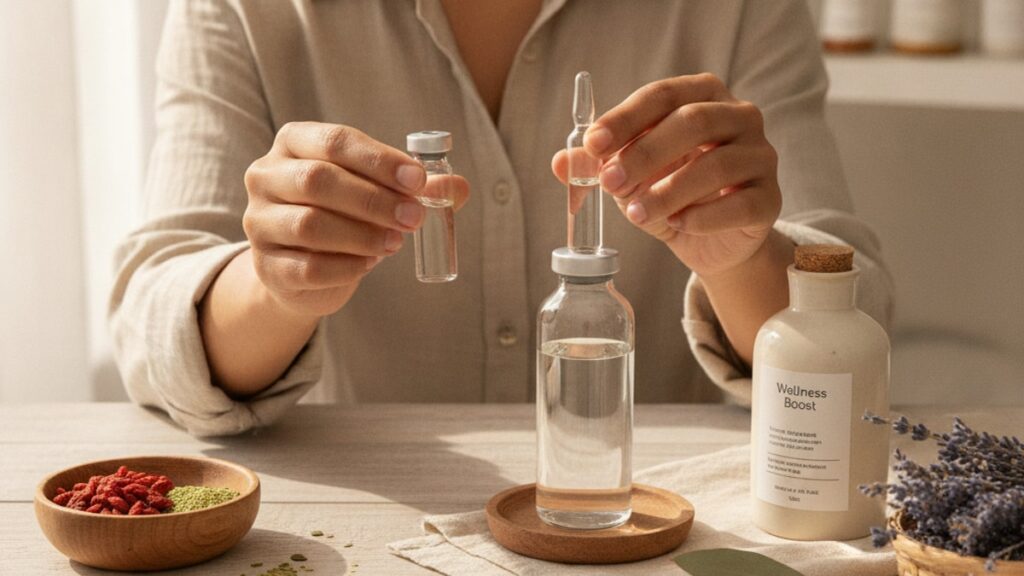
Choose hexarelin vial size based on dosing frequency and reconstitution stability. Research-grade peptides require exact calculations—here’s how to match

Hexarelin injection site rotation prevents lipohypertrophy and maintains absorption consistency. Proper technique protects tissue integrity across peptide
