
Verify Dihexa Purity — Lab Testing & Quality Standards

Verify dihexa purity through HPLC analysis, mass spectrometry, and third-party COAs. Labs use ≥95% thresholds to confirm pharmaceutical-grade nootropic



Your blog category
Verify dihexa purity through HPLC analysis, mass spectrometry, and third-party COAs. Labs use ≥95% thresholds to confirm pharmaceutical-grade nootropic

Dihexa research spans cognitive enhancement, neurogenesis, and synaptic plasticity. Studies show N-terminal synaptogenic activity — yet clinical

Learn how to run dihexa cycle safely with precise dosing schedules, cycling protocols, and post-cycle planning. Protocol details inside.

Choose dihexa vial size based on protocol frequency and reconstitution needs. Research dosing at 5mg vs 10mg and storage stability considerations.

Rotating dihexa injection sites prevents tissue scarring and preserves absorption. Learn the specific rotation pattern, site recovery timing, and

Time dihexa doses precisely using its 2–3 hour half-life. Twice-daily protocols maintain receptor engagement without desensitization—research shows timing

Learn to calculate Adamax concentration accurately using molecular weight, dilution formulas, and proper reconstitution protocols for research
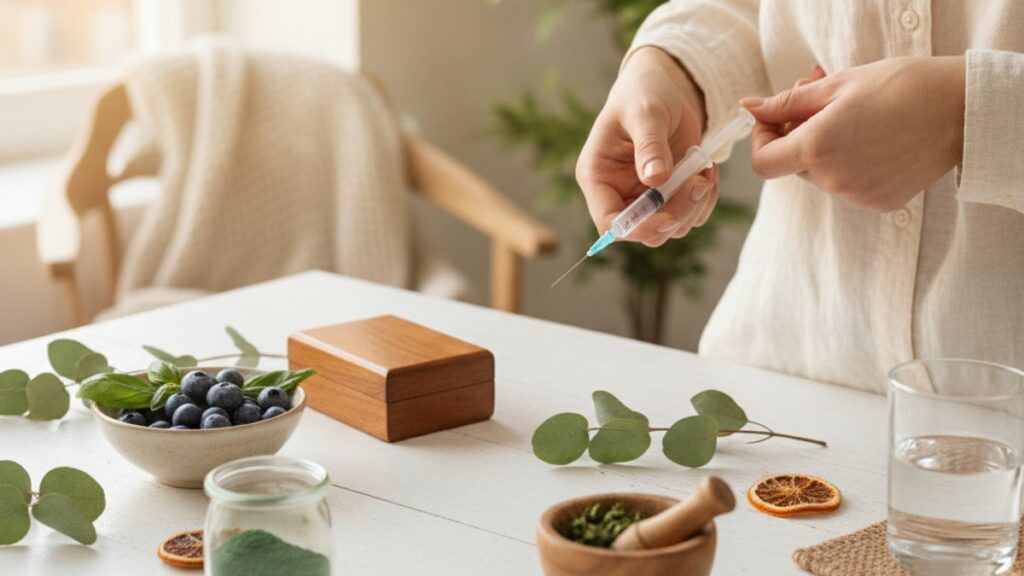
Subcutaneous injection of Adamax requires 45-degree angle insertion into fatty tissue. Master reconstitution, dose measurement, and injection site

Adamax peptide requires −20°C storage in lyophilised form and 2–8°C refrigeration after reconstitution to maintain stability and prevent protein

Rotating Adamax injection sites prevents tissue damage, maintains absorption, and reduces side effects. Learn proper rotation patterns and site recovery
