
What Does Lipo-C Look Like in Solution? (Visual Guide)
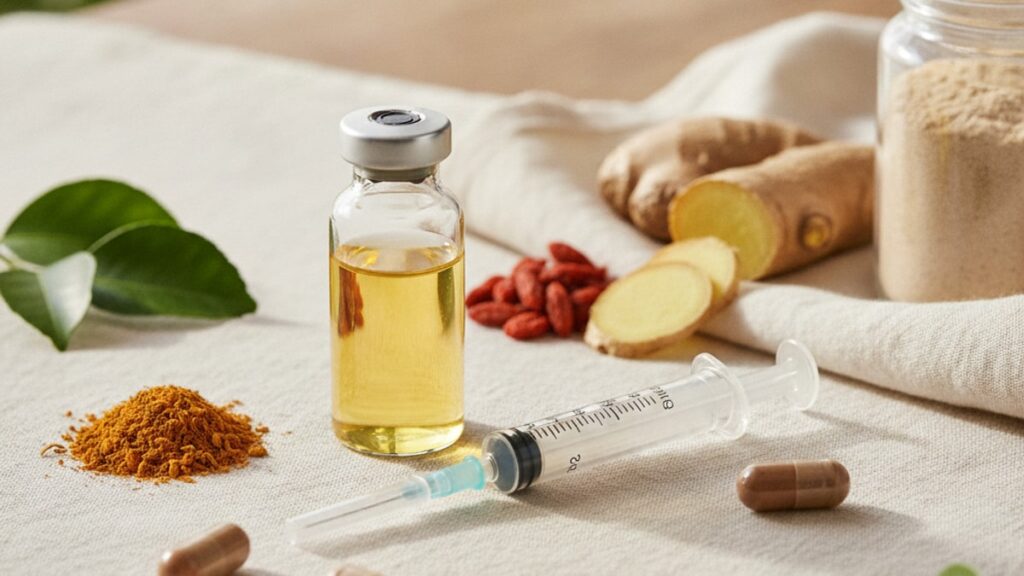
Properly reconstituted Lipo-C appears as a clear, pale yellow to colorless liquid. Cloudiness, crystals, or discoloration signal degradation or



Your blog category
Properly reconstituted Lipo-C appears as a clear, pale yellow to colorless liquid. Cloudiness, crystals, or discoloration signal degradation or

Lipo-C concentration for research protocols: 25–50mg/mL methionine, 25–50mg/mL inositol, 50–100mg/mL choline — stability and solubility determine

Lipo-C popular in weight loss for lipotropic amino acids that mobilize hepatic fat stores, enhance mitochondrial function, and support thyroid metabolism

Lipo-C and Lipo C are the same compound: lipotropic formula with methionine, inositol, and choline. The difference lies in formulation purity, not

Lipo-C doesn’t require cycling like peptides—methionine, inositol, and choline clear within 24-72 hours, allowing continuous use without receptor

Glutathione neutralizes free radicals, regenerates vitamins C and E, and binds toxins for elimination — supporting cellular defense against oxidative

Glutathione’s effects appear within hours at the cellular level, but measurable outcomes in research protocols typically emerge after 4–12 weeks of

Multiple clinical trials confirm glutathione supplementation is well-tolerated in healthy adults at doses up to 1,000mg daily, with minimal adverse

Glutathione can be safely combined with most peptides including BPC-157, TB-500, and GHK-Cu — when reconstitution protocols and administration timing are

Glutathione conjugation drives Phase II detox by binding toxins for excretion — but GSH depletion under oxidative stress compromises this pathway
