
Document VIP Research — How to Validate Peptide Purity Data

Document VIP research by cross-referencing HPLC reports, MS data, and batch traceability. We explain how to verify peptide authenticity before starting





Your blog category
Document VIP research by cross-referencing HPLC reports, MS data, and batch traceability. We explain how to verify peptide authenticity before starting

Choose VIP vial size correctly: match peptide concentration, injection frequency, and reconstitution volume. Oversizing wastes money; undersizing risks

Calculate ARA-290 concentration using precise dilution formulas, molecular weight conversions, and lab-grade measurement tools for reproducible research

ARA-290 subcutaneous injection requires precise reconstitution, site rotation, and sterile technique. Learn exact steps, injection angles, and storage

Rotating ARA-290 injection sites prevents lipohypertrophy and maintains peptide absorption — here’s the evidence-based rotation pattern that protects
Tirzepatide VIP doses range from 2.5mg to 15mg weekly, titrated over 20 weeks. Real Peptides explains dosing protocols, escalation timing, and clinical
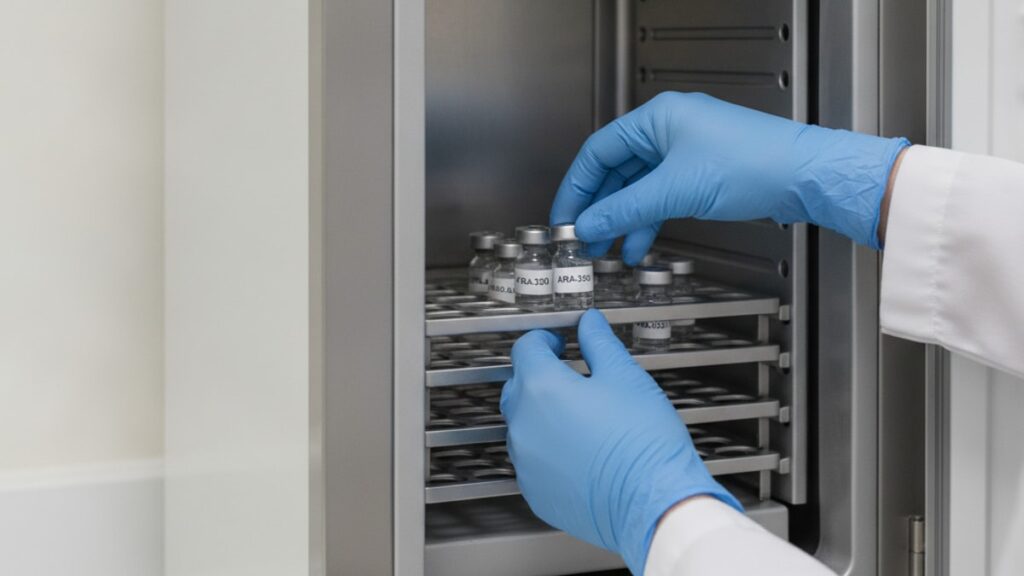
Store ARA-290 long term at −20°C lyophilized or 2–8°C reconstituted for 30 days. Temperature control prevents irreversible peptide degradation.
Verify ARA-290 purity through HPLC, mass spec, and third-party testing. Learn which methods catch contamination before your research is compromised.

Learn how to read ARA-290 COA documents to verify purity, potency, and quality. Understand HPLC results, mass spectrometry data, and red flags before

Reconstituting ARA-290 requires bacteriostatic water, refrigerated vials, and precise injection technique. Temperature control determines peptide
