





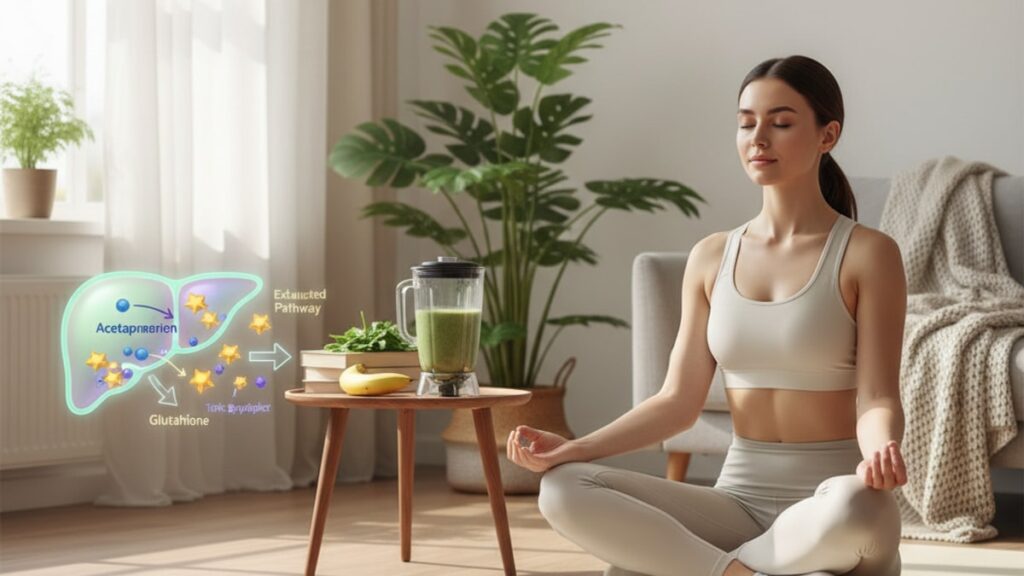
We've all been there. A throbbing headache, a nagging backache, or the first signs of a fever, and you reach for that familiar bottle of acetaminophen—often known by the brand name Tylenol. It's one of the most common over-the-counter medications in the world, a staple in medicine cabinets everywhere. It’s effective, accessible, and generally considered safe when used as directed. But what if we told you that every time you take it, a critical, behind-the-scenes process kicks off that directly impacts your body's most powerful protective molecule?
That brings us to the core question, one we hear with increasing frequency from the health-conscious and the scientific community alike: does acetaminophen deplete glutathione? The short answer is a definitive yes. It's not a theory or a possibility; it's a fundamental, well-documented biochemical reality. Here at Real Peptides, where our entire focus is on the intricate world of peptides and cellular function, understanding this interaction is crucial. It reveals just how fragile the balance of our internal systems can be and highlights the importance of supporting our body's natural defense mechanisms. Let's break down exactly what's happening under the hood.
What Exactly is Glutathione? (And Why We Call It the 'Master Antioxidant')
Before we can talk about depletion, we have to appreciate what's being depleted. Glutathione isn't just another antioxidant. It's the master antioxidant. Think of it as the CEO of your body's entire defense and detoxification system. It's a tripeptide, meaning it's composed of three amino acids: cysteine, glutamic acid, and glycine. Your body produces it naturally in almost every single cell, but the highest concentrations are found in the liver—and for a very good reason.
Its job is sprawling and non-negotiable. It does a few key things:
- Neutralizes Oxidative Stress: It directly quenches free radicals, those unstable molecules that damage cells, proteins, and DNA, contributing to aging and disease.
- Recycles Other Antioxidants: Glutathione helps regenerate other vital antioxidants like vitamins C and E, bringing them back online so they can continue to do their jobs.
- Powers Detoxification: This is the big one for our discussion. The liver uses glutathione to grab onto toxins, drugs, and metabolic byproducts, making them water-soluble so they can be safely flushed out of your body. It's the primary garbage disposal system for harmful compounds.
- Supports Immune Function: It plays a critical role in the proliferation and activation of lymphocytes, the white blood cells that form the backbone of your adaptive immune system.
Without sufficient glutathione, your body's ability to protect itself from damage and clear out waste plummets. It’s that important. The system grinds to a halt. Our team's experience in peptide research constantly reinforces that maintaining robust endogenous systems like the glutathione pathway is fundamental to overall cellular resilience.
The Acetaminophen-Glutathione Connection: A Biochemical Deep Dive
Now, let's introduce acetaminophen into the picture. When you swallow that pill, it travels to your liver to be metabolized, or broken down, so it can be eliminated. The liver has several pathways to handle this. For a normal, therapeutic dose, about 90% of the acetaminophen is processed through safe, non-toxic pathways called glucuronidation and sulfation.
But a small portion, around 5-10%, is shunted down a different path. It gets processed by a group of enzymes known as the cytochrome P450 system. This process creates a new, highly toxic byproduct. Its name is a mouthful: N-acetyl-p-benzoquinone imine, or NAPQI for short.
NAPQI is bad news. It's incredibly reactive and destructive to liver cells. If left unchecked, it will start binding to cellular proteins and membranes, causing rapid cell death (necrosis). This is the direct mechanism of acetaminophen-induced liver damage. So, what stands in its way? What’s the bodyguard protecting your liver from this toxic metabolite?
Glutathione. That’s it.
Your liver’s glutathione stores immediately jump into action, binding to every molecule of NAPQI. This conjugation reaction neutralizes the toxin, rendering it harmless. This new, safe compound is then excreted in your urine. This process works beautifully… as long as you have enough glutathione to handle the NAPQI load. The system is elegant and effective, a testament to the body's incredible design. But it has a very clear breaking point.
So, Does Acetaminophen Deplete Glutathione? The Unflinching Answer.
Yes. Absolutely, one hundred percent, yes.
Every single time you take acetaminophen, your body must use glutathione to neutralize the toxic NAPQI metabolite. It's not an accident; it's a required step in the drug's metabolism. The key variable is the amount of depletion.
With a standard, recommended dose (say, 500-1000 mg for an adult), your liver has plenty of glutathione in reserve. It uses a small amount to neutralize the NAPQI, and your cells quickly regenerate what was lost. The result is a minor, temporary dip in glutathione levels that your body can easily recover from. No harm done. For a healthy individual, this is a perfectly manageable metabolic cost.
But what happens when you take too much? An overdose of acetaminophen is a catastrophic event for the liver precisely because it overwhelms the glutathione system. The sheer volume of the drug creates a massive amount of NAPQI. Your liver throws all of its available glutathione at the problem, but the supply is finite. Once your glutathione stores are depleted by about 70%, the system breaks. There is no longer a defense.
The remaining NAPQI, now free and unchecked, begins to systematically destroy liver cells. This is what leads to acute liver failure, a life-threatening medical emergency. It’s why acetaminophen overdose is a leading cause of acute liver failure in the Western world. It's not the acetaminophen itself that's the primary poison; it's the NAPQI that can't be cleared once glutathione runs out.
Beyond Overdose: The Risks of Chronic, Long-Term Use
Okay, so we understand the danger of a massive, acute overdose. But what about the person taking acetaminophen every day for chronic arthritis, persistent back pain, or recurring headaches? This is where the conversation gets more nuanced and, frankly, more relevant for most people.
Chronic use, even at therapeutic doses, creates a constant, low-level drain on your glutathione reserves. It might not be enough to cause acute liver failure, but it can contribute to a state of chronically suppressed glutathione levels. We can't stress this enough: this isn't just a theoretical concern. Our team sees this pattern in broader research on cellular health—small, persistent stressors can be just as damaging over time as a single, large insult.
Think of it like a bank account. An overdose is like a massive, fraudulent withdrawal that empties your account in an hour. Chronic use is like a small, unauthorized subscription fee that gets charged every single day. Over time, it can still leave your account dangerously low, making you vulnerable if another, larger expense suddenly comes along. This 'slow burn' depletion can leave your cells less resilient to other sources of oxidative stress, like pollution, poor diet, alcohol consumption, or illness.
This is particularly concerning for individuals who already have compromised glutathione production, such as the elderly, those with chronic illnesses, or individuals with a high toxic load. For them, even standard doses can tip the scales toward a state of glutathione insufficiency, impacting not just their liver but their overall immune function and antioxidant capacity.
The Role of NAC (N-Acetylcysteine): The Antidote Explained
To fully appreciate the acetaminophen-glutathione link, you only need to look at the universally accepted antidote for acetaminophen poisoning: N-acetylcysteine, or NAC.
When a patient arrives at the hospital with an acetaminophen overdose, the first thing doctors do is administer massive doses of NAC, usually intravenously. Why? Because NAC is a direct precursor to cysteine, one of the three amino acid building blocks of glutathione. By flooding the body with NAC, you provide the liver with the raw materials it needs to rapidly synthesize more glutathione.
NAC does two things:
- It aggressively replenishes glutathione stores, allowing the liver to get back to its job of neutralizing the toxic NAPQI.
- It can, to some extent, substitute for glutathione in the detoxification pathway, offering another layer of protection.
The effectiveness of NAC as an antidote is the most powerful clinical proof of the mechanism we've been discussing. The entire treatment protocol for the world's most common drug overdose is centered on restoring the body's supply of a single peptide: glutathione.
Comparison Table: Approaches to Glutathione Support
When researchers or health-conscious individuals consider how to maintain healthy glutathione levels, especially in the context of stressors like medication use, several strategies come into play. Here's a breakdown our team put together to compare the different approaches.
| Approach | Mechanism of Action | Pros | Cons |
|---|---|---|---|
| Dietary Precursors | Provides the body with raw materials (sulfur, selenium, amino acids) from foods like whey protein, broccoli, garlic, and onions to synthesize its own glutathione. | Natural, cost-effective, provides a wide range of other nutrients. | Slower to impact levels, dependent on digestive health, may be insufficient during high-stress periods. |
| NAC Supplementation | Directly provides cysteine, the rate-limiting amino acid for glutathione synthesis, prompting the body to produce more. | Clinically proven, highly effective at boosting production, relatively inexpensive. | Doesn't provide glutathione directly; some people report mild gastrointestinal side effects. |
| Direct Glutathione | Bypasses the body's synthesis pathway by providing the complete tripeptide. Researchers often use this to study direct effects. | Direct and immediate supply of the molecule itself. Useful in controlled research settings. | Historically, oral bioavailability has been a point of debate, though formulations are improving. |
| Lifestyle Factors | Actions like regular exercise, adequate sleep, and stress management reduce the overall oxidative burden, thus preserving existing glutathione stores. | Holistic, free, improves overall health and resilience in countless ways. | Doesn't actively boost production; more about conservation. Effects are indirect and long-term. |
Strategies for Supporting Glutathione Levels: A Proactive Approach
Understanding the problem is one thing; knowing what to do about it is another. For those in the research community and for anyone taking a proactive role in their health, supporting the body's glutathione system is a cornerstone of cellular wellness. Here’s what we’ve learned from both clinical data and our own deep dive into peptide science.
First, food is foundational. Your body needs the right building blocks. This means a diet rich in sulfur-containing amino acids, found in cruciferous vegetables (broccoli, cauliflower, Brussels sprouts), alliums (onions, garlic), and high-quality whey protein. Selenium, a critical cofactor for the glutathione peroxidase enzyme, is also vital—you can find it in Brazil nuts, sardines, and grass-fed beef.
Second, lifestyle can't be ignored. Chronic stress and lack of sleep both generate enormous amounts of oxidative stress, forcing your body to burn through its glutathione reserves just to keep up. Regular, moderate exercise has been shown to boost glutathione levels, but over-training can actually have the opposite effect. It's all about balance.
Third, targeted supplementation can play a powerful role. As we discussed, NAC is a well-researched and potent glutathione precursor. Others include alpha-lipoic acid (ALA) and milk thistle (silymarin), both of which have shown promise in supporting liver health and glutathione levels. For researchers studying direct antioxidant replenishment, having access to high-purity, stable forms of Glutathione is a non-negotiable element. It allows for controlled studies on its direct impact, bypassing the body's own synthesis pathways. At Real Peptides, ensuring the stability and purity of compounds like this is our top priority, because we know that reliable data depends on reliable materials.
For a deeper visual dive into some of these biochemical pathways, our colleagues over at MorelliFit's YouTube channel often break down complex health topics in an accessible way that we think is incredibly valuable.
The Bigger Picture: Peptides and Cellular Health
This entire conversation about acetaminophen and glutathione is a perfect microcosm of a much larger principle: the intricate, interconnected nature of our cellular health. It shows how one simple, external compound can have cascading effects on our most fundamental protective systems.
This is the world our team at Real Peptides operates in every day. The research we support is all about understanding and influencing these pathways. Whether it’s studying how antioxidant peptides like Glutathione protect cells, how regenerative peptides like BPC 157 might support tissue repair, or how immune-modulating peptides like Thymosin Alpha 1 interact with the body's defense systems, it all comes back to maintaining cellular balance and resilience. The tools may change, but the goal is the same: to understand how to keep cells healthy in the face of stress.
Our commitment is to provide the scientific community with the purest, most reliable tools to conduct this vital work. When a researcher is investigating a delicate pathway, they can't afford to have impurities or inconsistencies in their compounds clouding the results. That’s why we focus on small-batch synthesis and exact amino-acid sequencing. Explore our full collection to see the tools researchers are using to push the boundaries of cellular science. If you're a researcher ready to investigate these pathways, you can Get Started Today with the highest-purity compounds available.
So while that bottle of acetaminophen in your cabinet may seem simple, its interaction with your body is anything but. It's a potent reminder that we need to be mindful of everything we put into our systems and proactive about supporting the elegant, powerful biology that keeps us running. It’s about respecting the chemistry that keeps us alive.
Frequently Asked Questions
How much acetaminophen does it take to deplete glutathione?
▼
Even a single, standard dose of acetaminophen will use up some glutathione. Significant, dangerous depletion typically occurs during an overdose, usually defined as taking more than 4,000 mg in a 24-hour period for adults, or one large dose exceeding 150 mg per kg of body weight.
Does ibuprofen or aspirin deplete glutathione too?
▼
No, not in the same direct way. Ibuprofen and aspirin belong to a class of drugs called NSAIDs, and they have a different metabolic pathway. While chronic inflammation from any source can tax the antioxidant system, they don’t create the toxic NAPQI metabolite that directly consumes glutathione.
Can I take glutathione supplements with acetaminophen?
▼
This is a question for your healthcare provider. While theoretically supporting glutathione levels is beneficial, the timing and dosage relative to taking medication are complex. It’s crucial to follow medical advice, especially when dealing with pain management.
What are the signs of low glutathione levels?
▼
Symptoms of chronically low glutathione can be vague and overlap with many other conditions. They may include fatigue, brain fog, a weakened immune system (frequent illness), and slower recovery from exercise. Acute depletion from an overdose leads to symptoms of liver failure, which is a medical emergency.
Does drinking alcohol make acetaminophen more dangerous?
▼
Yes, absolutely. Chronic alcohol consumption can deplete glutathione stores on its own and up-regulates the same cytochrome P450 enzymes that create NAPQI. This combination makes the liver far more vulnerable to damage from acetaminophen, even at lower doses.
How quickly can my body regenerate glutathione?
▼
A healthy body is constantly regenerating glutathione. After a minor dip from a standard acetaminophen dose, levels can recover relatively quickly, within hours. However, after significant depletion from an overdose, it can take days to recover, even with medical intervention like NAC.
Are children more susceptible to glutathione depletion from acetaminophen?
▼
Children’s metabolic pathways are different, and while they can still suffer from overdose, some evidence suggests they may be slightly less susceptible than adults due to differences in liver metabolism. However, proper dosing based on weight is absolutely critical to prevent toxicity.
Can I get enough glutathione from my diet alone?
▼
You cannot get glutathione directly from food in significant amounts, as it’s poorly absorbed. Instead, your diet provides the building blocks (amino acids like cysteine) and cofactors (like selenium) that your body uses to produce its own glutathione.
Is it safe to take NAC as a regular supplement?
▼
NAC is widely available as a dietary supplement and is generally considered safe for many people. It’s used to support respiratory health and antioxidant status. As with any supplement, it’s best to consult with a healthcare professional to see if it’s appropriate for your specific needs.
Does the form of acetaminophen (e.g., tablet, liquid) matter?
▼
No, the form of delivery does not change the fundamental metabolic process. Whether it’s a tablet, capsule, or liquid, the acetaminophen is still processed by the liver and will generate the NAPQI metabolite, thus consuming glutathione.
What is the role of the Real Peptides Glutathione product?
▼
Our high-purity [Glutathione](https://www.realpeptides.co/products/glutathione/) is intended strictly for laboratory and research purposes. It allows scientists to study the direct effects of this critical tripeptide in a controlled, in-vitro setting, helping to further our understanding of cellular health and antioxidant defense.
Besides acetaminophen, what other common things deplete glutathione?
▼
Many factors can deplete glutathione. These include chronic stress, environmental toxins (heavy metals, pesticides), excessive alcohol consumption, smoking, poor diet, and even aging itself. Essentially, anything that increases the body’s total oxidative stress load will increase the demand for glutathione.











