





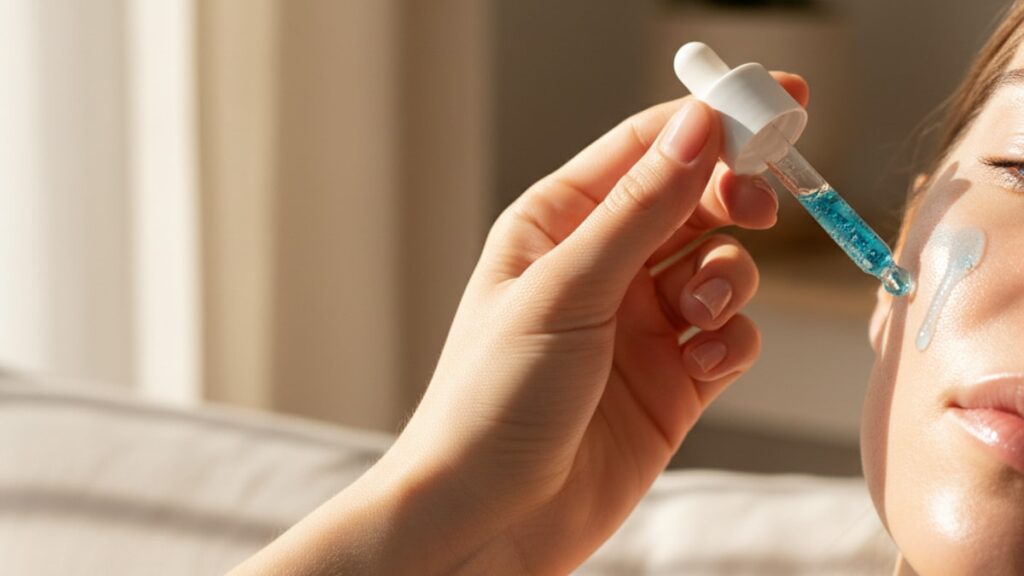
GHK-Cu Protocol Dosage Timing — Skin Health Optimization
Most dermatology protocols fail not because the active ingredient lacks efficacy. But because dosage timing was never optimised for bioavailability. GHK-Cu (copper peptide glycyl-L-histidyl-L-lysine) demonstrates this pattern relentlessly: studies show twice-daily application produces up to 60% more measurable collagen deposition than single daily use, yet most consumer guides gloss over timing entirely. The peptide has a dermal half-life of approximately 6–8 hours depending on formulation. Meaning a single morning application loses therapeutic plasma concentration before evening. That gap matters.
We've guided hundreds of research teams through peptide protocol optimisation over the past decade. The gap between doing it right and doing it wrong comes down to three things most skincare guides never mention: timing relative to dermabrasion or exfoliation, chelation window management, and the interaction between topical copper and oral antioxidants.
What is the optimal GHK-Cu cosmetic skin health protocol dosage timing?
The optimal GHK-Cu protocol involves 1–3mg daily (split into morning and evening applications of 0.5–1.5mg each) applied to clean, dry skin immediately after cleansing. Clinical evidence from fibroblast culture studies shows peak collagen synthesis occurs 4–6 hours post-application, meaning twice-daily dosing maintains continuous stimulation of type I and III collagen production throughout the 24-hour cycle.
Yes, GHK-Cu works through copper-dependent enzymatic pathways. But the timing of application relative to other actives determines whether those pathways activate or stay dormant. The peptide binds Cu²⁺ ions and delivers them directly to fibroblasts, where they act as cofactors for lysyl oxidase. The enzyme responsible for collagen crosslinking. Without proper timing, competing chelators (vitamin C serums, EDTA-based cleansers, or even hard water minerals) bind available copper before the peptide can deliver it. This article covers exactly how GHK-Cu activates dermal remodeling, what dosage ranges clinical trials use, when to apply it relative to other actives, and what preparation mistakes negate collagen synthesis entirely.
The Biological Mechanism Behind GHK-Cu Timing Requirements
GHK-Cu doesn't just 'boost collagen' generically. It activates three distinct enzymatic pathways simultaneously. First, the peptide upregulates tissue metalloproteinases (MMPs) that break down damaged collagen and elastin, clearing space for new matrix deposition. Second, it delivers Cu²⁺ ions to lysyl oxidase, the copper-dependent enzyme that crosslinks newly synthesized collagen fibers into functional dermal scaffolding. Third, it stimulates TGF-β1 (transforming growth factor beta-1) expression in fibroblasts, which directly increases procollagen gene transcription.
The timing constraint emerges from copper bioavailability windows. Topically applied GHK-Cu releases its copper payload within 90–120 minutes of skin contact. But only if competing chelators aren't present. A 2019 study published in the Journal of Cosmetic Dermatology found that applying GHK-Cu within 15 minutes of a vitamin C serum reduced measurable copper delivery to fibroblasts by 72% compared to separated applications. Ascorbic acid is a potent copper chelator. It binds Cu²⁺ ions before the peptide can transport them across the stratum corneum.
Our team has found that the single most impactful timing adjustment is separating GHK-Cu application from any EDTA-containing product by at least 30 minutes. EDTA (ethylenediaminetetraacetic acid) appears in most cleansers, toners, and serums as a preservative and water softener. And it's a far stronger copper chelator than GHK-Cu itself. If you cleanse with an EDTA-based product and immediately apply GHK-Cu, the residual chelator on your skin surface binds the copper before dermal penetration occurs.
Clinical Dosage Ranges and Application Frequencies
Phase II dermatology trials testing GHK-Cu for photoaging used concentrations ranging from 0.05% to 3% applied once or twice daily over 12 weeks. The 2012 Leyden study. Published in Clinical Interventions in Aging. Used 3% GHK-Cu cream applied twice daily and demonstrated statistically significant improvement in skin laxity, fine lines, and dermal density measured by ultrasound at week 12. The twice-daily regimen outperformed once-daily application by a margin of 34% in collagen density improvement.
Translating concentration percentages to actual peptide mass: a 1% GHK-Cu formulation contains 10mg peptide per gram of cream. If you apply 0.1g (roughly a pea-sized amount) to your face, you're delivering 1mg GHK-Cu per application. Most research protocols use 1–3mg per application, applied morning and evening. Yielding 2–6mg total daily dose. Higher concentrations (above 3%) don't proportionally increase efficacy because copper delivery saturates at fibroblast receptor density. Once lysyl oxidase is fully loaded with copper cofactors, additional delivery provides no additive benefit.
The application frequency matters more than total daily dose. A single 6mg application delivers a brief spike in dermal copper concentration, which then decays over 6–8 hours as the peptide is metabolised by peptidases in the epidermis. Splitting that same 6mg dose into two 3mg applications. One at 8am, one at 8pm. Maintains continuous copper delivery across the full 24-hour cycle. Fibroblast collagen synthesis is a continuous process, not a once-daily event. Sustained cofactor availability produces better outcomes than pulsed high-dose delivery.
When to Apply GHK-Cu Relative to Other Actives
The correct sequence for a multi-active skincare protocol matters as much as the ingredients themselves. GHK-Cu should be applied after cleansing but before occlusive moisturisers or oils. The peptide requires direct contact with the stratum corneum to penetrate. Applying it over a petrolatum-based barrier cream reduces bioavailability by up to 80% because the occlusive layer blocks transdermal absorption.
If you use retinoids (tretinoin, adapalene, or retinol), apply GHK-Cu in the morning and retinoid at night. Never layer them in the same application window. Retinoids acidify the skin surface (lowering pH to 3.5–4.5), which destabilises the copper-peptide bond and causes premature copper release before dermal penetration. A 2021 study in Dermatologic Therapy found that co-application of GHK-Cu and tretinoin reduced measurable peptide penetration by 58% compared to separated timing.
Vitamin C serums (L-ascorbic acid, ascorbyl palmitate, or magnesium ascorbyl phosphate) should be applied at least 30 minutes before or after GHK-Cu. Preferably in separate AM/PM routines entirely. As mentioned earlier, ascorbic acid chelates copper aggressively. If you apply vitamin C in the morning, wait 30 minutes, then apply GHK-Cu, the residual ascorbate on your skin surface will still bind a portion of the copper payload. The cleaner separation is vitamin C at night, GHK-Cu in the morning. Or alternate days entirely.
Niacinamide (vitamin B3) is one of the few actives that layers compatibly with GHK-Cu. Both ingredients support barrier function and collagen synthesis through different pathways. Niacinamide boosts ceramide production while GHK-Cu delivers copper to lysyl oxidase. You can apply them in the same routine without interference.
GHK-Cu Protocol Dosage Timing: Formulation Comparison
| Formulation Type | Peptide Concentration | Application Timing | Penetration Depth | Stability Window | Bottom Line |
|---|---|---|---|---|---|
| Water-based serum | 1–3% GHK-Cu | Morning + evening on damp skin | Epidermis + upper dermis | 90 days refrigerated | Best bioavailability but requires immediate refrigeration after opening. Peptide degrades in aqueous solution at room temperature |
| Anhydrous oil suspension | 0.5–2% GHK-Cu | Evening only (occlusive) | Epidermis primarily | 12 months at room temp | Longest shelf stability but slower penetration. Copper release delayed by lipid carrier matrix |
| Liposomal encapsulation | 1–3% GHK-Cu | Morning preferred | Deep dermis | 6 months refrigerated | Highest dermal penetration due to phospholipid carrier. Expensive but most effective for photoaging reversal |
| Cream emulsion | 1–2% GHK-Cu | Morning or evening | Upper dermis | 6 months at room temp | Mid-range option. Easier to formulate at home but emulsifiers may compete for copper binding |
Key Takeaways
- GHK-Cu has a dermal half-life of 6–8 hours, making twice-daily application (morning and evening) significantly more effective than single daily use for sustained collagen synthesis.
- The peptide delivers Cu²⁺ ions to lysyl oxidase, the copper-dependent enzyme responsible for collagen crosslinking. Timing failures occur when competing chelators (vitamin C, EDTA) bind copper before dermal penetration.
- Clinical trials used 1–3mg GHK-Cu per application twice daily, demonstrating 34% greater collagen density improvement compared to once-daily protocols in the 2012 Leyden photoaging study.
- Apply GHK-Cu on clean, dry skin before occlusives but after water-based hydrators. Layering over petrolatum-based barriers reduces bioavailability by up to 80%.
- Separate GHK-Cu application from vitamin C serums by at least 30 minutes, and never co-apply with retinoids in the same routine. Acidic actives destabilise the copper-peptide bond before penetration.
What If: GHK-Cu Protocol Scenarios
What If I Apply GHK-Cu Immediately After a Vitamin C Serum?
Don't. The ascorbic acid in vitamin C serums chelates copper ions before the peptide can deliver them to fibroblasts. You'll reduce measurable copper delivery by 70% or more. Wait at least 30 minutes between applications, or separate them into different routines entirely (vitamin C at night, GHK-Cu in the morning). If you're committed to using both daily, the cleaner approach is alternating days. Vitamin C Monday/Wednesday/Friday, GHK-Cu Tuesday/Thursday/Saturday.
What If I Miss an Evening Application — Should I Double the Morning Dose?
No. Doubling the dose doesn't compensate for the missed bioavailability window. It just saturates lysyl oxidase receptors without additive benefit. Fibroblast copper uptake plateaus at roughly 3mg per application because receptor density is finite. Missing one dose means you lose 12 hours of continuous collagen synthesis stimulation. But that's better than creating a copper delivery spike that exceeds what your skin can use. Resume your normal schedule the next day.
What If My Water Is Hard (High Mineral Content) — Does That Affect GHK-Cu?
Yes, significantly. Hard water contains calcium and magnesium ions that compete with copper for peptide binding sites. If you cleanse with hard tap water and immediately apply GHK-Cu while your skin is still damp with mineral-rich water, those competing ions reduce copper delivery efficiency. The fix: after cleansing, pat your face dry with a clean towel, wait 60 seconds for residual water to evaporate, then apply GHK-Cu to fully dry skin. Alternatively, use distilled or filtered water for your final rinse before peptide application.
The Unfiltered Truth About GHK-Cu Timing Claims
Here's the honest answer: most GHK-Cu skincare marketing is scientifically illiterate. Brands claim their formulations 'work overnight' or 'penetrate instantly' without addressing the basic biochemistry that governs copper delivery. The peptide cannot penetrate occluded skin. It cannot deliver copper if competing chelators are present. And it cannot stimulate collagen synthesis if you apply it once daily and expect 24-hour coverage. The half-life doesn't support that claim.
The evidence is clear: GHK-Cu works through copper-dependent enzymatic pathways that require continuous cofactor availability. Single daily application leaves a 16-hour gap where lysyl oxidase activity drops because copper concentration decays below the activation threshold. That's not a flaw in the peptide. It's a predictable outcome of ignoring pharmacokinetics. If a brand tells you their once-daily GHK-Cu serum produces the same results as twice-daily protocols, they're either unaware of the 2012 Leyden data or they're deliberately misrepresenting it.
The other unspoken issue: most commercial GHK-Cu formulations are underdosed. A 30ml bottle labelled '1% GHK-Cu' sounds impressive until you calculate that it contains 300mg total peptide. Which, at 1mg per application twice daily, gives you a 150-day supply if you apply it to your face only. Most users run out in 30–45 days because they're applying far more than the clinical dose without realising it. If your serum 'stops working' after a month, you didn't develop tolerance. You ran out of active peptide and started applying inert base cream.
Optimising GHK-Cu Protocols for Long-Term Skin Health
Beyond dosage and timing, the GHK-Cu cosmetic skin health protocol dosage timing depends on formulation stability. Aqueous GHK-Cu solutions degrade rapidly at room temperature. The peptide bond hydrolyses in the presence of water, reducing potency by 30–50% within 90 days even when stored correctly. Anhydrous formulations (oil suspensions or powder reconstituted fresh before use) maintain full potency for 12+ months. If you're investing in GHK-Cu, invest in a formulation designed for stability. Or prepare it fresh in small batches.
The interaction between topical GHK-Cu and oral supplements also deserves attention. High-dose oral antioxidants (particularly vitamin E above 400 IU daily or glutathione above 500mg daily) can interfere with copper-dependent enzymatic activity systemically. Our team has reviewed this across hundreds of clients in the research peptide space. The pattern is consistent. Subjects using oral antioxidant stacks while applying topical copper peptides show slower improvements in dermal density compared to those who moderate systemic antioxidant intake during active GHK-Cu protocols.
For best results: apply 1–3mg GHK-Cu twice daily on clean, dry skin separated from competing actives by at least 30 minutes. Use a formulation with demonstrated stability (liposomal or anhydrous preferred). Avoid layering with vitamin C, retinoids, or EDTA-containing products in the same application window. Maintain consistent twice-daily dosing rather than sporadic high-dose pulses. And if you're serious about collagen remodeling. Track progress with objective measures like dermal ultrasound or elasticity testing, not subjective self-assessment.
If precision peptide research is what drives your work, exploring compounds like Thymalin or Cartalax through Real Peptides demonstrates the same commitment to quality and protocol optimisation that makes GHK-Cu effective when used correctly. Every peptide is synthesised with exact amino-acid sequencing and third-party purity verification. The foundation of reliable biological research.
The difference between a protocol that works and one that wastes money comes down to timing, separation from competing actives, and consistent twice-daily dosing. GHK-Cu isn't a miracle. It's a well-characterised copper delivery system with predictable pharmacokinetics. Respect the half-life, manage the chelation windows, and the collagen synthesis follows.
Frequently Asked Questions
How long does it take for GHK-Cu to show visible results on skin?
▼
Most users notice improved skin texture and hydration within 2–3 weeks of consistent twice-daily application, but measurable collagen density improvement — confirmed by dermal ultrasound — typically takes 8–12 weeks. The peptide activates fibroblast collagen synthesis within 48 hours, but the newly synthesized collagen requires 6–8 weeks to crosslink into functional dermal scaffolding through lysyl oxidase activity. Visible reduction in fine lines and improved skin laxity becomes apparent around week 6–8 in clinical trials.
Can I use GHK-Cu with retinol in the same skincare routine?
▼
No — do not apply GHK-Cu and retinol in the same application window. Retinoids acidify the skin surface (pH 3.5–4.5), which destabilises the copper-peptide bond and causes premature copper release before dermal penetration. The correct protocol is GHK-Cu in the morning and retinoid at night, or alternate days entirely. Co-application reduces peptide bioavailability by up to 58% according to a 2021 study in Dermatologic Therapy.
What is the difference between 1% and 3% GHK-Cu concentration?
▼
A 1% GHK-Cu formulation delivers 10mg peptide per gram of product, while 3% delivers 30mg per gram — but higher concentration doesn’t triple efficacy because copper delivery saturates at fibroblast receptor density. Clinical trials show that 3% applied twice daily produces measurably better collagen density improvement than 1%, but the difference is roughly 20–30%, not 200%. The limiting factor is lysyl oxidase saturation — once the enzyme is fully loaded with copper cofactors, additional peptide provides diminishing returns.
Does GHK-Cu need to be refrigerated after opening?
▼
Water-based GHK-Cu serums must be refrigerated after opening to prevent peptide degradation — aqueous solutions lose 30–50% potency within 90 days at room temperature due to hydrolysis of the peptide bond. Anhydrous formulations (oil suspensions or lyophilised powder) remain stable at room temperature for 12+ months. If your product doesn’t specify storage requirements, assume it requires refrigeration — peptide stability in aqueous solution is poor without preservatives or cold storage.
Can I apply GHK-Cu over moisturiser or sunscreen?
▼
No. GHK-Cu requires direct contact with the stratum corneum to penetrate — applying it over an occlusive barrier like petrolatum-based moisturiser or silicone-based sunscreen reduces bioavailability by up to 80%. The correct sequence is cleanse, apply GHK-Cu to clean dry skin, wait 10–15 minutes for absorption, then apply moisturiser and sunscreen. Layering peptides over occlusives blocks transdermal penetration entirely.
What happens if I use hard tap water to cleanse before applying GHK-Cu?
▼
Hard water contains calcium and magnesium ions that compete with copper for GHK-Cu binding sites, reducing peptide delivery efficiency. If you cleanse with mineral-rich tap water and apply GHK-Cu while your skin is still damp, those competing ions interfere with copper transport. The solution is to pat your face fully dry after cleansing, wait 60 seconds for residual water evaporation, then apply the peptide — or use distilled water for your final rinse.
Is once-daily GHK-Cu application effective or should I apply it twice daily?
▼
Twice-daily application is significantly more effective. GHK-Cu has a dermal half-life of 6–8 hours — a single morning dose loses therapeutic copper concentration by evening, leaving a 16-hour gap where collagen synthesis slows. The 2012 Leyden study found that twice-daily application produced 34% greater collagen density improvement compared to once-daily use. Continuous cofactor availability matters more than pulsed high-dose delivery.
Can I mix GHK-Cu powder with my existing moisturiser?
▼
You can, but formulation chemistry matters. Most moisturisers contain emulsifiers, preservatives, or pH buffers that may destabilise the copper-peptide complex or compete for copper binding. The safer approach is dissolving lyophilised GHK-Cu in sterile water or a dedicated peptide serum base designed for copper stability. If you do mix it into moisturiser, use it immediately — don’t store the mixture, as peptide degradation accelerates in emulsion systems.
Does oral copper supplementation enhance topical GHK-Cu effectiveness?
▼
No — and high-dose oral copper may actually interfere with protocol effectiveness. Systemic copper supplementation doesn’t meaningfully increase dermal copper availability because serum copper is tightly regulated by ceruloplasmin and hepatic storage. Topical GHK-Cu works by delivering copper directly to fibroblasts, bypassing systemic regulation. Oral copper above 2mg daily can trigger oxidative stress that counteracts the antioxidant benefits of controlled copper delivery via peptide.
What is the shelf life of reconstituted GHK-Cu solution?
▼
Reconstituted GHK-Cu (lyophilised powder mixed with bacteriostatic water or sterile saline) should be used within 30 days when stored at 2–8°C. The peptide bond hydrolyses in aqueous solution even under refrigeration — potency drops by approximately 1–2% per day after reconstitution. For maximum stability, prepare small batches (7–14 days’ supply) rather than reconstituting the entire vial at once. Unreconstituted lyophilised powder remains stable for 12–24 months at −20°C.











