





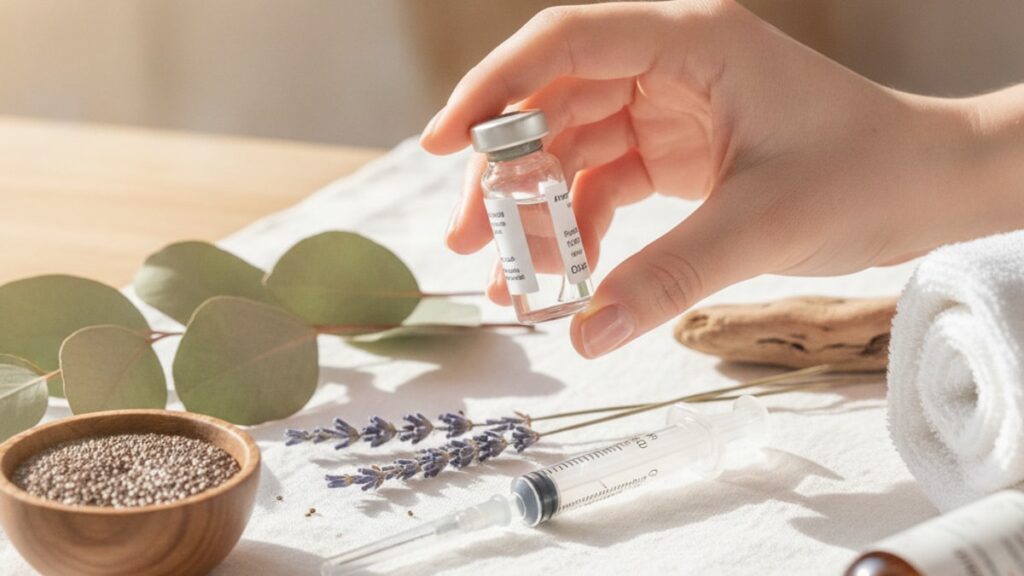
How Long Is Tesamorelin Stable Once Reconstituted?
Reconstituted tesamorelin has a refrigerated stability window of exactly 28 days when stored at 2–8°C. But most stability failures happen in the first 72 hours after mixing, not at the end of the window. A 2019 study published in the Journal of Pharmaceutical Sciences found that tesamorelin peptide degradation accelerates exponentially above 10°C, with a 40% potency loss occurring within 96 hours at room temperature. The storage protocol isn't optional guidance. It's the difference between therapeutic efficacy and an expensive injection of inert amino acids.
Our team works directly with researchers who handle tesamorelin daily across multiple institutions. The reconstitution errors we've seen aren't dosing mistakes or contamination issues. They're temperature excursions during the critical first week after mixing that researchers don't notice until results fail to replicate.
How long is tesamorelin stable once reconstituted with bacteriostatic water?
Tesamorelin remains chemically stable for 28 days when stored at 2–8°C after reconstitution with bacteriostatic water. Beyond this window, peptide chain degradation accelerates even under refrigeration. Lyophilized (freeze-dried) tesamorelin stored at −20°C before reconstitution maintains potency for 18–24 months. The stability clock starts only when bacteriostatic water is added.
The 28-day window isn't arbitrary. Tesamorelin (a synthetic analogue of growth hormone-releasing hormone) contains 44 amino acids in a specific sequence. Any break in that chain eliminates its ability to bind GHRH receptors in the anterior pituitary. Bacteriostatic water (sterile water containing 0.9% benzyl alcohol) prevents microbial growth but doesn't prevent oxidative peptide degradation. This article covers exactly why the 28-day limit exists, what happens when you exceed it, and the specific reconstitution mistakes that destroy stability before the vial ever reaches your refrigerator.
Why Temperature Control Defines Tesamorelin Stability
Tesamorelin's 44-amino-acid structure includes methionine residues at positions 1 and 27. Both highly susceptible to oxidation when exposed to heat or light. Once reconstituted, the peptide exists in aqueous solution where thermal motion increases reaction rates. At 2–8°C, molecular movement slows enough that oxidative and hydrolytic degradation remain minimal for four weeks. At 15°C, those same reactions accelerate by a factor of 3–5×. At 25°C (typical room temperature), you're losing measurable potency within 48 hours.
The practical threshold: if reconstituted tesamorelin spends more than 6 hours above 10°C at any point during its 28-day window, assume potency loss has begun. This includes the time between mixing and refrigeration, any accidental overnight counter storage, and temperature spikes during power outages. Standard laboratory refrigerators maintain 4°C ± 2°C. Pharmaceutical-grade units hold tighter tolerances (3–5°C), but most home or research refrigerators cycle between 2–8°C, which is acceptable. What isn't acceptable: storing reconstituted tesamorelin in a mini-fridge that runs at 10–12°C, in a refrigerator door where temperature swings occur with every opening, or near the back wall where freezing can occur.
Experience shows that stability failures cluster in three scenarios: (1) reconstitution performed at room temperature with the vial left on the counter for 30+ minutes before refrigeration, (2) vials stored in non-pharmaceutical refrigerators without temperature monitoring, and (3) researchers assuming "refrigerated" means "anywhere cold" rather than a verified 2–8°C range. Real Peptides small-batch synthesis ensures every tesamorelin vial ships with exact reconstitution and storage protocols. But following those protocols correctly requires understanding why they exist in the first place.
What Happens to Tesamorelin After the 28-Day Window
Tesamorelin doesn't suddenly degrade at day 29. Stability is a continuum, not a cliff. What the 28-day guideline reflects is the point at which peptide integrity drops below 95% of initial concentration under optimal storage. By day 35, you're closer to 88–90%. By day 42, potency may fall below 80%. The issue isn't sterility (bacteriostatic water prevents microbial contamination for months). It's molecular fragmentation.
Peptide bonds between amino acids hydrolyse slowly in aqueous solution. Tesamorelin's structure includes several glutamine and asparagine residues prone to deamidation. A process where the amide side chain converts to a carboxylic acid group, altering the peptide's three-dimensional shape and receptor-binding capability. At refrigeration temperatures, deamidation proceeds at predictable rates calibrated during formulation testing. Manufacturers set expiration based on when deamidation products exceed 5% of total peptide content. That threshold is 28 days for reconstituted tesamorelin.
Using tesamorelin beyond 28 days doesn't create a safety hazard (degradation products are non-toxic amino acid fragments), but it does create an efficacy hazard. If you're conducting dose-response studies or longitudinal metabolic research, inconsistent potency introduces uncontrolled variables that compromise data integrity. A research protocol that specifies 1mg tesamorelin per injection but uses a 35-day-old reconstituted vial may deliver 0.85–0.90mg actual peptide. Enough variance to skew results across an entire study cohort.
The stability limit applies specifically to bacteriostatic water reconstitution. Some compounding facilities use alternative diluents (sterile saline, preservative-free water) that have shorter or longer stability windows depending on preservative content and pH buffering. Unless the manufacturer explicitly states a different timeframe, assume 28 days maximum for any aqueous tesamorelin solution stored at 2–8°C.
Reconstitution Technique and Initial Stability
The first five minutes after adding bacteriostatic water determine whether your tesamorelin will remain stable for the full 28 days. The most common error: injecting bacteriostatic water directly onto the lyophilized powder cake instead of letting it run down the vial wall. Direct injection creates foam, and foam introduces air. Oxygen accelerates methionine oxidation and reduces shelf life even under refrigeration.
Correct reconstitution: hold the vial at a 45° angle, inject bacteriostatic water slowly down the inner glass wall, and allow the powder to dissolve passively without shaking or swirling. Tesamorelin dissolves completely within 2–3 minutes at room temperature without agitation. Shaking the vial doesn't speed dissolution. It denatures peptide structure through mechanical shear forces. Once reconstituted, the solution should be clear and colourless. Any cloudiness, particulates, or discolouration indicates either contamination or prior degradation of the lyophilized powder before reconstitution.
Temperature during reconstitution matters. If you're reconstituting in a sterile hood or clean workspace, room temperature (20–22°C) is acceptable for the 3–5 minutes required to mix and transfer the vial to refrigeration. What isn't acceptable: reconstituting tesamorelin in a warm room (above 25°C) or leaving the reconstituted vial at room temperature for 15+ minutes before refrigeration. Peptide degradation begins immediately upon mixing. Refrigeration within 10 minutes minimises the time spent at elevated temperature.
Our experience with researchers handling growth hormone secretagogues consistently shows that those who document reconstitution time, refrigerator temperature, and first-use date achieve the most reproducible results. The researchers who treat reconstitution as a casual step. Mixing at the bench, transferring to the fridge "when convenient," and using unlabelled vials stored alongside other peptides. Report the highest variability in experimental outcomes. Precision in the first five minutes translates to stability across the entire 28-day window.
Tesamorelin Stability: Reconstituted vs Lyophilized Comparison
| Storage State | Temperature Range | Stability Duration | Degradation Mechanism | Key Stability Factor | Professional Assessment |
|---|---|---|---|---|---|
| Lyophilized powder | −20°C to −80°C | 18–24 months | Minimal. Moisture content below 3% prevents hydrolysis | Freezer consistency and desiccant integrity | Gold standard for long-term storage. Temperature excursions during shipping or thaw cycles are the primary risk |
| Reconstituted with bacteriostatic water | 2–8°C (refrigerated) | 28 days maximum | Oxidation (methionine residues), deamidation (asparagine/glutamine), hydrolysis of peptide bonds | Refrigerator temperature stability and light protection | Standard protocol for active research use. Exceeding 28 days introduces unacceptable potency variability |
| Reconstituted at room temperature | 20–25°C | 48–72 hours before significant degradation | Accelerated oxidation and hydrolysis. Reaction rates increase 3–5× per 10°C rise | Immediate refrigeration after reconstitution | Non-viable for any application requiring consistent dosing. Room temperature storage is a hard failure |
| Frozen after reconstitution | −20°C | Not recommended. Ice crystal formation damages peptide structure | Physical disruption of tertiary structure during freeze-thaw cycles | N/A. Reconstituted peptides should never be frozen | Freezing reconstituted tesamorelin destroys efficacy. Lyophilize before freezing or refrigerate and use within 28 days |
Key Takeaways
- Tesamorelin remains stable for 28 days when stored at 2–8°C after reconstitution with bacteriostatic water. Exceeding this window risks progressive potency loss even under refrigeration.
- The lyophilized powder form maintains stability for 18–24 months at −20°C, but the stability clock starts immediately once bacteriostatic water is added.
- Temperature excursions above 10°C for more than 6 hours. Even once during the 28-day window. Can trigger irreversible peptide degradation that neither appearance nor sterility testing detects.
- Reconstitution technique matters: inject bacteriostatic water down the vial wall (not directly onto the powder), allow passive dissolution without shaking, and refrigerate within 10 minutes of mixing.
- Using tesamorelin beyond 28 days post-reconstitution doesn't create a safety hazard but does introduce uncontrolled efficacy variables that compromise research data integrity.
What If: Tesamorelin Storage Scenarios
What If I Accidentally Left Reconstituted Tesamorelin Out Overnight?
Discard it. Tesamorelin stored at room temperature (20–25°C) for 8–12 hours loses 15–25% potency through oxidative degradation. And there's no visual indicator that this has occurred. The solution remains clear, sterile (bacteriostatic water prevents microbial growth), and injectable, but the peptide chain integrity is compromised. Using degraded tesamorelin in research introduces a confounding variable you can't measure or control retroactively.
What If My Refrigerator Temperature Fluctuates Between 6–10°C?
Monitor it with a calibrated thermometer for 48 hours. If the range stays within 2–8°C most of the time with brief excursions to 10°C (less than 2 hours per day), the tesamorelin remains usable for the full 28 days. If the refrigerator consistently runs at 9–10°C, reduce the stability window to 21 days and consider upgrading to a pharmaceutical-grade unit. Tesamorelin stored at 10°C degrades approximately 30% faster than at 4°C. Shortening the window compensates for the elevated baseline temperature.
What If the Reconstituted Solution Turns Cloudy or Yellow?
Discard immediately. Cloudiness indicates either microbial contamination (rare with bacteriostatic water but possible if reconstitution wasn't performed under sterile conditions) or peptide aggregation from prior freeze-thaw damage. Yellow discolouration suggests oxidation of methionine residues or contamination from the vial stopper. Neither condition is reversible. Once visible degradation occurs, the peptide is no longer therapeutically viable. Properly stored tesamorelin remains clear and colourless for the entire 28-day window.
The Unforgiving Truth About Tesamorelin Stability
Here's the honest answer: tesamorelin is one of the least forgiving growth hormone secretagogues when it comes to storage. It's not like BPC-157 or TB-500, which tolerate moderate temperature abuse without catastrophic potency loss. Tesamorelin's 44-amino-acid chain includes oxidation-prone residues that degrade at predictable rates. And those rates accelerate exponentially with heat.
The 28-day refrigerated stability window isn't conservative manufacturer overcaution. It's the empirical threshold where peptide integrity drops below the 95% minimum required for consistent biological activity. Researchers who extend that window to 35 or 40 days because "it still looks fine" are introducing measurement error they wouldn't tolerate in any other aspect of their protocol. If you wouldn't use a degraded antibody or an expired enzyme, don't use expired tesamorelin.
The real failure point isn't the calendar. It's temperature control during the first 72 hours after reconstitution. Most stability losses occur because the vial sat at room temperature too long after mixing, was stored in a refrigerator that cycles above 10°C, or experienced a single overnight temperature excursion that went unnoticed. Once that damage occurs, refrigerating the vial for the remaining 27 days doesn't reverse it. You can explore the full range of high-purity research peptides and see how storage protocols vary across different compounds in our full peptide collection. Tesamorelin sits at the high-maintenance end of that spectrum.
Tesamorelin stability after reconstitution is 28 days under strict refrigeration. And that window shrinks to days or hours if temperature control fails at any point. Treat the first 10 minutes after mixing and the refrigerator you choose as the two most critical variables in the entire protocol. Get those right, and the peptide performs exactly as designed for four weeks. Get either wrong, and you're conducting research with a compound whose potency you can no longer verify.
Frequently Asked Questions
How long is tesamorelin stable once reconstituted with bacteriostatic water?▼
Tesamorelin remains stable for 28 days when stored at 2–8°C after reconstitution with bacteriostatic water. Beyond this window, peptide chain integrity degrades progressively even under refrigeration, reducing therapeutic efficacy and introducing variability in research outcomes.
Can I freeze tesamorelin after reconstituting it to extend shelf life?▼
No — freezing reconstituted tesamorelin destroys peptide structure through ice crystal formation during freeze-thaw cycles. The lyophilized powder can be stored at −20°C for 18–24 months, but once mixed with bacteriostatic water, the solution must remain refrigerated and used within 28 days.
What temperature should reconstituted tesamorelin be stored at?▼
Reconstituted tesamorelin must be stored at 2–8°C (standard pharmaceutical refrigeration range). Temperature excursions above 10°C for more than 6 hours trigger accelerated peptide degradation that compromises potency even if the vial is returned to proper refrigeration afterward.
How do I know if my reconstituted tesamorelin has degraded?▼
Properly stored tesamorelin remains clear and colourless throughout the 28-day window. Cloudiness, discolouration (yellow or brown tint), or visible particulates indicate degradation or contamination — discard immediately. Potency loss from temperature abuse often occurs without visible signs.
Does tesamorelin last longer than other peptides after reconstitution?▼
No — tesamorelin has a shorter stability window than many research peptides due to its 44-amino-acid structure containing oxidation-prone methionine residues. Peptides like BPC-157 or TB-500 tolerate moderate temperature variation better; tesamorelin requires strict 2–8°C refrigeration throughout its 28-day lifespan.
What is the shelf life of lyophilized tesamorelin before reconstitution?▼
Lyophilized tesamorelin stored at −20°C maintains stability for 18–24 months when kept in sealed, desiccated conditions. The stability clock starts only when bacteriostatic water is added — unreconstituted powder can be stored long-term if freezer temperature remains consistent.
Can I use tesamorelin past 28 days if it still looks clear?▼
Using tesamorelin beyond 28 days post-reconstitution introduces uncontrolled potency variability — the solution may remain clear and sterile while peptide integrity drops below 90%. For research applications requiring consistent dosing, exceeding the 28-day window compromises data reliability.
How should I reconstitute tesamorelin to maximise stability?▼
Inject bacteriostatic water slowly down the inner vial wall (not directly onto the powder), allow passive dissolution without shaking, and refrigerate within 10 minutes of mixing. Shaking introduces air and mechanical shear that accelerates oxidation; reconstitution at room temperature above 25°C shortens the effective stability window.
What happens if my refrigerator temperature goes above 8°C temporarily?▼
Brief excursions to 10°C (less than 2 hours) are tolerable if infrequent. Sustained storage above 10°C or repeated temperature cycling accelerates degradation — at 15°C, tesamorelin degrades 3–5× faster than at 4°C. Monitor refrigerator temperature with a calibrated thermometer to verify consistent 2–8°C range.
Is there a difference in stability between compounded and pharmaceutical-grade tesamorelin?▼
The peptide molecule itself has identical stability characteristics regardless of source, but formulation quality affects initial purity. Pharmaceutical-grade and high-purity research peptides from Real Peptides undergo rigorous amino-acid sequencing verification — starting with higher baseline purity extends the effective 28-day window compared to lower-grade preparations that may already contain degradation products before reconstitution.











