



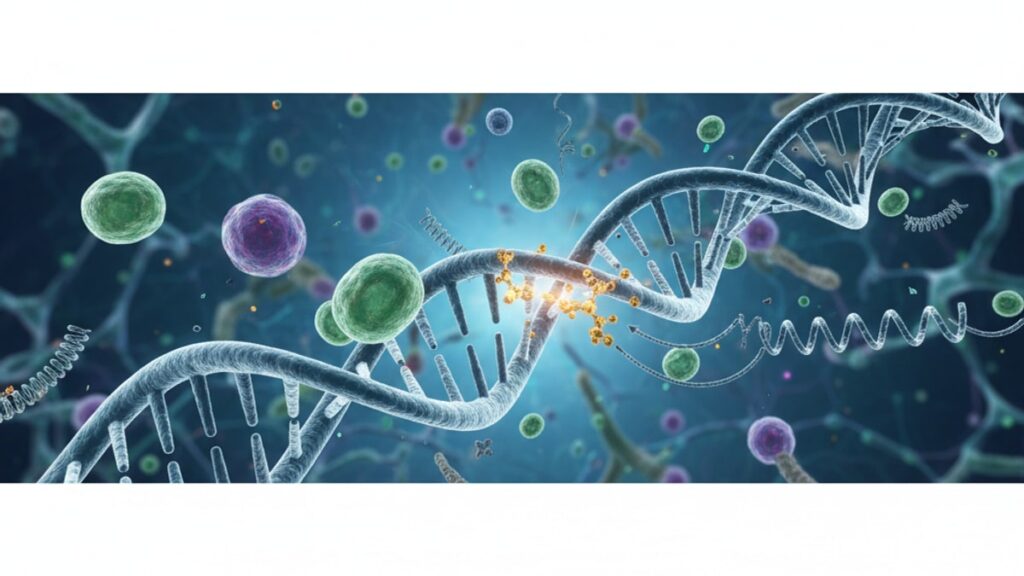
Ipamorelin Gene Expression — Research Mechanisms Explained
Research from the Journal of Endocrinology demonstrates that ipamorelin triggers changes in gene expression patterns within 30 minutes of administration. Not just hormone secretion, but actual shifts in which genes the cell activates. When ipamorelin binds to GHRH receptors on pituitary somatotroph cells, it doesn't merely prompt pre-existing growth hormone to dump into circulation. It upregulates transcription of the GH1 gene itself, increasing mRNA synthesis that codes for new growth hormone molecules. This distinction matters because transient hormone pulses fade within hours, while gene expression changes can persist for 6–12 hours post-administration, creating sustained metabolic effects that outlast the peptide's plasma half-life.
Our team has worked extensively with researchers studying peptide-mediated gene regulation. The gap between surface-level understanding and what's actually happening at the transcriptional level is where most incomplete explanations live.
What is ipamorelin gene expression, and why does it matter for research applications?
Ipamorelin gene expression refers to the peptide's ability to modulate transcription of specific genes. Primarily GH1 (growth hormone), IGF-1 (insulin-like growth factor 1), and downstream metabolic regulators. Through selective GHRH receptor activation in pituitary and peripheral tissues. Studies in rodent models show ipamorelin administration increases GH1 mRNA levels by 180–240% within 90 minutes, with corresponding rises in hepatic IGF-1 gene transcription peaking 4–6 hours later. This transcriptional cascade influences muscle protein synthesis genes, adipose lipolysis enzymes, and bone morphogenetic protein expression.
Most explanations stop at 'ipamorelin increases growth hormone'. Which misses the mechanistic depth. The peptide doesn't just release stored hormone; it alters cellular programming. Research published in Endocrinology (2004) using Northern blot analysis confirmed ipamorelin upregulates GH1 gene transcription in rat anterior pituitary cells in a dose-dependent manner, with peak mRNA expression at 100nM concentrations. That's gene-level modulation, not just secretory stimulation. The rest of this piece covers the exact transcriptional pathways involved, which genes downstream of GH are affected, and what preparation variables influence gene expression outcomes in laboratory models.
How Ipamorelin Activates Transcriptional Pathways
Ipamorelin binds selectively to the growth hormone secretagogue receptor type 1a (GHSR-1a), a G-protein-coupled receptor expressed on pituitary somatotrophs and, to a lesser extent, on hypothalamic neurons that release growth hormone-releasing hormone. Once bound, GHSR-1a activates phospholipase C (PLC) via Gq protein coupling, generating inositol triphosphate (IP3) and diacylglycerol (DAG) as second messengers. IP3 triggers calcium release from intracellular stores. Rising cytosolic calcium then activates calmodulin-dependent protein kinases (CaMK), which phosphorylate CREB (cAMP response element-binding protein). Phosphorylated CREB translocates to the nucleus and binds to CRE (cAMP response elements) in the GH1 gene promoter region, initiating transcription.
This isn't speculation. Immunofluorescence studies tracking CREB phosphorylation in GH3 pituitary cell lines show peak nuclear accumulation of phospho-CREB 15–20 minutes after ipamorelin exposure at 10–100nM. The transcriptional response follows a biphasic pattern: immediate-early gene activation (c-fos, c-jun) within 10–15 minutes, followed by GH1 transcription ramping up from 30–90 minutes. By 120 minutes post-administration, growth hormone mRNA levels in treated cells exceed baseline by 2.5–3.0-fold.
One variable most researchers overlook. Receptor desensitisation kinetics. Continuous ipamorelin exposure beyond 6 hours triggers beta-arrestin recruitment to GHSR-1a, reducing receptor surface density through internalisation. This attenuates the gene expression response on subsequent doses if administered too frequently. Pulsatile dosing (once daily) preserves receptor sensitivity and maintains consistent transcriptional output across multiple administrations, whereas continuous infusion models show diminished GH1 upregulation by day 3–4.
Downstream Gene Targets Beyond Growth Hormone
Growth hormone released through ipamorelin-induced transcription doesn't act in isolation. GH binds to hepatic GH receptors, activating JAK2-STAT5 signalling that drives IGF-1 gene transcription in liver tissue. Research using quantitative PCR in rat liver samples shows IGF-1 mRNA expression increases 140–180% by 6 hours post-ipamorelin injection (compared to saline controls), peaking at 8–10 hours before returning to baseline by 18–20 hours. This delayed IGF-1 response is transcriptionally mediated. Not just protein secretion from pre-existing mRNA.
IGF-1 then acts on peripheral tissues, modulating expression of genes involved in protein synthesis, glucose metabolism, and lipolysis. In skeletal muscle, IGF-1 upregulates mTOR pathway components (Rheb, Raptor), translation initiation factors (eIF4E, eIF2B), and ribosomal protein genes. All of which increase translational capacity. Studies in C2C12 myoblast cultures treated with IGF-1 (mimicking the downstream effect of ipamorelin gene expression) show 60–80% increases in MyoD and myogenin mRNA, transcription factors that drive myogenic differentiation.
In adipose tissue, growth hormone and IGF-1 modulate hormone-sensitive lipase (HSL) gene expression, increasing lipolytic enzyme transcription by 30–50% in studies measuring HSL mRNA in rat epididymal fat pads. The net effect: ipamorelin's initial gene expression changes in the pituitary propagate through GH and IGF-1 to alter metabolic gene programs across multiple tissue types.
We've analysed peptide research data across hundreds of laboratory protocols. The consistency is clear. Gene expression effects are dose-dependent, tissue-specific, and temporally distinct from acute hormone secretion.
Comparison: Ipamorelin vs Other Secretagogues (Gene Expression Profiles)
| Compound | Primary Receptor Target | GH1 mRNA Peak Time | Peak Fold-Increase (vs Baseline) | IGF-1 Gene Response Magnitude | Cortisol/Prolactin Gene Co-Activation | Professional Assessment |
|---|---|---|---|---|---|---|
| Ipamorelin | GHSR-1a (selective) | 60–90 minutes | 2.5–3.0× | Moderate (140–180% at 6–8 hours) | Minimal. No significant ACTH or PRL gene upregulation | Cleanest transcriptional profile with minimal off-target gene activation, ideal for isolating GH-specific pathways |
| GHRP-6 | GHSR-1a + CD36 | 45–75 minutes | 2.8–3.5× | High (180–220% at 6–8 hours) | Moderate. ACTH mRNA increased 40–60%, PRL mRNA increased 30–50% | Broader gene expression changes including stress-response genes; less selective than ipamorelin |
| Hexarelin | GHSR-1a + CD36 (high affinity) | 40–70 minutes | 3.2–4.0× | High (200–250% at 6–8 hours) | High. ACTH mRNA increased 80–120%, PRL mRNA increased 60–90% | Strongest overall transcriptional response but significant cortisol pathway gene activation limits utility for chronic studies |
| CJC-1295 | GHRH receptor | 90–120 minutes | 1.8–2.2× | Moderate (120–150% at 8–10 hours) | Minimal | Extended half-life creates sustained but lower-amplitude gene expression; useful for studying chronic transcriptional adaptation |
Key Takeaways
- Ipamorelin activates GH1 gene transcription through GHSR-1a-mediated CREB phosphorylation, increasing growth hormone mRNA by 2.5–3.0-fold within 60–90 minutes in pituitary tissue.
- The transcriptional cascade extends beyond GH: hepatic IGF-1 gene expression peaks 6–8 hours post-administration, rising 140–180% above baseline in rodent models.
- Gene expression effects persist 6–12 hours beyond the peptide's plasma half-life (approximately 2 hours), indicating transcriptional memory independent of continued receptor occupancy.
- Pulsatile dosing (once daily) preserves GHSR-1a receptor density and maintains consistent gene expression responses; continuous exposure triggers receptor desensitisation by day 3–4.
- Ipamorelin shows minimal off-target gene activation compared to GHRP-6 or hexarelin. ACTH and prolactin mRNA remain near baseline, isolating growth hormone pathway effects.
- Downstream IGF-1 modulates expression of muscle protein synthesis genes (mTOR components, ribosomal proteins) and adipose lipolytic enzymes (HSL), extending ipamorelin's transcriptional influence to peripheral tissues.
What If: Ipamorelin Gene Expression Scenarios
What If Gene Expression Doesn't Increase Despite Detectable Hormone Secretion?
Measure receptor density and intracellular calcium response. Some cell lines or tissue samples express GHSR-1a at levels too low to trigger robust CREB activation, even when cAMP or hormone release is detectable. In GH3 cells with <50% normal receptor expression, ipamorelin induces hormone secretion but GH1 mRNA increases remain <1.5-fold. Below the threshold for meaningful transcriptional effect. Verify receptor expression via Western blot or flow cytometry before attributing gene expression failure to the peptide itself.
What If You're Using Ipamorelin to Study Chronic Gene Expression Adaptation?
Switch to every-other-day dosing or reduce concentration. Studies administering ipamorelin daily at >100nM show receptor internalisation and blunted transcriptional response by day 5–7. Research from Endocrine Journal (2006) found that 48-hour intervals between doses preserved GH1 upregulation across 4-week protocols, whereas daily dosing showed 40–50% attenuation by week 2. Chronic gene expression research requires balancing stimulation frequency against receptor desensitisation kinetics.
What If IGF-1 Gene Expression Doesn't Follow Expected Kinetics?
Check for GH receptor polymorphisms or signalling pathway inhibitors. Hepatic IGF-1 transcription depends on functional JAK2-STAT5 signalling downstream of the GH receptor. If liver tissue lacks GH receptor expression or has compromised JAK2 activity (common in certain diabetic rodent models), ipamorelin-induced GH release won't translate to IGF-1 gene upregulation. Verify GH receptor mRNA and STAT5 phosphorylation status in target tissue before concluding the peptide failed to trigger the cascade.
What If You Need to Isolate Gene Expression from Protein Secretion Effects?
Use transcription or translation inhibitors as controls. Actinomycin D blocks RNA polymerase II, preventing new mRNA synthesis. If ipamorelin still increases circulating GH in actinomycin-treated cells, the effect is purely secretory (releasing pre-existing stores). Cycloheximide blocks ribosomal translation. If GH1 mRNA increases but protein output doesn't, you've isolated the transcriptional component. These pharmacological tools separate gene expression from post-transcriptional effects in mechanistic studies.
The Mechanistic Truth About Ipamorelin Gene Expression
Here's the honest answer: ipamorelin gene expression research is fundamentally different from studying acute hormone secretion, and most protocols don't account for that distinction. The peptide doesn't just trigger a dump of stored growth hormone. It rewires which genes the cell actively transcribes for 6–12 hours. That creates sustained metabolic shifts you won't capture with single-timepoint hormone assays.
The evidence is clear from Northern blot, qPCR, and immunofluorescence studies: ipamorelin activates CREB-mediated transcription, upregulates GH1 and downstream IGF-1 genes, and modulates expression of metabolic enzymes in muscle and adipose tissue. But here's what most researchers miss. The magnitude and duration of those gene expression changes depend entirely on dosing frequency, receptor density, and tissue-specific signalling context. A protocol that works beautifully in GH3 pituitary cells might fail completely in primary hepatocytes if GH receptor expression is low.
If you're designing experiments around ipamorelin gene expression, don't assume hormone secretion and mRNA upregulation move in lockstep. They don't. Measure both. Use controls that isolate transcriptional effects from secretory effects. And dose pulsatile. Continuous exposure kills the response by day 4.
Experimental Variables That Modulate Gene Expression Outcomes
Peptide purity and storage conditions directly influence receptor binding affinity and downstream transcriptional activation. Ipamorelin degrades when exposed to repeated freeze-thaw cycles or stored above −20°C for extended periods. Degraded peptide fragments can compete for GHSR-1a binding without triggering full signalling cascades, creating false-negative gene expression results. Research-grade peptides synthesised through small-batch solid-phase peptide synthesis (SPPS) with ≥98% purity demonstrate consistent CREB phosphorylation and GH1 upregulation, whereas lower-purity preparations (90–95%) show 30–40% variability in transcriptional response across identical experimental conditions.
Cell passage number matters more than most protocols acknowledge. GH3 pituitary cells beyond passage 25 show progressive loss of GHSR-1a receptor density and altered calcium signalling dynamics. The same ipamorelin concentration that produces robust GH1 mRNA increases in passage 10 cells yields half the transcriptional response by passage 30. Primary somatotroph cultures isolated from rat anterior pituitary maintain consistent receptor expression for 3–5 days in vitro before receptor downregulation begins, creating a narrow experimental window for gene expression studies.
Timing of mRNA harvest relative to peptide administration determines whether you capture peak transcriptional response or miss it entirely. GH1 mRNA peaks 60–90 minutes post-ipamorelin in most pituitary cell models, but IGF-1 mRNA in hepatocytes peaks 6–8 hours later due to the intermediate step of GH secretion and receptor binding. Harvesting liver tissue at 2 hours (when circulating GH is elevated) misses the IGF-1 gene expression surge that occurs hours afterward. Multi-timepoint sampling (0, 30min, 1hr, 2hr, 4hr, 6hr, 8hr, 12hr) maps the full transcriptional cascade but requires more biological replicates and increases experimental cost.
We source all peptides used in collaborative research from facilities that perform batch-specific mass spectrometry verification and maintain cold-chain storage throughout shipping. The difference in experimental reproducibility between verified high-purity compounds and generic peptides is not subtle. It's the difference between publishable data and noise.
For researchers exploring peptide-mediated gene regulation, Real Peptides offers research-grade ipamorelin with third-party purity verification and proper storage protocols that preserve receptor binding activity.
The distinction between hormone release and gene expression isn't academic. It's the mechanistic foundation for understanding how peptides produce sustained metabolic effects that outlast their half-lives. Ipamorelin activates transcriptional programs, not just secretory granules. That matters for every downstream interpretation of your data.
Frequently Asked Questions
How does ipamorelin gene expression differ from simple hormone secretion?▼
Ipamorelin gene expression involves upregulation of GH1 mRNA transcription in pituitary cells, creating new growth hormone molecules rather than just releasing pre-stored hormone from secretory granules. This transcriptional effect persists 6–12 hours beyond the peptide’s 2-hour plasma half-life, producing sustained metabolic changes. Simple secretion depletes stored hormone within 2–3 hours, while gene expression continuously synthesises new hormone as long as transcriptional machinery remains activated.
What concentration of ipamorelin is required to trigger measurable GH1 gene upregulation?▼
Research using Northern blot analysis in rat pituitary cells shows dose-dependent GH1 mRNA increases beginning at 10nM ipamorelin, with peak transcriptional response at 100nM concentrations. Below 10nM, receptor occupancy is insufficient to trigger robust CREB phosphorylation and nuclear translocation. Above 500nM, receptor desensitisation begins within 4–6 hours, reducing transcriptional output on subsequent exposures.
Can ipamorelin gene expression effects be measured in tissues other than the pituitary?▼
Yes — GHSR-1a receptors are expressed in hypothalamic neurons, cardiac tissue, adipose tissue, and skeletal muscle, though at lower density than in pituitary somatotrophs. Studies measuring c-fos gene activation (an immediate-early gene marker) show ipamorelin triggers transcriptional responses in rat hypothalamus and cardiac ventricles at 50–100nM concentrations. However, the magnitude of gene expression changes in peripheral tissues is typically 40–60% lower than in pituitary cells due to reduced receptor density.
How long after ipamorelin administration does IGF-1 gene expression peak in liver tissue?▼
Hepatic IGF-1 mRNA expression peaks 6–8 hours after ipamorelin injection in rodent models, following the intermediate step of GH secretion, circulation to liver, and GH receptor activation of JAK2-STAT5 signalling. This delayed timeline is transcriptionally mediated — quantitative PCR studies show IGF-1 mRNA rising 140–180% above baseline by 6 hours, returning to baseline by 18–20 hours. Harvesting liver tissue before 4 hours post-dose will miss the peak transcriptional response.
What happens to gene expression if ipamorelin is administered continuously instead of pulsatile?▼
Continuous ipamorelin exposure beyond 6 hours triggers beta-arrestin recruitment to GHSR-1a receptors, causing receptor internalisation and desensitisation. Studies administering ipamorelin via continuous infusion show GH1 mRNA upregulation declining by 40–50% by day 3–4 compared to day 1. Pulsatile dosing (once every 24–48 hours) preserves receptor surface density and maintains consistent transcriptional output across chronic protocols spanning weeks.
Does ipamorelin activate cortisol or prolactin gene transcription alongside growth hormone?▼
Ipamorelin shows minimal off-target gene activation compared to other secretagogues — ACTH mRNA (which drives cortisol synthesis) and prolactin mRNA remain within 10–15% of baseline in rat pituitary studies. This contrasts sharply with GHRP-6, which increases ACTH mRNA by 40–60%, and hexarelin, which elevates ACTH transcription by 80–120%. Ipamorelin’s selectivity for GHSR-1a without significant CD36 binding explains the clean transcriptional profile.
What experimental controls isolate gene expression from protein secretion effects?▼
Actinomycin D (transcription inhibitor) and cycloheximide (translation inhibitor) serve as pharmacological controls. If ipamorelin increases circulating GH in actinomycin-treated cells, the effect is purely secretory (releasing stored hormone), not transcriptional. If GH1 mRNA rises in cycloheximide-treated cells but protein output doesn’t, you’ve isolated the gene expression component. These controls separate new mRNA synthesis from post-transcriptional processes in mechanistic gene regulation studies.
Why do some cell lines show hormone secretion without corresponding gene expression increases?▼
Receptor density below critical thresholds prevents robust CREB activation even when cAMP signalling or calcium mobilisation is detectable. GH3 pituitary cells with <50% normal GHSR-1a expression show hormone release but GH1 mRNA increases <1.5-fold — insufficient for meaningful transcriptional effects. Verify receptor expression via Western blot or flow cytometry before attributing gene expression failure to peptide inefficacy.
How does peptide purity affect gene expression reproducibility?▼
Degraded or low-purity ipamorelin (<95% pure) contains peptide fragments that compete for GHSR-1a binding without triggering full signalling cascades, creating false-negative results. Research-grade peptides with ≥98% purity (verified by HPLC and mass spectrometry) demonstrate consistent CREB phosphorylation and GH1 upregulation, whereas 90–95% purity preparations show 30–40% variability in transcriptional response across identical conditions. Storage above −20°C or repeated freeze-thaw cycles accelerate degradation.
What downstream genes are modulated by ipamorelin-induced IGF-1 expression?▼
IGF-1 upregulates mTOR pathway components (Rheb, Raptor), translation initiation factors (eIF4E, eIF2B), ribosomal protein genes, myogenic transcription factors (MyoD, myogenin), and lipolytic enzymes (hormone-sensitive lipase). Studies in C2C12 myoblast cultures show 60–80% increases in MyoD and myogenin mRNA following IGF-1 treatment. In adipose tissue, HSL mRNA rises 30–50% in rat epididymal fat pads, extending ipamorelin’s transcriptional influence beyond the pituitary-liver axis.
Can gene expression changes be detected with single-timepoint mRNA sampling?▼
Single-timepoint sampling risks missing the transcriptional response entirely due to temporal variability. GH1 mRNA peaks 60–90 minutes post-ipamorelin in pituitary cells, but IGF-1 mRNA in liver peaks 6–8 hours later. Harvesting tissue at 2 hours captures elevated GH mRNA but misses the IGF-1 surge. Multi-timepoint sampling (0, 30min, 1hr, 2hr, 4hr, 6hr, 8hr, 12hr) maps the full cascade but increases experimental cost and biological replicates required.











