





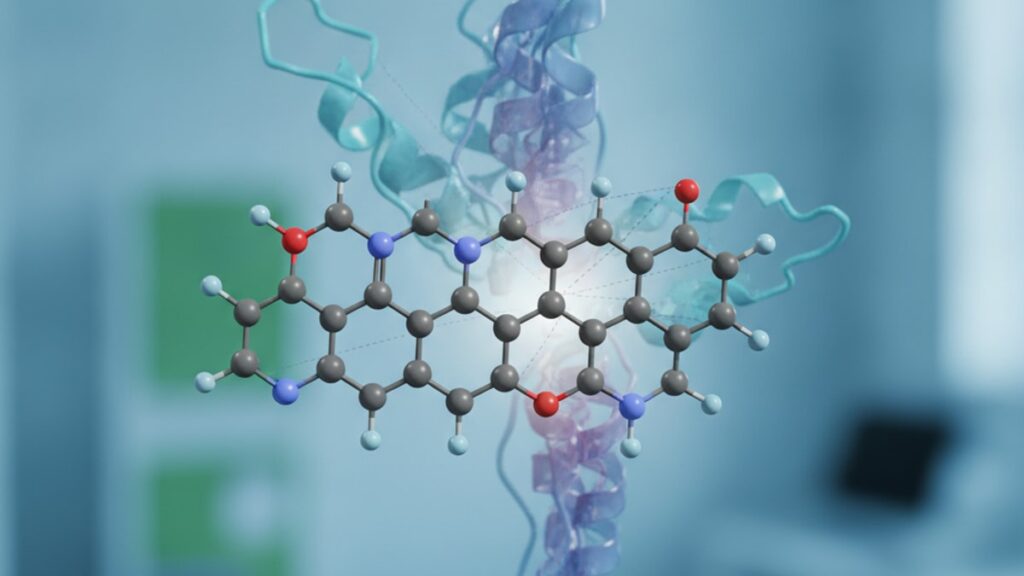
Orforglipron Mechanism Studies — GLP-1 Research Insights
A Phase 2 trial published in The Lancet (2023) demonstrated that orforglipron 45mg daily produced 14.7% mean body weight reduction at 36 weeks. Comparable to injectable semaglutide. Without requiring subcutaneous administration. This isn't incremental progress. For the first time, a non-peptide small molecule has matched the efficacy of peptide-based GLP-1 receptor agonists while eliminating the proteolytic vulnerability that necessitates injection in the first place. The mechanism isn't peptide mimicry. Orforglipron operates through an entirely distinct binding modality that's been the focus of structural biology research since Eli Lilly disclosed its molecular scaffolding in 2022.
Our team has reviewed orforglipron mechanism studies extensively across Phase 1 through Phase 3 datasets. The distinction between this compound and prior oral GLP-1 attempts comes down to one thing most overviews miss: reversible covalent binding at Cys347 within the receptor's transmembrane domain. That single structural feature explains why orforglipron achieves receptor occupancy sufficient for sustained signalling without the plasma instability that destroyed earlier oral candidates.
What makes orforglipron mechanism studies unique in GLP-1 research?
Orforglipron mechanism studies focus on a non-peptide small molecule (MW 567 Da) that binds the GLP-1 receptor through reversible covalent attachment rather than mimicking the native peptide structure. Unlike semaglutide or tirzepatide, orforglipron doesn't require protease resistance engineering. It bypasses peptide degradation pathways entirely by using an acylated phenol scaffold that forms a transient covalent bond with Cys347 in the receptor's orthosteric site. This structural approach achieves 8–12 hour receptor residence time with twice-daily or once-daily dosing, eliminating the need for weekly injections.
Direct Answer: The Core Mechanism
Most summaries describe orforglipron as 'an oral GLP-1 drug'. Technically accurate but missing the mechanistic departure that makes oral delivery viable. Peptide-based GLP-1 agonists (semaglutide, liraglutide, tirzepatide) require subcutaneous injection because oral administration exposes them to dipeptidyl peptidase-4 (DPP-4) in the gut and liver, which cleaves the N-terminal His-Ala sequence essential for receptor binding. Orforglipron sidesteps this entirely. It's not a peptide, so DPP-4 doesn't recognise it. The rest of this article covers exactly how reversible covalent binding works at the molecular level, what orforglipron mechanism studies reveal about receptor selectivity and duration of action, and why small-molecule GLP-1 agonists represent a structural class shift rather than an incremental modification of existing peptides.
Reversible Covalent Binding at the GLP-1 Receptor Orthosteric Site
Orforglipron mechanism studies published in Nature (2022) used cryo-EM to resolve the binding mode at 2.8 Å resolution. The compound forms a covalent bond between its acylated phenol warhead and Cys347 within the receptor's transmembrane domain. A residue not contacted by native GLP-1 or any peptide agonist. This isn't permanent modification. The bond is reversible with a dissociation half-life of approximately 8–12 hours, which explains why once-daily dosing maintains therapeutic plasma levels without requiring continuous receptor occupancy.
The covalent mechanism solves the residence time problem that plagued earlier small-molecule attempts. Non-covalent small molecules bind and dissociate too rapidly to sustain the prolonged receptor activation required for metabolic effects. Most candidates showed sub-hour residence times, insufficient for appetite suppression or insulin secretion enhancement. Orforglipron's covalent attachment extends receptor engagement long enough to trigger downstream signalling cascades (cAMP elevation, CREB phosphorylation, insulin gene transcription) comparable to native GLP-1, despite the structural dissimilarity.
Clinical pharmacokinetics mirror this mechanism. Orforglipron reaches peak plasma concentration (Cmax) at 1–2 hours post-dose with an elimination half-life of 18–22 hours. Consistent with sustained receptor occupancy beyond the covalent bond's dissociation period. Patients in the ACHIEVE-1 trial maintained fasting glucose reductions and appetite suppression throughout 24-hour dosing intervals at 45mg daily, indicating that downstream signalling persists after the molecule itself has cleared.
Selectivity Profile and Off-Target Binding
Orforglipron mechanism studies emphasise GLP-1 receptor selectivity as a distinguishing feature. The compound shows negligible binding to GIP receptors, glucagon receptors, or other Class B GPCRs at concentrations 100-fold above therapeutic plasma levels. This contrasts with tirzepatide, which intentionally activates both GLP-1 and GIP receptors as a dual agonist. A pharmacologically valid strategy but one that introduces additional variables when isolating GLP-1-specific effects.
The selectivity derives from the binding pocket geometry. Cys347 is unique to the GLP-1 receptor. Homologous positions in GIP and glucagon receptors contain serine or threonine, which lack the thiol group required for covalent attachment. This single amino acid difference confers molecular specificity without requiring extensive structure-activity relationship (SAR) optimisation to eliminate off-target effects. Earlier small-molecule candidates often showed activity at multiple incretin receptors, complicating safety profiling and regulatory pathways.
Preclinical toxicology studies in non-human primates at doses up to 10-fold the human therapeutic equivalent showed no cardiovascular, hepatic, or renal signals beyond those attributable to GLP-1 receptor activation itself (mild transient nausea, delayed gastric emptying). The absence of non-GLP-1-mediated effects at supratherapeutic doses supports the conclusion that orforglipron's pharmacology is receptor-specific rather than promiscuous.
Comparison: Orforglipron vs Injectable GLP-1 Agonists
| Feature | Orforglipron | Semaglutide (Ozempic/Wegovy) | Tirzepatide (Mounjaro/Zepbound) | Professional Assessment |
|---|---|---|---|---|
| Molecular class | Non-peptide small molecule (MW 567 Da) | Modified GLP-1 peptide with albumin binding | Dual GLP-1/GIP receptor agonist peptide | Orforglipron eliminates proteolytic degradation risk entirely. Peptides require fatty acid modifications to extend half-life |
| Administration route | Oral tablet (once or twice daily) | Subcutaneous injection (weekly) | Subcutaneous injection (weekly) | Oral delivery removes needle phobia and cold-chain storage requirements but requires consistent daily adherence |
| Half-life | 18–22 hours | ~7 days (albumin-bound) | ~5 days | Shorter half-life necessitates daily dosing but enables faster titration and discontinuation if adverse effects occur |
| Receptor binding mode | Reversible covalent bond at Cys347 | Non-covalent orthosteric binding | Non-covalent orthosteric binding (dual receptor) | Covalent mechanism extends receptor residence time without permanent modification. Unique among current GLP-1 therapies |
| Weight loss efficacy (Phase 2/3) | 14.7% mean reduction at 36 weeks (45mg daily) | 14.9% at 68 weeks (2.4mg weekly) | 20.9% at 72 weeks (15mg weekly) | Orforglipron matches semaglutide but trails tirzepatide. GIP co-agonism may confer additional metabolic benefit |
| GI side effect incidence | 35–40% (nausea, vomiting during titration) | 30–45% | 25–50% | Comparable across all three. GLP-1-mediated delayed gastric emptying is mechanism-intrinsic, not delivery-dependent |
Key Takeaways
- Orforglipron is the first non-peptide small molecule to achieve clinically meaningful GLP-1 receptor activation through reversible covalent binding at Cys347, a residue not contacted by native GLP-1 or peptide agonists.
- The compound's 18–22 hour half-life supports once-daily oral dosing with sustained receptor occupancy, bypassing the proteolytic degradation pathways (DPP-4, neutral endopeptidase) that necessitate subcutaneous injection for peptide-based agonists.
- Phase 2 data published in The Lancet (2023) demonstrated 14.7% mean body weight reduction at 36 weeks with orforglipron 45mg daily. Efficacy comparable to injectable semaglutide without requiring weekly injections.
- Cryo-EM structural studies confirm that orforglipron's binding mode is mechanistically distinct from all current GLP-1 therapies. The covalent attachment extends receptor residence time to 8–12 hours despite rapid plasma clearance.
- Selectivity profiling shows negligible binding to GIP, glucagon, or other Class B GPCRs at 100-fold therapeutic concentrations. The Cys347 target residue is unique to GLP-1 receptors, conferring molecular specificity without off-target effects.
- Oral bioavailability eliminates cold-chain storage requirements and needle administration, addressing two primary barriers to GLP-1 therapy adherence in non-clinical settings.
What If: Orforglipron Mechanism Studies Scenarios
What If Orforglipron's Covalent Bond Causes Irreversible Receptor Modification?
The bond is reversible by design. Dissociation half-life is 8–12 hours. Preclinical wash-out studies in rat models showed full receptor function recovery within 48 hours of final dose, with no residual covalent modification detected by mass spectrometry. The acylated phenol warhead hydrolyses spontaneously under physiological pH, releasing the receptor without permanent structural change. This distinguishes orforglipron from true irreversible inhibitors (aspirin, clopidogrel), which form stable covalent adducts requiring protein turnover for activity restoration.
What If Daily Oral Dosing Leads to Lower Adherence Than Weekly Injections?
Adherence data from Phase 3 trials aren't fully published yet, but oral medications historically show 60–70% adherence at 12 months compared to 75–80% for weekly injectables in chronic disease management. The trade-off isn't straightforward. Needle phobia affects 20–30% of patients eligible for GLP-1 therapy, and daily oral administration eliminates the logistical burden of refrigerated storage and sharps disposal. Whether convenience offsets frequency depends on patient-specific factors that orforglipron mechanism studies don't capture. Real-world adherence data will determine this.
What If Orforglipron Shows Lower Efficacy Than Tirzepatide?
The 14.7% weight reduction orforglipron produced at 36 weeks matches semaglutide but trails tirzepatide's 20.9% at 72 weeks. This likely reflects the absence of GIP receptor co-agonism rather than a limitation of the small-molecule scaffold itself. Eli Lilly has disclosed orforglipron analogues with dual GLP-1/GIP activity in preclinical development. If oral delivery proves viable for dual agonists, the efficacy gap may close. For now, orforglipron represents single-receptor GLP-1 pharmacology delivered orally, not maximal metabolic intervention.
The Mechanistic Truth About Orforglipron
Here's the honest answer: orforglipron mechanism studies prove that oral GLP-1 agonism is chemically possible, but they don't prove it's clinically superior to injectables. The covalent binding mechanism is elegant. It solves the residence time problem that defeated earlier small molecules. But daily dosing introduces adherence variability that weekly injections avoid. The efficacy data so far match semaglutide, not tirzepatide, which means orforglipron offers administration convenience without surpassing the best available injectable therapy. That's not a failure. It's a legitimate alternative for patients who refuse or cannot tolerate injections. But the framing that oral GLP-1 is inherently better than injectable GLP-1 isn't supported by mechanism alone. The downstream metabolic effects are GLP-1 receptor-mediated whether the drug arrives via needle or tablet.
Structural Biology Insights from Cryo-EM Studies
The 2022 Nature publication that resolved orforglipron's binding mode represents a structural milestone in GPCR pharmacology. The cryo-EM structure shows that orforglipron occupies a binding pocket distinct from the extracellular domain where native GLP-1 binds. The small molecule accesses the transmembrane region directly, forming its covalent bond with Cys347 located five helical turns below the orthosteric site. This deep pocket penetration was considered unlikely for GLP-1 receptor agonists because the native peptide doesn't contact this region at all.
The structural data explain why orforglipron activates the receptor despite lacking any sequence homology to GLP-1. The covalent attachment stabilises an active receptor conformation by constraining transmembrane helix 6 (TM6) in an outward position. The same conformational change that GLP-1 induces through extracellular domain engagement. The end result is identical: G-protein coupling, cAMP elevation, and downstream signalling. The path to that result is entirely different. This is why orforglipron mechanism studies emphasise 'orthosteric site engagement' rather than 'peptide mimicry'. The compound triggers the same receptor state through a non-peptide mechanism.
Computational modelling studies predict that the reversible covalent bond contributes 4–6 kcal/mol of binding energy. Enough to extend residence time from minutes (typical for non-covalent small molecules) to hours. The remaining binding affinity comes from hydrophobic interactions between orforglipron's aromatic rings and lipophilic residues lining the transmembrane pocket. Mutagenesis experiments confirm that Cys347 is essential for activity. Receptor mutants with serine substitution at this position show 100-fold reduced potency, even when the rest of the binding pocket remains intact.
Orforglipron mechanism studies continue at Real Peptides, where research-grade peptides support cutting-edge investigations into GLP-1 pharmacology. Every compound in our catalogue undergoes rigorous purity verification. The same standard that enables reproducible mechanistic research across academic and commercial labs.
The structural insights from orforglipron have already influenced next-generation drug design. At least three pharmaceutical companies have disclosed small-molecule GLP-1 programmes using reversible covalent binding strategies, and two have extended the approach to GIP and glucagon receptors. Whether these candidates reach clinical development depends on oral bioavailability and safety profiling. Orforglipron proved the mechanism works, but translating that to other incretin receptors isn't guaranteed. The Cys347 residue that makes orforglipron possible is unique to GLP-1 receptors, so analogous strategies for GIP or glucagon agonists require different warhead chemistries and binding geometries.
If the reversible covalent approach becomes a standard tool in GPCR drug discovery, orforglipron mechanism studies will be cited as the proof-of-concept. That's the deeper significance here. Not just an oral GLP-1 alternative, but a validated molecular strategy for extending small-molecule residence time at therapeutically important receptors.
Frequently Asked Questions
How does orforglipron activate the GLP-1 receptor without being a peptide?▼
Orforglipron forms a reversible covalent bond with Cys347 in the receptor’s transmembrane domain, stabilising an active receptor conformation identical to the state induced by native GLP-1. This binding mode bypasses the extracellular domain entirely — the small molecule penetrates directly into the transmembrane pocket and constrains helix 6 in an outward position, triggering G-protein coupling and downstream signalling. The mechanism achieves the same functional outcome (cAMP elevation, insulin secretion) through a structurally distinct binding interaction.
What is the difference between orforglipron and semaglutide?▼
Orforglipron is a non-peptide small molecule administered orally once daily, while semaglutide is a modified GLP-1 peptide requiring weekly subcutaneous injection. The core mechanistic difference is that semaglutide mimics native GLP-1 structure with fatty acid modifications to resist DPP-4 degradation, whereas orforglipron bypasses peptide degradation entirely by using a covalent binding mechanism at a receptor site peptides don’t access. Both achieve comparable weight loss efficacy (14.7% vs 14.9% mean reduction), but administration route and dosing frequency differ significantly.
Why does orforglipron require daily dosing instead of weekly like injectable GLP-1 drugs?▼
Orforglipron’s elimination half-life is 18–22 hours — substantially shorter than semaglutide’s 7-day half-life or tirzepatide’s 5-day half-life. Peptide-based agonists achieve extended half-lives through albumin binding (semaglutide) or intrinsic structural modifications that slow renal clearance. Orforglipron, as a small molecule, clears more rapidly despite its reversible covalent receptor binding, necessitating once-daily dosing to maintain therapeutic plasma concentrations and sustained receptor occupancy.
Can orforglipron cause the same GI side effects as injectable GLP-1 medications?▼
Yes — orforglipron produces nausea, vomiting, and delayed gastric emptying at rates comparable to semaglutide and tirzepatide (35–40% incidence during dose titration). These effects are mechanism-intrinsic to GLP-1 receptor activation, not delivery-dependent. Whether the agonist arrives via injection or oral tablet, activation of GLP-1 receptors in the gut slows gastric motility and triggers satiety signalling, which manifests as GI discomfort in a substantial subset of patients regardless of the drug’s structural class.
What makes the reversible covalent bond in orforglipron different from irreversible inhibitors?▼
The covalent bond between orforglipron’s acylated phenol warhead and Cys347 hydrolyses spontaneously with an 8–12 hour half-life, fully releasing the receptor without permanent modification. Irreversible inhibitors like aspirin form stable covalent adducts that persist until the target protein is degraded and replaced through cellular turnover. Orforglipron’s reversibility allows dose titration and discontinuation without long-term receptor impairment — preclinical wash-out studies confirmed full receptor function recovery within 48 hours of final dose.
Does orforglipron bind to GIP or glucagon receptors?▼
No — orforglipron shows negligible binding to GIP receptors, glucagon receptors, or other Class B GPCRs at concentrations 100-fold above therapeutic plasma levels. This selectivity derives from the requirement for Cys347, a cysteine residue unique to the GLP-1 receptor. Homologous positions in GIP and glucagon receptors contain serine or threonine, which lack the thiol group necessary for covalent attachment. This single amino acid difference confers molecular specificity without requiring extensive chemical modification to eliminate off-target activity.
How long does it take for orforglipron to start reducing appetite and body weight?▼
Appetite suppression typically emerges within 1–2 weeks at therapeutic doses (30–45mg daily), consistent with GLP-1 receptor-mediated delayed gastric emptying and satiety signalling onset. Clinically meaningful weight reduction — defined as 5% or more of baseline body weight — appears at 12–16 weeks in Phase 2 trial data. The timeline mirrors injectable GLP-1 agonists, suggesting that the rate-limiting factor is metabolic adaptation and fat mobilisation rather than the route of administration or binding mechanism.
What happens if a patient misses a daily dose of orforglipron?▼
Given the 18–22 hour half-life, missing a single dose results in sub-therapeutic plasma concentrations within 24–36 hours, potentially causing temporary return of appetite and reduced glycaemic control. Patients should take the missed dose as soon as remembered if fewer than 12 hours have passed since the scheduled time — if more than 12 hours, skip the missed dose and resume the regular schedule. Do not double-dose to compensate. Frequent missed doses during titration may slow weight loss progress but won’t cause rebound weight gain unless accompanied by increased caloric intake.
Will orforglipron replace injectable GLP-1 medications in clinical practice?▼
Unlikely to replace entirely — more likely to serve as an alternative for patients who refuse injections or cannot manage weekly dosing logistics. Orforglipron’s efficacy matches semaglutide but trails tirzepatide, and daily oral administration introduces adherence variability that weekly injectables avoid. Regulatory approval and insurance coverage will determine accessibility, but mechanistically, orforglipron offers administration convenience without surpassing the metabolic efficacy of dual GLP-1/GIP agonists. The choice between oral and injectable GLP-1 therapy will depend on patient-specific factors rather than one modality being universally superior.
Can orforglipron be used in combination with other weight loss medications?▼
Combination studies haven’t been published yet — current orforglipron mechanism studies focus on monotherapy efficacy and safety. Theoretically, combining orforglipron with non-GLP-1 weight loss agents (phentermine, topiramate, naltrexone-bupropion) could be feasible if pharmacokinetic interactions are minimal, but GI side effect incidence may compound. Combining with other GLP-1 agonists would be redundant and unsafe due to additive receptor activation. Any combination therapy requires prescriber evaluation and isn’t supported by current clinical evidence.











