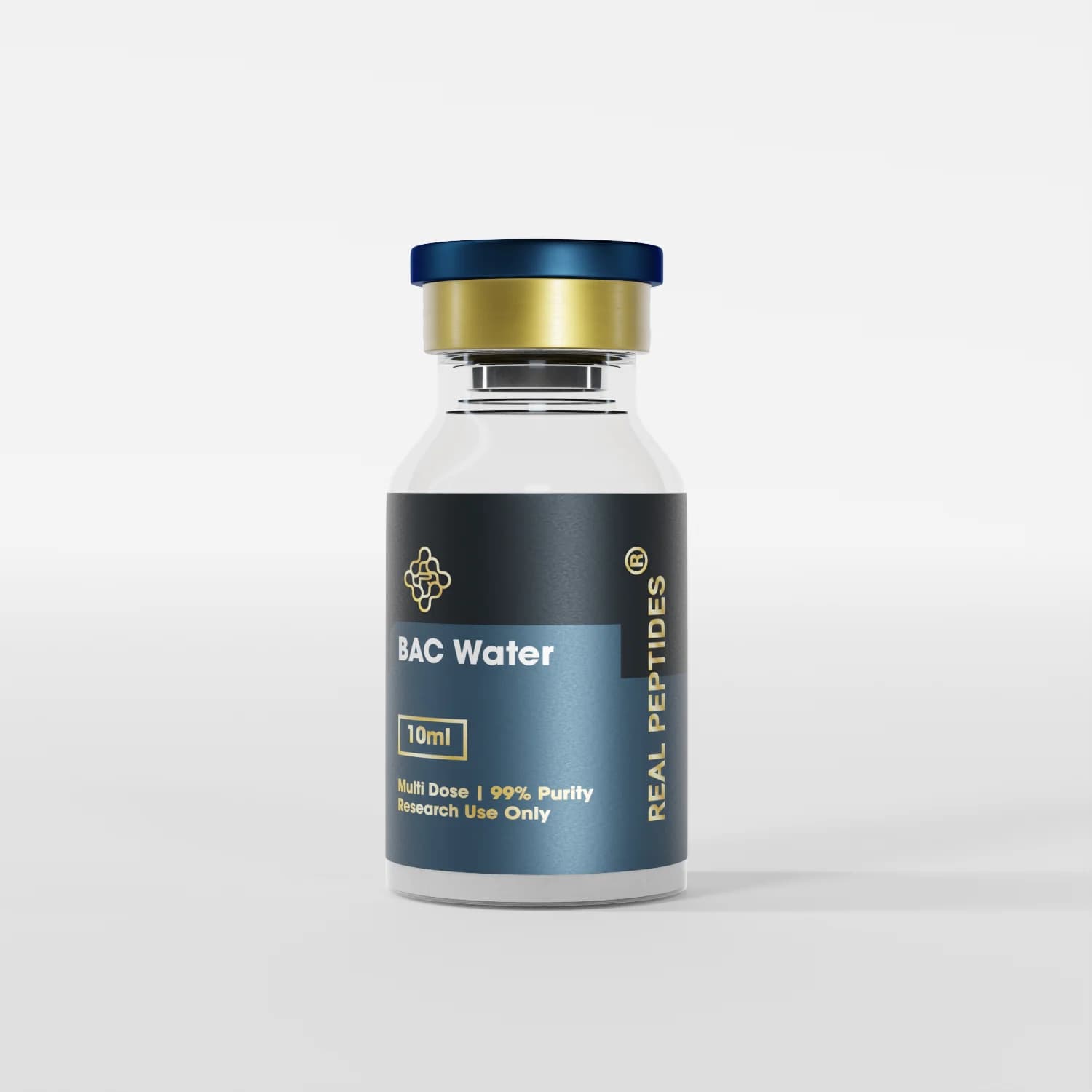
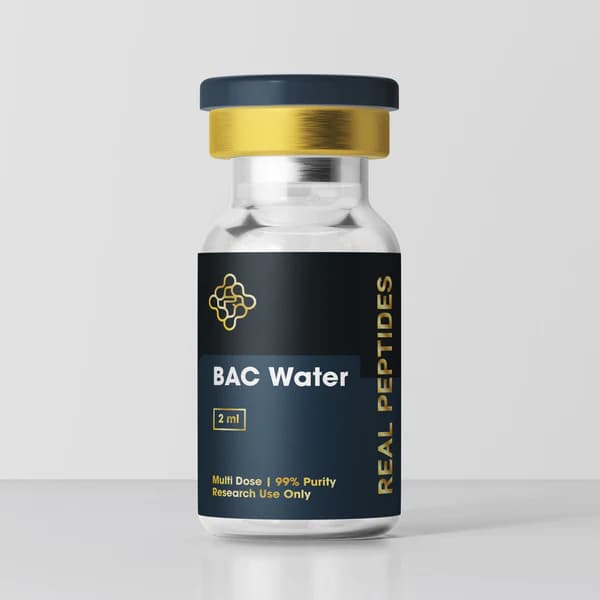
Composition and quality framework. Real Peptides Bacteriostatic Water is purified, sterile water preserved with benzyl alcohol at 0.9 percent w/v. Nothing else is present — no buffers, colorants, or additional excipients. The water is produced and filled against USP-grade quality standards, a framework that sets expectations for purity, conductivity, total organic carbon, particulate matter, container-closure quality, and the sterility of the finished sealed unit. Filling takes place under controlled cleanroom conditions, and each vial is sealed at the point of fill. Size options are exactly as listed on this page; nothing outside that list is offered.
How benzyl alcohol preservation works. Benzyl alcohol is a bacteriostatic agent rather than a sterilant. It partitions into microbial cell membranes, increasing permeability and disrupting the transport processes organisms depend on to replicate. The practical result is inhibition: a low incidental bioburden introduced when the closure is entered is held in check instead of multiplying across the remaining contents. Bacteriostatic is not the same as bactericidal — the agent restrains growth, it does not sanitize a contaminated container or reverse contamination that has already taken hold. Aseptic technique at the laboratory bench remains the controlling factor.
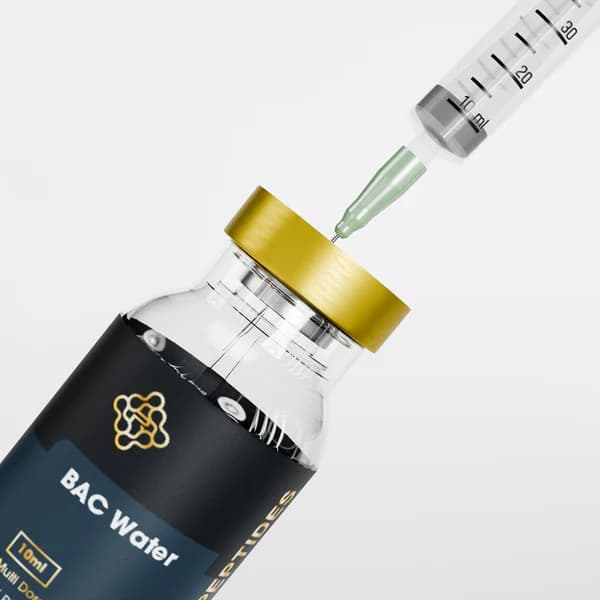
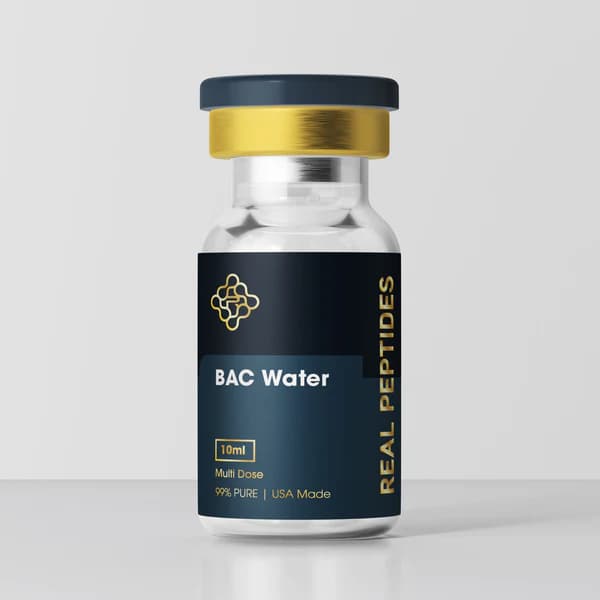
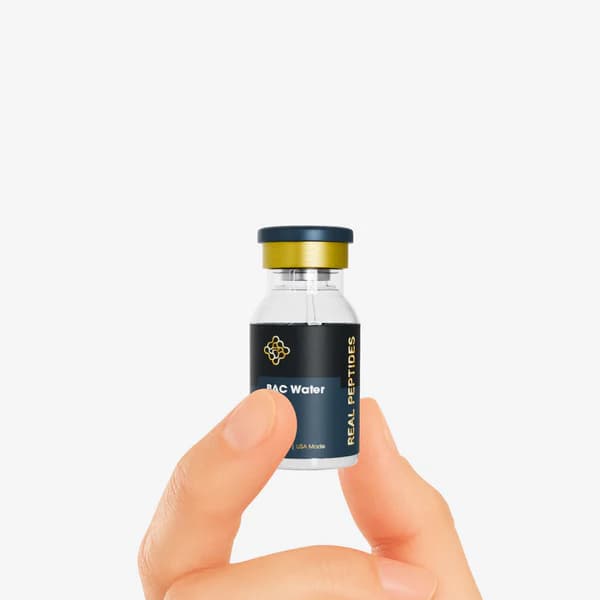
Multi-use vial format and closure integrity. Each unit is a clear glass vial fitted with an elastomeric stopper, crimped under an aluminum seal with a flip-off cap. The stopper is formulated to reseal after entry, which is what makes repeated access possible without immediately compromising the container. Integrity depends on that stopper remaining intact and the crimp remaining tight. Before and after each entry, laboratory personnel are expected to inspect the vial for clarity, absence of visible particulates, an intact seal, and legible lot and expiry markings. A compromised closure means the unit is no longer a closed system and should be retired.
Laboratory storage and the 28-day convention. Sealed vials are stored at controlled room temperature, roughly 20–25°C (68–77°F), protected from direct light and not frozen. Freezing stresses glass and closure alike. Sealed units carry a printed expiry that applies while storage conditions hold. Once the closure has been entered, laboratories conventionally log the date and retire the vial 28 days later. That 28-day window is a documentation and inventory convention drawn from USP practice for preserved multiple-entry containers — it exists so that records show exactly when a container was opened and when it left service.
Quality assurance. Every lot is tested by an independent laboratory, and the certificate of analysis is published so results can be reviewed before purchase. Each label carries a lot number traceable back to that documentation. All material is supplied strictly for research use only and is not for human or veterinary use.



 Ships within 24 hours
 Free standard shipping on orders $250+
 Lab report included


