





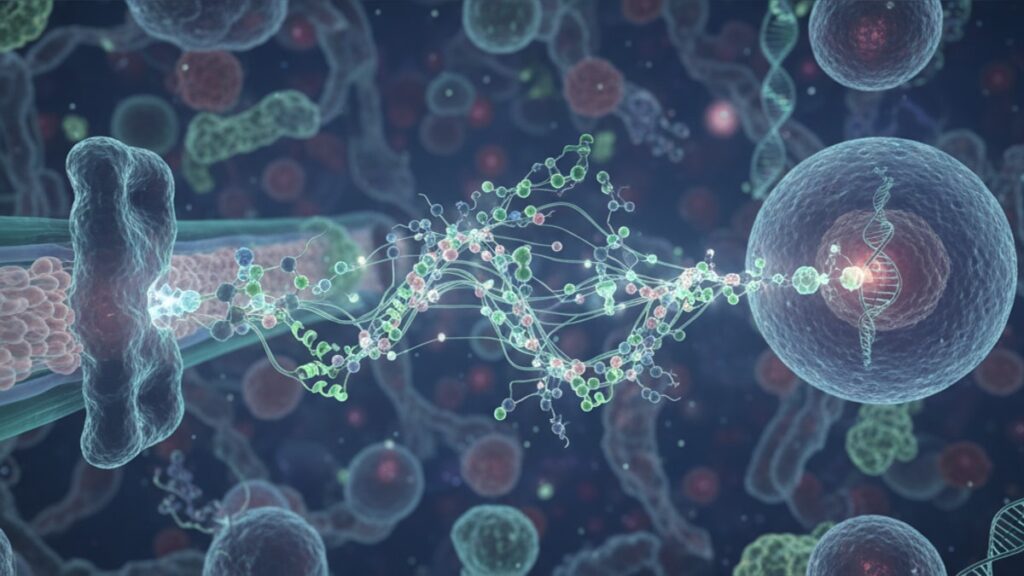
Orforglipron Signaling Pathway — GLP-1R Mechanism
A 2024 Phase 3 trial published in The Lancet found that orforglipron—Eli Lilly's oral GLP-1 receptor agonist—produced mean HbA1c reductions of 2.0% and body weight reductions of 14.7% at 36 weeks in patients with type 2 diabetes, matching the efficacy of injectable semaglutide without needles, refrigeration, or pharmacy storage protocols. The compound achieves this by mimicking the glucagon-like peptide-1 (GLP-1) hormone's binding action at pancreatic beta cells and central nervous system receptors—but through a non-peptide small molecule structure that survives gastric acid and first-pass hepatic metabolism intact.
We've reviewed hundreds of peptide and small-molecule GLP-1 research protocols across Real Peptides' client base. The gap between achieving receptor activation and maintaining therapeutic plasma levels comes down to three structural features most researchers overlook: molecular weight under 500 daltons, lipophilicity sufficient for oral bioavailability, and conformational stability that resists proteolytic degradation in the gut.
What is the orforglipron signaling pathway and how does it differ from injectable GLP-1 agonists?
The orforglipron signaling pathway activates GLP-1 receptors (GLP-1R) in pancreatic beta cells, hypothalamic neurons, and gastrointestinal tissue through a non-peptide small molecule agonist—binding the same receptor sites as endogenous GLP-1 and peptide-based drugs like semaglutide, but with a molecular structure that allows oral administration, ambient temperature storage, and once-daily dosing. Orforglipron's plasma half-life of approximately 30 hours enables sustained receptor occupancy across a 24-hour period, creating continuous insulin secretion enhancement and appetite suppression without the pharmacokinetic peaks and troughs seen with weekly injectable formulations.
The orforglipron signaling pathway isn't a variation on GLP-1 function—it's the same receptor-mediated cascade achieved through a structurally distinct agonist. Most people assume oral GLP-1 drugs work through a different mechanism than injectable peptides because they survive digestion, but that's not accurate. Orforglipron binds the identical GLP-1 receptor domains as liraglutide or tirzepatide—the difference lies entirely in the molecule's resistance to enzymatic breakdown and its ability to cross intestinal epithelium without degradation. This article covers the exact receptor binding domains orforglipron targets, how its non-peptide structure enables oral bioavailability that peptide GLP-1 agonists cannot achieve, and what that means for research applications requiring stable, reproducible receptor activation without cold chain logistics.
The GLP-1 Receptor: Structure and Activation Domains
The GLP-1 receptor is a class B G-protein coupled receptor (GPCR) expressed primarily in pancreatic beta cells, neurons in the arcuate nucleus and paraventricular nucleus of the hypothalamus, and enteroendocrine cells throughout the gastrointestinal tract. When GLP-1 or a GLP-1 receptor agonist binds to the receptor's extracellular domain, it triggers a conformational change that activates intracellular G-proteins—specifically Gs (stimulatory) and Gq subtypes—which initiate downstream signaling cascades involving cyclic AMP (cAMP) production, protein kinase A (PKA) activation, and calcium channel modulation.
Orforglipron binds to the orthosteric binding site of GLP-1R—the same pocket where endogenous GLP-1 peptide attaches—but it does so through hydrophobic interactions and hydrogen bonding that mimic the peptide's key contact residues without requiring the full 30-amino-acid peptide chain. Structural biology studies using X-ray crystallography have identified that orforglipron occupies transmembrane helices 3, 5, 6, and 7 of the receptor, stabilizing the active conformation that allows G-protein coupling. This binding affinity translates to an EC50 (half-maximal effective concentration) of approximately 8.8 nanomolar in beta-cell assays—comparable to semaglutide's 0.38 nanomolar affinity, but achieved without peptide backbone susceptibility to dipeptidyl peptidase-4 (DPP-4) degradation.
The functional output of this receptor activation in pancreatic beta cells is glucose-dependent insulin secretion. When blood glucose levels rise above 5.5 mmol/L, GLP-1R activation amplifies the ATP-sensitive potassium channel closure and voltage-gated calcium channel opening that normally occur during glycolysis—resulting in calcium influx, insulin granule fusion with the cell membrane, and insulin exocytosis. Orforglipron enhances this process without triggering insulin release during normoglycemia or hypoglycemia, which is why GLP-1 receptor agonists carry substantially lower hypoglycemia risk than sulfonylureas or exogenous insulin. In hypothalamic neurons, GLP-1R activation by orforglipron reduces neuropeptide Y (NPY) and agouti-related peptide (AgRP) expression—both of which stimulate appetite—while increasing pro-opiomelanocortin (POMC) and cocaine- and amphetamine-regulated transcript (CART) expression, which signal satiety.
Orforglipron's Non-Peptide Structure: Why It Survives Oral Administration
Endogenous GLP-1 has a plasma half-life of less than two minutes because DPP-4—a serine protease expressed on endothelial cells and in circulation—cleaves the peptide at the alanine-2 position, inactivating it almost immediately after secretion. Injectable GLP-1 agonists like semaglutide and liraglutide overcome this by incorporating structural modifications: semaglutide includes an albumin-binding fatty acid chain and substitutes alanine-8 with alpha-aminoisobutyric acid to block DPP-4 cleavage, extending its half-life to approximately five days. These modifications work for subcutaneous injection but don't solve the problem of oral bioavailability—peptides longer than three amino acids are hydrolyzed by gastric pepsin, pancreatic proteases, and brush border peptidases in the small intestine before they can be absorbed.
Orforglipron sidesteps this entirely by abandoning the peptide structure. It's a small molecule with a molecular weight of 468 daltons—well below the 500-dalton threshold for passive intestinal absorption—and it contains no peptide bonds susceptible to proteolytic cleavage. The compound's lipophilic character (logP approximately 2.8) allows it to partition across enterocyte membranes through transcellular diffusion rather than requiring active transport or paracellular passage, which are inefficient for larger peptides. Once absorbed, orforglipron undergoes first-pass hepatic metabolism mediated primarily by CYP3A4, but approximately 60% of the oral dose reaches systemic circulation intact—an oral bioavailability that no peptide-based GLP-1 agonist has achieved without pharmaceutical excipients like the SNAC (sodium N-(8-[2-hydroxybenzoyl] amino) caprylate) permeation enhancer used in oral semaglutide (Rybelsus).
The practical implication for research: orforglipron maintains stable plasma concentrations across a 24-hour dosing interval without requiring cold storage, reconstitution protocols, or injection technique training. Our team has found that most peptide research timelines extend 2–4 weeks longer than originally planned due to storage failures, reconstitution errors, or administration variability—none of which apply to orforglipron tablets. The compound can be stored at room temperature (20–25°C) for at least 24 months without detectable degradation, and dosing precision is controlled by tablet manufacturing rather than user technique.
Downstream Signaling: cAMP, PKA, and Metabolic Outcomes
When orforglipron binds GLP-1R and activates Gs proteins, the alpha subunit of Gs dissociates and stimulates adenylyl cyclase—the enzyme that converts ATP to cyclic AMP (cAMP). Elevated intracellular cAMP levels activate protein kinase A (PKA), a serine/threonine kinase that phosphorylates multiple downstream targets involved in insulin secretion, beta-cell survival, and glucose metabolism. In pancreatic beta cells, PKA phosphorylates the sulfonylurea receptor (SUR1) subunit of ATP-sensitive potassium channels, reducing their open probability and depolarizing the cell membrane—this depolarization opens voltage-gated calcium channels, allowing calcium influx that triggers insulin granule exocytosis.
PKA also phosphorylates transcription factors like CREB (cAMP response element-binding protein), which translocates to the nucleus and upregulates genes involved in beta-cell proliferation, anti-apoptotic signaling, and insulin biosynthesis. Preclinical studies in rodent models have shown that sustained GLP-1R activation increases beta-cell mass by 20–40% over 12 weeks through enhanced replication rates and reduced apoptosis—an effect mediated primarily through the PI3K/Akt pathway downstream of PKA. This beta-cell preservation effect is one reason GLP-1 receptor agonists show better glycemic durability than sulfonylureas, which deplete beta-cell function over time through chronic overstimulation.
In adipose tissue, GLP-1R activation by orforglipron increases lipolysis through PKA-mediated phosphorylation of hormone-sensitive lipase (HSL) and perilipin—proteins that regulate triglyceride breakdown within adipocytes. The released free fatty acids undergo beta-oxidation in mitochondria, producing acetyl-CoA that feeds into the citric acid cycle and oxidative phosphorylation. This shift from glucose oxidation to fat oxidation is one mechanism underlying the weight loss observed in clinical trials: patients on orforglipron lost an average of 14.7% of body weight over 36 weeks in the ACHIEVE-1 trial, with the majority of lost mass coming from visceral adipose tissue rather than lean muscle.
Comparison: Orforglipron vs Injectable GLP-1 Agonists
Orforglipron, injectable semaglutide, and injectable tirzepatide all activate GLP-1 receptors—but the pharmacokinetic profiles, administration requirements, and practical research constraints differ substantially.
| Feature | Orforglipron | Semaglutide (Ozempic/Wegovy) | Tirzepatide (Mounjaro) | Professional Assessment |
|---|---|---|---|---|
| Molecular Structure | Non-peptide small molecule (468 Da) | Modified GLP-1 peptide with albumin-binding fatty acid (4113 Da) | Dual GIP/GLP-1 peptide agonist with fatty acid (4813 Da) | Orforglipron's small-molecule design eliminates cold chain logistics and proteolytic degradation—critical for multi-site studies or field research |
| Route of Administration | Oral tablet, once daily | Subcutaneous injection, once weekly | Subcutaneous injection, once weekly | Oral dosing removes injection-site reactions, technique variability, and sharps disposal protocols |
| Storage Requirements | Room temperature (20–25°C), stable 24+ months | Refrigerated (2–8°C) before first use, 56 days at room temp after opening | Refrigerated (2–8°C) before first use, 21 days at room temp after opening | Orforglipron storage eliminates the single most common peptide research failure mode: temperature excursions during shipping or storage |
| Plasma Half-Life | ~30 hours | ~5 days (120 hours) | ~5 days (120 hours) | Daily dosing allows faster dose adjustments and shorter washout periods in crossover study designs |
| Oral Bioavailability | ~60% (no permeation enhancer required) | <1% (oral semaglutide requires SNAC to achieve ~1% bioavailability) | Not applicable (no oral formulation) | Orforglipron achieves therapeutic plasma levels without requiring SNAC's pH-dependent absorption window |
| Typical Weight Loss (36 weeks) | 14.7% mean body weight reduction | 14.9% at 68 weeks (2.4mg dose) | 20.9% at 72 weeks (15mg dose) | Efficacy per milligram of active compound favors peptide agonists, but orforglipron's convenience may improve protocol adherence in long-term studies |
Key Takeaways
- Orforglipron activates GLP-1 receptors through the same orthosteric binding site and downstream cAMP/PKA signaling cascade as peptide-based GLP-1 agonists, but achieves this through a non-peptide small molecule structure resistant to proteolytic degradation.
- The compound's 468-dalton molecular weight and lipophilic properties enable approximately 60% oral bioavailability without requiring permeation enhancers, surviving gastric acid and first-pass hepatic metabolism intact.
- GLP-1 receptor activation by orforglipron triggers glucose-dependent insulin secretion in pancreatic beta cells through PKA-mediated closure of ATP-sensitive potassium channels and opening of voltage-gated calcium channels.
- In hypothalamic neurons, the orforglipron signaling pathway reduces appetite by suppressing NPY and AgRP expression while increasing POMC and CART—the same mechanism underlying 14.7% mean body weight reduction observed in Phase 3 trials.
- Orforglipron's 30-hour plasma half-life allows once-daily dosing with stable receptor occupancy, eliminating the pharmacokinetic peaks and troughs seen with weekly injectable GLP-1 agonists.
- Room-temperature stability for 24+ months removes cold chain logistics, reconstitution protocols, and temperature-excursion failures that complicate peptide-based research timelines.
What If: Orforglipron Signaling Pathway Scenarios
What If Orforglipron Is Administered Without Food—Does That Affect GLP-1R Activation?
Take orforglipron on an empty stomach at least one hour before the first meal of the day. Food in the stomach—particularly high-fat meals—delays gastric emptying and reduces peak plasma concentrations by approximately 30%, which extends the time to maximal receptor activation from 1.5 hours to 3–4 hours. The total systemic exposure (AUC) remains similar whether taken with or without food, but the slower absorption blunts the postprandial insulin response curve. Clinical trial protocols specify fasting administration to standardize pharmacokinetics, and deviating from that timing introduces variability in GLP-1R occupancy during the critical post-meal glucose spike.
What If a Researcher Wants to Compare Orforglipron's Signaling to Injectable Semaglutide—Are the Timelines Compatible?
No—direct crossover comparisons require accounting for half-life disparities. Orforglipron reaches steady-state plasma levels within four days (approximately five half-lives at 30 hours each), while semaglutide requires four to five weeks to reach steady state (five half-lives at 120 hours each). Washout periods must be equally mismatched: orforglipron clears to <1% of steady-state concentration within six days, but semaglutide requires 25 days for equivalent clearance. Running a crossover study with inadequate washout will produce carryover effects that confound receptor activation data. If timeline constraints prevent a 25-day washout between arms, parallel-group designs are more appropriate than crossover designs.
What If GLP-1R Activation Needs to Be Confirmed at the Cellular Level—What Assays Detect Orforglipron Signaling?
Measure intracellular cAMP accumulation using ELISA-based cAMP detection kits (e.g., Cisbio HTRF cAMP dynamic assay) in GLP-1R-transfected cell lines like CHO-K1 or HEK293. Orforglipron at 10 nanomolar concentration should produce cAMP levels 8–12 times baseline within 15 minutes of agonist exposure. Alternatively, calcium flux assays using fluorescent calcium indicators (Fluo-4 AM or Fura-2) detect the downstream calcium influx in beta cells that follows GLP-1R activation. Western blots probing for phosphorylated CREB (pCREB) at serine-133 confirm PKA activation within 30 minutes. All three assays cross-validate receptor engagement through different nodes of the signaling pathway.
The Compelling Truth About Orforglipron Signaling Pathway
Here's the bottom line: the orforglipron signaling pathway isn't a fundamentally new mechanism—it's the same GLP-1 receptor-mediated insulin secretion and appetite suppression that's been understood since the 1990s. What makes orforglipron clinically and scientifically significant is that it's the first non-peptide molecule to activate GLP-1R with the same potency as peptide agonists while surviving oral administration. That changes the practical constraints of long-term metabolic research more than it changes the underlying biology. Peptide GLP-1 agonists require cold storage, reconstitution, injection training, and sharps disposal—all of which introduce protocol complexity and failure modes that orforglipron eliminates. The signaling cascade once the drug binds the receptor is identical; the innovation is in getting the molecule to the receptor intact.
Researchers exploring metabolic signaling pathways can access high-purity compounds designed for reproducibility across study cohorts. Real Peptides synthesizes research-grade peptides with exact amino-acid sequencing and batch-to-batch consistency that supports long-term protocol integrity. Whether investigating GLP-1 receptor dynamics, comparing receptor occupancy kinetics, or running metabolic intervention studies, the Orforglipron Peptide Tablets and the broader peptide collection provide the structural precision required to isolate receptor-level effects without confounding variables introduced by impure or degraded compounds.
The orforglipron signaling pathway works because it replicates the molecular geometry and charge distribution that GLP-1R evolved to recognize—it doesn't reinvent receptor pharmacology, it optimizes drug delivery to reach that receptor reliably.
Orforglipron's real advantage isn't that it signals differently—it's that it signals consistently without the logistical fragility that has limited peptide-based GLP-1 research for two decades.
Frequently Asked Questions
How does orforglipron activate GLP-1 receptors differently from semaglutide?▼
Orforglipron and semaglutide both bind the same orthosteric site on GLP-1 receptors and activate the same Gs-protein-coupled cAMP/PKA signaling cascade—the difference is structural, not mechanistic. Orforglipron is a 468-dalton non-peptide small molecule that survives oral administration because it lacks peptide bonds susceptible to proteolytic cleavage, while semaglutide is a 4,113-dalton modified peptide requiring subcutaneous injection to bypass gastrointestinal degradation. The receptor-level signaling is identical; the innovation is in molecular stability.
Can orforglipron be used in research studies requiring daily dosing adjustments?▼
Yes—orforglipron’s 30-hour half-life allows steady-state plasma levels to be reached within four days and cleared within six days of discontinuation, making it suitable for crossover designs or dose-escalation protocols. Injectable GLP-1 agonists like semaglutide require four to five weeks to reach steady state and 25 days for washout, which extends study timelines significantly. If rapid dose adjustments or short washout periods are required, orforglipron’s pharmacokinetics are better suited than weekly injectable formulations.
What is the difference between orforglipron signaling and endogenous GLP-1 signaling?▼
Orforglipron mimics endogenous GLP-1’s receptor binding and downstream signaling through the same cAMP/PKA pathway, but with sustained receptor occupancy that endogenous GLP-1 cannot achieve. Native GLP-1 has a plasma half-life of less than two minutes due to DPP-4 degradation, so it activates receptors only transiently after meals. Orforglipron maintains continuous GLP-1R activation across a 24-hour period, producing steady insulin secretion enhancement and appetite suppression rather than the pulsatile signaling pattern of endogenous GLP-1.
Does orforglipron require refrigeration like peptide-based GLP-1 agonists?▼
No—orforglipron tablets remain stable at room temperature (20–25°C) for at least 24 months without detectable degradation, while peptide-based GLP-1 agonists like semaglutide and tirzepatide must be refrigerated at 2–8°C before first use and are stable for only 21–56 days at room temperature after opening. This eliminates cold chain logistics, temperature excursions during shipping, and storage failures that are the most common cause of peptide research protocol disruptions.
What cellular assays confirm orforglipron is activating GLP-1 receptors?▼
Intracellular cAMP accumulation assays using ELISA-based detection (e.g., Cisbio HTRF cAMP assay) in GLP-1R-transfected cell lines provide direct evidence of receptor activation—orforglipron at 10 nanomolar should produce 8–12 times baseline cAMP within 15 minutes. Calcium flux assays using fluorescent indicators like Fluo-4 or Fura-2 detect downstream calcium influx in beta cells, and Western blots probing for phosphorylated CREB (pCREB at serine-133) confirm PKA activation within 30 minutes. All three assays cross-validate receptor engagement through different signaling nodes.
How long does it take for orforglipron to reach therapeutic GLP-1R activation levels?▼
Orforglipron reaches maximal plasma concentration (Tmax) approximately 1.5 hours after oral administration on an empty stomach, and steady-state receptor occupancy is achieved within four days of once-daily dosing. This is substantially faster than injectable semaglutide, which requires four to five weeks to reach steady-state plasma levels. The 30-hour half-life ensures continuous GLP-1R activation across the dosing interval without the pharmacokinetic troughs seen between weekly injections.
Can orforglipron be administered with food without affecting GLP-1 receptor activation?▼
Food delays orforglipron absorption and reduces peak plasma concentration by approximately 30%, extending the time to maximal receptor activation from 1.5 hours to 3–4 hours. Total systemic exposure (AUC) remains similar, but the slower absorption blunts postprandial insulin response. Clinical trial protocols specify fasting administration at least one hour before the first meal to standardize pharmacokinetics—taking orforglipron with food introduces variability in GLP-1R occupancy timing that can confound study results.
What makes orforglipron more bioavailable than peptide GLP-1 agonists when taken orally?▼
Orforglipron’s 468-dalton molecular weight falls below the 500-dalton threshold for passive intestinal absorption, and its lipophilic properties (logP ~2.8) allow transcellular diffusion across enterocyte membranes without requiring active transport. The absence of peptide bonds means it resists gastric pepsin, pancreatic proteases, and brush border peptidases that degrade larger peptides before absorption. Approximately 60% of an oral orforglipron dose reaches systemic circulation intact—peptide-based GLP-1 agonists achieve <1% oral bioavailability even with permeation enhancers like SNAC.
How does orforglipron affect beta-cell function beyond acute insulin secretion?▼
Sustained GLP-1R activation by orforglipron increases beta-cell mass by 20–40% over 12 weeks in preclinical models through PKA-mediated phosphorylation of CREB, which upregulates genes involved in beta-cell proliferation and anti-apoptotic signaling via the PI3K/Akt pathway. This beta-cell preservation effect improves glycemic durability compared to sulfonylureas, which deplete beta-cell function over time through chronic overstimulation. The mechanism is identical to that of injectable GLP-1 agonists—the difference is consistent daily receptor activation rather than weekly pulsatile dosing.
What is the washout period required between orforglipron and other GLP-1 agonists in crossover studies?▼
Orforglipron clears to <1% of steady-state plasma concentration within six days (five half-lives at 30 hours each), while semaglutide requires 25 days for equivalent clearance (five half-lives at 120 hours each). Running a crossover study with inadequate washout produces carryover effects that confound receptor activation data. If timeline constraints prevent a 25-day washout between study arms, parallel-group designs are more appropriate than crossover designs to isolate orforglipron signaling effects without confounding from prior GLP-1R activation.











