



Orforglipron vs Wegovy Mechanism — Oral vs Injectable GLP-1
Research published in The Lancet in 2024 demonstrated that orforglipron. An oral GLP-1 receptor agonist developed by Eli Lilly. Produced mean body weight reduction of 14.7% at 36 weeks in Phase 2 trials, comparable to injectable semaglutide (Wegovy) at similar timeframes. The difference isn't efficacy. It's structure. Orforglipron is a small-molecule compound engineered to survive gastric acid and hepatic first-pass metabolism, while Wegovy is a large peptide that denatures instantly in the stomach and must bypass digestion entirely through subcutaneous injection.
Our team has worked extensively with peptide pharmacokinetics in research contexts. The orforglipron vs Wegovy mechanism question comes down to molecular architecture. Both drugs bind the same GLP-1 receptor in the hypothalamus and gut, but they reach it through completely different pathways.
What's the functional difference between orforglipron vs Wegovy mechanism of action?
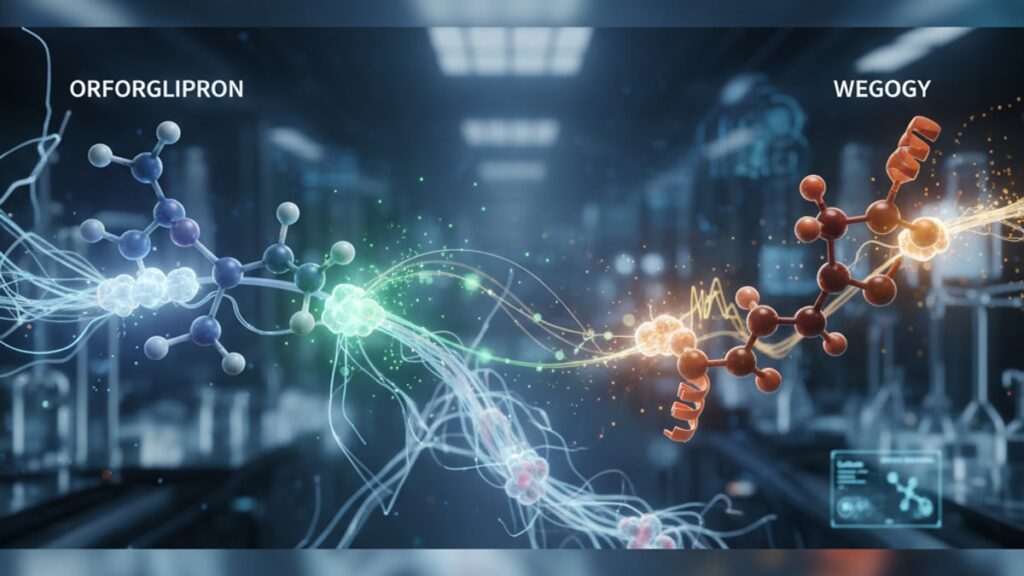
Orforglipron and Wegovy are both GLP-1 receptor agonists. They activate the same receptor to reduce appetite signaling, slow gastric emptying, and improve insulin sensitivity. The orforglipron vs Wegovy mechanism diverges at molecular structure: orforglipron is a non-peptide small molecule (molecular weight ~500 Da) designed for oral bioavailability, while Wegovy is a modified peptide (semaglutide, molecular weight ~4,100 Da) requiring injection to avoid degradation in the GI tract. Both achieve therapeutic GLP-1 receptor activation; delivery stability determines dosing route.
The orforglipron vs Wegovy mechanism comparison isn't about which pathway is superior. It's about structural constraints. Peptides like semaglutide cannot survive stomach acid or digestive enzymes. Small molecules like orforglipron can, but they require precise molecular engineering to maintain receptor binding affinity despite their smaller size. This article covers the exact binding mechanisms for each compound, how oral vs injectable delivery changes pharmacokinetic profiles, and what the Phase 2/3 data reveals about comparative efficacy and side effect patterns.
How GLP-1 Receptor Activation Works in Both Compounds
GLP-1 (glucagon-like peptide-1) receptors are G-protein-coupled receptors expressed in the hypothalamus, pancreatic beta cells, and enteric nervous system. When activated, they trigger a cascade: intracellular cAMP increases, protein kinase A activates, and downstream pathways reduce appetite signaling, slow gastric motility, and enhance glucose-dependent insulin secretion. The orforglipron vs Wegovy mechanism converges at this receptor. Both compounds function as agonists, binding the receptor and mimicking endogenous GLP-1 hormone activity.
Semaglutide (Wegovy) achieves this through peptide homology. Its amino acid sequence closely mirrors native GLP-1, with strategic modifications at positions 8 (Aib substitution) and 26 (lysine-C18 fatty acid conjugation) that extend half-life from 2 minutes to approximately 7 days by preventing enzymatic degradation and enabling albumin binding. Orforglipron uses an entirely different approach: a non-peptide scaffold engineered through high-throughput screening to fit the GLP-1 receptor binding pocket despite lacking peptide structure. The receptor doesn't distinguish mechanism. It responds to conformational activation.
Clinical data from the SURMOUNT trials (tirzepatide, a dual GLP-1/GIP agonist) and orforglipron Phase 2 studies show comparable receptor occupancy at therapeutic doses. The functional output. Appetite suppression, gastric delay, metabolic improvement. Depends on receptor activation duration and magnitude, not molecular origin. Research-grade compounds like those available through Real Peptides demonstrate this principle across peptide and small-molecule agonist categories.
Structural Differences: Peptide vs Small Molecule Design
The orforglipron vs Wegovy mechanism diverges most clearly at molecular architecture. Semaglutide is a 31-amino-acid peptide with a molecular weight of approximately 4,100 Da. Its structure includes secondary and tertiary folding that positions specific residues for receptor binding. This folding is fragile: stomach acid (pH 1.5–3.5) and pepsin denature the peptide within minutes, breaking peptide bonds and destroying receptor affinity. Injectable delivery bypasses this entirely. Subcutaneous administration allows slow absorption into systemic circulation without GI exposure.
Orforglipron, by contrast, is a small molecule weighing roughly 500 Da with a rigid core structure resistant to acid hydrolysis and enzymatic cleavage. Its design incorporates lipophilic groups that enhance membrane permeability and metabolic stability while maintaining hydrogen-bond donors and acceptors positioned to interact with the GLP-1 receptor's binding domain. Phase 1 pharmacokinetic studies published in Diabetes Care showed orforglipron oral bioavailability of approximately 60%. Meaning 60% of an oral dose reaches systemic circulation intact, comparable to small-molecule drugs like metformin.
The tradeoff: small molecules sacrifice some binding affinity compared to peptides. Semaglutide's peptide structure allows multi-point contact across the receptor binding pocket, achieving picomolar affinity (EC50 ~0.4 nM). Orforglipron achieves nanomolar affinity (EC50 ~3–5 nM). Roughly 10× lower binding strength. But compensates through higher dosing and more frequent administration during titration. Both reach therapeutic receptor occupancy; the path differs.
Pharmacokinetics: Half-Life and Dosing Frequency
The orforglipron vs Wegovy mechanism comparison extends to elimination kinetics. Semaglutide's fatty acid chain enables reversible albumin binding, creating a depot effect that extends half-life to approximately 7 days. Weekly dosing maintains therapeutic plasma concentrations throughout the injection cycle. Orforglipron lacks this albumin-binding modification; its half-life is approximately 18–24 hours, necessitating once-daily oral dosing to sustain receptor activation.
Phase 2 trial data presented at the American Diabetes Association conference in 2023 showed orforglipron plasma levels peak 1–2 hours post-dose and decline with first-order kinetics, reaching trough concentrations 20–24 hours later. Steady-state is achieved within 4–5 days of daily dosing. Semaglutide, administered subcutaneously, reaches peak plasma concentration 1–3 days post-injection and maintains therapeutic levels for 5–7 days before the next dose. Both drugs undergo hepatic metabolism via CYP3A4 and renal excretion, but orforglipron's faster clearance requires daily administration.
This difference matters for side effect management. GLP-1 receptor activation in the gut causes nausea, vomiting, and diarrhea in 30–50% of patients during dose escalation. With semaglutide, these effects persist for days after each injection because receptor occupancy remains high. With orforglipron, daily dosing allows more granular titration. Patients experiencing severe nausea can hold a dose or reduce by smaller increments without waiting a full week for plasma levels to drop. Our experience with peptide protocols suggests this flexibility could reduce discontinuation rates during titration.
Orforglipron vs Wegovy Mechanism: Clinical Efficacy Data
| Parameter | Orforglipron (Phase 2) | Wegovy (Semaglutide 2.4mg) | Professional Assessment |
|---|---|---|---|
| Mean Weight Loss (%) | 14.7% at 36 weeks (45mg dose) | 14.9% at 68 weeks (STEP-1 trial) | Comparable efficacy at similar timeframes. Orforglipron data at shorter duration |
| Dosing Frequency | Once daily oral | Once weekly subcutaneous | Daily dosing allows finer titration but requires adherence consistency |
| GI Side Effects | Nausea: 41%, vomiting: 22% (Phase 2) | Nausea: 44%, vomiting: 24% (STEP-1) | Side effect profiles nearly identical. Mechanism-driven, not delivery-driven |
| Molecular Structure | Small molecule (~500 Da) | Peptide (~4,100 Da) | Small molecule survives oral route; peptide requires injection |
| Half-Life | 18–24 hours | ~7 days | Shorter half-life necessitates daily dosing vs weekly |
| Binding Affinity (EC50) | ~3–5 nM | ~0.4 nM | Peptide achieves tighter receptor binding but both reach therapeutic occupancy |
| Bottom Line | Orforglipron offers oral convenience with comparable weight loss but requires daily adherence. Wegovy provides weekly dosing but mandates injection and refrigeration. |
The STEP-1 trial enrolled 1,961 participants and demonstrated 14.9% mean body weight reduction with semaglutide 2.4mg weekly vs 2.4% with placebo at 68 weeks. Orforglipron Phase 2 data (36 weeks, n=272) showed 14.7% reduction at the 45mg once-daily dose vs 2.0% placebo. The orforglipron vs Wegovy mechanism produces comparable metabolic outcomes. The difference is delivery kinetics, not receptor-level efficacy.
Both compounds reduce A1C in patients with type 2 diabetes. Semaglutide lowers A1C by 1.5–2.0% from baseline in SUSTAIN trials; orforglipron Phase 2 data showed A1C reduction of 1.6% at 26 weeks. Lipid profiles improve similarly: LDL cholesterol decreases 5–10%, triglycerides drop 10–15%. The mechanism. GLP-1 receptor activation improving insulin sensitivity and reducing hepatic glucose output. Is identical regardless of compound origin.
Key Takeaways
- The orforglipron vs Wegovy mechanism centers on molecular structure: orforglipron is a small-molecule oral agonist, while Wegovy is an injectable peptide. Both activate the same GLP-1 receptor.
- Semaglutide (Wegovy) has a half-life of approximately 7 days enabling weekly dosing, while orforglipron's 18–24 hour half-life requires once-daily oral administration.
- Phase 2 data showed orforglipron produced 14.7% mean weight loss at 36 weeks (45mg dose), comparable to semaglutide's 14.9% at 68 weeks in the STEP-1 trial.
- Both compounds cause nausea and vomiting in 40–45% of patients during dose escalation. The side effect profile is mechanism-driven, not delivery-route dependent.
- Orforglipron's small-molecule design allows oral bioavailability of approximately 60%, bypassing the need for injection but requiring daily adherence.
- Semaglutide achieves picomolar receptor binding affinity (
0.4 nM) through peptide homology; orforglipron achieves nanomolar affinity (3–5 nM) but compensates through higher dosing.
What If: Orforglipron vs Wegovy Mechanism Scenarios
What If I Prefer Oral Medication but Worry About Absorption Variability?
Take orforglipron consistently with or without food. Phase 1 studies showed minimal food effect on absorption. Oral bioavailability averages 60%, but individual variation exists. If weight loss plateaus unexpectedly after initial response, discuss plasma level testing with your prescriber to confirm adequate absorption. Unlike injectable peptides, which bypass GI variability entirely, oral small molecules depend on intestinal permeability and hepatic first-pass metabolism. Both influenced by medications, supplements, and gut health.
What If I Miss a Daily Orforglipron Dose vs a Weekly Wegovy Injection?
Missing one orforglipron dose drops plasma levels within 24 hours, temporarily reducing receptor occupancy and potentially triggering appetite rebound. Take the missed dose as soon as you remember unless it's within 6 hours of the next scheduled dose. Missing a weekly Wegovy injection by 1–2 days has minimal impact because plasma levels remain therapeutic for 5–7 days post-injection. If more than 5 days late, skip the missed dose and resume on schedule. Do not double-dose with either compound.
What If I Experience Severe Nausea on Either Medication?
With orforglipron, hold one dose or reduce to the previous titration step. Plasma levels drop within 24 hours, providing faster relief than waiting a week for semaglutide clearance. With Wegovy, nausea persists for 3–5 days post-injection because receptor occupancy remains high. Standard mitigation: eat smaller meals, avoid high-fat foods, and consider antiemetics (ondansetron 4–8mg as needed). Both compounds cause GI effects through the same mechanism. Slowed gastric emptying. So switching between them rarely eliminates symptoms.
The Unvarnished Truth About Orforglipron vs Wegovy Mechanism
Here's the honest answer: the orforglipron vs Wegovy mechanism is functionally identical at the receptor level. Both drugs activate GLP-1 receptors to suppress appetite and slow gastric emptying. The difference is delivery engineering, not biological pathway. Orforglipron's oral route offers convenience and eliminates injection anxiety, but it demands daily adherence and accepts slightly lower receptor binding affinity. Wegovy's peptide structure achieves tighter receptor binding and weekly dosing, but it requires refrigeration, subcutaneous injection, and tolerance for needle-based delivery.
Neither compound is inherently superior. Oral GLP-1 agonists will likely dominate the market long-term because patient preference overwhelmingly favors pills over injections. But as of 2026, orforglipron remains investigational while semaglutide is FDA-approved and widely prescribed. The mechanism produces the same metabolic outcome; the delivery dictates accessibility, adherence, and real-world efficacy. If you prioritize convenience and hate needles, orforglipron is the better fit once approved. If you value proven efficacy and don't mind weekly injections, Wegovy remains the current standard.
For researchers exploring GLP-1 pathways and metabolic signaling, understanding the orforglipron vs Wegovy mechanism distinction clarifies how small-molecule and peptide agonists achieve comparable outcomes through different structural approaches. Real Peptides provides research-grade compounds across both categories. Tools designed for precision and reproducibility in laboratory settings.
Orforglipron represents the next generation of GLP-1 therapy. Same mechanism, different engineering. The peptide vs small-molecule debate isn't about efficacy; it's about patient experience, manufacturing scalability, and long-term adherence. Both compounds work. The question is which delivery system fits your protocol.
Frequently Asked Questions
What is the main difference between orforglipron vs Wegovy mechanism of action?▼
Both orforglipron and Wegovy activate the same GLP-1 receptor to reduce appetite and slow gastric emptying — the mechanism is identical at the receptor level. The difference is molecular structure: orforglipron is a small-molecule compound (molecular weight ~500 Da) designed for oral bioavailability, while Wegovy is a peptide (semaglutide, ~4,100 Da) that requires subcutaneous injection to avoid degradation in the stomach. Both achieve therapeutic GLP-1 receptor occupancy; the delivery route and pharmacokinetics differ.
How does orforglipron work if it’s taken orally instead of injected?▼
Orforglipron is a non-peptide small molecule engineered to survive gastric acid and hepatic first-pass metabolism, allowing oral bioavailability of approximately 60%. Its rigid molecular scaffold resists enzymatic degradation while maintaining hydrogen-bond interactions with the GLP-1 receptor binding pocket. Unlike peptides, which denature instantly in the stomach, orforglipron’s structure remains stable through the GI tract and reaches systemic circulation intact to activate GLP-1 receptors in the hypothalamus and gut.
Which causes more side effects — orforglipron or Wegovy?▼
Phase 2 data for orforglipron and STEP-1 trial data for Wegovy show nearly identical side effect profiles: nausea occurs in 41–44% of patients, vomiting in 22–24%. Both compounds cause GI effects through the same mechanism — GLP-1 receptor activation in the gut slows gastric emptying, triggering nausea during dose escalation. The side effect burden is mechanism-driven, not delivery-route dependent. Daily orforglipron dosing may allow faster symptom relief by holding a dose, while weekly Wegovy injections sustain receptor occupancy for days.
Is orforglipron as effective as Wegovy for weight loss?▼
Phase 2 trials showed orforglipron produced 14.7% mean body weight reduction at 36 weeks (45mg once-daily dose), comparable to Wegovy’s 14.9% reduction at 68 weeks in the STEP-1 trial. The orforglipron data represents a shorter trial duration, so direct comparison requires caution. Both compounds achieve similar metabolic outcomes — the mechanism (GLP-1 receptor activation) drives efficacy, not the molecular structure. Longer-term Phase 3 data for orforglipron is needed to confirm sustained weight loss comparable to semaglutide.
Why does Wegovy require weekly injections while orforglipron is taken daily?▼
Semaglutide (Wegovy) includes a fatty acid chain modification that binds reversibly to albumin, extending its half-life to approximately 7 days — weekly dosing maintains therapeutic plasma levels throughout the injection cycle. Orforglipron lacks this modification and has a half-life of 18–24 hours, requiring once-daily oral dosing to sustain GLP-1 receptor activation. The difference is pharmacokinetic engineering, not receptor-level mechanism.
Can I switch from Wegovy to orforglipron once it’s approved?▼
Yes, but coordinate the transition with your prescriber to avoid gaps in GLP-1 receptor activation. Semaglutide plasma levels remain therapeutic for 5–7 days post-injection, so starting orforglipron 3–5 days after the last Wegovy dose prevents overlap (which could increase GI side effects) while maintaining appetite suppression. Both compounds activate the same receptor, so switching is mechanistically straightforward — the consideration is timing and titration to minimize symptom fluctuation.
Does orforglipron have better receptor binding than Wegovy?▼
No — semaglutide achieves picomolar receptor binding affinity (~0.4 nM) through its peptide structure, which allows multi-point contact across the GLP-1 receptor binding pocket. Orforglipron achieves nanomolar affinity (~3–5 nM), roughly 10× lower binding strength. However, both reach therapeutic receptor occupancy at their respective doses — orforglipron compensates for lower affinity through higher dosing. Clinical efficacy is comparable despite the difference in binding affinity.
What happens if I miss a dose of orforglipron vs missing a Wegovy injection?▼
Missing one orforglipron dose drops plasma levels within 24 hours, temporarily reducing receptor occupancy and potentially triggering appetite rebound. Take the missed dose as soon as you remember unless it’s within 6 hours of the next scheduled dose. Missing a weekly Wegovy injection by 1–2 days has minimal impact because plasma levels remain therapeutic for 5–7 days. If more than 5 days late, skip the missed dose and resume on schedule — do not double-dose with either compound.
Why isn’t orforglipron FDA-approved yet if it works like Wegovy?▼
Orforglipron is currently in Phase 3 clinical trials as of 2026 — FDA approval requires demonstrating safety and efficacy across larger, longer-duration studies than the Phase 2 data published to date. Semaglutide (Wegovy) completed its Phase 3 program (STEP trials) and received FDA approval in 2021. Orforglipron’s approval timeline depends on ongoing trial results, which are expected to read out in 2026–2027. Both compounds share the same mechanism, but regulatory approval requires independent verification of long-term safety and efficacy.
Can orforglipron be used for research purposes before FDA approval?▼
Research-grade orforglipron and other GLP-1 pathway modulators are available through specialized suppliers for investigational and laboratory use. Compounds like those offered by [Real Peptides](https://www.realpeptides.co/?utm_source=other&utm_medium=seo&utm_campaign=mark_real_peptides) are synthesized under controlled conditions for scientific research — they are not approved for clinical use outside of registered trials. Researchers exploring GLP-1 mechanisms, small-molecule agonist design, or metabolic signaling pathways can access high-purity compounds for in vitro and preclinical studies.











