
02-Adamax 04-Adamax 05-Adamax 04-Adamax 03-Adamax 01-Adamax

Out of stock

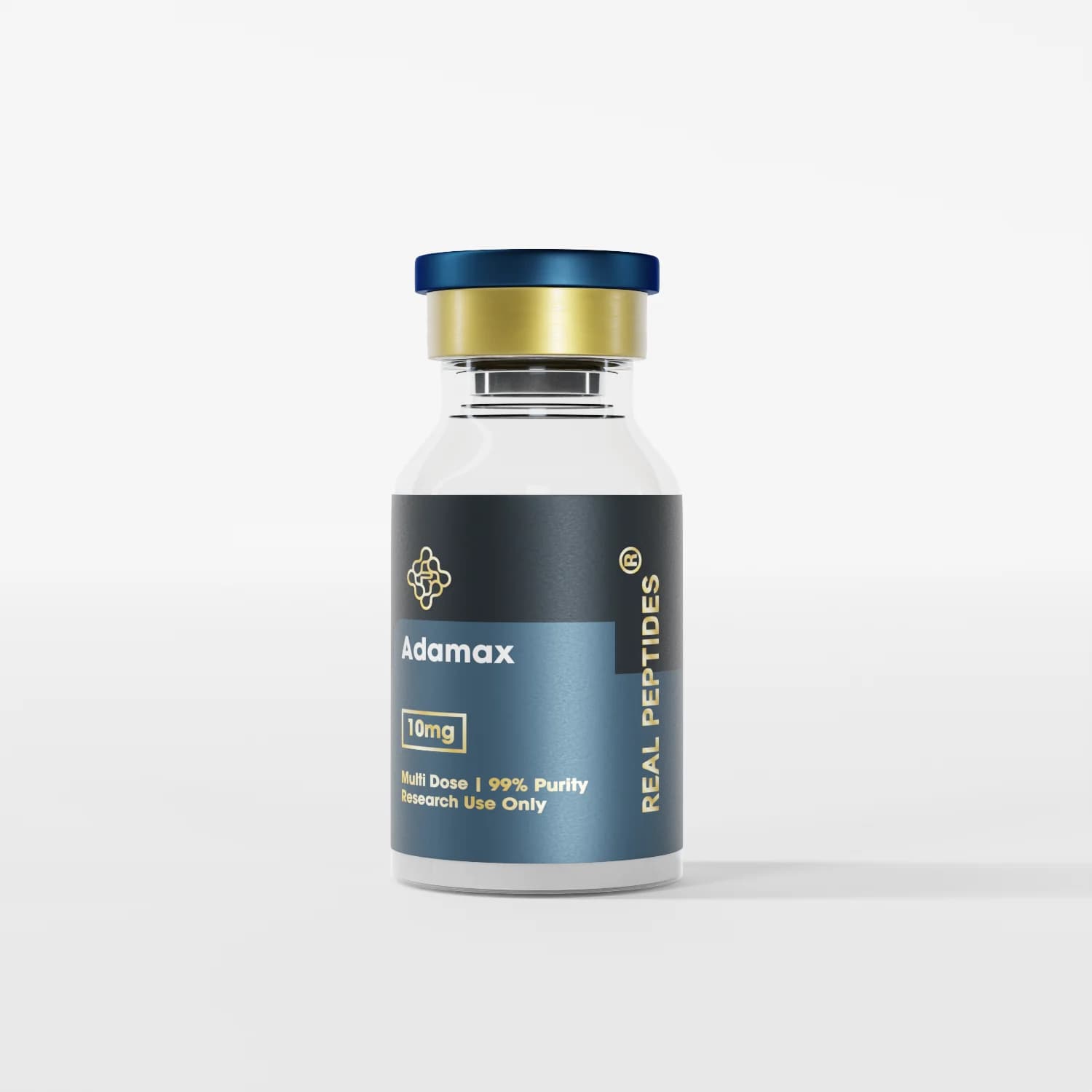
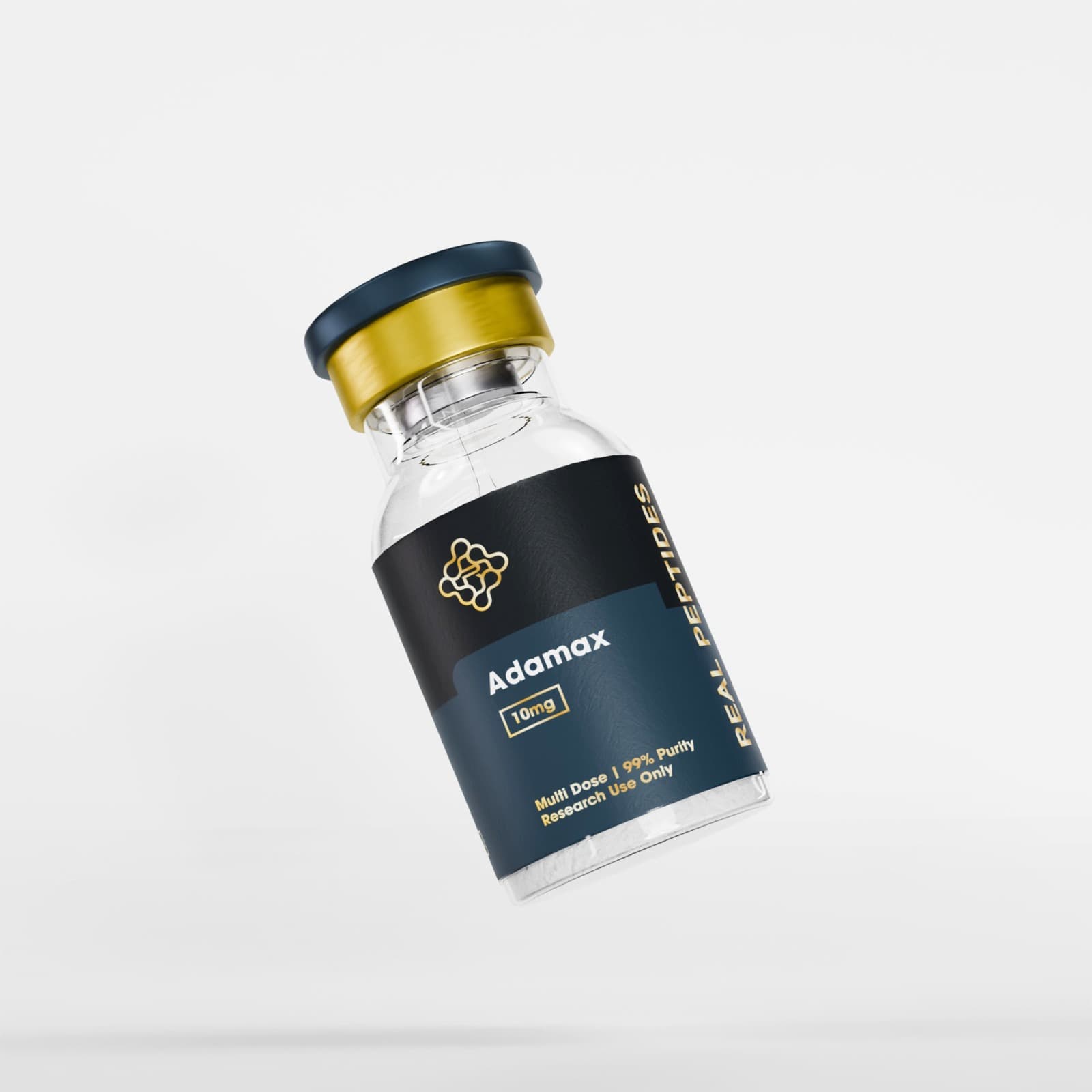
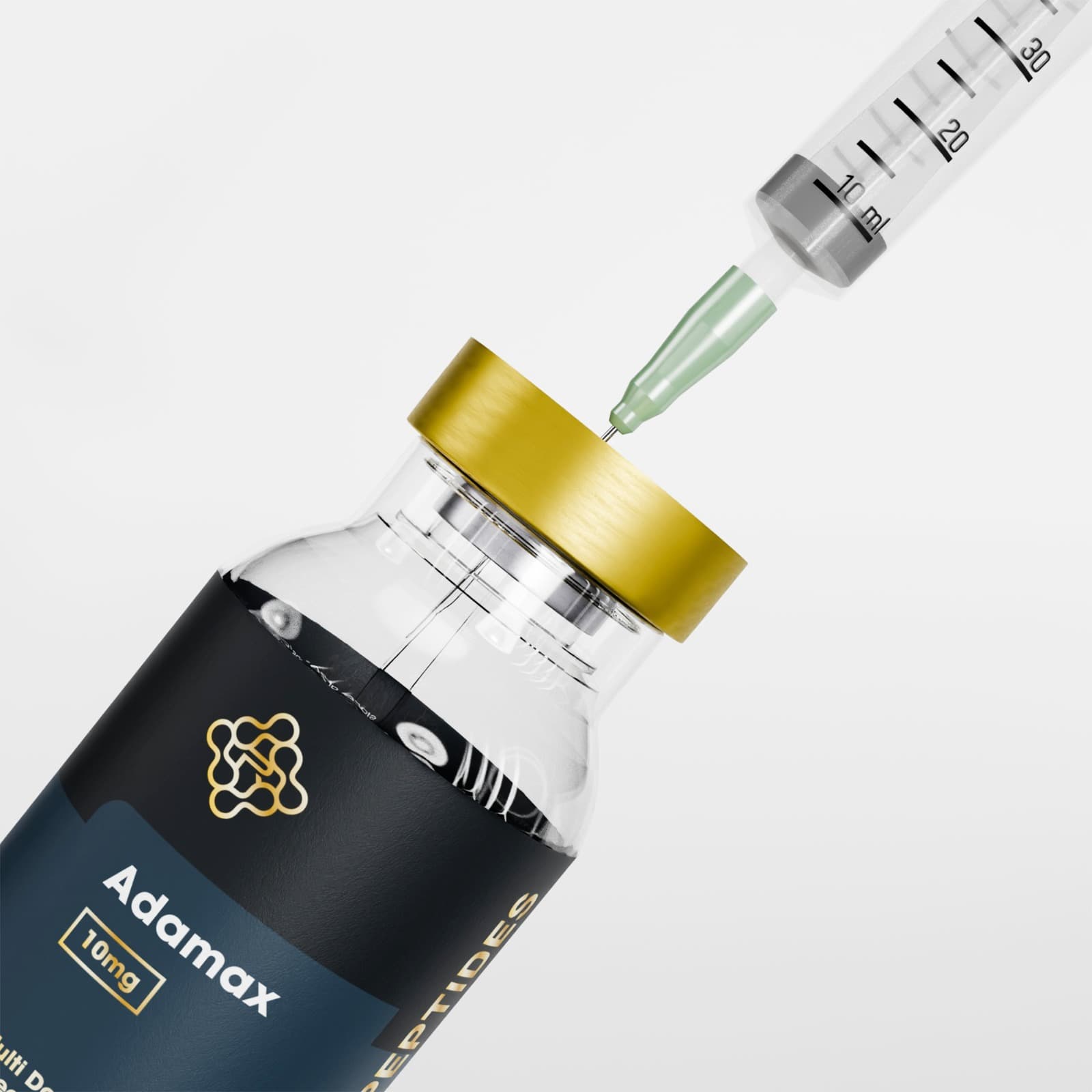
Adamax Peptide 10mg

$70.00

Adamax 10mg is a next-generation metabolic research peptide gaining rapid interest for its potential role in appetite modulation, energy balance, glucose regulation, and body-weight studies. As a novel molecule with emerging relevance in obesity and metabolic dysfunction research, Adamax provides a unique pathway distinct from GLP-1 or GIP agonists, allowing researchers to explore alternative mechanisms influencing satiety, caloric intake, neuroendocrine signaling, and adipose behavior. All Adamax vials from Real Peptides are USA-made, 99%+ purity, third-party tested, and designed for advanced metabolic and endocrine-focused studies.

COA / HPLC / MS
⚠️ Important Disclaimer
For Research Use Only. Not for human consumption or therapeutic treatment.

Out of stock

Pairs well with

Peptides are not ready to use. Must purchase BAC water for reconstitution.

Adamax Peptide

Hypothalamic Appetite Signaling

Adamax is being evaluated for its potential impact on appetite-regulating centers in the hypothalamus, where it may modulate neuropeptides tied to hunger and satiety patterns. By altering signal intensity in these circuits, Adamax may help model changes in caloric intake, craving behavior, and feeding frequency in preclinical settings.

Adipocyte Signaling & Fat Oxidation

Studies are exploring whether Adamax can influence fat cell metabolism, including lipolysis, adipocyte size, and fat-storage behavior. Researchers use it in models designed to assess fat oxidation and shifts in energy mobilization from adipose tissue.

Glucose Uptake & Insulin Sensitivity

Adamax is of interest in models examining glucose disposal, insulin sensitivity, and metabolic syndrome. Early research suggests that by modulating metabolic pathways, Adamax may help improve how tissues respond to glucose and insulin signaling, making it relevant in prediabetes and metabolic dysfunction research.

Neuroendocrine Crosstalk

There is strong theoretical interest in Adamax’s role in neuroendocrine communication — the interface between hormones, brain signaling, and behavior. By influencing appetite-related peptides and possibly reward circuits, Adamax can be a useful tool in studying emotional and behavioral components of overeating.

Energy Expenditure & Mitochondrial Activity

Because metabolic rate and mitochondrial function are tightly linked, researchers are also examining Adamax for its potential impact on energy expenditure, basal metabolic rate, and mitochondrial output. This makes it a candidate for multi-pathway obesity and longevity-related studies.

EXPLORE Adamax Peptide

Research Benefits of Adamax

Appetite-Regulation Modeling

Adamax is used in research models focused on hunger, cravings, and satiety, allowing scientists to better understand how altering central appetite pathways may affect caloric intake.

Support for Body-Fat Reduction Pathways

By impacting caloric intake, energy balance, and adipocyte signaling, Adamax is commonly used in fat-loss research, especially when paired with other metabolic peptides.

Metabolic-Rate and Energy-Expenditure Studies

Researchers study Adamax in contexts where energy expenditure and thermogenic activity are key endpoints, helping map how metabolism may respond to multi-pathway interventions.

Glucose-Control & Insulin-Response Models

Because metabolic disease often involves impaired glucose handling, Adamax is investigated for its potential to support insulin sensitivity and glycemic stability in research environments

Weight-Regain & Maintenance Protocols

A major interest is whether compounds like Adamax may be useful in post-intervention or post-GLP models, where researchers seek to better understand mechanisms behind weight regain and maintenance.

Synergy With GLP & Metabolic Agents

Adamax is frequently studied alongside GLP and metabolic agents like Tirzepatide, Retatrutide, Survodutide, Mazdutide and amylin analogs such as Cagrilintide, giving researchers a wider toolbox of metabolic levers.

Non-GLP Mechanism for Comparative Studies

Because Adamax works through non-GLP pathways, it’s valuable for comparisons against GLP-centric peptides and for designing stacked or sequential protocols.

Neuroendocrine & Reward-Pathway Research

Adamax is also relevant in research exploring food reward, emotional eating, and stress-related appetite changes, tying metabolism to neurological signaling.

Body Recomposition & Performance Contexts

When studied alongside growth hormone secretagogues like CJC-1295 no DAC, Ipamorelin, or Tesamorelin, Adamax may help researchers map how fat loss and lean-mass preservation interact.

Multi-Pathway Metabolic Exploration

Adamax is ideal in broad metabolic research frameworks where scientists want to layer GLP, amylin, NNMT, mitochondrial, and GH-axis pathways together, using peptides such as 5-Amino-1MQ, MOTS-c, SS-31, and others as part of advanced experimental designs.

What Is Adamax?

Adamax is a novel metabolic research peptide studied for its potential to affect appetite, weight regulation, glucose handling, and fat metabolism. While it is not a GLP-1, GIP, or glucagon agonist, Adamax is often investigated alongside advanced GLP peptides like Tirzepatide, Retatrutide, and Survodutide due to overlapping relevance in metabolic and obesity research. Its unique non-GLP mechanism gives researchers a way to expand beyond traditional incretin pathways and explore secondary or adjunctive appetite-control systems.

Why Choose Adamax for Research?

Researchers choose Adamax when they want to look beyond standard GLP-based models while still targeting hot topics like appetite, fat loss, and metabolic control. Adamax can be incorporated into:

  • Studies assessing caloric intake behavior

  • Research examining weight regain after GLP or diet intervention

  • Comparative experiments against agents like Mazdutide, Tirzepatide, or Retatrutide

Stack-based research where Adamax is combined with metabolic enhancers such as 5-Amino-1MQ or mitochondrial peptides like MOTS-c


By offering an additional metabolic lever, Adamax lets scientists build more nuanced and layered research designs.

What Sets Adamax Apart?

What sets Adamax apart is its position as a non-GLP metabolic peptide that still contributes meaningfully to research around obesity, appetite, and weight regulation. Instead of acting directly through GLP-1, GIP, or glucagon receptors, Adamax appears to influence downstream neural and metabolic circuits that can complement — rather than compete with — incretin-based peptides.

This makes Adamax uniquely suited for:


  • Adjunct research with GLP-1/GIP agents like Tirzepatide or Retatrutide
  • Pre- and post-GLP models to understand how alternative mechanisms may help maintain results

  • Combination studies with Cagrilintide and 5-Amino-1MQ for multi-pathway metabolic exploration

Adamax fills a gap in the metabolic toolbox: a novel, non-GLP peptide that broadens what’s possible in complex metabolic research.

Research Models & Use Cases

Adamax can be incorporated into:


  • Rodent models of diet-induced obesity


  • Experiments evaluating binge eating vs. controlled intake


  • Studies mapping weight regain after GLP, diet, or caloric restriction


  • Multi-peptide stacks involving 5-Amino-1MQ, MOTS-c, SS-31 and GH secretagogues like CJC-1295 no DAC and Ipamorelin


  • Research into reward-driven eating behaviors, stress response, and neuroendocrine patterns
This positions Adamax as a flexible, high-value metabolic tool for advanced researchers.

Stacking & Synergy

Researchers commonly study Adamax in combination with:


All combinations are for research use only and must be handled under appropriate lab conditions.

EXPLORE BY BENEFIT

Adamax 10mg FAQs

What is Adamax peptide?

Adamax is a novel metabolic research peptide investigated for its potential impact on appetite regulation, body-weight control, fat metabolism, and glucose handling. Unlike GLP-1 or GIP agonists such as Tirzepatide or Retatrutide, Adamax appears to work through distinct pathways, making it ideal for alternative or adjunctive metabolic research.

What is Adamax used for in research?

Adamax is used in studies focused on hunger modeling, satiety, caloric intake, weight-regain dynamics, metabolic rate, and glucose regulation. It’s often incorporated into complex metabolic research designs that also include agents like Cagrilintide, 5-Amino-1MQ, or GLP-related peptides.

What are the research benefits of Adamax?

Key benefits of Adamax in research contexts include the ability to study changes in appetite, body-weight trends, energy expenditure, insulin response, and multi-pathway fat-loss mechanisms. Researchers also value how Adamax interacts with or differs from incretin-based compounds, providing a deeper look at metabolic complexity.Key benefits of Adamax in research contexts include the ability to study changes in appetite, body-weight trends, energy expenditure, insulin response, and multi-pathway fat-loss mechanisms. Researchers also value how Adamax interacts with or differs from incretin-based compounds, providing a deeper look at metabolic complexity.Key benefits of Adamax in research contexts include the ability to study changes in appetite, body-weight trends, energy expenditure, insulin response, and multi-pathway fat-loss mechanisms. Researchers also value how Adamax interacts with or differs from incretin-based compounds, providing a deeper look at metabolic complexity.Key benefits of Adamax in research contexts include the ability to study changes in appetite, body-weight trends, energy expenditure, insulin response, and multi-pathway fat-loss mechanisms. Researchers also value how Adamax interacts with or differs from incretin-based compounds, providing a deeper look at metabolic complexity.Key benefits of Adamax in research contexts include the ability to study changes in appetite, body-weight trends, energy expenditure, insulin response, and multi-pathway fat-loss mechanisms. Researchers also value how Adamax interacts with or differs from incretin-based compounds, providing a deeper look at metabolic complexity.Key benefits of Adamax in research contexts include the ability to study changes in appetite, body-weight trends, energy expenditure, insulin response, and multi-pathway fat-loss mechanisms. Researchers also value how Adamax interacts with or differs from incretin-based compounds, providing a deeper look at metabolic complexity.Key benefits of Adamax in research contexts include the ability to study changes in appetite, body-weight trends, energy expenditure, insulin response, and multi-pathway fat-loss mechanisms. Researchers also value how Adamax interacts with or differs from incretin-based compounds, providing a deeper look at metabolic complexity.Key benefits of Adamax in research contexts include the ability to study changes in appetite, body-weight trends, energy expenditure, insulin response, and multi-pathway fat-loss mechanisms. Researchers also value how Adamax interacts with or differs from incretin-based compounds, providing a deeper look at metabolic complexity.Key benefits of Adamax in research contexts include the ability to study changes in appetite, body-weight trends, energy expenditure, insulin response, and multi-pathway fat-loss mechanisms. Researchers also value how Adamax interacts with or differs from incretin-based compounds, providing a deeper look at metabolic complexity.Key benefits of Adamax in research contexts include the ability to study changes in appetite, body-weight trends, energy expenditure, insulin response, and multi-pathway fat-loss mechanisms. Researchers also value how Adamax interacts with or differs from incretin-based compounds, providing a deeper look at metabolic complexity.Key benefits of Adamax in research contexts include the ability to study changes in appetite, body-weight trends, energy expenditure, insulin response, and multi-pathway fat-loss mechanisms. Researchers also value how Adamax interacts with or differs from incretin-based compounds, providing a deeper look at metabolic complexity.Key benefits of Adamax in research contexts include the ability to study changes in appetite, body-weight trends, energy expenditure, insulin response, and multi-pathway fat-loss mechanisms. Researchers also value how Adamax interacts with or differs from incretin-based compounds, providing a deeper look at metabolic complexity.Key benefits of Adamax in research contexts include the ability to study changes in appetite, body-weight trends, energy expenditure, insulin response, and multi-pathway fat-loss mechanisms. Researchers also value how Adamax interacts with or differs from incretin-based compounds, providing a deeper look at metabolic complexity.Key benefits of Adamax in research contexts include the ability to study changes in appetite, body-weight trends, energy expenditure, insulin response, and multi-pathway fat-loss mechanisms. Researchers also value how Adamax interacts with or differs from incretin-based compounds, providing a deeper look at metabolic complexity.Key benefits of Adamax in research contexts include the ability to study changes in appetite, body-weight trends, energy expenditure, insulin response, and multi-pathway fat-loss mechanisms. Researchers also value how Adamax interacts with or differs from incretin-based compounds, providing a deeper look at metabolic complexity.Key benefits of Adamax in research contexts include the ability to study changes in appetite, body-weight trends, energy expenditure, insulin response, and multi-pathway fat-loss mechanisms. Researchers also value how Adamax interacts with or differs from incretin-based compounds, providing a deeper look at metabolic complexity.Key benefits of Adamax in research contexts include the ability to study changes in appetite, body-weight trends, energy expenditure, insulin response, and multi-pathway fat-loss mechanisms. Researchers also value how Adamax interacts with or differs from incretin-based compounds, providing a deeper look at metabolic complexity.Key benefits of Adamax in research contexts include the ability to study changes in appetite, body-weight trends, energy expenditure, insulin response, and multi-pathway fat-loss mechanisms. Researchers also value how Adamax interacts with or differs from incretin-based compounds, providing a deeper look at metabolic complexity.Key benefits of Adamax in research contexts include the ability to study changes in appetite, body-weight trends, energy expenditure, insulin response, and multi-pathway fat-loss mechanisms. Researchers also value how Adamax interacts with or differs from incretin-based compounds, providing a deeper look at metabolic complexity.Key benefits of Adamax in research contexts include the ability to study changes in appetite, body-weight trends, energy expenditure, insulin response, and multi-pathway fat-loss mechanisms. Researchers also value how Adamax interacts with or differs from incretin-based compounds, providing a deeper look at metabolic complexity.Key benefits of Adamax in research contexts include the ability to study changes in appetite, body-weight trends, energy expenditure, insulin response, and multi-pathway fat-loss mechanisms. Researchers also value how Adamax interacts with or differs from incretin-based compounds, providing a deeper look at metabolic complexity.Key benefits of Adamax in research contexts include the ability to study changes in appetite, body-weight trends, energy expenditure, insulin response, and multi-pathway fat-loss mechanisms. Researchers also value how Adamax interacts with or differs from incretin-based compounds, providing a deeper look at metabolic complexity.Key benefits of Adamax in research contexts include the ability to study changes in appetite, body-weight trends, energy expenditure, insulin response, and multi-pathway fat-loss mechanisms. Researchers also value how Adamax interacts with or differs from incretin-based compounds, providing a deeper look at metabolic complexity.Key benefits of Adamax in research contexts include the ability to study changes in appetite, body-weight trends, energy expenditure, insulin response, and multi-pathway fat-loss mechanisms. Researchers also value how Adamax interacts with or differs from incretin-based compounds, providing a deeper look at metabolic complexity.Key benefits of Adamax in research contexts include the ability to study changes in appetite, body-weight trends, energy expenditure, insulin response, and multi-pathway fat-loss mechanisms. Researchers also value how Adamax interacts with or differs from incretin-based compounds, providing a deeper look at metabolic complexity.Key benefits of Adamax in research contexts include the ability to study changes in appetite, body-weight trends, energy expenditure, insulin response, and multi-pathway fat-loss mechanisms. Researchers also value how Adamax interacts with or differs from incretin-based compounds, providing a deeper look at metabolic complexity.Key benefits of Adamax in research contexts include the ability to study changes in appetite, body-weight trends, energy expenditure, insulin response, and multi-pathway fat-loss mechanisms. Researchers also value how Adamax interacts with or differs from incretin-based compounds, providing a deeper look at metabolic complexity.Key benefits of Adamax in research contexts include the ability to study changes in appetite, body-weight trends, energy expenditure, insulin response, and multi-pathway fat-loss mechanisms. Researchers also value how Adamax interacts with or differs from incretin-based compounds, providing a deeper look at metabolic complexity.Key benefits of Adamax in research contexts include the ability to study changes in appetite, body-weight trends, energy expenditure, insulin response, and multi-pathway fat-loss mechanisms. Researchers also value how Adamax interacts with or differs from incretin-based compounds, providing a deeper look at metabolic complexity.Key benefits of Adamax in research contexts include the ability to study changes in appetite, body-weight trends, energy expenditure, insulin response, and multi-pathway fat-loss mechanisms. Researchers also value how Adamax interacts with or differs from incretin-based compounds, providing a deeper look at metabolic complexity.Key benefits of Adamax in research contexts include the ability to study changes in appetite, body-weight trends, energy expenditure, insulin response, and multi-pathway fat-loss mechanisms. Researchers also value how Adamax interacts with or differs from incretin-based compounds, providing a deeper look at metabolic complexity.Key benefits of Adamax in research contexts include the ability to study changes in appetite, body-weight trends, energy expenditure, insulin response, and multi-pathway fat-loss mechanisms. Researchers also value how Adamax interacts with or differs from incretin-based compounds, providing a deeper look at metabolic complexity.Key benefits of Adamax in research contexts include the ability to study changes in appetite, body-weight trends, energy expenditure, insulin response, and multi-pathway fat-loss mechanisms. Researchers also value how Adamax interacts with or differs from incretin-based compounds, providing a deeper look at metabolic complexity.Key benefits of Adamax in research contexts include the ability to study changes in appetite, body-weight trends, energy expenditure, insulin response, and multi-pathway fat-loss mechanisms. Researchers also value how Adamax interacts with or differs from incretin-based compounds, providing a deeper look at metabolic complexity.

How does Adamax compare to GLP-1 peptides like Tirzepatide?

Tirzepatide is a dual GIP/GLP-1 agonist with well-defined receptor targets. Adamax, by contrast, appears to function via non-incretin pathways, offering unique insights when studied alongside GLP-1 research peptides in appetite and obesity models.

Is Adamax stronger than Retatrutide?

“Stronger” isn’t the right framing, because Retatrutide is a triple agonist (GLP-1/GIP/glucagon), whereas Adamax follows a different mechanistic route. Researchers instead compare how these compounds differ in appetite reduction, weight maintenance, and metabolic adaptation.

Does Adamax support appetite suppression in models?

Yes, Adamax is often used in experiments designed to observe changes in hunger, cravings, and feeding patterns, making it a valuable tool in appetite-suppression and caloric-intake research.

Can Adamax help model weight regain after GLP-1 therapy?

Adamax is of particular interest in studies that explore what happens after GLP-1 or GLP-related interventions end. By layering Adamax into these models, researchers can test whether alternative pathways may contribute to weight-maintenance or weight-regain dynamics.

Can Adamax be stacked with other peptides in research?

Yes. In research contexts, Adamax is frequently combined with:
– Tirzepatide, Retatrutide, Survodutide, Mazdutide
– Cagrilintide for amylin-related satiety
– 5-Amino-1MQ, MOTS-c, and SS-31 for deep metabolic and mitochondrial research
– CJC-1295 no DAC + Ipamorelin or Tesamorelin for recomposition models

What pathways does Adamax target?

Adamax appears to influence hypothalamic appetite circuitry, adipocyte metabolism, neuroendocrine balance, and potentially mitochondrial energy regulation, making it a multi-relevance tool in metabolic and obesity research.

Is Adamax a GLP-1 peptide?

No. Adamax is not a GLP-1, GIP, or glucagon agonist. That’s precisely what makes it valuable — it opens up non-GLP metabolic avenues for researchers who want to look at alternative or complementary mechanisms.

Is Adamax FDA approved?

No. Adamax is not FDA approved for any medical or human-use indication. It is available for research use only and should never be used as a treatment, drug, or supplement.

Yes, Adamax may be legally purchased for laboratory research in many regions, provided it is used according to applicable laws and regulations and not administered to humans or animals.

What dosage is used in Adamax research studies?

There is no standardized or clinically established human dosage. Dosing choices in research settings are based on model type, study duration, and experimental objectives, and are determined by the researchers and ethics committees overseeing the work.

How should Adamax be reconstituted?

Reconstitution procedures depend on internal lab protocols. Many researchers use sterile diluents such as Bacteriostatic Water following standard peptide-handling and aseptic techniques. Always follow your lab’s SOPs.

Does Adamax affect glucose and insulin signaling?

Early studies suggest that Adamax may impact glucose-disposal mechanisms and insulin responsiveness, making it a candidate for inclusion in metabolic-syndrome and glycemic-control models alongside compounds like 5-Amino-1MQ or MOTS-c.

Does Adamax increase metabolic rate or energy expenditure?

Adamax is being investigated for its potential influence on energy expenditure and thermogenic activity, particularly when part of larger stacks that may include mitochondrial peptides like SS-31 or metabolic regulators such as 5-Amino-1MQ.

How is Adamax different from Cagrilintide?

Cagrilintide is an amylin analog; Adamax is a novel metabolic peptide working through non-amylin, non-GLP pathways. This difference makes them complementary in research, rather than redundant.

Does Adamax increase metabolic rate or energy expenditure?

Adamax is being investigated for its potential influence on energy expenditure and thermogenic activity, particularly when part of larger stacks that may include mitochondrial peptides like SS-31 or metabolic regulators such as 5-Amino-1MQ.

How is Adamax different from Cagrilintide?

Cagrilintide is an amylin analog; Adamax is a novel metabolic peptide working through non-amylin, non-GLP pathways. This difference makes them complementary in research, rather than redundant.

Is Adamax safe to handle in a lab?

When handled according to standard laboratory safety practices, Adamax is considered safe for researchers to work with. It should never be ingested, injected into humans or animals, or used outside controlled research environments.

Where can I buy Adamax for research?

Adamax is available through Real Peptides, alongside a full catalog of metabolic, mitochondrial, nootropic, and hormonal research tools such as 5-Amino-1MQ, MOTS-c, Tirzepatide, Retatrutide, and the Wolverine Stack.

Can Adamax be used in long-term metabolic research?

Yes. Adamax is often included in multi-week or multi-phase research designs focused on chronic obesity, maintenance vs. regain, metabolic flexibility, and appetite adaptation — frequently alongside other peptides in your catalog like Survodutide, Mazdutide, or 5-Amino-1MQ.

Didn’t find your answer?

Don't hestitate to contact us

Contact us
Join Waitlist We will inform you when the product arrives in stock. Please leave your valid email address below.

Search