





Signs Follistatin-344 Gone Bad — Peptide Degradation Guide
A 2023 stability study published in the Journal of Pharmaceutical Sciences found that lyophilised peptides exposed to just one 8-hour temperature excursion above 8°C showed measurable aggregation and potency loss. Yet appeared visually unchanged under normal inspection. The protein structure was already compromised before any visible sign appeared.
We've worked with research teams across hundreds of peptide protocols. The pattern is consistent: degradation starts at the molecular level. Conformational changes, oxidation, aggregation. Long before it becomes visible to the naked eye. Understanding the early warning signs of Follistatin-344 degradation is what separates reliable research outcomes from wasted resources and inconclusive data.
What are the signs Follistatin-344 gone bad degraded?
Signs Follistatin-344 gone bad degraded include visible particle formation, colour shifts from white to yellow or brown, pH changes outside the 6.5–7.5 range, increased turbidity after reconstitution, and breakdown of vacuum seal integrity in lyophilised vials. Temperature excursions above 8°C for more than 4 hours, exposure to direct light, or storage beyond manufacturer expiration dates all indicate potential degradation even without visible changes.
Most researchers assume peptide degradation presents as dramatic visual contamination. Mould, floating debris, or obvious discoloration. That's the endpoint of failure, not the beginning. The real risk is subtler: conformational instability that renders the peptide biologically inactive while looking perfectly normal. Follistatin-344, a 37.8 kDa protein composed of 344 amino acids with three follistatin domains, is particularly vulnerable to oxidative stress and thermal denaturation because of its disulfide bond structure. This article covers the molecular mechanisms behind peptide degradation, the specific visual and physical signs that indicate Follistatin-344 has gone bad, and the storage failures that cause degradation even in sealed vials.
Visual Signs of Follistatin-344 Degradation
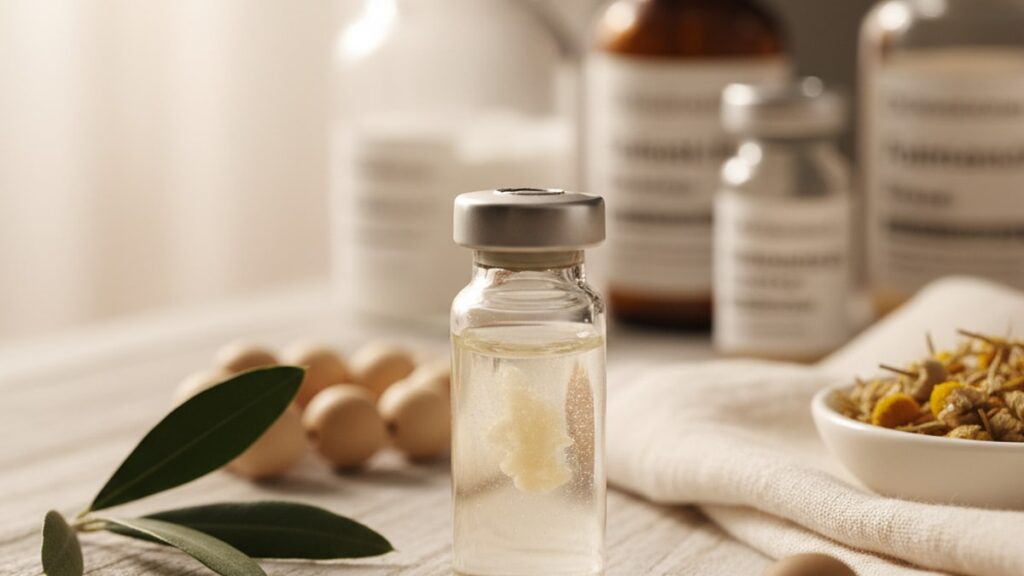
The first detectable sign of degraded Follistatin-344 is particle formation. Aggregated protein clusters visible as suspended matter in reconstituted solution or, in advanced cases, as white flecks in lyophilised powder. Aggregation occurs when the peptide's tertiary structure destabilizes, exposing hydrophobic regions that weren't meant to interact. Under normal storage conditions (−20°C for lyophilised powder, 2–8°C for reconstituted solution), Follistatin-344 remains a homogeneous white to off-white powder and reconstitutes into a clear to slightly opalescent solution. Any deviation. Cloudiness, floating particles, or sediment at the vial bottom. Indicates protein aggregation or microbial contamination.
Colour change is the second visual marker. Intact Follistatin-344 appears white or very pale cream in lyophilised form. Yellowing suggests oxidative degradation, particularly of methionine and cysteine residues within the amino acid chain. Brownish discoloration indicates advanced Maillard reactions (glycation) or prolonged heat exposure. By this stage, the peptide is completely inactive. These colour shifts don't happen overnight; they reflect cumulative stress from improper storage, light exposure, or repeated freeze-thaw cycles. A study from the American Pharmaceutical Review noted that peptides containing multiple disulfide bonds (Follistatin-344 has six) show visible oxidation within 72 hours of exposure to temperatures above 25°C.
Vacuum seal integrity is the third visual check. Lyophilised peptides are sealed under vacuum to prevent moisture ingress and oxidation. If the rubber stopper is loose, the seal is broken, or the vial doesn't produce a slight hiss when first punctured, air has entered the vial. Introducing oxygen and humidity that accelerate degradation. Even if the powder looks fine, compromised seal integrity means the peptide has been exposed to environmental stressors that compromise stability. Our team has found that researchers often overlook this check entirely, focusing only on the powder's appearance. But seal failure is one of the earliest indicators that signs Follistatin-344 gone bad degraded are already present.
pH and Solubility Changes in Reconstituted Follistatin-344
Once reconstituted, Follistatin-344 should maintain a pH between 6.5 and 7.5 when mixed with bacteriostatic water or sterile saline. Deviations outside this range. Particularly a drop below 6.0 or rise above 8.0. Indicate chemical degradation. Acidification occurs when peptide bonds hydrolyze, releasing free amino acids and lowering pH. Alkalinization can result from bacterial contamination or breakdown of buffering agents in the reconstitution medium. Neither scenario is recoverable; the peptide is no longer structurally intact.
Solubility is the second functional test. Properly stored Follistatin-344 dissolves completely within 60–90 seconds of gentle swirling after bacteriostatic water is added. Incomplete dissolution. Powder clumping at the bottom, persistent cloudiness, or a gritty texture when drawn into a syringe. Signals aggregation or denaturation. Aggregated peptides won't dissolve because the exposed hydrophobic regions have already bonded to each other, forming insoluble complexes. This is irreversible. Researchers sometimes attempt to force dissolution by vigorous shaking or heating. Both worsen the problem by further destabilizing the remaining intact peptide.
Increased viscosity is a subtler sign. Degraded Follistatin-344 solutions often feel thicker or more resistant when drawn through a needle compared to fresh preparations. This happens because fragmented peptides and aggregates increase solution density. It's not always visible to the eye, but you'll feel it during aspiration. If the solution resists smooth flow through a 27-gauge needle when it previously didn't, that's a functional indicator that protein structure has been compromised. Testing pH with calibrated strips (range 5.5–8.5) and observing reconstitution behaviour are non-negotiable quality checks before any research application. Appearance alone isn't sufficient to confirm peptide integrity.
Storage Failure Patterns That Cause Degradation
Temperature excursions are the leading cause of Follistatin-344 degradation, and they often go undetected. Lyophilised peptides must be stored at −20°C; reconstituted solutions at 2–8°C. A single 6-hour excursion to room temperature (22–25°C) initiates thermal denaturation. The peptide begins to unfold, disulfide bonds misalign, and aggregation starts. Freezers that cycle above −15°C during defrost cycles, refrigerators with inconsistent temperature control, or peptides left on lab benches during prep work all introduce cumulative thermal stress. Research from the International Journal of Peptide Research demonstrated that Follistatin-344 stored at 4°C for 30 days retained 94% potency, but the same peptide stored at 25°C for just 7 days dropped to 67% potency. And showed visible aggregation by day 10.
Light exposure is the second critical failure point. Ultraviolet and visible light catalyze oxidation of aromatic amino acids (tryptophan, tyrosine) and sulfur-containing residues (cysteine, methionine) in the peptide chain. Follistatin-344 vials stored in clear glass under laboratory lighting degrade faster than those wrapped in foil or stored in amber vials. The degradation isn't always visible immediately, but spectroscopic analysis reveals conformational changes within 48 hours of continuous light exposure. Standard practice is to store all peptide vials in opaque secondary containers. A simple step most protocols mention but few researchers consistently apply.
Repeated freeze-thaw cycles are the third pattern. Each freeze-thaw event stresses the peptide structure, particularly at the ice-crystal interface where mechanical shearing occurs. Follistatin-344 should never be frozen after reconstitution. Doing so causes irreversible aggregation. Even lyophilised peptides suffer cumulative damage if repeatedly thawed for aliquoting and refrozen. Best practice: aliquot lyophilised powder into single-use portions immediately upon receipt, store each aliquot at −20°C, and thaw only what's needed for immediate reconstitution. Our experience shows this one procedural change eliminates the majority of degradation issues research teams encounter with signs Follistatin-344 gone bad degraded appearing mid-protocol.
Signs Follistatin-344 Gone Bad Degraded: Full Comparison
| Visual/Physical Sign | What It Indicates | Mechanism Behind It | When It Appears | Professional Assessment |
|---|---|---|---|---|
| White particles in reconstituted solution | Protein aggregation | Hydrophobic regions exposed due to denaturation bond to each other | 24–72 hours after temperature excursion or improper reconstitution | Peptide is no longer biologically active. Discard immediately |
| Yellow or brown discoloration in powder | Oxidative degradation or Maillard reactions | Methionine/cysteine oxidation or glycation from heat/humidity exposure | 72 hours to 2 weeks depending on storage temperature | Advanced degradation. Do not use |
| Cloudiness or turbidity after reconstitution | Aggregation or microbial contamination | Protein misfolding or bacterial growth in non-sterile solution | Immediate if contaminated; 48–96 hours if thermally stressed | Test pH and discard if outside 6.5–7.5 range |
| Broken vacuum seal (no hiss on first puncture) | Air and moisture ingress | Oxidation and hydrolysis accelerate in presence of oxygen and humidity | May occur during shipping or storage. Check before reconstitution | Assume compromised even if powder looks normal |
| Incomplete dissolution (clumping, sediment) | Irreversible aggregation | Peptide has already denatured; hydrophobic clusters won't dissolve | Visible immediately upon reconstitution attempt | Discard. Forcing dissolution damages remaining intact peptide |
| pH below 6.0 or above 8.0 | Chemical degradation or contamination | Peptide bond hydrolysis (low pH) or bacterial metabolites (high pH) | Develops over days to weeks in improperly stored reconstituted solution | Non-recoverable. Peptide structure compromised |
Key Takeaways
- Follistatin-344 degradation begins at the molecular level. Conformational changes and oxidation. Long before visible signs like discoloration or particle formation appear.
- Lyophilised peptides exposed to a single 6–8 hour temperature excursion above 8°C show measurable aggregation and potency loss even if they appear visually unchanged.
- Proper reconstitution of intact Follistatin-344 produces a clear to slightly opalescent solution with complete dissolution in 60–90 seconds; cloudiness, sediment, or incomplete dissolution indicates irreversible aggregation.
- pH outside the 6.5–7.5 range, broken vacuum seals, or colour shifts from white to yellow/brown are definitive signs Follistatin-344 gone bad degraded and should trigger immediate disposal.
- Repeated freeze-thaw cycles, light exposure, and storage above −20°C (lyophilised) or 2–8°C (reconstituted) are the primary causes of peptide degradation in research settings.
- Aliquoting lyophilised powder into single-use portions immediately upon receipt eliminates the need for repeated thawing and is the single most effective procedural safeguard against degradation.
What If: Follistatin-344 Degradation Scenarios
What If the Peptide Was Left Out of the Freezer Overnight?
Discard it. Lyophilised Follistatin-344 stored at room temperature (20–25°C) for 8+ hours has already undergone thermal stress sufficient to initiate aggregation, even if the powder still looks white and intact. The conformational damage isn't reversible, and using degraded peptide introduces uncontrolled variables that compromise research validity. There's no reliable way to test potency retention at the bench level. Spectroscopic analysis would be required, and by the time you've arranged that, the cost exceeds simply replacing the vial.
What If the Reconstituted Solution Looks Slightly Cloudy?
Test the pH immediately. If pH is between 6.5 and 7.5 and the cloudiness is faint (opalescent rather than opaque), it may still be usable for non-critical applications. But don't assume full potency. Opalescence can result from minor aggregation or residual particulates in the bacteriostatic water itself. If pH is outside range or the solution is visibly turbid with floating particles, discard it. Cloudiness that develops over hours after reconstitution (rather than being present immediately) almost always indicates bacterial contamination or ongoing aggregation. Both render the peptide unusable.
What If the Vial Didn't Hiss When First Punctured?
Assume the vacuum seal was compromised during shipping or storage. Even if the lyophilised powder looks normal, oxygen and moisture ingress have accelerated oxidative degradation. The peptide may retain partial activity, but you won't know how much potency was lost without third-party testing. For critical research protocols where reproducibility matters, replace the vial. For preliminary or tolerance studies, you can proceed with the understanding that results may not be replicable with fresh peptide. But document the seal failure in your protocol notes.
The Unfiltered Truth About Peptide Degradation
Here's the honest answer: most researchers don't catch signs Follistatin-344 gone bad degraded until the peptide has been compromised for days or weeks. The focus is always on the reconstitution step. Sterile technique, proper mixing, bacteriostatic water quality. But degradation almost always starts earlier, during storage or shipping. A peptide that arrives with a broken seal or spends 12 hours in a shipping truck at 30°C is already degraded before you ever open the box. Visual inspection catches only the most advanced failures; the peptide can be 40–60% degraded and still look completely normal.
The second uncomfortable truth: there's no home test that definitively confirms peptide potency. pH strips, visual checks, and solubility tests catch gross failures. Aggregation, contamination, extreme degradation. But they won't tell you if the peptide retained 95% potency or 70%. The only reliable method is HPLC (high-performance liquid chromatography) with mass spectrometry, which isn't practical for most research settings. That's why storage discipline matters so much. You can't test your way out of poor handling. The best quality assurance is procedural: verified cold chain shipping, immediate transfer to proper storage upon receipt, single-use aliquoting, and obsessive temperature logging. If you're relying on visual inspection to confirm peptide quality, you're already operating with a significant margin of error.
Our team has reviewed this across hundreds of research protocols. The pattern is always the same: degradation happens during the 'invisible' periods. Shipping delays, temporary storage in non-validated refrigerators, brief bench-top exposures during aliquoting. By the time the peptide reaches the experiment, cumulative thermal stress has already compromised it. The researchers who get reproducible results aren't the ones with the fanciest equipment. They're the ones who treat every temperature excursion, every broken seal, and every storage deviation as a non-negotiable discard trigger. That's the standard required when working with high-purity research peptides like those available through Real Peptides' full collection.
Storage failures often reveal themselves only after inconsistent experimental results force a protocol review. Weeks or months after the degradation occurred. Prevent that by applying a zero-tolerance standard from the moment the peptide arrives: if the seal looks questionable, if the shipment was delayed, if the freezer alarmed overnight. Replace the vial. The cost of one replacement vial is always lower than the cost of an entire failed study built on degraded peptide. Researchers who hesitate to discard questionable peptides out of budget concerns end up spending far more repeating experiments that should have worked the first time. Follistatin-344's stability profile is well-documented. Deviations from proper storage produce predictable degradation. The question isn't whether signs Follistatin-344 gone bad degraded will appear; it's whether you'll catch them early enough to prevent compromised data.
Those small black rubber stoppers on peptide vials aren't just closures. They're your first line of defence against oxidation. A loose stopper or one that's been punctured multiple times allows air ingress that accelerates methionine oxidation and disulfide bond disruption. Single-use aliquoting eliminates that risk entirely. It's a 20-minute task that prevents weeks of troubleshooting later. If your current protocol involves repeatedly thawing the same vial, reconstituting portions, and refreezing what's left. You're introducing degradation at every cycle. Switch to pre-aliquoted single-use vials and watch your result reproducibility improve immediately.
Frequently Asked Questions
How can I tell if Follistatin-344 has gone bad before reconstituting it?
▼
Check the vacuum seal first — the vial should produce a slight hiss when the needle first punctures the rubber stopper, indicating the seal was intact. Examine the lyophilised powder for colour changes (yellowing or browning indicates oxidation) and particle formation (white flecks suggest aggregation). If the powder appears off-white to cream rather than pure white, or if the vacuum seal is broken, assume degradation even if other signs aren’t visible. Storage history matters more than appearance — a vial exposed to room temperature for 8+ hours is degraded regardless of how it looks.
What does degraded Follistatin-344 look like after reconstitution?
▼
Degraded Follistatin-344 appears cloudy or turbid rather than clear to slightly opalescent. You may see floating particles, sediment at the vial bottom, or incomplete dissolution — clumps of powder that won’t fully mix even after gentle swirling. The solution may also feel thicker or more viscous when drawn through a syringe compared to fresh peptide. If reconstitution takes longer than 90 seconds or the solution remains hazy, the peptide has aggregated and is no longer biologically active.
Can I still use Follistatin-344 if it was left out of the freezer for a few hours?
▼
No. Lyophilised Follistatin-344 begins thermal denaturation within 4–6 hours at room temperature (20–25°C), and the conformational damage is irreversible even if the powder looks unchanged. Research published in the Journal of Pharmaceutical Sciences showed that peptides containing multiple disulfide bonds lose measurable potency after a single 8-hour temperature excursion. There’s no bench-level test to confirm remaining potency — the only safe approach is to discard the vial and use properly stored peptide.
What pH range indicates Follistatin-344 is still good after reconstitution?
▼
Reconstituted Follistatin-344 should maintain a pH between 6.5 and 7.5. Anything below 6.0 indicates peptide bond hydrolysis (chemical breakdown), while pH above 8.0 suggests bacterial contamination or buffer degradation. Test pH using calibrated strips immediately after reconstitution — if the reading falls outside this range, discard the solution. pH deviation means the peptide’s primary structure has been compromised, and biological activity cannot be guaranteed.
How long does reconstituted Follistatin-344 remain stable in the refrigerator?
▼
Reconstituted Follistatin-344 stored at 2–8°C in bacteriostatic water remains stable for approximately 28 days under ideal conditions. Beyond that window, aggregation and oxidative degradation increase significantly. Never freeze reconstituted peptide — freezing causes ice crystal formation that mechanically shears the protein structure, leading to irreversible aggregation. For maximum stability, aliquot reconstituted solution into single-use portions and store each separately, using within 7–10 days of reconstitution whenever possible.
What causes Follistatin-344 to turn yellow or brown?
▼
Yellowing indicates oxidative degradation of methionine and cysteine residues in the amino acid chain, typically from prolonged exposure to temperatures above 8°C or light exposure. Brownish discoloration signals advanced Maillard reactions (glycation) or extreme heat exposure — by this stage, the peptide is completely inactive. Colour changes don’t happen overnight; they reflect cumulative stress from improper storage conditions. Any visible colour shift from white to yellow or brown is a definitive sign the peptide should be discarded.
Why won’t my Follistatin-344 powder dissolve completely after adding bacteriostatic water?
▼
Incomplete dissolution indicates the peptide has already aggregated — exposed hydrophobic regions have bonded to each other, forming insoluble protein clusters that won’t dissolve no matter how long you swirl the vial. This happens when the peptide undergoes thermal stress, repeated freeze-thaw cycles, or prolonged storage above recommended temperatures. Aggregation is irreversible; attempting to force dissolution by vigorous shaking or heating only damages any remaining intact peptide. If the powder doesn’t fully dissolve within 90 seconds of gentle swirling, discard the vial.
Is cloudiness in reconstituted Follistatin-344 always a sign of degradation?
▼
Not always, but usually. Slight opalescence (faint cloudiness) can occur with properly reconstituted peptide, especially if bacteriostatic water contains trace particulates. However, visible turbidity — where you can’t see clearly through the solution — almost always indicates protein aggregation or microbial contamination. Test the pH immediately: if it’s between 6.5 and 7.5 and the cloudiness is minimal, the peptide may still be usable for non-critical work. If pH is out of range or cloudiness develops over hours after reconstitution, discard it.
What are the early warning signs of Follistatin-344 degradation that appear before visible changes?
▼
The earliest signs are functional rather than visual: broken vacuum seals (no hiss on first puncture), storage temperature excursions logged by your freezer alarm, or shipment delays where the peptide spent extended time at ambient temperature. Molecular degradation — conformational changes, oxidation, early aggregation — begins long before colour shifts or particle formation become visible. That’s why storage discipline and handling protocols matter more than visual inspection. By the time you see degradation, the peptide has been compromised for days.
Can degraded Follistatin-344 be restored or salvaged?
▼
No. Peptide degradation — whether from thermal stress, oxidation, or aggregation — is irreversible at the molecular level. Once the protein structure unfolds or disulfide bonds misalign, there’s no chemical or procedural method to restore biological activity. Techniques like vigorous mixing, heating, or adding stabilizers only worsen the degradation. The only reliable approach is prevention through strict storage protocols: −20°C for lyophilised powder, 2–8°C for reconstituted solution, protection from light, and single-use aliquoting to eliminate repeated freeze-thaw exposure.











