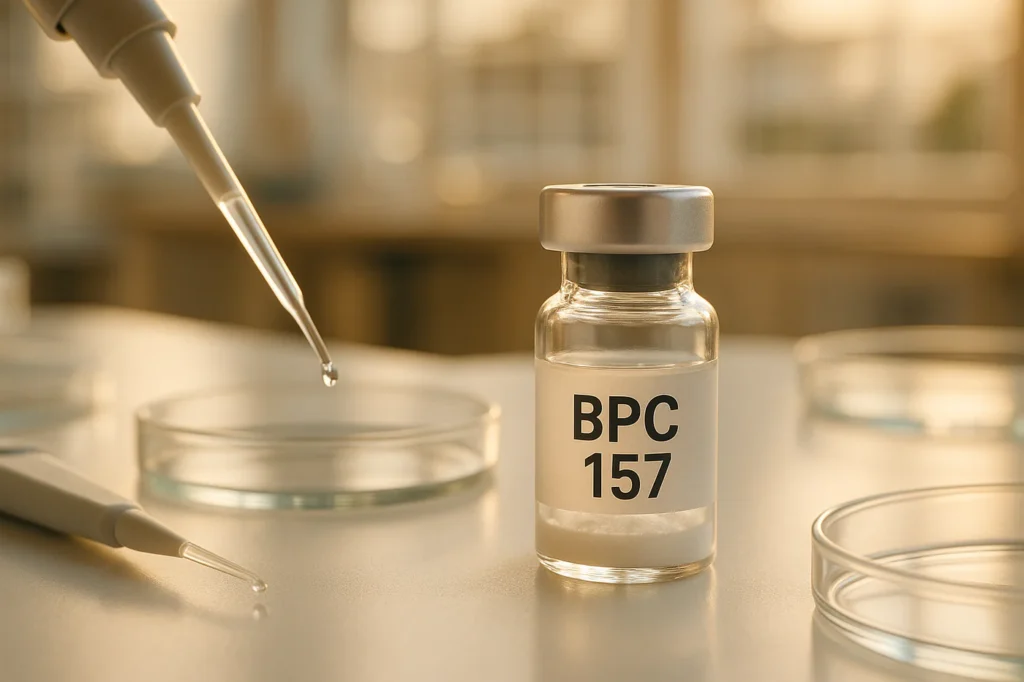
BPC 157 is a synthetic peptide consisting of 15 amino acids, derived from a protein found in the stomach. Known as the Body Protection Compound, it has been developed for research purposes, particularly in regenerative medicine. This peptide is not approved for human use and is classified as research-use-only under U.S. regulations.
Key Highlights:
Purpose: Studied for tissue repair, wound healing, and inflammation management.
Stability: Resistant to hydrolysis, enzyme digestion, and gastric juice, making it reliable for experiments.
Applications: Research focuses on muscle recovery, tendon repair, and gastrointestinal healing.
Regulations: Restricted to laboratory research; not approved for therapeutic use.
BPC 157 shows potential in controlled studies for its ability to support healing and protect cells. Researchers must follow strict guidelines for storage and handling to ensure its integrity during experiments. Always consult regulatory standards before use.
Biochemical Properties and Stability
Amino Acid Sequence and Molecular Weight
BPC 157 is a peptide made up of 15 amino acids with the sequence Gly-Glu-Pro-Pro-Pro-Pro-Gly-Lys-Pro-Ala-Asp-Asp-Ala-Gly-Leu-Val, often abbreviated as GEPPPGKPADDAGLV in single-letter code. It has a molecular weight of 1,419 Da, with an exact mass calculated at 1,418.70415882 Da.
Stability in Research Conditions
One standout feature of BPC 157 is its stability under standard lab conditions. The peptide resists hydrolysis, enzyme digestion, and even the harsh environment of gastric juice. According to research:
“Although the mechanism of action of BPC157 remains unclear, BPC157 has demonstrated significant effects at very low doses with very good stability… It can be stored at room temperature and is resistant to hydrolysis, enzyme digestion, and even gastric juice.”
This makes it ideal for use in aqueous solutions and cell cultures, as it maintains its integrity throughout experiments.
How Stability Affects Research Results
The exceptional stability of BPC 157 contributes to reliable and reproducible results in research. Since the peptide remains intact during experiments, researchers can attribute outcomes to the compound itself rather than breakdown products. This stability also allows for longer experimental durations and simplifies handling by removing the need for specialized storage, such as ultra-cold freezers.
These biochemical properties make BPC 157 a valuable tool in regenerative medicine studies.
BPC-157: Everything You Need to Know – Benefits, Risks, Dosing, & Delivery Methods
How BPC 157 Works
Studies indicate that BPC 157 plays a role in supporting tissue repair, reducing inflammation, and protecting cells. Let’s break down how this peptide functions in these areas.
Tissue Repair and Regeneration
BPC 157 contributes to tissue repair by promoting the movement of cells to injured areas. This cell migration is crucial for healing muscles, tendons, and other soft tissues, making it a key player in regeneration.
Inflammation Control
This peptide is known for its anti-inflammatory properties. It helps regulate the body’s inflammatory response while shielding cells from stress, which can be particularly beneficial in recovery processes.
Protection Across Organ Systems
BPC 157 has shown potential in safeguarding various organ systems, including the gastrointestinal, cardiovascular, and neurological systems. By maintaining tissue integrity in these areas, it opens doors for further exploration into its regenerative applications.
For researchers looking to delve deeper into these mechanisms, Real Peptides provides research-grade BPC 157 that meets the rigorous standards required for advanced studies and cellular research.
sbb-itb-9529e2d
Research Applications in Regenerative Medicine
Tissue Repair in Trauma and Injury Models
Recent studies continue to shed light on the regenerative potential of BPC 157, particularly in addressing severe tissue injuries. One notable investigation, published in January 2025 by the Department of Pharmacology at the University of Zagreb‘s School of Medicine, examined BPC 157’s effects on severe muscle-bone detachment injuries in a rat model. In this experiment, researchers surgically detached the quadriceps muscle from its attachments to the femur and iliac bone. While untreated rats in the control group showed no significant recovery, those treated with BPC 157 at doses of either 10 µg/kg or 10 ng/kg daily (administered orally) displayed remarkable healing outcomes.
“BPC 157 therapy improved walking, resolved leg contracture, and promoted muscle reattachment with minimal gap. Microscopic analysis showed reattachment fibers extending into new bone, with increased mesenchymal cells and periosteum reactivation observed by day 3”.
The study provided a detailed evaluation of the peptide’s restorative effects. By the three-month mark, treated rats exhibited stable reattachment, with newly formed cortical bone and mature muscle fibers firmly integrated with the bone. This dual-sided healing – addressing both muscle and bone – demonstrates BPC 157’s ability to restore critical tissue junctions, such as neuromuscular, osteotendinous, and myotendinous connections. Additionally, it supported the repair of severely damaged tendons, ligaments, and bones.
These findings highlight the potential of BPC 157 in regenerative medicine, particularly for repairing complex injuries and restoring essential tissue connections. Researchers interested in exploring these applications further can access high-purity BPC 157 through Real Peptides.
Laboratory Use Guidelines
Regulatory Compliance for Research Use
BPC 157 is strictly intended for laboratory research and is not approved for human consumption, therapeutic use, or clinical applications. U.S. regulations specify that peptides like this are only accessible to qualified researchers, institutions, and laboratories. Researchers must adhere to all relevant federal and institutional regulations, obtaining necessary approvals before conducting clinical or animal testing. These rules ensure experiments are designed rigorously and conducted safely.
Storage and Handling Protocols
To maintain the integrity of BPC 157, store the lyophilized powder at –20°C. Once reconstituted with sterile water, keep it between 2°C and 8°C and use it within the recommended period. Avoid repeated freeze-thaw cycles, and gently swirl the solution during reconstitution to preserve its quality. Following these steps helps ensure consistent and reliable experimental results.
Available Formats and Lab Integration
Real Peptides offers BPC 157 in a 5 mg lyophilized vial, providing flexibility for accurate dosing and varied experimental setups. Each vial undergoes HPLC verification, ensuring a purity level of ≥99%, along with rigorous endotoxin screening for added safety.
For researchers managing more intricate studies, Real Peptides also supplies pre-blended research stacks. These stacks combine complementary peptides designed for regenerative research, eliminating the need for manual weighing and mixing. This reduces the chance of errors and saves valuable lab time. All products are shipped using temperature-controlled methods and include certificates of analysis for verification. To further assist researchers, Real Peptides provides educational tools like reconstitution guides, dosing calculators, and detailed storage instructions, making lab integration straightforward and efficient.
By following these guidelines, researchers can rely on BPC 157 as a consistent and effective tool for advancing regenerative medicine studies.
Research highlights BPC 157’s diverse potential in regenerative studies. This stable 15-amino acid peptide has been explored for its role in promoting tissue repair, aiding wound healing, encouraging angiogenesis, and modulating inflammation. Studies also suggest it may influence growth factor activity and bolster protective responses across various organ systems.
Since BPC 157 is designated for research use only, it’s crucial to follow federal regulations and proper storage guidelines – outlined in the Laboratory Use Guidelines – to preserve its integrity and ensure reliable experimental results.
Real Peptides provides BPC 157 with verified high purity through HPLC testing. They also offer pre-blended research stacks and educational resources, simplifying its use in laboratory settings. These measures allow researchers to concentrate on advancing their work in regenerative medicine.
As studies on tissue repair and inflammation management progress, BPC 157 continues to show promise, supporting current findings and encouraging deeper exploration into the intricate processes of regeneration.