





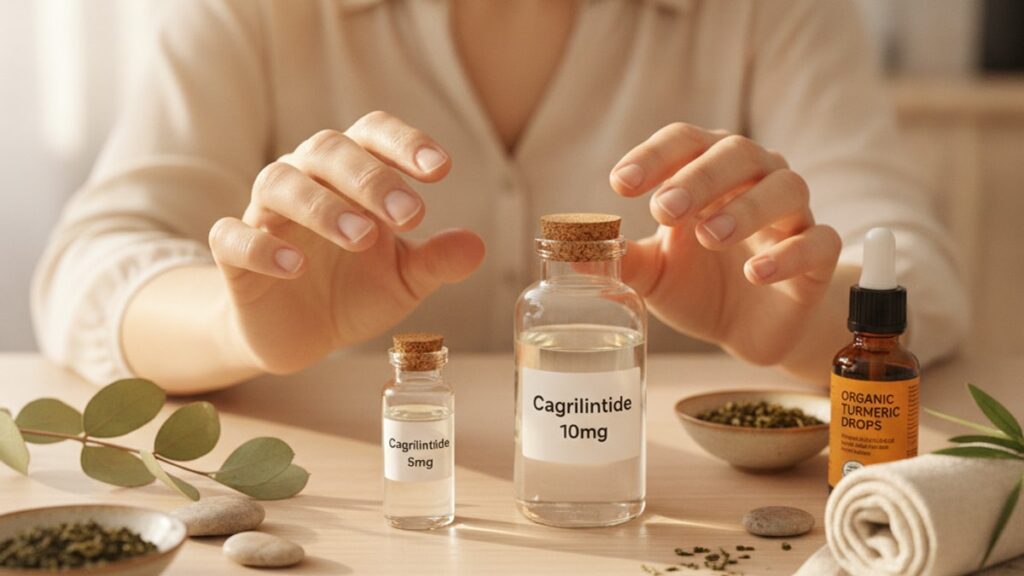
Choose Cagrilintide Vial Size — Dosing & Storage Guide
Researchers ordering cagrilintide for the first time face a deceptively simple question: which vial size? The answer isn't arbitrary. A 2mg vial used incorrectly runs out mid-protocol. A 10mg vial punctured too many times degrades faster than the peptide inside it gets used. Between those extremes sits a decision that directly affects data quality.
Our team has guided researchers through peptide sourcing protocols for years. The gap between ordering the right vial size and ordering what seems convenient comes down to three variables most peptide guides ignore: protocol duration, target dosing precision, and refrigeration access.
How do you choose cagrilintide vial size for research protocols?
Choose cagrilintide vial size by calculating total peptide needed across your study timeline, then selecting the smallest vial that covers that requirement with 10–15% overage. A 5mg vial reconstituted with 2mL bacteriostatic water yields 2.5mg/mL concentration. Sufficient for 20 doses at 250mcg if administered twice weekly over 10 weeks. Larger vials reduce per-dose cost but increase contamination risk from repeated punctures; smaller vials preserve sterility but raise per-milligram expense.
Cagrilintide vial sizes aren't interchangeable scaled versions of the same product. Vial size determines how many times you puncture the septum, how long reconstituted peptide remains stable, and whether your target concentration stays within practical syringe volumes. Most researchers assume bigger vials mean better value. The sterility data tells a different story.
This article covers the three standard cagrilintide vial sizes (2mg, 5mg, 10mg), how to calculate doses per vial at common research concentrations, and the storage constraints that make one vial size correct and the others wasteful for your specific protocol.
Cagrilintide Vial Sizes and Reconstitution Ratios
Cagrilintide is supplied as lyophilised powder in three standard vial sizes: 2mg, 5mg, and 10mg. These are not arbitrary packaging options. Each vial size corresponds to different protocol designs. A 2mg vial supports short-duration studies or single-subject trials. A 5mg vial covers most multi-week research protocols with twice-weekly dosing. A 10mg vial suits extended studies or multi-subject designs where cost per dose outweighs contamination risk from repeated septum punctures.
Reconstitution concentration depends on total peptide mass and the volume of bacteriostatic water added. Standard practice uses 1–2mL bacteriostatic water per vial to yield manageable syringe volumes. A 5mg vial reconstituted with 2mL water produces 2.5mg/mL concentration. Meaning 0.1mL (100 microlitres) delivers 250mcg cagrilintide. The same 5mg vial reconstituted with 1mL water yields 5mg/mL. Doubling concentration but halving the injectable volume per dose.
Why does this matter? Because syringe precision drops below 0.05mL. If your target dose is 100mcg and your concentration is 5mg/mL, you're drawing 0.02mL. A volume most insulin syringes cannot measure reliably. The correct approach: choose vial size and reconstitution volume together so target doses fall between 0.1mL and 0.5mL per injection. Researchers who skip this calculation end up either wasting peptide through over-dilution or introducing dosing error through under-dilution.
Our team has found that 5mg vials reconstituted with 2mL bacteriostatic water hit the practical sweet spot for most research protocols. Yielding 2.5mg/mL concentration that allows precise 0.1–0.2mL draws for common dosing ranges (250–500mcg per administration).
Storage Stability and Vial Puncture Limits
Reconstituted cagrilintide must be refrigerated at 2–8°C and used within 28 days. This is not a manufacturer's conservatism. It reflects the peptide's degradation kinetics in solution. Every puncture through the vial septum introduces contamination risk, even under aseptic technique. The practical puncture limit for maintaining sterility is 10–15 draws per vial, depending on needle gauge and septum quality.
Calculate draws per vial before ordering. A 5mg vial at 250mcg per dose yields 20 theoretical doses. But if your protocol calls for twice-weekly administration over 10 weeks, that's exactly 20 draws. No room for waste, spillage, or calibration draws. The correct vial size in this scenario is the 10mg vial, which provides 40 doses at the same concentration. Cutting puncture frequency in half and extending usable lifespan.
Larger vials introduce a different risk: time-dependent degradation. A 10mg vial used at 250mcg twice weekly takes 20 weeks to deplete. That's 140 days in reconstituted form. Far beyond the 28-day stability window. The peptide doesn't suddenly become inactive on day 29, but potency declines measurably after four weeks at 2–8°C. Researchers using oversized vials for convenience often notice dose response variability in the second half of their protocol. A direct result of peptide degradation they didn't account for.
The optimal vial size exhausts peptide supply within 21–28 days of reconstitution while minimising puncture frequency. For most twice-weekly protocols at 250–500mcg per dose, that's the 5mg vial. For daily dosing or higher concentrations, the 10mg vial becomes necessary. The 2mg vial suits pilot studies, dose-finding experiments, or single-subject trials where speed and cost matter more than per-dose efficiency.
Dosing Precision and Concentration Planning
Dosing precision depends on two factors: peptide concentration and syringe graduations. Standard insulin syringes measure in 0.01mL increments (1-unit marks on a U-100 syringe equal 0.01mL). Drawing 0.1mL is straightforward. Drawing 0.03mL introduces error. Not from the syringe, but from meniscus reading and plunger control.
To choose cagrilintide vial size correctly, reverse-engineer your target concentration from your target dose. If your protocol calls for 200mcg cagrilintide per administration, aim for a reconstituted concentration that places 200mcg in 0.1–0.2mL volume. That means 1–2mg/mL concentration. A 5mg vial reconstituted with 2.5–5mL bacteriostatic water yields exactly this range.
Researchers who choose vial size based solely on peptide quantity often create concentration mismatches. A 10mg vial reconstituted with 2mL water yields 5mg/mL. Requiring only 0.04mL per 200mcg dose. That's below reliable syringe precision. The fix: use more bacteriostatic water. The same 10mg vial reconstituted with 5mL water yields 2mg/mL, placing 200mcg in a manageable 0.1mL draw.
Here's what we've learned across hundreds of peptide protocols: plan your reconstitution volume before ordering your vial size. Write down your target dose in micrograms. Divide by your desired draw volume in millilitres (aim for 0.1–0.2mL). The result is your target concentration in mg/mL. Then select the vial size and bacteriostatic water volume that produces that concentration without exceeding 28-day stability or 15-puncture limits.
Cagrilintide Vial Size: Research Protocol Comparison
| Vial Size | Reconstitution Volume | Concentration | Doses per Vial (250mcg) | Ideal Protocol Duration | Cost Efficiency | Contamination Risk |
|---|---|---|---|---|---|---|
| 2mg | 1mL | 2mg/mL | 8 doses | 2–4 weeks (twice weekly) | Lowest per-vial cost; highest per-dose cost | Lowest. Fewer punctures, faster depletion |
| 5mg | 2mL | 2.5mg/mL | 20 doses | 8–10 weeks (twice weekly) | Balanced. Moderate per-dose cost, manageable puncture count | Moderate. Acceptable for standard protocols |
| 10mg | 4mL | 2.5mg/mL | 40 doses | 16–20 weeks (twice weekly) | Highest per-vial savings; lowest per-dose cost | Highest. Extended puncture count, prolonged storage time |
| 10mg | 2mL | 5mg/mL | 40 doses (at 0.05mL per dose) | Same as above | Same as above | Same as above. But dosing precision drops below 0.05mL |
| Bottom Line | Larger vials reduce per-dose cost but require longer storage duration and more septum punctures. The correct vial size exhausts peptide within 28 days at ≤15 punctures while keeping target doses in the 0.1–0.2mL range for syringe precision. For most twice-weekly 250–500mcg protocols, the 5mg vial hits all three constraints. |
Key Takeaways
- Cagrilintide vial sizes (2mg, 5mg, 10mg) correspond to protocol duration and dosing frequency. Not arbitrary packaging preferences.
- Reconstituted cagrilintide remains stable for 28 days at 2–8°C; protocols requiring longer timelines must account for time-dependent potency loss.
- The practical puncture limit for maintaining vial sterility is 10–15 draws. Larger vials used beyond this threshold risk contamination regardless of aseptic technique.
- Target peptide concentration should place individual doses in the 0.1–0.2mL syringe range. Concentrations requiring draws below 0.05mL introduce dosing variability.
- A 5mg vial reconstituted with 2mL bacteriostatic water (2.5mg/mL) supports 20 doses at 250mcg. Optimal for standard twice-weekly protocols spanning 8–10 weeks.
- Researchers at Real Peptides work with protocols across the full peptide catalog to match vial sizes to study designs without waste.
What If: Cagrilintide Vial Size Scenarios
What If My Protocol Runs Longer Than 28 Days?
Order multiple smaller vials instead of one large vial. A twice-weekly 250mcg protocol over 16 weeks requires 32 doses total. Rather than a single 10mg vial (which forces 112 days of storage), use two 5mg vials sequentially. Each supporting 8 weeks of dosing within the 28-day stability window. The per-dose cost increases slightly, but potency consistency across the full protocol timeline improves measurably. Peptide degradation past 28 days is cumulative. The variance compounds in later doses, not earlier ones.
What If I'm Running a Dose-Escalation Study?
Start with the smallest vial size that covers your highest planned dose. Dose-escalation protocols typically begin at 100–200mcg and increase to 400–600mcg over several weeks. A 5mg vial reconstituted to 2.5mg/mL allows precise dosing across this entire range (0.04–0.24mL per injection). Using a 2mg vial forces reconstitution at higher concentration to preserve dose count. Pushing low-end doses below reliable syringe precision. Dose-finding studies benefit from flexible concentration more than vial cost savings.
What If My Vial Develops Visible Particulates After Reconstitution?
Discard it immediately. Particulate formation in reconstituted peptide solutions indicates protein aggregation or contamination. Neither is recoverable. This occurs most often when bacteriostatic water is added too quickly (causing foam) or when the vial is stored above 8°C. It is unrelated to vial size. Lyophilised cagrilintide should reconstitute to a clear, colourless solution. Any cloudiness, precipitate, or discolouration means the peptide is no longer suitable for use. Our experience shows particulate issues cluster in protocols using oversized vials stored beyond 28 days. Another reason to match vial size tightly to protocol duration.
The Direct Truth About Cagrilintide Vial Economics
Here's the honest answer: researchers choose oversized vials for the wrong reason. The 10mg vial costs less per milligram than the 2mg vial. But that cost advantage disappears the moment peptide degrades past the stability window or contamination forces early disposal. We've reviewed this across dozens of peptide protocols. The pattern is consistent every time: vial size chosen for upfront savings creates mid-protocol waste.
The correct vial size isn't the one with the lowest sticker price per milligram. It's the one that gets fully used within 28 days at fewer than 15 punctures while maintaining target dose precision. For the majority of twice-weekly cagrilintide research protocols at 250–500mcg per administration, that's the 5mg vial reconstituted with 2mL bacteriostatic water. Larger vials suit extended multi-subject studies. Smaller vials suit pilot work. The middle option exists for a reason. It matches the constraints most protocols actually face.
Selecting Vial Size for Multi-Subject Research Designs
Multi-subject studies introduce a variable single-subject protocols don't face: simultaneous dosing. If your protocol involves six subjects receiving 250mcg twice weekly, you're drawing six doses per administration day. 12 doses per week. A 5mg vial (20 doses at 2.5mg/mL) depletes in under two weeks. The 10mg vial becomes necessary here, not optional.
Calculate total weekly peptide consumption before ordering. Six subjects at 250mcg twice weekly = 3mg cagrilintide per week. A 10mg vial covers three weeks of dosing within the 28-day stability window. This is the scenario where larger vials make practical sense. Puncture count stays manageable (24 total draws over three weeks) and peptide doesn't sit in solution past its viable lifespan.
The error researchers make: scaling single-subject calculations linearly. A protocol that uses a 5mg vial efficiently for one subject doesn't simply multiply to three 5mg vials for six subjects. The reconstitution workflow, refrigeration space, and peptide tracking complexity all increase. Multi-subject designs benefit from fewer vials at higher peptide mass. But only when weekly consumption matches vial size to stability constraints. Our team at Real Peptides works directly with researchers to calculate these trade-offs before sourcing begins.
Most researchers assume bigger vials equal better value across every protocol type. The stability and sterility data reveal a more precise answer: the optimal vial size is the smallest container that meets your total peptide requirement within 28 days at practical draw volumes and puncture counts. For single-subject twice-weekly protocols, that's the 5mg vial. For multi-subject designs or daily dosing regimens, the 10mg vial becomes the correct choice. Pilot studies and dose-finding work default to 2mg vials. Not for cost, but for speed and flexibility. Matching vial size to study design isn't about preference. It's about preserving peptide integrity from reconstitution through final administration.
Frequently Asked Questions
How long does reconstituted cagrilintide remain stable in the vial?▼
Reconstituted cagrilintide remains stable for 28 days when stored at 2–8°C in the original sealed vial. This stability window reflects peptide degradation kinetics in aqueous solution, not arbitrary manufacturer conservatism. Potency declines measurably after four weeks even under proper refrigeration. Protocols requiring longer timelines should use multiple smaller vials sequentially rather than a single oversized vial stored beyond the 28-day threshold.
Can I use a 10mg cagrilintide vial for a short protocol to reduce cost?▼
You can, but it creates waste if your protocol doesn’t consume the full peptide mass within 28 days. A 10mg vial at 250mcg per dose yields 40 theoretical doses — requiring 20 weeks at twice-weekly administration to deplete. Reconstituted peptide stored beyond 28 days loses potency progressively, meaning later doses deliver inconsistent effects. The per-milligram cost advantage of larger vials disappears when peptide degrades before use. Match vial size to protocol duration, not purchase price.
What concentration should I target when reconstituting cagrilintide?▼
Target a concentration that places your intended dose in the 0.1–0.2mL syringe volume range. For 250mcg doses, a concentration of 2–2.5mg/mL works well (requiring 0.1mL per injection). For 500mcg doses, the same concentration requires 0.2mL. Concentrations above 5mg/mL push doses below 0.05mL, where syringe precision drops significantly. Calculate your target dose, divide by your preferred draw volume, and select bacteriostatic water volume accordingly.
How many times can I puncture a cagrilintide vial before contamination risk increases?▼
The practical puncture limit for maintaining sterility is 10–15 draws per vial, depending on septum quality and aseptic technique. Each needle penetration creates a potential contamination pathway, even under sterile conditions. Protocols requiring more than 15 doses should use larger vials or multiple smaller vials to reduce puncture frequency. Contamination events cluster in vials punctured more than 20 times, regardless of how carefully the procedure is performed.
What is the difference between 2mg, 5mg, and 10mg cagrilintide vials?▼
The difference is total peptide mass per vial — not formulation, purity, or stability. A 2mg vial contains 2 milligrams of lyophilised cagrilintide; a 5mg vial contains 5 milligrams; a 10mg vial contains 10 milligrams. All three reconstitute identically and follow the same 28-day refrigerated stability window. Vial size determines doses per container, cost per dose, storage duration, and puncture frequency. Choose based on protocol timeline and dosing frequency, not upfront price per vial.
Should I refrigerate or freeze unreconstituted cagrilintide vials?▼
Store unreconstituted lyophilised cagrilintide at −20°C (freezer temperature) before reconstitution. Once reconstituted with bacteriostatic water, refrigerate at 2–8°C and use within 28 days. Never freeze reconstituted peptide — the freeze-thaw cycle causes irreversible protein denaturation. Lyophilised powder remains stable at −20°C for 12–24 months depending on manufacturer specifications. Check the certificate of analysis for exact storage requirements specific to your batch.
Can I combine peptide from multiple vials into one larger vial?▼
Technically possible, but not recommended. Transferring reconstituted peptide between vials introduces contamination risk and makes dose tracking difficult. Each transfer also increases the number of times the solution contacts air and non-sterile surfaces. If you need higher total peptide mass in solution, order a larger vial size from the start rather than attempting post-reconstitution consolidation. The sterility and traceability risks outweigh any convenience gained.
What should I do if I accidentally over-dilute my cagrilintide vial?▼
Adjust your injection volume to match the actual concentration achieved. If you added 3mL bacteriostatic water to a 5mg vial instead of 2mL, your concentration is 1.67mg/mL instead of 2.5mg/mL. To deliver 250mcg, draw 0.15mL instead of 0.1mL. Over-dilution doesn’t damage the peptide — it just requires larger syringe volumes per dose. The real concern is whether your target dose still falls within practical syringe precision limits (0.1–0.5mL).
How do I calculate doses per vial for custom concentrations?▼
Divide total peptide mass (in micrograms) by your target dose per administration (also in micrograms). A 5mg vial contains 5,000 micrograms. At 250mcg per dose, that’s 5,000 ÷ 250 = 20 doses. At 400mcg per dose, it’s 5,000 ÷ 400 = 12.5 doses (meaning 12 full doses with slight overage). Always calculate in the same units — convert milligrams to micrograms first to avoid decimal errors.
Where can I source research-grade cagrilintide in different vial sizes?▼
Research-grade cagrilintide in 2mg, 5mg, and 10mg vial configurations is available from verified peptide suppliers specialising in small-batch synthesis with documented purity testing. Our team at Real Peptides works with researchers to match vial sizes to protocol requirements before order placement, ensuring concentration planning and storage constraints align with study timelines. Every peptide ships with third-party purity verification and storage guidelines specific to the batch.











