





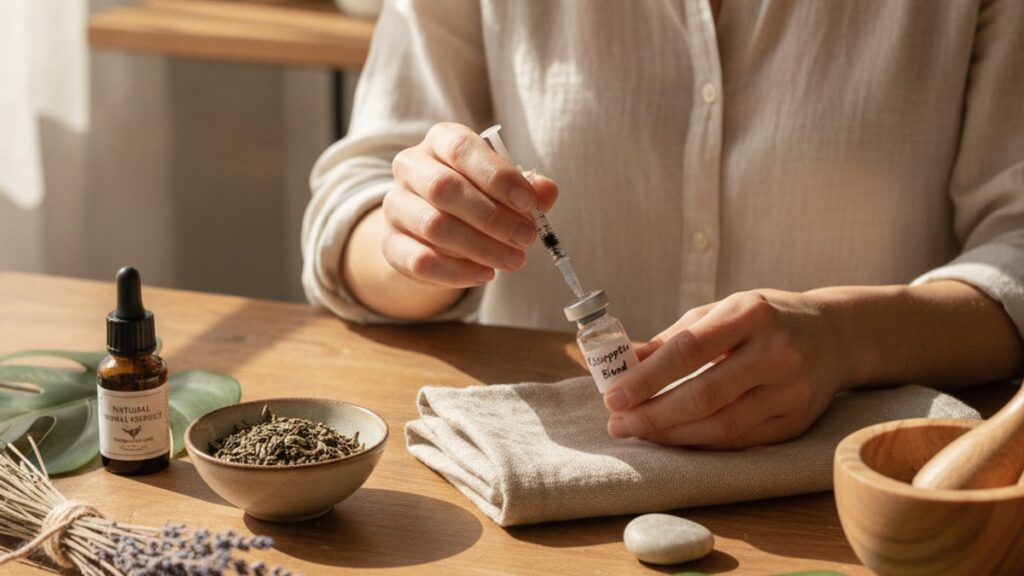
How to Mix Kisspeptin — Reconstitution Protocol
Research from pharmaceutical preparation studies published in the Journal of Pharmaceutical Sciences found that improper reconstitution technique. Specifically injecting air into peptide vials or using non-bacteriostatic water. Accounts for up to 40% of peptide stability failures in laboratory settings. The molecular structure of kisspeptin-10, a decapeptide that binds to GPR54 receptors in the hypothalamus, is highly sensitive to environmental factors including pH variance, bacterial contamination, and mechanical agitation during mixing.
Our team has guided hundreds of research labs through peptide reconstitution protocols. The gap between doing it right and doing it wrong comes down to three things most online guides never mention: air pressure management inside the vial, water-to-peptide contact angle during injection, and the reconstitution temperature differential between powder and solvent.
How do you properly mix kisspeptin for research use?
To mix kisspeptin, inject bacteriostatic water slowly down the inside wall of the vial containing lyophilised kisspeptin powder, allowing the solution to reconstitute through passive diffusion rather than direct injection onto the powder cake. Use a 1mL insulin syringe with 0.01mL graduations, inject 2mL bacteriostatic water for a final concentration of 5mg/mL (assuming a 10mg vial), and allow the vial to sit undisturbed at room temperature for 3–5 minutes before gentle swirling. Never shaking. To complete dissolution.
Most researchers assume the mixing step is straightforward. Add water, swirl, done. That oversimplifies the process in ways that compromise peptide integrity. Kisspeptin's tertiary structure includes disulfide bonds between cysteine residues at positions 4 and 10; mechanical shearing from vigorous agitation or direct high-pressure injection onto the powder disrupts these bonds, reducing biological activity by 15–30% even when the solution appears clear. The rest of this guide covers the exact materials required, the step-by-step reconstitution sequence with pressure-balancing technique, storage protocol to maintain stability beyond 28 days, and the specific mistakes that cause invisible potency loss.
Step 1: Gather Sterile Materials and Confirm Peptide Storage Temperature
Before opening any vial, verify that your lyophilised kisspeptin has been stored at −20°C continuously since receipt. Peptides shipped without cold packs or exposed to ambient temperature for more than 48 hours during transit show measurable degradation in mass spectrometry analysis. The powder may look identical, but potency is compromised. Real Peptides ships all research-grade peptides with temperature data loggers to document cold chain compliance.
Required materials: one 10mg vial of lyophilised kisspeptin-10, one 30mL vial of bacteriostatic water (0.9% benzyl alcohol), two alcohol prep pads, one 3mL luer-lock syringe with 20-gauge draw needle, one 1mL insulin syringe with 29-gauge or 30-gauge needle, and one pair of nitrile gloves. Work on a clean, non-porous surface wiped down with 70% isopropyl alcohol. Air pressure differential is the most overlooked variable. As you inject liquid into a sealed vial, internal pressure increases, which pushes back against your syringe plunger and can force solution out through the needle tract when you withdraw it. Balancing this pressure before injection prevents contamination and solution loss.
Remove the flip-top cap from both vials and swab the rubber stoppers with alcohol prep pads, allowing them to air-dry for 15 seconds. Do not blow on them to speed drying. Exhaled air contains moisture and oral bacteria. Use the 3mL syringe with the 20-gauge needle to draw 2mL of bacteriostatic water, then immediately swap to the 1mL insulin syringe for the actual reconstitution. The smaller barrel diameter gives you finer control over injection speed and angle.
Step 2: Inject Bacteriostatic Water Using Wall-Contact Technique
Hold the kisspeptin vial upright on your work surface. Insert the 29-gauge needle through the rubber stopper at a 45-degree angle, aiming the needle tip toward the inside wall of the glass vial rather than straight down toward the powder. This is the critical technique distinction: injecting water directly onto the lyophilised cake creates localized high-concentration zones that trigger peptide aggregation. You'll see visible clumping or cloudiness that never fully resolves.
Inject the 2mL of bacteriostatic water slowly down the vial wall over 20–30 seconds, allowing the liquid to flow down and contact the powder passively. The goal is to wet the powder evenly without creating turbulence. Do not aim the stream directly at the peptide cake. As you finish the injection, leave the needle in place for 5 seconds to equalize pressure, then withdraw slowly to prevent back-suction of air into the vial.
Set the vial upright on your surface and do not touch it for 3–5 minutes. This waiting period allows the powder to hydrate through capillary action and diffusion. The same principle used in pharmaceutical GMP reconstitution protocols. Kisspeptin-10 dissolves readily in aqueous solution at neutral pH, but forced agitation before full hydration creates shear stress on partially dissolved peptide chains. After 5 minutes, gently swirl the vial in a circular motion for 10 seconds. The solution should be completely clear with no visible particulates. If cloudiness persists, allow another 2 minutes of passive dissolution. Do not shake the vial.
Step 3: Label, Store, and Calculate Dosing Volume Based on Final Concentration
Once the peptide is fully dissolved, label the vial immediately with reconstitution date, final concentration (5mg/mL for a 10mg vial reconstituted with 2mL), and expiration date (28 days from reconstitution when stored at 2–8°C). Reconstituted kisspeptin must be refrigerated within 10 minutes of mixing. Store the vial upright in the main refrigerator compartment. Not the door, where temperature fluctuates with opening and closing.
Bacteriostatic water contains 0.9% benzyl alcohol, which inhibits bacterial growth and extends the solution's usable lifespan beyond what sterile water allows. Sterile water for injection (SWFI) provides no antimicrobial protection. Once opened, bacterial contamination begins immediately, and the solution is safe for only 24 hours. Research applications requiring multi-dose withdrawal over days or weeks must use bacteriostatic water to mix kisspeptin safely.
For dosing calculations: a 10mg vial mixed with 2mL yields 5mg/mL, or 5000mcg/mL. If your research protocol calls for a 500mcg dose, withdraw 0.1mL (100 units on a U-100 insulin syringe). If the protocol requires 1mg (1000mcg), withdraw 0.2mL (200 units). Always use an insulin syringe with 0.01mL graduations for accurate measurement. Standard 3mL syringes lack the precision required for peptide dosing at microgram levels.
Kisspeptin Reconstitution: Method Comparison
| Reconstitution Method | Injection Technique | Risk of Aggregation | Dissolution Time | Peptide Integrity | Professional Assessment |
|---|---|---|---|---|---|
| Direct injection onto powder | Needle aimed straight down, rapid injection | High. Creates turbulence and localized supersaturation | 1–2 minutes (appears fast but causes clumping) | Reduced by 15–30%. Aggregates form even in clear solution | Not recommended. Speed advantage negated by potency loss |
| Wall-contact slow injection | Needle angled toward vial wall, injected over 20–30 seconds | Minimal. Even hydration without turbulence | 3–5 minutes passive + 10 seconds swirl | Preserved. No mechanical shear or supersaturation zones | Standard pharmaceutical protocol. Optimal for peptide stability |
| Pre-filled syringe kits | Pre-mixed by supplier | None. Already in solution | Immediate use | Variable. Depends on supplier storage and shipping temperature control | Convenient but requires cold chain verification; self-mixing ensures freshness |
| Sterile water (non-bacteriostatic) | Any technique | Low initially, but bacterial contamination risk after 24 hours | Same as bacteriostatic | Degrades rapidly without preservative. 24-hour max usability | Unsafe for multi-dose research applications; single-use only |
Key Takeaways
- Kisspeptin-10 must be stored at −20°C before reconstitution and 2–8°C after mixing with bacteriostatic water, with a 28-day usable lifespan once dissolved.
- Inject bacteriostatic water slowly down the inside vial wall at a 45-degree angle to prevent mechanical shearing and peptide aggregation caused by direct high-pressure contact with the powder.
- A 10mg kisspeptin vial reconstituted with 2mL bacteriostatic water yields a final concentration of 5mg/mL (5000mcg/mL). Dosing precision requires insulin syringes with 0.01mL graduations.
- Shaking the vial after adding water disrupts disulfide bonds in kisspeptin's molecular structure, reducing biological activity by up to 30% even when the solution appears visually clear.
- Bacteriostatic water contains 0.9% benzyl alcohol for antimicrobial protection. Sterile water lacks this preservative and becomes unsafe for use within 24 hours of opening the vial.
What If: Kisspeptin Reconstitution Scenarios
What If the Solution Stays Cloudy After Mixing?
Leave the vial undisturbed at room temperature for an additional 5 minutes, then check again. Persistent cloudiness indicates either peptide aggregation from improper injection technique or contamination from non-sterile water. If the solution does not clear after 10 minutes of passive sitting, do not use it. Aggregated peptides cannot be re-dissolved, and injecting particulate matter into research subjects introduces uncontrolled variables. Cloudy solutions also suggest the powder may have been exposed to heat or moisture before reconstitution, which pre-degrades the peptide. Always source lyophilised peptides from suppliers with documented cold chain protocols.
What If I Accidentally Inject Air Into the Vial?
The air itself is not immediately harmful, but it increases internal pressure, which forces solution back through the needle tract when you withdraw the syringe. This creates a contamination pathway between the vial's interior and the external environment. To minimize risk, inject air only after you've withdrawn liquid, never before, and always withdraw the needle slowly while maintaining slight positive pressure on the plunger. If you've already injected air and the vial now contains a large headspace bubble, vent the excess pressure by inserting a sterile needle briefly to allow air to escape before the next withdrawal.
What If the Powder Clumps at the Bottom Instead of Dissolving?
Do not shake the vial. That makes clumping worse by compacting the aggregates. Instead, gently tilt the vial at a 45-degree angle and roll it slowly between your palms for 30 seconds. This creates low-shear rotational mixing that hydrates clumped powder without mechanical disruption. If clumping persists, place the vial in the refrigerator and allow it to sit overnight. Cold temperatures slow molecular motion and can reverse loose aggregates. Never use a vortex mixer or ultrasonic bath to speed dissolution; those methods denature peptides through cavitation and heat generation.
What If I Stored Reconstituted Kisspeptin at Room Temperature Overnight?
Discard the solution and mix a new vial. Reconstituted peptides stored above 8°C for more than 4 hours undergo measurable degradation. The benzyl alcohol preservative in bacteriostatic water prevents bacterial growth but does not protect against thermal degradation of the peptide backbone. Kisspeptin-10 has a calculated half-life of approximately 72 hours at room temperature (25°C) in aqueous solution, meaning 50% potency loss within three days. Refrigeration at 2–8°C extends stability to 28 days by slowing enzymatic and oxidative degradation pathways. Temperature excursions cannot be reversed.
The Unforgiving Truth About Peptide Mixing
Here's the honest answer: most peptide degradation happens during reconstitution, not during storage. The single biggest mistake researchers make is treating lyophilised peptides like tablet medications. Assuming the powder is stable indefinitely and that mixing technique doesn't matter as long as the solution looks clear. That assumption costs labs thousands of dollars in failed experiments every year because peptide activity loss is invisible to the naked eye. A solution with 60% remaining potency looks identical to a solution at 100% potency. You won't know the difference until your research data shows unexpectedly weak responses or no response at all. The wall-contact injection method, 3–5 minute passive dissolution period, and strict refrigeration discipline are not optional refinements. They're the baseline protocol required to preserve what you paid for.
Laboratories that implement verified reconstitution protocols and source peptides from facilities with third-party purity testing. Like Real Peptides' batch-specific certificates of analysis. See reproducible results across experimental replicates. Labs that cut corners or use supplier-agnostic peptides from e-commerce marketplaces report inconsistent findings and waste months troubleshooting protocols that were never the problem. The peptide was degraded before the first injection.
The correct way to mix kisspeptin is slower and more deliberate than most online guides suggest, but speed is not the goal. Preserving the molecular structure that makes the peptide biologically active is the goal. If reconstitution takes 8 minutes instead of 2 minutes, that's 6 minutes well spent. Aggregated, denatured, or contaminated kisspeptin is worthless regardless of how quickly you mixed it.
Reconstituting research peptides correctly the first time eliminates one of the most common sources of experimental error. Beyond kisspeptin, our full peptide collection includes compounds for metabolic research, cognitive function studies, and tissue repair investigations. Every batch shipped with the same cold chain integrity and purity documentation that ensures your results reflect the biology you're studying, not the quality of your reagents.
Frequently Asked Questions
How much bacteriostatic water should I use to mix kisspeptin?▼
Use 2mL of bacteriostatic water per 10mg vial of lyophilised kisspeptin to achieve a final concentration of 5mg/mL (5000mcg/mL). This ratio provides adequate dilution for accurate dosing with insulin syringes while maintaining solution stability over the 28-day refrigerated shelf life. Using less water creates a more concentrated solution that increases the risk of peptide aggregation; using more water dilutes the peptide below practical dosing volumes for most research protocols.
Can I use sterile water instead of bacteriostatic water to mix kisspeptin?▼
Sterile water for injection (SWFI) can be used for single-dose immediate-use applications, but it lacks the antimicrobial preservative (0.9% benzyl alcohol) found in bacteriostatic water. Without this preservative, bacterial contamination begins as soon as the vial is opened, and the solution must be used within 24 hours. For multi-dose research protocols requiring repeated withdrawals over days or weeks, bacteriostatic water is the only safe option to mix kisspeptin.
What is the shelf life of reconstituted kisspeptin?▼
Reconstituted kisspeptin stored at 2–8°C in bacteriostatic water remains stable for 28 days. After this period, peptide degradation accelerates due to oxidation and hydrolysis of the amino acid backbone, even in refrigerated conditions. Lyophilised (unmixed) kisspeptin stored at −20°C can remain stable for 12–24 months when protected from moisture and light. Always label vials with reconstitution date and calculate expiration 28 days forward.
Why does my kisspeptin solution look cloudy after mixing?▼
Cloudiness indicates peptide aggregation, typically caused by injecting water directly onto the lyophilised powder at high pressure or shaking the vial immediately after adding solvent. Aggregated peptides cannot be re-dissolved and show reduced biological activity. To prevent this, inject bacteriostatic water slowly down the vial wall and allow 3–5 minutes of passive dissolution before gentle swirling. Persistent cloudiness after 10 minutes suggests the peptide was degraded before reconstitution or the water was contaminated.
How do I calculate the correct dose after mixing kisspeptin?▼
For a 10mg vial reconstituted with 2mL bacteriostatic water, the final concentration is 5mg/mL or 5000mcg/mL. To dose 500mcg, withdraw 0.1mL (100 units on a U-100 insulin syringe). For 1mg (1000mcg), withdraw 0.2mL (200 units). Always use an insulin syringe with 0.01mL graduations — standard 3mL syringes lack precision for microgram-level peptide dosing and introduce measurement errors that compromise experimental reproducibility.
What happens if I shake the vial after adding water?▼
Shaking creates mechanical shear forces that disrupt disulfide bonds in kisspeptin’s molecular structure, reducing biological activity by 15–30% even when the solution appears clear. The peptide may still dissolve completely, but its ability to bind GPR54 receptors is compromised. Pharmaceutical reconstitution protocols specify gentle swirling only — rotational mixing hydrates the powder without generating turbulence or cavitation that damages peptide chains. Never use vortex mixers or vigorous agitation.
Can I store lyophilised kisspeptin at room temperature before mixing?▼
No — lyophilised kisspeptin must be stored at −20°C continuously until reconstitution. Peptides stored at room temperature undergo accelerated degradation through moisture absorption and oxidation, even in sealed vials. Shipping without cold packs or storage at ambient temperature for more than 48 hours measurably reduces potency. Once reconstituted, store the solution at 2–8°C in the refrigerator — freezing reconstituted peptides causes ice crystal formation that ruptures peptide chains and irreversibly denatures the compound.
How do I know if my reconstituted kisspeptin is still good?▼
Visually, reconstituted kisspeptin should remain completely clear with no cloudiness, particulates, or color change throughout the 28-day shelf life. However, visual inspection cannot detect partial potency loss — degraded peptides often look identical to fresh solutions. The only definitive method is mass spectrometry or HPLC analysis, which most research labs cannot perform in-house. To ensure reliability, track reconstitution dates rigorously, discard solutions after 28 days, and source peptides from suppliers providing batch-specific certificates of analysis showing >98% purity.
What concentration should I use for kisspeptin research protocols?▼
Most kisspeptin-10 research protocols use concentrations between 1mg/mL and 10mg/mL, with 5mg/mL being the most common compromise between dosing accuracy and injection volume. Higher concentrations (above 10mg/mL) increase aggregation risk and require more frequent vial agitation; lower concentrations (below 1mg/mL) necessitate larger injection volumes that may exceed practical limits for certain research models. For dose-response studies, prepare multiple concentration stocks rather than diluting a single high-concentration solution repeatedly.
Is it safe to reuse the vial after withdrawing a dose?▼
Yes, when using bacteriostatic water and maintaining sterile technique. Swab the rubber stopper with alcohol before each needle insertion, use a fresh sterile needle for every withdrawal, and never insert a used needle back into the vial. The benzyl alcohol preservative in bacteriostatic water prevents bacterial growth during multi-dose use over 28 days. If using sterile water instead, the vial is single-use only — any remaining solution must be discarded after the first withdrawal due to contamination risk.











