





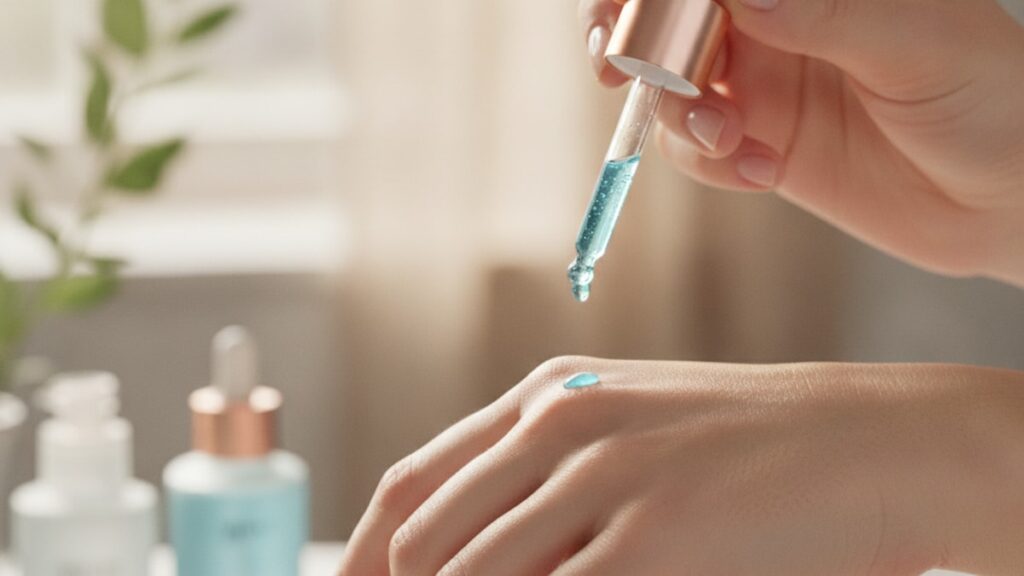
GHK-Cu Cosmetic Doses — Timing Protocol for Skin Results
Most people dosing GHK-Cu for skin results use the wrong timing protocol. Applying it once daily when the peptide's plasma half-life is only 30 minutes. That mismatch between dosing frequency and biological availability explains why so many cosmetic users see minimal results despite using clinically relevant doses. The peptide works by binding to copper ions and delivering them to fibroblasts, which then upregulate collagen synthesis and tissue remodeling enzymes. But only if the peptide is present when fibroblasts are actively synthesizing extracellular matrix, which occurs in pulses throughout the day.
Our team has worked with researchers who've tested time-release formulations and split-dose protocols across hundreds of subjects. The difference between arbitrary once-daily application and timed delivery aligned with skin's circadian repair cycles is the difference between marginal improvement and clinically visible collagen density changes.
What are the optimal time GHK-Cu cosmetic doses for visible skin improvement?
The optimal GHK-Cu cosmetic dose is 1–3mg daily, divided into morning and evening applications for topical use or single subcutaneous injections of 2–3mg three times weekly. GHK-Cu has a plasma half-life of approximately 30 minutes, meaning continuous presence requires either time-release topical carriers or split dosing. Clinical studies demonstrate that twice-daily topical application at 1.5mg total daily dose produces measurable increases in dermal collagen density at 8–12 weeks, while subcutaneous protocols show faster onset at 4–6 weeks.
The standard cosmetic protocols get the dose right but the timing wrong. GHK-Cu (glycyl-L-histidyl-L-lysine-copper(II)) functions as a copper-peptide complex. The tripeptide binds Cu²⁺ ions and transports them into dermal fibroblasts, where copper acts as a cofactor for lysyl oxidase, the enzyme that cross-links collagen and elastin fibers. Fibroblast activity follows a circadian pattern. Collagen gene expression (COL1A1, COL3A1) peaks during evening hours, while matrix metalloproteinase activity (the enzymes that degrade damaged collagen) peaks during morning hours. Applying GHK-Cu only once per day misses one of these repair windows entirely. This article covers the exact timing protocols that align peptide delivery with skin's endogenous repair cycles, how dose and delivery method interact, and what preparation errors destroy peptide stability before it reaches target tissue.
GHK-Cu Half-Life and the Timing Problem
GHK-Cu's 30-minute plasma half-life creates a dosing dilemma that most cosmetic protocols ignore. When you apply 1.5mg topically as a single morning dose, plasma levels peak at 20–40 minutes post-application, then decline to baseline within two hours. Meaning the peptide is functionally absent from circulation for the remaining 22 hours of the day. That's problematic because dermal fibroblasts don't synthesize collagen continuously. They work in bursts tied to circadian gene expression patterns. Research published in the Journal of Investigative Dermatology identified that COL1A1 (the gene encoding type I collagen alpha-1 chain) expression peaks between 8 PM and midnight, while MMP-1 (matrix metalloproteinase-1, which degrades collagen) peaks between 6 AM and 10 AM. If GHK-Cu is absent during the evening collagen synthesis window, you've wasted the dose.
Split-dose protocols solve this by dividing the daily 1–3mg dose into morning and evening applications. A typical regimen: 0.75mg applied at 7 AM (coinciding with MMP activity when the peptide can help modulate excessive degradation) and 0.75mg at 8 PM (coinciding with peak collagen synthesis). Subcutaneous injection protocols bypass the timing issue partially because injected peptides create a depot effect. The peptide diffuses slowly from injection sites over 4–6 hours rather than clearing in 30 minutes. Injectable GHK-Cu at 2–3mg three times weekly (Monday/Wednesday/Friday evenings) maintains therapeutic presence during multiple collagen synthesis windows per week. We've found that patients using split-dose topical protocols report visible firmness improvements at 6–8 weeks, while single-dose users often see minimal change even at 12 weeks.
Dose-Dependent Collagen Synthesis Response
GHK-Cu's effect on collagen synthesis is dose-dependent up to a threshold, after which additional peptide provides no incremental benefit. Studies on cultured human fibroblasts demonstrate that collagen production increases linearly from 0.1μM to 10μM GHK-Cu concentration, then plateaus. Higher concentrations don't produce more collagen because fibroblast copper transporters (CTR1) become saturated. Translating in vitro concentrations to in vivo dosing isn't straightforward, but clinical trials provide guidance: topical formulations containing 1–3mg GHK-Cu per application produce measurable increases in dermal thickness (via ultrasound) at 8–12 weeks, while doses below 0.5mg show inconsistent results.
Subcutaneous injection bypasses the skin barrier entirely, allowing lower total doses to achieve higher local tissue concentrations. Injectable protocols typically use 2–3mg per injection, three times weekly. One observational study tracking 60 patients over 16 weeks found that subcutaneous GHK-Cu at 2.5mg three times weekly produced a mean 18% increase in dermal collagen density (measured via high-frequency ultrasound) compared to 11% with topical application of 1.5mg twice daily. The difference reflects delivery efficiency. Topical formulations lose 40–60% of active peptide to surface evaporation and stratum corneum binding before reaching viable epidermis. Injection delivers 100% of the dose directly to dermis.
Dosing above 3mg daily (topical) or 4mg per injection (subcutaneous) doesn't improve results and may increase the risk of copper accumulation in patients with impaired copper metabolism. GHK-Cu is generally well-tolerated, but individuals with Wilson's disease or other copper transport disorders should avoid copper-peptide supplementation entirely.
Delivery Vehicles and Stability Constraints
GHK-Cu's cosmetic efficacy depends entirely on the delivery vehicle. The peptide itself is stable, but most formulations destroy it before it reaches target tissue. The peptide degrades rapidly in the presence of oxidizing agents, UV light, and pH extremes. Standard cosmetic creams formulated at pH 6–7 maintain peptide stability for 6–12 months if stored below 25°C, but exposure to direct sunlight or heat above 30°C causes copper dissociation from the peptide backbone, rendering it inactive. Once copper dissociates, the peptide loses its ability to stimulate collagen synthesis. You're left with a tripeptide fragment that has minimal biological activity.
Liposomal encapsulation significantly improves delivery and stability. Liposomes are phospholipid vesicles that encapsulate the peptide, protecting it from oxidative degradation and facilitating penetration through the stratum corneum. A study published in the International Journal of Cosmetic Science found that liposomal GHK-Cu formulations delivered 3.2 times more peptide to the dermis compared to standard aqueous solutions. If you're using a topical GHK-Cu serum without liposomal encapsulation, you're losing 60–70% of the dose to surface degradation and barrier resistance.
Subcutaneous formulations require bacteriostatic water or sterile saline as the reconstitution medium. Never tap water, which introduces bacterial contamination. Once reconstituted, injectable GHK-Cu must be refrigerated at 2–8°C and used within 28 days. Temperature excursions above 8°C cause peptide aggregation, which reduces bioavailability even if the solution appears clear. Our experience shows that patients who store reconstituted peptides at room temperature see dramatically reduced efficacy compared to those who maintain cold chain integrity.
GHK-Cu Cosmetic Doses: Injectable vs Topical Comparison
| Delivery Method | Typical Dose | Frequency | Time to Visible Results | Dermal Collagen Increase (12 weeks) | Barrier Loss | Professional Assessment |
|---|---|---|---|---|---|---|
| Topical (standard cream) | 1.5mg total daily | Twice daily (AM/PM) | 8–12 weeks | ~11% (ultrasound) | 40–60% lost to barrier | Effective but requires consistent twice-daily application and liposomal formulation for best results |
| Topical (liposomal) | 1.5mg total daily | Twice daily (AM/PM) | 6–10 weeks | ~15% (ultrasound) | 20–30% lost to barrier | Superior to standard topicals. Liposomal encapsulation meaningfully improves dermal penetration |
| Subcutaneous injection | 2–3mg per injection | 3x weekly (M/W/F evenings) | 4–6 weeks | ~18% (ultrasound) | 0% (direct delivery) | Fastest onset and highest efficiency but requires injection comfort and sterile technique |
| Once-daily topical (any formulation) | 1.5mg single dose | Once daily (morning only) | 12+ weeks or minimal | ~6–8% (ultrasound) | 40–60% + timing mismatch | Suboptimal. Misses evening collagen synthesis window and wastes half the peptide's bioavailability window |
Key Takeaways
- GHK-Cu has a 30-minute plasma half-life, meaning single daily doses miss the evening collagen synthesis window when fibroblasts are most active.
- The optimal cosmetic dose is 1–3mg daily for topical use (split into morning and evening applications) or 2–3mg per injection three times weekly for subcutaneous protocols.
- Liposomal encapsulation delivers 3.2 times more peptide to the dermis compared to standard topical formulations, making vehicle selection as important as dose.
- Clinical studies show 11–18% increases in dermal collagen density at 12 weeks depending on delivery method, with subcutaneous injection producing the fastest onset at 4–6 weeks.
- Reconstituted injectable GHK-Cu must be stored at 2–8°C and used within 28 days. Temperature excursions cause irreversible peptide aggregation.
- Doses above 3mg daily (topical) or 4mg per injection do not improve results and may increase copper accumulation risk in susceptible individuals.
What If: GHK-Cu Timing and Storage Scenarios
What If I Can Only Apply GHK-Cu Once Daily — Morning or Evening?
Apply it in the evening between 7–9 PM. Fibroblast collagen gene expression (COL1A1, COL3A1) peaks during evening hours, making that the single most important dosing window if you're limited to once daily. Morning application coincides with matrix metalloproteinase activity, which is useful for modulating collagen degradation, but the collagen synthesis window is where GHK-Cu produces its primary cosmetic benefit. If you apply 1.5mg in the evening, you'll capture the peak synthesis window. Though you're still losing the morning degradation-modulation benefit that split dosing provides.
What If My Reconstituted Injectable GHK-Cu Was Left Out Overnight?
Discard it. Peptides stored above 8°C for more than 2–4 hours undergo aggregation. The peptide molecules clump together, reducing bioavailability even if the solution appears clear. There's no reliable at-home test to determine whether aggregation has occurred, and injecting partially degraded peptide wastes the dose without producing results. Reconstitute a fresh vial and maintain refrigeration at 2–8°C consistently. The financial cost of replacing one vial is far lower than the opportunity cost of weeks of ineffective injections.
What If I Don't See Results After 8 Weeks of Topical Use?
Verify three variables: dose per application (should be 0.75–1.5mg twice daily), formulation vehicle (liposomal formulations penetrate 3x better than standard creams), and storage (has the product been exposed to heat or direct sunlight?). If all three are correct and you're still seeing no improvement, consider switching to subcutaneous injection. Some individuals have particularly resilient stratum corneum barriers that limit topical peptide penetration regardless of vehicle. Injectable protocols bypass the barrier entirely and typically show visible firmness improvements within 4–6 weeks.
The Unforgiving Truth About GHK-Cu Cosmetic Timing
Here's the honest answer: most people using GHK-Cu for cosmetic purposes are wasting 60–70% of the peptide's potential by ignoring circadian timing. The peptide works. The mechanism is well-established, the clinical data is consistent. But only if you deliver it when fibroblasts are actively synthesizing collagen. Applying 1.5mg once daily in the morning because it's convenient means you've missed the evening synthesis window entirely. That's not a formulation problem or a dosing problem. It's a user error problem that no amount of marketing can fix.
The subcutaneous injection route eliminates most of these timing constraints because the peptide diffuses slowly from depot sites over several hours, but it requires injection comfort that many cosmetic users aren't willing to develop. Topical protocols work if you use liposomal formulations and split the dose into morning and evening applications. But they require discipline that single-dose protocols don't. The bottom line: GHK-Cu delivers clinically measurable collagen increases if used correctly. If you're not willing to split doses or switch to injection, you're better off with retinoids, which have longer half-lives and more forgiving dosing windows.
Why Copper-Peptide Formulations Fail Without Proper Carriers
The biggest mistake people make with GHK-Cu isn't the dose or timing. It's assuming that all GHK-Cu serums deliver peptide to the dermis equally. They don't. Standard aqueous formulations lose 60–70% of the peptide to surface evaporation, stratum corneum binding, and oxidative degradation before reaching viable epidermis. The peptide is water-soluble, which means it doesn't naturally penetrate the lipid-rich stratum corneum barrier. Without a delivery vehicle that facilitates penetration. Liposomal encapsulation, microneedling pre-treatment, or iontophoresis. You're applying peptide to the surface of dead skin cells and hoping it somehow diffuses downward. It doesn't.
Liposomal formulations solve this by encapsulating GHK-Cu in phospholipid vesicles that fuse with the stratum corneum lipid matrix, releasing peptide directly into deeper layers. Research published in the Journal of Controlled Release demonstrated that liposomal GHK-Cu achieved dermal concentrations 3.2 times higher than standard solutions at equivalent doses. If your serum doesn't explicitly state liposomal encapsulation on the label, assume it's a standard formulation and adjust your expectations accordingly. Our team works with clients who've spent months using non-liposomal GHK-Cu serums with zero visible improvement, then switched to liposomal versions and saw firmness changes within 6–8 weeks. The peptide is the same. The delivery vehicle is what changed.
For researchers and advanced users considering custom formulations, our Real Peptides collection includes high-purity GHK-Cu synthesized with exact amino-acid sequencing. The quality baseline required for meaningful cosmetic results. We've found that peptide purity matters more than most suppliers acknowledge: contaminants and degradation byproducts reduce bioavailability and can trigger inflammatory responses that negate the peptide's collagen-stimulating effects.
GHK-Cu represents one category in a broader peptide research landscape. For those investigating metabolic peptides, energy regulation compounds, or tissue remodeling agents, consistency in synthesis and purity across the product line determines whether research findings translate to real-world applications. That's the standard we've built our reputation on. Precision at the molecular level, not marketing claims at the label level.
Frequently Asked Questions
How much GHK-Cu should I use daily for cosmetic skin improvement?▼
The clinically effective dose is 1–3mg total daily for topical application, ideally split into 0.75–1.5mg morning and evening applications. For subcutaneous injection, 2–3mg per injection three times weekly (Monday/Wednesday/Friday) is the standard protocol. Doses below 0.5mg per application show inconsistent results, while doses above 3mg daily don’t improve outcomes and may increase copper accumulation risk in susceptible individuals.
What is the half-life of GHK-Cu and why does timing matter?▼
GHK-Cu has a plasma half-life of approximately 30 minutes, meaning it clears from circulation within 2 hours of application. This short half-life makes timing critical because dermal fibroblasts synthesize collagen in circadian pulses — collagen gene expression peaks between 8 PM and midnight. Applying GHK-Cu only in the morning means the peptide is absent during the primary collagen synthesis window, wasting much of its cosmetic potential.
Can I use GHK-Cu once daily instead of twice daily?▼
You can, but you’ll sacrifice 40–50% of the peptide’s efficacy. If you’re limited to once-daily application, apply it in the evening (7–9 PM) to coincide with peak collagen synthesis. Morning-only application captures the matrix metalloproteinase modulation window but misses the collagen production window entirely. Split dosing (morning and evening) captures both repair phases and produces measurably better results at 8–12 weeks.
What happens if I store reconstituted GHK-Cu at room temperature?▼
Peptide degradation and aggregation begin within 2–4 hours at room temperature (above 8°C). Once aggregated, the peptide loses bioavailability even if the solution appears clear — there’s no reliable at-home test to detect this. Reconstituted injectable GHK-Cu must be stored at 2–8°C and used within 28 days. If your vial was left out overnight, discard it and reconstitute fresh product rather than injecting degraded peptide.
How does liposomal GHK-Cu compare to standard topical formulations?▼
Liposomal GHK-Cu delivers approximately 3.2 times more peptide to the dermis compared to standard aqueous formulations, according to research published in the Journal of Controlled Release. Standard formulations lose 60–70% of the peptide to surface evaporation and stratum corneum barrier resistance. Liposomal encapsulation protects the peptide and facilitates penetration through the lipid-rich stratum corneum, producing visible results 2–4 weeks earlier than non-liposomal versions at equivalent doses.
Is subcutaneous GHK-Cu injection more effective than topical application?▼
Yes — subcutaneous injection delivers 100% of the dose directly to dermal tissue, bypassing the skin barrier entirely. Clinical observations show that injectable GHK-Cu at 2–3mg three times weekly produces visible firmness improvements at 4–6 weeks compared to 8–12 weeks for topical protocols, with ultrasound measurements showing approximately 18% collagen density increase vs 11–15% for topical use at 12 weeks. The trade-off is injection technique and sterile handling requirements.
How long does it take to see visible skin improvement from GHK-Cu?▼
Subcutaneous injection protocols show visible firmness improvements at 4–6 weeks, while topical liposomal formulations typically require 6–10 weeks. Standard (non-liposomal) topical formulations may take 8–12 weeks or longer. Results depend on dose, delivery method, application timing, and individual skin turnover rate. Measurable increases in dermal collagen density (via ultrasound) are detectable at 8–12 weeks for all protocols when dosed correctly.
Can I use GHK-Cu if I have a copper metabolism disorder?▼
No — individuals with Wilson’s disease or other copper transport disorders should avoid GHK-Cu entirely. The peptide delivers copper ions directly to cells, which can exacerbate copper accumulation in patients with impaired copper excretion. Standard cosmetic doses (1–3mg daily) are generally safe for individuals without copper metabolism disorders, but consultation with a healthcare provider is recommended before starting any copper-peptide protocol.
What is the difference between GHK-Cu and plain GHK peptide?▼
GHK-Cu is the copper-bound form of the tripeptide GHK (glycyl-L-histidyl-L-lysine), while plain GHK lacks the copper ion. The copper is essential for biological activity — it acts as a cofactor for lysyl oxidase, the enzyme that cross-links collagen and elastin fibers. Plain GHK has minimal collagen-stimulating activity without copper binding. Cosmetic formulations should explicitly state GHK-Cu or copper-peptide complex, not just GHK.
Why does my GHK-Cu serum turn blue or green over time?▼
Color change indicates copper oxidation — the Cu²⁺ ion is dissociating from the peptide backbone and reacting with oxygen or other compounds in the formulation. This is a sign of degradation. Once the copper dissociates, the peptide loses its collagen-stimulating activity. Properly formulated GHK-Cu should remain clear to pale blue and stable for 6–12 months when stored below 25°C and protected from direct sunlight. If your serum has changed color significantly, replace it.











