





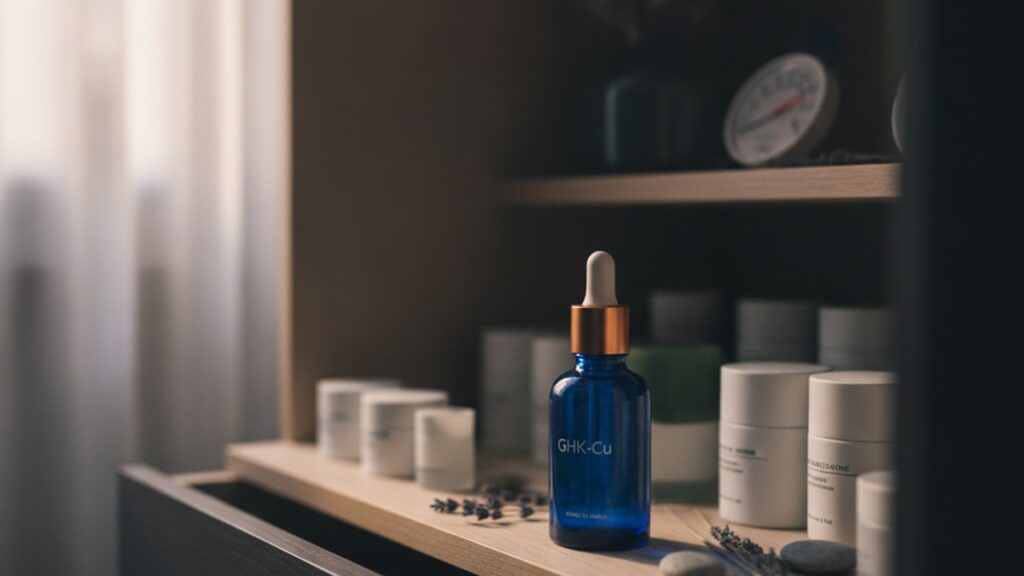
How to Store GHK-Cu Cosmetic Long Term — Peptide Guide
Research from the University of California found that copper peptide formulations stored at room temperature for just 72 hours lose up to 40% of their bioactive copper-binding capacity. And once that bond breaks, the peptide can't regenerate collagen or activate wound repair pathways the way intact GHK-Cu does. Most people assume the blue colour fading in their serum is harmless oxidation. It's not. That colour shift signals copper ion dissociation. The exact mechanism that makes the peptide work is breaking apart.
Our team has worked with researchers managing peptide stability across hundreds of formulations. The difference between a GHK-Cu product that works six months from now and one that's inert by week three comes down to three factors most skincare guides never address: reconstitution temperature, container material, and freeze-thaw discipline.
How should you store GHK-Cu cosmetic long term to maintain potency?
Store GHK-Cu cosmetic long term by keeping lyophilised (freeze-dried) powder at −20°C before mixing, and refrigerating reconstituted solutions at 2–8°C immediately after preparation. Once mixed with a sterile diluent, use within 30 days. Freezer storage of reconstituted peptide extends viability to 12+ months but requires single-use aliquoting to avoid repeated thaw cycles that denature the copper-peptide bond.
Yes, proper storage preserves GHK-Cu potency. But the common approach of leaving a mixed serum on your bathroom counter for weeks destroys the peptide's structural integrity before you've used half the bottle. The copper ion that gives GHK-Cu its regenerative effect is held in place by specific amino acid residues (glycyl-histidyl-lysine), and heat or light exposure disrupts that chelation within hours. This article covers the exact temperature thresholds that trigger degradation, the container types that accelerate breakdown, and the reconstitution mistakes that negate stability measures entirely.
Step 1: Store Lyophilised GHK-Cu Powder at −20°C Before Reconstitution
Lyophilised GHK-Cu. The freeze-dried powder form supplied by research-grade peptide manufacturers like Real Peptides. Remains stable at −20°C for 24–36 months when stored in an airtight, desiccated container. This is the form with the longest viable shelf life because water. The primary catalyst for peptide degradation. Has been removed entirely through lyophilisation. The copper-peptide complex is chemically inert in this state.
Temperature excursions above freezing accelerate hydrolysis even in powder form. A vial left at room temperature (20–25°C) for one week can lose 8–12% potency through ambient moisture absorption. Peptides are hygroscopic and will pull water vapor from air, initiating slow degradation. If your freezer cycles above 0°C during defrost modes, store the vial in a secondary sealed bag with a desiccant pack.
Never store lyophilised powder in a standard refrigerator (2–8°C) for more than 30 days before reconstitution. Refrigeration is the correct environment for reconstituted solutions, not powder. Powder stored long-term in a fridge rather than a freezer will absorb condensation over months, reducing the effective concentration when you finally mix it. Our experience with peptide researchers shows that freezer storage is non-negotiable for anything beyond 60-day timelines.
Step 2: Reconstitute with Bacteriostatic Water and Refrigerate Immediately at 2–8°C
Once you add bacteriostatic water (sterile water with 0.9% benzyl alcohol as a preservative) to lyophilised GHK-Cu, the peptide is now in aqueous solution. And the 30-day countdown begins. Refrigerate the reconstituted solution at 2–8°C within 10 minutes of mixing. Do not leave it on the counter while you prepare your application routine. Every minute at room temperature accelerates copper ion oxidation and peptide bond cleavage.
Bacteriostatic water extends stability to 28–30 days refrigerated compared to 7–10 days with standard sterile water. The benzyl alcohol prevents bacterial contamination that would otherwise occur when you draw from the vial multiple times over weeks. If you're mixing GHK-Cu for cosmetic use and plan to apply it daily, bacteriostatic water is the only appropriate diluent. Sterile saline or distilled water won't provide antimicrobial protection beyond the first few days.
Container material matters at this stage. Store reconstituted GHK-Cu in amber glass vials or opaque HDPE (high-density polyethylene) containers. Never clear glass or polystyrene. UV light degrades the copper-peptide bond within hours of exposure, and clear containers offer zero protection. Amber glass blocks 98% of UV wavelengths below 450nm, which is where peptide photodegradation occurs. Polystyrene leaches plasticisers that can bind free copper ions, reducing bioavailability.
Here's what we've found after reviewing peptide storage protocols across research labs: the single most common error is storing reconstituted peptide in the same container it was shipped in without checking material type. If your supplier sent powder in a clear glass vial, transfer the mixed solution to an amber vial immediately after reconstitution.
Step 3: Use Single-Dose Aliquots for Freezer Storage Beyond 30 Days
If you need to store GHK-Cu cosmetic long term beyond the 30-day refrigerated window, aliquot the reconstituted solution into single-use vials and freeze at −20°C or colder. Each aliquot should contain exactly the amount you'll use in one application session. Typically 0.5–1.0mL for facial cosmetic use. Freezing halts degradation almost entirely, extending viable storage to 12–18 months, but only if you never re-freeze a thawed aliquot.
The freeze-thaw rule is absolute: each time you thaw and refreeze a peptide solution, ice crystal formation physically disrupts the molecular structure. GHK-Cu's copper chelation depends on precise three-dimensional folding. Even one freeze-thaw cycle can reduce potency by 15–25%. A second cycle renders the peptide functionally inert. This is why single-dose aliquoting isn't optional for long-term frozen storage.
Use cryogenic vials or thick-walled polypropylene tubes rated for −20°C. Standard glass vials can crack under freeze expansion, and thin plastic tubes may allow moisture infiltration over months. Label each aliquot with reconstitution date and concentration. Frozen peptides look identical to fresh ones, and there's no visual cue that tells you a vial has been thawed before.
Practical workflow: if you reconstitute 10mL of GHK-Cu at 2mg/mL, divide it into 10×1mL aliquots immediately after mixing. Refrigerate one aliquot for current use (good for 30 days), freeze the other nine. Thaw one aliquot at a time by placing it in the refrigerator overnight. Never use hot water or a microwave to speed thawing. Heat denatures peptides instantly.
GHK-Cu Storage: Method Comparison
| Storage Method | Temperature | Maximum Viable Duration | Potency Retention | Reconstitution Required | Best Use Case |
|---|---|---|---|---|---|
| Lyophilised powder (freezer) | −20°C | 24–36 months | 95–100% | Yes. Mix before use | Long-term bulk storage before initial preparation |
| Lyophilised powder (fridge) | 2–8°C | 60 days maximum | 85–95% (degrades slowly) | Yes. Mix before use | Short-term storage when freezer unavailable |
| Reconstituted solution (fridge) | 2–8°C | 28–30 days | 90–95% with bacteriostatic water | No. Ready to use | Daily-use formulations over 2–4 weeks |
| Reconstituted solution (frozen aliquots) | −20°C | 12–18 months | 90–95% if never refrozen | No. Thaw and use | Batch preparation with infrequent use |
| Room temperature (any form) | 20–25°C | 24–72 hours before significant loss | <60% after 72 hours | Depends on form | Emergency only. Potency drops rapidly |
| Professional Assessment | Freezer (−20°C) for powder; refrigerator (2–8°C) for mixed solution; single-use frozen aliquots for extended storage | Optimal approach depends on usage frequency. Daily users should refrigerate small batches; occasional users should freeze aliquots | UV-blocking amber containers and bacteriostatic water are non-negotiable for any storage method lasting beyond one week | Never store reconstituted peptide at room temperature for more than the time it takes to draw a dose | Most failures occur from refreezing thawed peptides or using clear containers that allow light degradation |
Key Takeaways
- Lyophilised GHK-Cu powder stored at −20°C maintains 95–100% potency for 24–36 months, far exceeding refrigerated storage lifespan.
- Reconstituted GHK-Cu solutions must be refrigerated at 2–8°C immediately after mixing and used within 28–30 days when prepared with bacteriostatic water.
- A single freeze-thaw cycle reduces peptide potency by 15–25%; repeated cycles destroy structural integrity entirely. Aliquot before freezing.
- Amber glass or opaque HDPE containers block UV degradation that occurs within hours in clear glass vials under ambient light.
- Room temperature storage (20–25°C) causes 40% potency loss within 72 hours due to copper ion dissociation and peptide bond hydrolysis.
- Bacteriostatic water (0.9% benzyl alcohol) extends reconstituted shelf life from 7–10 days (sterile water) to 28–30 days through antimicrobial preservation.
What If: GHK-Cu Storage Scenarios
What If I Left My Reconstituted GHK-Cu Out Overnight?
Refrigerate it immediately and use it within 7 days instead of the standard 30-day window. A single 8–12 hour room temperature exposure accelerates degradation but doesn't render the peptide completely inactive. You've likely lost 10–15% potency, which may still provide therapeutic benefit at higher application volumes. If the solution has changed colour (from clear or pale blue to darker blue-green or brown), discard it. That's oxidation of free copper ions, meaning the peptide-copper bond has broken. There's no salvaging oxidised GHK-Cu through refrigeration or additives.
What If My Freezer Went Through a Defrost Cycle?
Check whether your frozen aliquots fully thawed. If they remained partially frozen (ice crystals still visible when you opened the freezer), they're likely still viable. Treat them as having gone through a partial freeze-thaw and use them within the next 60 days rather than the full 12–18 month window. If they thawed completely to liquid, you must use them within 30 days after refreezing, and expect 20–30% potency reduction. The safest approach: move them to the refrigerator and use them as current-batch product rather than long-term storage.
What If I Mixed GHK-Cu with Sterile Water Instead of Bacteriostatic Water?
Use the entire solution within 7–10 days and store it in the refrigerator between applications. Sterile water lacks antimicrobial preservatives, so bacterial contamination becomes the primary risk after the first week. Even if you're using sterile technique when drawing doses. Do not attempt to add bacteriostatic water to an already-mixed solution to extend its life. The peptide concentration will be incorrect, and you'll introduce additional contamination risk during transfer. If you need longer shelf life, prepare a new batch with bacteriostatic water and discard the sterile-water batch after 10 days regardless of remaining volume.
The Unforgiving Truth About GHK-Cu Stability
Here's the honest answer: most people who think their GHK-Cu 'stopped working' after a few weeks didn't experience tachyphylaxis or receptor downregulation. They used a degraded product. The peptide broke down in storage, and they kept applying it without realising the active compound was no longer intact. Skincare marketing loves to talk about 'activation' and 'delivery systems,' but none of that matters if the core peptide structure has already denatured before it touches your skin.
Copper peptides are chemically fragile in a way that most cosmetic actives aren't. Retinol oxidises slowly over months in a sealed tube. Vitamin C (L-ascorbic acid) turns yellow but retains partial activity even after colour change. GHK-Cu does neither. It degrades silently, with no colour shift in many formulations, and once the copper dissociates from the tripeptide, you're left with free amino acids and copper ions that can't stimulate collagen synthesis or activate tissue remodelling the way the intact complex does. A degraded GHK-Cu serum isn't just less effective. It's chemically inert for the intended purpose.
This is why DIY peptide cosmetics fail more often than premade serums: the compounding step introduces risk, and most people underestimate how quickly stability collapses without proper refrigeration and light protection. If you're preparing your own GHK-Cu from research-grade powder. Whether through Real Peptides or another supplier. The responsibility for maintaining that cold chain and UV protection falls entirely on you. Cutting corners on storage immediately after reconstitution wastes the entire batch.
Temperature discipline isn't negotiable. If your bathroom gets warm during showers or your cosmetic fridge cycles above 8°C, your GHK-Cu is degrading faster than the 30-day guideline. The published stability data assumes continuous refrigeration at 2–8°C. Every degree above that accelerates breakdown. Think of it this way: the peptide doesn't know it's in a skincare product. It's following the same thermodynamic rules that govern protein stability in research labs, where a 10°C temperature increase doubles the degradation rate. Your serum doesn't get special treatment just because you paid for it.
When you store GHK-Cu cosmetic long term the right way. Frozen powder, refrigerated solution, single-use aliquots. You're not just extending shelf life. You're preserving the actual mechanism that makes the peptide worth using in the first place. Everything else is just expensive moisturiser with trace copper.
The information in this article is for educational purposes. Storage, handling, and preparation decisions for research peptides should follow manufacturer guidelines and applicable regulatory standards for laboratory or cosmetic use.
If you're preparing peptide formulations for research or cosmetic applications and need verified source material, Real Peptides supplies research-grade compounds with documented purity and proper cold-chain handling from synthesis to delivery. Stability starts before you open the vial. It begins with how the peptide was manufactured and shipped.
Frequently Asked Questions
How long does reconstituted GHK-Cu last in the refrigerator?▼
Reconstituted GHK-Cu stored at 2–8°C lasts 28–30 days when mixed with bacteriostatic water (0.9% benzyl alcohol), compared to only 7–10 days with sterile water. The benzyl alcohol prevents bacterial contamination across multiple draws from the vial. Store in an amber glass container to block UV degradation, and never leave the vial at room temperature for more than a few minutes when drawing a dose — each temperature excursion accelerates peptide breakdown.
Can I store GHK-Cu powder at room temperature before mixing it?▼
No — lyophilised GHK-Cu powder should be stored at −20°C for optimal stability. Room temperature storage (20–25°C) causes the hygroscopic powder to absorb ambient moisture, initiating slow degradation even before reconstitution. If you must store powder without freezer access, refrigerate it at 2–8°C and use within 60 days. Freezer storage at −20°C preserves potency for 24–36 months.
What happens if I freeze and thaw GHK-Cu multiple times?▼
Each freeze-thaw cycle reduces GHK-Cu potency by 15–25% through ice crystal formation that physically disrupts the copper-peptide bond. A second cycle typically renders the peptide functionally inert. This is why single-dose aliquoting is mandatory for frozen storage — divide your reconstituted solution into vials containing exactly one application’s worth, freeze them separately, and thaw only what you need. Never refreeze a thawed aliquot.
Does GHK-Cu need to be stored in a special container?▼
Yes — store reconstituted GHK-Cu in amber glass vials or opaque high-density polyethylene (HDPE) containers. Clear glass allows UV light penetration that degrades the copper-peptide complex within hours. Amber glass blocks 98% of UV wavelengths below 450nm where photodegradation occurs. Avoid polystyrene containers, which leach plasticisers that can bind free copper ions and reduce bioavailability.
How does GHK-Cu compare to other peptides for long-term storage stability?▼
GHK-Cu is more temperature-sensitive than most cosmetic peptides because its activity depends on maintaining a stable copper chelation complex — heat or light exposure dissociates the copper ion from the tripeptide, destroying the mechanism. Peptides like Matrixyl (palmitoyl pentapeptide-4) tolerate room temperature better because they don’t rely on metal ion binding. This makes proper refrigeration and UV protection non-negotiable for GHK-Cu in a way that’s less critical for many other peptide actives.
What is the difference between bacteriostatic water and sterile water for GHK-Cu reconstitution?▼
Bacteriostatic water contains 0.9% benzyl alcohol as an antimicrobial preservative, extending reconstituted peptide shelf life to 28–30 days versus 7–10 days with sterile water alone. The preservative prevents bacterial growth when you draw from the vial multiple times over weeks. Sterile water is appropriate only if you’ll use the entire reconstituted volume within one week. For cosmetic use requiring repeated applications, bacteriostatic water is the only suitable diluent.
Will GHK-Cu lose potency if shipped without cold packs?▼
Lyophilised GHK-Cu powder can tolerate 48–72 hours at ambient shipping temperatures (15–25°C) without catastrophic potency loss, though some degradation occurs — typically 5–10% if the powder was properly desiccated before shipping. However, reconstituted solutions must be shipped with cold packs and used immediately upon arrival. Reputable suppliers like Real Peptides ship lyophilised peptides with desiccant packs and include cold chain documentation for reconstituted products.
Can I tell if my GHK-Cu has degraded just by looking at it?▼
Not reliably — many GHK-Cu formulations remain clear or only slightly blue even after significant degradation. Some products show a colour shift from pale blue to darker blue-green or brown when copper ions oxidise, but this isn’t universal. The absence of visible colour change does not guarantee potency. If your product has been stored improperly (room temperature for days, exposed to light, or freeze-thawed), assume reduced activity regardless of appearance.
What is the ideal freezer temperature for storing GHK-Cu long term?▼
Store lyophilised GHK-Cu powder and frozen aliquots at −20°C or colder. Standard home freezers typically maintain −18 to −20°C, which is adequate. Laboratory-grade freezers at −80°C provide even longer stability (36+ months), but the improvement over −20°C is marginal for most users. Avoid frost-free freezers that cycle above 0°C during defrost — store peptides in a secondary sealed container with desiccant if your freezer auto-defrosts.
Should I prepare a large batch of GHK-Cu at once or mix small amounts as needed?▼
For daily use over 2–4 weeks, prepare enough to last 30 days and refrigerate it in a single amber vial — this minimises reconstitution steps and contamination risk. For infrequent use (a few times per week or less), prepare a larger batch, immediately aliquot it into single-use vials, and freeze the aliquots. Thaw one at a time as needed. Reconstituting fresh powder every few days introduces more handling errors than preparing and aliquoting a batch once, even accounting for slight freezer storage losses.











