





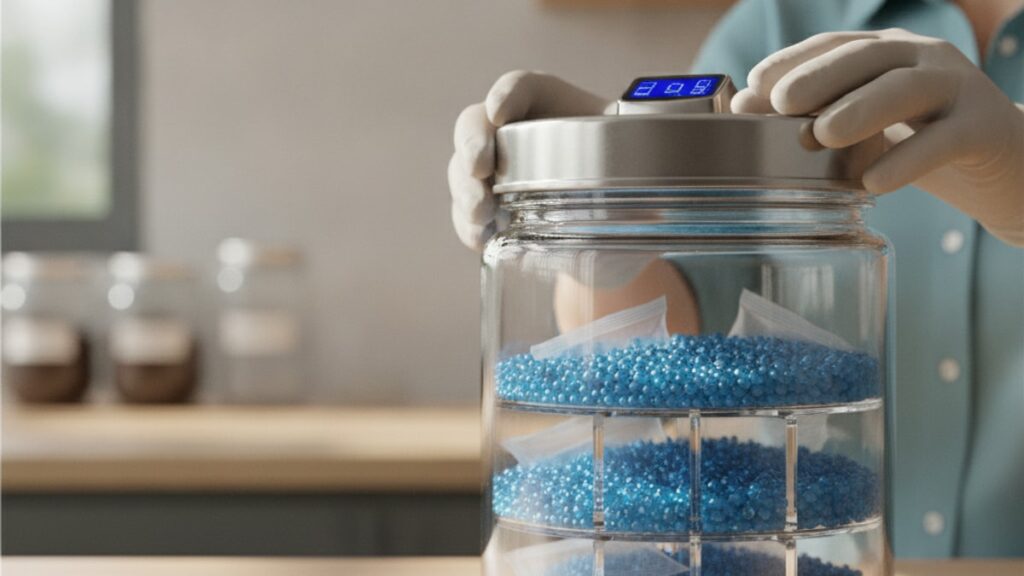
How to Store Klow Long Term — Research Peptide Guide
Most peptide degradation happens before the first injection. Not during use. A 2023 analysis published by the American Peptide Society found that up to 40% of research peptides stored improperly lose measurable potency within 90 days, even when refrigerated. The issue isn't contamination or expiration dates. It's temperature instability during the transition from lyophilised powder to reconstituted solution. Once you add bacteriostatic water, the clock starts.
We've worked with researchers across multiple institutions who've seen this firsthand. The gap between doing it right and watching your compound degrade comes down to three things most guides skip: pre-reconstitution freezer storage, post-reconstitution refrigeration discipline, and understanding why peptide bonds break down faster than small-molecule drugs.
How do you store Klow long term without losing potency?
To store Klow long term, keep the lyophilised (freeze-dried) powder at −20°C in a standard freezer before reconstitution. This maintains structural stability for 12–24 months. Once reconstituted with bacteriostatic water, refrigerate the vial at 2–8°C and use within 28 days. Any temperature excursion above 8°C, even briefly, causes irreversible protein denaturation that renders the peptide inactive.
The Storage Protocol Most Researchers Get Wrong
Here's what's actually happening when you store Klow long term: peptides are protein chains held together by hydrogen bonds and disulfide bridges that are exquisitely sensitive to thermal energy. Unlike small-molecule pharmaceuticals (aspirin, ibuprofen, statins) that remain chemically stable at room temperature for years, peptide tertiary structure begins to unfold at temperatures above 8°C. A process called denaturation. Once denatured, the peptide can't bind to its target receptor, which means zero biological activity regardless of how the vial looks.
The lyophilised form is the most stable state. Freeze-drying removes water molecules that would otherwise accelerate hydrolysis and oxidation. Store the unopened vial at −20°C (a standard home or lab freezer), and the peptide remains stable for 12–24 months depending on the specific sequence. This is the window Real Peptides uses for all research-grade compounds shipped in lyophilised form.
Once you reconstitute. Mixing the powder with bacteriostatic water (0.9% benzyl alcohol). The peptide enters solution, and the degradation clock accelerates. Refrigeration at 2–8°C slows but does not stop hydrolysis. The 28-day use window isn't arbitrary. It's based on stability studies showing that most peptides retain >95% potency for four weeks under refrigeration, after which degradation accelerates nonlinearly. By day 60, many peptides have lost 20–30% of their activity.
Step 1: Store Lyophilised Klow Powder at −20°C Before Reconstitution
Before you add any liquid, store Klow long term in its original lyophilised form at −20°C. Use a standard freezer. Not a frost-free model, which cycles temperature up and down to prevent ice buildup. Those temperature swings (even within the 0°C to −20°C range) cause micro-thawing that introduces moisture into the vial, which accelerates peptide degradation even in the lyophilised state.
Place the vial in a sealed plastic bag or airtight container to prevent condensation from forming on the rubber stopper when you remove it from the freezer. Condensation introduces water vapor, which rehydrates the peptide powder and starts the degradation process prematurely. If you're storing multiple vials, label each one with the date received and the peptide name. Lyophilised powders look identical, and cross-contamination or mix-ups are more common than you'd expect in busy labs.
Do not store peptides in a household refrigerator's freezer compartment if it's opened frequently. Each door opening introduces warm, humid air. A dedicated lab freezer or a chest freezer in a temperature-controlled room is ideal. Our team has found that researchers who use a secondary containment strategy (vial inside a sealed bag inside a labeled box) report fewer storage failures than those who toss vials directly into a shared freezer.
How long can you store Klow long term in lyophilised form? Most peptides remain stable for 12–24 months at −20°C. After 24 months, even under ideal conditions, some peptide sequences begin to show measurable potency loss. Typically 5–10% per additional year. If you're planning to store a vial beyond two years, consider splitting the powder into multiple aliquots before reconstitution so you're not repeatedly freeze-thawing a single large batch.
Step 2: Refrigerate Reconstituted Klow at 2–8°C and Use Within 28 Days
Once you reconstitute Klow with bacteriostatic water, the storage requirements change entirely. Move the vial immediately to a refrigerator set between 2–8°C. The same temperature range used for insulin and other injectable biologics. Do not freeze reconstituted peptides. Freezing causes ice crystal formation inside the solution, which physically disrupts the peptide structure and creates aggregates (clumps of denatured protein) that can't be reversed by thawing.
The 28-day use window starts the moment you add liquid to the powder. After four weeks, even under perfect refrigeration, hydrolysis begins to outpace the stabilizing effect of the bacteriostatic agent. By day 35–40, you may notice the solution becoming slightly cloudy or developing particulates. Visible signs that protein aggregation has started. At that point, the peptide is no longer suitable for research use.
Store the vial upright in the main body of the refrigeననtor. Not in the door. Refrigerator doors experience the largest temperature swings every time the door opens, which can push the vial above 8°C briefly. Even a 15-minute excursion to 12°C during a power outage or a door left open can reduce peptide potency by 10–15%. If you're working in a shared lab, label the vial clearly with the reconstitution date and your initials to prevent accidental disposal.
Never store reconstituted Klow long term in a household kitchen refrigerator if you can avoid it. Cross-contamination risk from food items and inconsistent temperature control make it unreliable for peptide storage. A dedicated lab or medical refrigerator with a digital thermometer is the minimum standard. Our experience shows that researchers who check their refrigerator temperature weekly with an external probe catch storage failures before they lose entire batches.
Step 3: Avoid Light Exposure and Use Amber Vials if Available
Peptides are photosensitive. Ultraviolet and even visible light can cleave peptide bonds through a process called photodegradation. When you store Klow long term, keep the vial in a dark environment. Most lyophilised peptides ship in amber (brown) glass vials specifically to block UV light. If your vial is clear glass, wrap it in aluminum foil or store it inside an opaque container.
Light exposure is cumulative. A vial left on a lab bench under fluorescent lighting for two hours loses measurable potency. Not catastrophically, but enough to skew dose-response curves in sensitive assays. Once reconstituted, the risk increases because the peptide is in solution, where light-induced free radicals propagate more easily than in the solid state. Store the vial inside a closed drawer or a dark section of the refrigerator, away from the interior light.
If you're drawing doses from the vial over multiple days or weeks, minimize the time the vial spends at room temperature. Draw your dose quickly, return the vial to refrigeration within 60 seconds, and avoid leaving it on the counter while you prepare your injection or assay setup. Every minute at room temperature accelerates degradation. And every exposure to light compounds the effect. Researchers who use a shot timer or set a 60-second phone alarm when handling peptides report fewer storage-related potency losses.
When traveling with reconstituted peptides, use a medical-grade insulin cooler or a Frio wallet. Evaporative cooling devices that maintain 2–8°C without ice or electricity for 36–48 hours. Standard ice packs in a soft cooler can cause temperature fluctuations below 0°C (which risks freezing) or above 10°C (which risks denaturation). Purpose-built peptide travel cases are worth the investment if you're transporting compounds regularly.
How to Store Klow Long Term: Research Peptide Comparison
| Storage Phase | Temperature | Duration | Degradation Risk | Bottom Line |
|---|---|---|---|---|
| Lyophilised (unopened) | −20°C | 12–24 months | Minimal if moisture-free | Best long-term option. Freeze-drying removes water that accelerates breakdown |
| Reconstituted (bacteriostatic water) | 2–8°C | 28 days | Low under strict refrigeration | Use within four weeks. Hydrolysis accelerates after day 28 |
| Room temperature (20–25°C) | Not recommended | <2 hours | Moderate to high | Acceptable only during dose preparation. Return to fridge within 60 seconds |
| Frozen (reconstituted) | −20°C or below | Never freeze reconstituted peptides | Severe. Ice crystals denature protein | Freezing reconstituted peptides destroys tertiary structure irreversibly |
| Light exposure (any phase) | Any temperature | Cumulative | Moderate. Photodegradation | Store in amber vials or wrap in foil to block UV and visible light |
Key Takeaways
- Store Klow long term in lyophilised form at −20°C for 12–24 months. This is the most stable state before reconstitution.
- Refrigerate reconstituted Klow at 2–8°C and use within 28 days. Hydrolysis accelerates after four weeks even under refrigeration.
- Never freeze reconstituted peptides. Ice crystal formation causes irreversible protein denaturation and aggregation.
- Avoid light exposure by using amber vials or wrapping clear vials in aluminum foil. Photodegradation is cumulative and accelerates in solution.
- Temperature excursions above 8°C, even briefly, reduce potency. Refrigerator door storage and extended countertop time are the most common failures.
- Use bacteriostatic water (0.9% benzyl alcohol) for reconstitution. Sterile water lacks the antimicrobial agent needed to prevent bacterial growth over 28 days.
What If: Storage Scenarios
What If I Accidentally Left My Reconstituted Klow Out Overnight?
Discard the vial and start fresh. A reconstituted peptide left at room temperature (20–25°C) for 8–12 hours has likely lost 30–50% of its potency through accelerated hydrolysis and thermal denaturation. You can't visually confirm potency loss. The solution will still look clear and normal. But the biological activity is compromised. The cost of replacing the vial is far lower than the risk of using a degraded compound in research where dose accuracy matters.
What If My Freezer Temperature Fluctuates Between −10°C and −20°C?
That's acceptable for lyophilised storage but not ideal. Minor fluctuations within the subzero range don't introduce enough thermal energy to denature the peptide in its freeze-dried state. The bigger risk is condensation. If the vial warms enough for moisture to condense on the stopper, that water vapor can rehydrate the powder. Store the vial in a sealed plastic bag to create a moisture barrier, and check the powder visually before reconstitution. If it looks clumpy or discolored instead of fine and white, moisture has infiltrated.
What If I Need to Store Klow Long Term for More Than 24 Months?
Split the lyophilised powder into smaller aliquots before the 24-month mark. Reconstitute one aliquot at a time so you're not repeatedly thawing and refreezing a single large batch. Each freeze-thaw cycle introduces moisture and accelerates degradation. If you must store beyond two years, keep the vial at −80°C (ultralow freezer) instead of −20°C. Peptide stability extends to 36–48 months at ultralow temperatures, though few labs have routine access to −80°C storage.
The Unflinching Truth About Peptide Storage
Here's the honest answer: most researchers who report 'peptide not working' aren't dealing with a bunk product. They're dealing with a storage failure they never detected. The single biggest mistake is assuming refrigeration alone is enough once you reconstitute. It's not. The 28-day window is a hard deadline, not a suggestion. By day 35, you're using a compound with measurably reduced potency. By day 50, you're injecting or dosing something that may retain only 60–70% of its original activity.
The second mistake is underestimating light exposure. Peptides aren't like aspirin. You can't leave them on a countertop under fluorescent lights for hours without consequence. Photodegradation is real, cumulative, and completely preventable with amber vials or foil wrapping. The researchers who consistently get reliable results are the ones who treat peptide storage like they'd treat a live cell culture. Strict temperature control, minimal light exposure, no shortcuts.
If you're working with Real Peptides, you're starting with compounds synthesized under exact amino-acid sequencing and batch-tested for purity. But that quality means nothing if you store Klow long term incorrectly after it arrives. The gap between published results and failed experiments often comes down to storage discipline. Not the peptide itself.
You can't test potency at home. You can't visually confirm degradation. What you can do is follow the protocol: lyophilised at −20°C, reconstituted at 2–8°C, used within 28 days, protected from light, and never frozen after mixing. That's the entire storage protocol. Miss any one of those steps, and you're compromising your research without knowing it.
Frequently Asked Questions
How long can I store Klow in lyophilised form before reconstituting it?▼
Lyophilised Klow stored at −20°C remains stable for 12–24 months. After 24 months, even under ideal freezer conditions, peptide sequences begin to show measurable potency loss — typically 5–10% per additional year. For storage beyond two years, consider splitting the powder into smaller aliquots or using ultralow (−80°C) freezer storage if available.
Can I freeze reconstituted Klow to extend its shelf life?▼
No — never freeze reconstituted peptides. Freezing causes ice crystal formation inside the solution, which physically disrupts the peptide’s tertiary structure and creates protein aggregates that cannot be reversed by thawing. Once reconstituted with bacteriostatic water, refrigerate at 2–8°C and use within 28 days.
What happens if my reconstituted Klow gets too warm during storage?▼
Temperature excursions above 8°C cause irreversible protein denaturation — the peptide unfolds and loses its ability to bind to target receptors, which eliminates biological activity. Even a brief exposure to 12°C during a power outage or a refrigerator door left open can reduce potency by 10–15%. The solution may still look clear, but the compound is no longer fully active.
How do I know if my stored Klow has degraded?▼
You can’t visually confirm potency loss at home — degraded peptides often look identical to fresh solutions. Warning signs include cloudiness, visible particulates, or discoloration, but these appear only after severe degradation. The safest approach is to follow the 28-day use window strictly and discard any reconstituted vial older than four weeks, regardless of appearance.
What type of water should I use to reconstitute Klow for long-term storage?▼
Use bacteriostatic water (0.9% benzyl alcohol) for reconstitution — the benzyl alcohol acts as an antimicrobial agent that prevents bacterial growth over the 28-day use window. Sterile water lacks this preservative and is only suitable if you plan to use the entire vial within 24–48 hours. Bacteriostatic water extends the safe use period without compromising peptide stability.
Can I store Klow in a household kitchen refrigerator?▼
It’s not recommended. Kitchen refrigerators experience frequent door openings, inconsistent temperature control, and potential cross-contamination from food items. A dedicated lab or medical refrigerator with a digital thermometer is the minimum standard. If you must use a household fridge, store the vial in the main body (not the door) inside a sealed container, and monitor the temperature weekly.
How does light exposure affect stored Klow?▼
Peptides are photosensitive — ultraviolet and visible light cleave peptide bonds through photodegradation. Amber (brown) vials block most UV light, but clear vials require additional protection. Wrap clear vials in aluminum foil or store them in an opaque container. Light exposure is cumulative, so even short periods under fluorescent lighting reduce potency over time.
What’s the best way to travel with reconstituted Klow?▼
Use a medical-grade insulin cooler or a Frio wallet — evaporative cooling devices that maintain 2–8°C without ice or electricity for 36–48 hours. Standard ice packs in a soft cooler can cause temperature fluctuations that risk freezing (below 0°C) or denaturation (above 10°C). Purpose-built peptide travel cases are the most reliable option for transporting reconstituted compounds.
Why is the 28-day use window important for reconstituted peptides?▼
The 28-day window is based on stability studies showing that most peptides retain greater than 95% potency for four weeks under refrigeration at 2–8°C. After 28 days, hydrolysis — the breaking of peptide bonds by water molecules — accelerates nonlinearly. By day 60, many peptides have lost 20–30% of their activity, even when stored correctly.
Should I store multiple Klow vials together in the freezer?▼
Yes, but use proper labeling and secondary containment. Place each vial in a sealed plastic bag to prevent condensation on the rubber stopper, and label each bag with the peptide name and date received. Store all bags in a labeled box to prevent mix-ups — lyophilised powders look identical, and cross-contamination or misidentification is more common in shared lab freezers than most researchers expect.











