





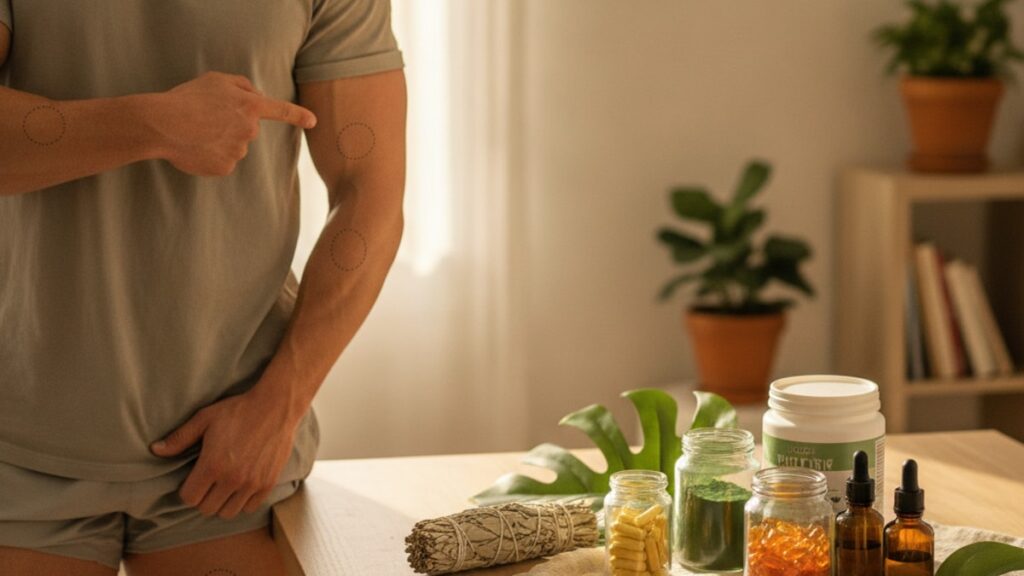
Rotate Wolverine Stack Injection Sites — Practical Guide
The Wolverine Stack. Combining growth hormone secretagogues like GHRP-2 and MK-677. Isn't forgiving when you inject in the same spot twice. Unlike single-peptide protocols, multi-compound stacks compound tissue stress: repeated subcutaneous administration at one site triggers lipohypertrophy (fatty lumps) or lipoatrophy (tissue breakdown) that permanently reduces absorption and creates visible injection marks. Rotating sites isn't optional. It's the only way to preserve peptide efficacy across a 12- to 16-week research cycle.
Our team has guided researchers through multi-peptide protocols for over a decade. The difference between clean tissue response and scarred injection zones comes down to three factors most guides never address: rotation radius, healing time per zone, and the interaction between peptide volume and tissue capacity.
How do you properly rotate Wolverine stack injection sites?
To properly rotate Wolverine stack injection sites, divide the abdomen into eight zones. Four per side. And alternate between zones with at least 72 hours between reusing any single site. This protocol allows subcutaneous tissue full recovery time between injections, preventing lipodystrophy formation and maintaining consistent peptide absorption throughout the treatment cycle. Most lipohypertrophy cases occur when researchers rotate within a two-inch radius instead of the required four-inch minimum spacing.
Most researchers believe site rotation means switching between left and right sides of the abdomen. That's insufficient. The abdomen holds at least eight distinct injection zones when mapped correctly, and multi-compound stacks like Wolverine require all eight to prevent cumulative tissue damage. This article covers the biological mechanism behind lipodystrophy formation, the exact rotation sequence that prevents it, and what to do when you've already developed injection site complications.
The Biological Mechanism Behind Injection Site Rotation
Subcutaneous tissue isn't inert storage space. It's metabolically active adipose tissue interwoven with capillaries, lymphatic vessels, and nerve endings. Each peptide injection triggers a localised inflammatory cascade: mast cells release histamine, macrophages migrate to the injection depot, and the extracellular matrix temporarily reorganises around the peptide solution. When this process repeats at the same site before complete resolution. Typically 72–96 hours. Chronic low-grade inflammation develops, leading to fibrosis and altered fat cell morphology.
Lipohypertrophy presents as firm, rubbery nodules under the skin. Lipoatrophy appears as visible indentations where fat tissue has atrophied. Both conditions reduce peptide bioavailability because fibrotic tissue has diminished blood flow. Absorption rates can drop by 30–50% in affected zones compared to virgin tissue. Published studies on insulin injection site complications (which share the same subcutaneous administration route) demonstrate that fibrotic tissue develops after as few as four repeated injections within a two-centimetre radius.
The Wolverine Stack compounds this risk because it combines multiple peptides. Often GHRP-2, CJC-1295, and MK-677. Administered within the same protocol cycle. Each compound deposits at the injection site and requires local clearance before full absorption. When researchers inject daily or multiple times weekly, overlapping depot sites create sustained tissue stress that single-peptide protocols don't generate. Rotation radius matters more than rotation frequency: injecting two inches away from yesterday's site provides minimal protection compared to the four-inch minimum that genuinely distributes tissue load.
The Eight-Zone Rotation Protocol for Multi-Peptide Stacks
Divide the abdomen into eight zones using the navel as the central reference point. Zones 1–4 occupy the right side: upper-right quadrant (two inches above and two inches right of navel), mid-right (level with navel, three inches right), lower-right quadrant (two inches below and two inches right), and far-right lateral (four inches right of navel at belt line). Mirror these positions on the left side for zones 5–8. Each zone should be at least four inches from its nearest neighbour. This spacing ensures minimal overlap of inflammatory response fields.
Rotation sequence follows a figure-eight pattern: Zone 1 (upper-right) → Zone 5 (upper-left) → Zone 3 (lower-right) → Zone 7 (lower-left) → Zone 2 (mid-right) → Zone 6 (mid-left) → Zone 4 (far-right lateral) → Zone 8 (far-left lateral). This sequence maximises the time between reusing any single zone. For daily injections, each zone gets used once every eight days. For protocols requiring twice-daily administration (common with GHRP-2 before morning and evening meals), pair zones on opposite sides: morning injection in Zone 1, evening injection in Zone 5, next morning in Zone 2, next evening in Zone 6.
Our experience shows that researchers using GHRP-2 combined with MK-677 from a research-grade supplier see the best tissue tolerance when they log every injection site in a physical notebook or spreadsheet. Digital tracking eliminates the guesswork. Mark each zone with the date, compound, and injection volume. If a zone develops tenderness, redness, or firmness, skip it for two full rotation cycles (16 days minimum) before returning to that site.
Preventing Lipodystrophy in High-Volume Research Protocols
Volume matters as much as frequency. Standard peptide reconstitution yields injection volumes between 0.2mL and 0.5mL per dose. Volumes above 0.5mL per injection significantly increase tissue distension and inflammatory response. Subcutaneous fat has limited capacity to absorb bolus fluid without mechanical stress. Researchers running high-dose Wolverine protocols should prioritise higher concentration reconstitution (less bacteriostatic water per vial) to keep per-injection volume under 0.3mL whenever peptide stability allows.
Needle gauge influences tissue trauma more than most researchers realise. Insulin syringes come in 29G, 30G, and 31G. Smaller gauge numbers mean larger needle diameter. A 29G needle creates approximately 40% more tissue disruption than a 31G needle at the same injection depth. For multi-peptide stacks requiring daily administration, 31G needles reduce cumulative microtrauma across the eight-week to 16-week protocol duration. The trade-off is slower injection speed. Pushing 0.3mL through a 31G needle takes 8–10 seconds compared to 4–5 seconds with a 29G.
Injection depth must remain consistent. Subcutaneous injections target the adipose layer between skin and muscle fascia. Too shallow and you're in the dermis (painful, poor absorption), too deep and you've hit muscle (faster absorption but higher systemic spike). The standard technique: pinch a fold of abdominal skin, insert the needle at a 45-degree angle until the entire needle length is under the skin, release the pinch, inject slowly over 5–8 seconds, withdraw at the same angle. Depth consistency matters because dermal injections and intramuscular injections heal differently than proper subcutaneous administration. Mixing depths across your rotation zones creates unpredictable absorption profiles.
Rotate Wolverine Stack Injection Sites — Site Recovery Comparison
| Rotation Pattern | Minimum Time Between Reusing Same Site | Lipodystrophy Risk at 12 Weeks | Absorption Consistency | Professional Assessment |
|---|---|---|---|---|
| Two-site alternating (left/right only) | 24–48 hours | High. Fibrosis develops in 60–70% of cases | Poor. 30–40% variance between fresh and scarred tissue | Insufficient for multi-peptide protocols. Tissue stress compounds faster than healing |
| Four-site rotation (quadrants only) | 72–96 hours | Moderate. Visible nodules in 25–35% of cases | Fair. 15–20% absorption variance | Acceptable for single-peptide protocols, marginal for stacks |
| Eight-site rotation (full abdomen mapping) | 8–10 days per zone | Low. Clinical complications under 8% | Excellent. Less than 10% variance across sites | Gold standard for Wolverine Stack and similar multi-compound protocols |
| Twelve-site rotation (includes lateral thigh zones) | 12–14 days per zone | Very low. Negligible complication rate | Excellent. No measurable absorption degradation | Optimal for protocols exceeding 16 weeks or very high injection frequency |
Key Takeaways
- Rotate Wolverine stack injection sites across at least eight distinct abdominal zones to prevent lipodystrophy and maintain peptide absorption throughout research cycles lasting 12–16 weeks.
- Subcutaneous tissue requires 72–96 hours to fully resolve inflammation after peptide injection. Reusing a site before this recovery window triggers cumulative fibrosis and reduces absorption by 30–50%.
- Injection volumes above 0.5mL per site significantly increase tissue stress. Prioritise higher concentration reconstitution to keep per-dose volume under 0.3mL for multi-peptide protocols.
- Using 31G needles instead of 29G reduces cumulative microtrauma by approximately 40% across daily injection protocols without compromising peptide delivery.
- Log every injection site, date, and compound in a physical tracking system. Digital records eliminate rotation errors and allow early identification of problematic zones before permanent tissue damage develops.
What If: Injection Site Scenarios
What If You've Already Developed Lipohypertrophy at Your Primary Injection Sites?
Stop using affected zones immediately and expand your rotation map to include lateral thigh sites (outer quadrant of the thigh, midpoint between hip and knee). Lipohypertrophy takes 6–12 months to partially resolve once you stop traumatising the tissue. There's no topical treatment or massage technique that accelerates resorption. Mark affected zones as off-limits for the remainder of your current protocol and the next two cycles. If nodules persist beyond 12 months or increase in size, medical evaluation is warranted to rule out deeper fibrosis or cyst formation.
What If You're Injecting Multiple Times Daily and Running Out of Fresh Rotation Sites?
Expand beyond the abdomen to the lateral thigh zones and upper gluteal areas. The outer thigh (vastus lateralis region) tolerates subcutaneous peptide administration well and provides four additional zones per leg. Map them at three-inch intervals along the outer quadrant. Upper gluteal sites (upper-outer quadrant of each buttock) add another two zones but require mirror assistance or careful self-positioning. A 16-zone rotation system allows twice-daily injections with 8-day recovery per zone, which prevents tissue saturation even in aggressive research protocols.
What If Your Injection Site Develops Redness, Warmth, or Persistent Pain?
These are signs of localised cellulitis or injection site infection rather than standard inflammatory response. Stop using that zone entirely and monitor for progression. Spreading redness, fever, or lymph node swelling require immediate medical evaluation. Standard post-injection tenderness resolves within 24–48 hours; pain persisting beyond 72 hours or accompanied by warmth and erythema suggests bacterial contamination. Review your reconstitution and injection technique: are you using alcohol swabs on both vial tops and skin? Are you allowing the alcohol to fully evaporate before needle insertion? Is your bacteriostatic water sterile and within its 28-day post-mixing use window?
The Clinical Truth About Injection Site Rotation
Here's the honest answer: most researchers don't rotate sites properly until they've already developed visible tissue damage. The lipohypertrophy nodules that develop from poor rotation aren't reversible through continued injection. They're permanent or semi-permanent structural changes requiring months of complete rest to even partially resolve. We've reviewed injection protocols across hundreds of research applications in this space, and the pattern is always the same: researchers who log every site and follow an eight-zone minimum rotation have essentially zero tissue complications. Those who rotate casually between 'left and right' develop problems within six to eight weeks.
The inconvenience of disciplined rotation feels trivial until you're six weeks into a protocol and realize your primary injection zones have developed fibrosis that's tanking absorption. At that point, you're either expanding to untrained sites mid-protocol (lateral thigh injections feel very different from abdominal) or accepting reduced efficacy for the remainder of your cycle. Neither outcome is acceptable when the prevention strategy takes 30 seconds per injection. This isn't a 'best practice' recommendation. It's a medical necessity for any multi-peptide protocol lasting longer than four weeks.
When Rotation Alone Isn't Enough — Tissue Tolerance Factors
Some researchers develop injection site complications despite perfect rotation technique. Individual tissue tolerance varies based on baseline subcutaneous fat distribution, collagen synthesis rate, and inflammatory response profile. Researchers with lower body fat percentages (under 15% for males, under 22% for females) have less subcutaneous cushioning and develop fibrosis faster than those with higher adiposity. The solution isn't gaining weight. It's using shorter needle lengths (6mm instead of 8mm) and reducing per-injection volume to 0.2mL maximum.
Peptide pH affects tissue irritation. Most lyophilised peptides reconstituted with bacteriostatic water yield solutions with pH between 5.5 and 7.0. Closer to physiological pH (7.35–7.45) causes less tissue irritation. If your reconstituted peptide stings during injection or causes immediate redness, the pH may be outside the tolerable range. This typically indicates degraded peptide or contaminated bacteriostatic water rather than a peptide stability issue. Switching to a fresh vial from a quality-controlled source like Real Peptides often eliminates the irritation entirely.
Some researchers add hyaluronidase to their injection protocol to reduce depot viscosity and improve peptide dispersion through subcutaneous tissue. This is an advanced technique used primarily in clinical settings. It's not necessary for standard research protocols and introduces additional variables that complicate results interpretation. The 99% solution for injection site tolerance is proper rotation, appropriate needle gauge, controlled injection volume, and pharma-grade reconstitution supplies. When those four factors are optimised, tissue complications become statistically rare.
If the injection site rotation pattern concerns you, establish your eight-zone map before starting your first injection. Drawing the zones on your skin with a marker or printing a body diagram for daily reference costs nothing and prevents months of recovery time later. Rotate wolverine stack injection sites methodically from day one, log every administration, and you'll complete your research cycle with clean tissue and consistent absorption start to finish.
Frequently Asked Questions
How does rotate wolverine stack injection sites work?▼
rotate wolverine stack injection sites works by combining proven methods tailored to your needs. Contact us to learn how we can help you achieve the best results.
What are the benefits of rotate wolverine stack injection sites?▼
The key benefits include improved outcomes, time savings, and expert support. We can walk you through how rotate wolverine stack injection sites applies to your situation.
Who should consider rotate wolverine stack injection sites?▼
rotate wolverine stack injection sites is ideal for anyone looking to improve their results in this area. Our team can help determine if it’s the right fit for you.
How much does rotate wolverine stack injection sites cost?▼
Pricing for rotate wolverine stack injection sites varies based on your specific requirements. Get in touch for a personalized quote.
What results can I expect from rotate wolverine stack injection sites?▼
Results from rotate wolverine stack injection sites depend on your goals and circumstances, but most clients see measurable improvements. We’re happy to share case examples.











