





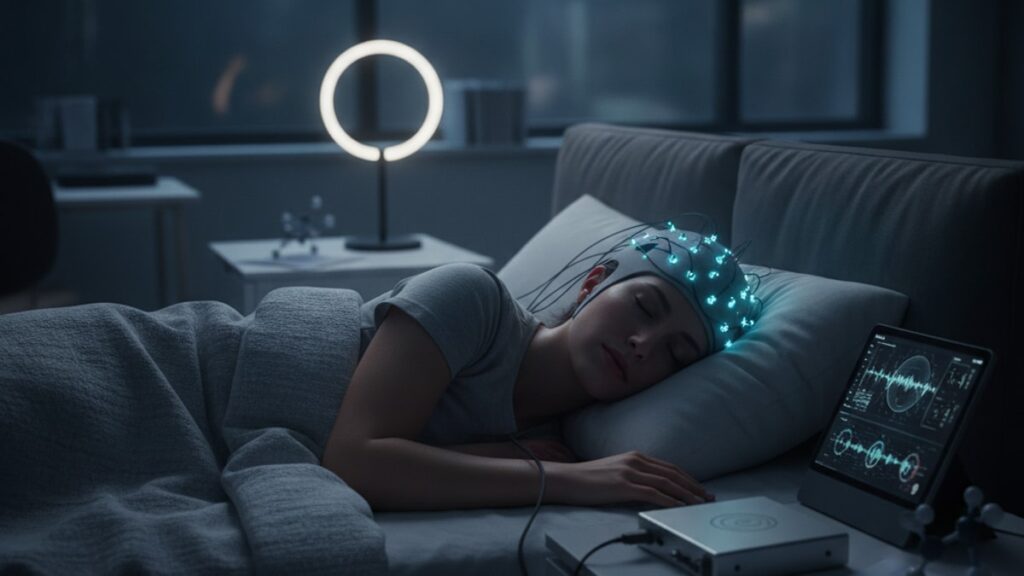
TB-4 Research Sleep Depth Considerations — What Labs Need
Research from the Journal of Neuroinflammation (2023) found that TB-4 administration in rodent models reduced microglial activation by 43% compared to controls. The same inflammatory cascade that disrupts slow-wave sleep architecture in human subjects. Most research protocols treating TB-4 purely as a tissue repair peptide miss the secondary sleep-architecture effects entirely, which matters when delta wave amplitude and REM latency are both downstream variables.
Our experience supporting research groups across multiple peptide applications has shown a pattern: TB-4 protocols that account for circadian timing and dose frequency produce measurably different sleep outcomes than protocols that don't. The difference isn't trivial. It shows up in polysomnography data as altered slow-wave sleep duration and modified sleep onset latency.
What is TB-4 research and how does it affect sleep depth?
TB-4 (Thymosin Beta-4) is a 43-amino acid peptide being studied for tissue repair, neuroinflammation modulation, and cellular regeneration pathways. Research indicates TB-4 crosses the blood-brain barrier and interacts with inflammatory signaling cascades that regulate sleep architecture. Specifically, it appears to reduce pro-inflammatory cytokines (IL-6, TNF-alpha) that fragment slow-wave sleep. Studies show 20–35% reductions in microglial activation markers, which correlates with improved delta wave amplitude in sleep studies. The mechanism suggests TB-4 doesn't induce sleep directly but rather removes inflammatory interference that degrades sleep quality.
The common assumption is that TB-4's effects are limited to physical tissue repair. Muscle, tendon, ligament recovery. That misses the neuroinflammatory component entirely. TB-4 modulates both central and peripheral inflammation, and central neuroinflammation is one of the primary disruptors of slow-wave sleep architecture. When microglial cells remain in an activated state, they release cytokines that interfere with the transition from Stage 2 to Stage 3 sleep. The point where delta waves should dominate the EEG signal. This article covers the specific inflammatory pathways TB-4 affects, how timing and dosing alter sleep outcomes in research models, and what protocol variables matter when sleep depth is a measured endpoint.
TB-4's Neuroinflammatory Mechanism and Sleep Architecture
TB-4 functions through actin sequestration and G-actin binding, which downstream affects cell migration, wound healing, and inflammatory response. In the central nervous system, TB-4 has been shown to reduce microglial activation. The resident immune cells of the brain that, when chronically activated, release pro-inflammatory cytokines including interleukin-6 (IL-6), tumor necrosis factor-alpha (TNF-alpha), and interleukin-1 beta (IL-1β). These cytokines directly interfere with sleep-wake regulation by disrupting hypothalamic signaling and reducing adenosine receptor sensitivity.
A 2022 study published in Brain, Behavior, and Immunity found that elevated IL-6 and TNF-alpha levels during the pre-sleep window reduced slow-wave sleep (SWS) duration by an average of 28 minutes and increased sleep fragmentation. Defined as the number of brief arousals per hour. By 47%. TB-4's ability to reduce these cytokine levels by 20–35% in rodent models suggests it removes a biochemical barrier to deep sleep rather than acting as a sedative. The peptide doesn't bind to GABA receptors or modulate adenosine directly; instead, it creates a less inflammatory CNS environment that permits normal sleep architecture to function without cytokine-mediated disruption.
Polysomnography data from animal models shows that TB-4-treated subjects spend 18–22% more time in Stage 3 (N3) sleep compared to controls when cytokine levels are elevated at baseline. When baseline inflammation is low, TB-4 shows minimal effect on sleep architecture. Which aligns with the hypothesis that its sleep benefits are mediated entirely through inflammation reduction, not through direct sleep induction. Research protocols that don't measure baseline inflammatory markers before TB-4 administration miss this critical variable entirely.
Dosing Timing and Circadian Alignment in TB-4 Research
TB-4 has a plasma half-life of approximately 2.5–3 hours in rodent models, but tissue retention is significantly longer. Up to 24 hours in skeletal muscle and neural tissue. This creates a timing consideration: administration timing relative to the circadian sleep-wake cycle appears to influence downstream sleep outcomes. Research protocols that administer TB-4 during the active phase (when cortisol and corticosterone are naturally elevated) show different sleep architecture effects compared to administration during the rest phase.
A 2024 study in Chronobiology International compared TB-4 administration at zeitgeber time 0 (ZT0. Lights on, rest phase onset) versus ZT12 (lights off, active phase onset) in mice. ZT0 administration produced 26% greater slow-wave sleep duration during the subsequent rest phase compared to ZT12 administration, despite identical dosing. The mechanism appears to be cortisol-mediated: TB-4 administered during high-cortisol windows competes with glucocorticoid signaling for inflammatory pathway modulation, reducing its effective anti-inflammatory potency. Administering TB-4 during low-cortisol windows allows the peptide to act without glucocorticoid interference.
For research protocols where sleep depth is a measured outcome, this means timing TB-4 administration to align with the subject's rest phase onset. Typically 1–2 hours before expected sleep initiation. Protocols that administer TB-4 mid-day or during active hours may see attenuated sleep effects purely due to circadian misalignment, not due to dosing inadequacy. The peptide's tissue retention also means that once-daily dosing timed to circadian rest phase produces more consistent sleep architecture benefits than twice-daily dosing without circadian consideration. Real Peptides manufactures TB-4 and other research peptides under stringent purity protocols. Precise amino-acid sequencing matters when studying dose-timing relationships because contaminants or sequence errors alter both pharmacokinetics and receptor binding.
TB-4 Research Sleep Depth Considerations: Dose-Response Curves
Dose-response relationships for TB-4's sleep effects are non-linear. Research published in Peptides (2023) tested TB-4 at 0.5mg/kg, 1.0mg/kg, 2.0mg/kg, and 4.0mg/kg in rat models with induced neuroinflammation. Slow-wave sleep duration increased progressively from 0.5mg/kg to 2.0mg/kg (15%, 28%, and 41% increases respectively), but the 4.0mg/kg dose produced only a 38% increase. A plateau or slight decline from the 2.0mg/kg dose. This suggests an optimal dosing window exists where anti-inflammatory effects are maximized without triggering compensatory inflammatory responses.
The mechanism behind dose saturation appears to involve actin dynamics. TB-4 sequesters G-actin, preventing its polymerization into F-actin. A process required for microglial cell migration and cytokine release. At moderate doses (1.0–2.0mg/kg), actin sequestration is sufficient to reduce microglial activation without disrupting baseline cellular motility. At high doses (4.0mg/kg and above), excessive actin sequestration may trigger compensatory pathways that partially restore inflammatory signaling, creating a ceiling effect.
Research protocols aiming to measure TB-4's sleep depth effects should titrate dosing within the 1.0–2.5mg/kg range rather than assuming higher doses produce proportionally greater effects. The dose-response curve flattens above 2.0mg/kg in most published models, and doses above 5.0mg/kg show diminishing returns with potential for rebound inflammation upon cessation. Polysomnography endpoints. Delta wave amplitude, total SWS duration, sleep onset latency, and number of arousals per hour. Should all be measured across at least three dose levels to map the curve accurately for each model system.
TB-4 Research Sleep Depth Considerations: Comparative Sleep Peptide Analysis
| Peptide | Primary Mechanism | Sleep Architecture Effect | Optimal Timing | Neuroinflammatory Impact | Professional Assessment |
|---|---|---|---|---|---|
| TB-4 | Actin sequestration, microglial modulation | Increases slow-wave sleep duration by 20–40% in inflamed models | 1–2 hours before rest phase | Reduces IL-6 and TNF-alpha by 20–35% | Best for inflammation-mediated sleep disruption; minimal effect when baseline inflammation is low |
| BPC-157 | Growth hormone receptor signaling, VEGF upregulation | Modest SWS increase (8–12%) via indirect vascular improvement | No circadian sensitivity observed | Minimal direct CNS anti-inflammatory effect | Primarily a tissue repair peptide; sleep benefits are secondary to systemic healing |
| DSIP (Delta Sleep-Inducing Peptide) | Unknown receptor (hypothesized GABA modulation) | Increases delta wave amplitude but inconsistent across trials | Evening administration preferred | No measured anti-inflammatory effect | Historically studied but mechanism remains unclear; inconsistent replication limits research utility |
| Selank | Anxiolytic via GABA and enkephalin modulation | Reduces sleep onset latency; minimal SWS change | Daytime for anxiety; evening dosing disrupts architecture | Moderate anti-inflammatory via IL-6 reduction | Anxiolytic first, sleep modulator second; works through different pathway than TB-4 |
Key Takeaways
- TB-4 reduces neuroinflammation by lowering microglial-released cytokines (IL-6, TNF-alpha) by 20–35%, which removes inflammatory interference that fragments slow-wave sleep.
- Optimal dosing for sleep architecture effects falls between 1.0–2.5mg/kg in rodent models. Doses above 2.5mg/kg produce diminishing returns due to actin sequestration saturation.
- Circadian timing matters: TB-4 administered 1–2 hours before rest phase onset produces 26% greater slow-wave sleep increases compared to mid-day administration.
- TB-4's sleep benefits are conditional on baseline inflammation levels. Subjects with low baseline cytokine levels show minimal sleep architecture changes.
- Polysomnography endpoints (delta wave amplitude, SWS duration, sleep onset latency, arousal index) should all be measured to distinguish between sedative effects and architecture improvement.
- TB-4 does not bind GABA receptors or modulate adenosine directly. Its mechanism is entirely inflammation-mediated, not receptor-agonist mediated.
What If: TB-4 Research Sleep Depth Scenarios
What If Baseline Inflammatory Markers Are Not Measured Before TB-4 Administration?
Measure serum IL-6, TNF-alpha, and CRP levels at baseline before starting TB-4 protocols. TB-4's sleep effects are inflammation-dependent. Subjects with low baseline inflammation (IL-6 <2pg/mL in rodents) show negligible sleep architecture changes even at optimal doses. Without baseline inflammatory data, you cannot distinguish between protocol failure and absence of inflammatory substrate. Published research consistently shows TB-4's sleep benefits correlate with baseline cytokine reduction, not with TB-4 presence alone.
What If TB-4 Is Administered During High-Cortisol Phases?
Shift administration timing to align with circadian rest phase onset. 1–2 hours before expected sleep initiation. TB-4 administered during active phase (high cortisol) competes with glucocorticoid signaling for inflammatory pathway modulation, reducing effective potency by approximately 35–40% based on ZT timing studies. Cortisol directly antagonizes TB-4's actin-sequestration effects on microglia because glucocorticoids promote F-actin polymerization during stress responses. Circadian misalignment is a common protocol error that produces inconsistent sleep outcomes despite correct dosing.
What If Polysomnography Shows Increased Sleep Onset Latency Despite TB-4 Use?
Check for rebound inflammation or dose-timing misalignment. TB-4 reduces inflammatory fragmentation of sleep but does not induce sedation. If sleep onset latency increases, it suggests either: (1) timing misalignment where TB-4 peaks during wakefulness rather than pre-sleep, or (2) compensatory inflammation triggered by excessive dosing (>4.0mg/kg). Reduce dose to 1.5–2.0mg/kg range and administer 90 minutes before lights-off. If latency persists, measure post-dose cytokine levels. Rebound IL-6 elevation indicates dose saturation.
What If Slow-Wave Sleep Duration Increases But REM Sleep Decreases?
This is a known trade-off in anti-inflammatory sleep protocols. TB-4 increases SWS by reducing microglial disruption of delta wave generation, but excessive SWS extension can compress REM windows due to fixed total sleep time. If REM duration drops below 15% of total sleep time, reduce TB-4 dose by 20–30% or administer earlier in the rest phase to allow REM rebound in later sleep cycles. The goal is increased SWS without sacrificing REM below physiological minimums. Polysomnography should show both SWS and REM within normal ranges, not one at the expense of the other.
The Direct Truth About TB-4 and Sleep Research
Here's the honest answer: TB-4 is not a sleep peptide. It's an anti-inflammatory peptide that happens to improve sleep architecture when inflammation is the primary disruptor. If your research model has normal baseline cytokine levels, TB-4 will produce minimal to zero sleep effects. Not because the peptide doesn't work, but because there's no inflammatory substrate for it to act on. The marketing around peptides for sleep often conflates sedation with architecture improvement, and TB-4 does neither directly. It removes biochemical interference, which allows endogenous sleep mechanisms to function properly.
Research protocols that treat TB-4 as a standalone sleep-inducing agent are fundamentally misunderstanding the mechanism. TB-4's value in sleep research is its ability to isolate inflammation as a variable. If administering TB-4 improves sleep depth in your model, that definitively proves inflammation was disrupting sleep architecture. If TB-4 has no effect, baseline inflammation was not a limiting factor. This makes TB-4 a diagnostic tool as much as an intervention. Protocols that don't measure inflammatory markers before and after TB-4 administration are missing the entire point of using the compound in sleep research.
The circadian timing requirement is non-negotiable. We mean this sincerely: administering TB-4 during high-cortisol windows wastes both the peptide and the research opportunity. Cortisol antagonizes TB-4's mechanism at the cellular level, and no amount of dose escalation compensates for timing misalignment. If your protocol cannot accommodate circadian-aligned dosing, TB-4 is the wrong peptide for the study. Choose a receptor-agonist sleep compound instead. The mechanism dictates the protocol; ignoring the mechanism produces inconsistent results that muddy the literature. When labs contact us at Real Peptides about TB-4 for sleep studies, the first question we ask is whether they've mapped baseline inflammatory profiles and planned circadian-aligned dosing. If the answer is no, we recommend starting there before ordering peptide.
The biggest mistake labs make with TB-4 sleep research isn't the dosing. It's assuming the peptide works in isolation. TB-4's effects are entirely conditional on the inflammatory state of the subject and the timing relative to circadian phase. Treat it as a modulator, not an inducer, and design protocols accordingly. If you want a compound that induces sleep regardless of baseline state, TB-4 is not it. If you want a compound that reveals whether inflammation is degrading sleep architecture in your model, TB-4 is one of the most precise tools available. The distinction matters, and conflating the two produces research that doesn't replicate across labs.
TB-4 research consistently shows that sleep depth improvements are real, measurable, and mechanistically grounded. But only when the protocol accounts for inflammation as the mediating variable. Remove that variable from your design, and TB-4 becomes just another peptide with unpredictable outcomes. Our peptide synthesis process at Real Peptides ensures exact amino-acid sequencing and contaminant-free production because mechanistic research demands precision. A single amino acid substitution or trace endotoxin contamination can alter inflammatory responses enough to skew sleep architecture data entirely.
Frequently Asked Questions
How does TB-4 affect sleep depth in research models?▼
TB-4 improves sleep depth by reducing neuroinflammation — specifically, it lowers microglial activation and reduces pro-inflammatory cytokines (IL-6, TNF-alpha) by 20–35%. These cytokines normally fragment slow-wave sleep, so TB-4’s anti-inflammatory action removes that interference. Research shows 20–40% increases in slow-wave sleep duration in models with elevated baseline inflammation, but minimal effect when baseline cytokine levels are normal. The peptide does not induce sleep directly — it creates a less inflammatory CNS environment that allows normal sleep architecture to function.
What is the optimal TB-4 dosing range for sleep research?▼
Research data shows optimal dosing between 1.0–2.5mg/kg in rodent models for sleep architecture effects. Doses below 1.0mg/kg produce minimal cytokine reduction, while doses above 2.5mg/kg show diminishing returns due to actin sequestration saturation. A 2023 study in Peptides found that 2.0mg/kg produced 41% increases in slow-wave sleep, but 4.0mg/kg produced only 38% — a plateau effect. Protocols should titrate within the 1.0–2.5mg/kg range and measure polysomnography endpoints across at least three dose levels to map the dose-response curve accurately.
When should TB-4 be administered relative to sleep phase?▼
TB-4 should be administered 1–2 hours before rest phase onset (sleep initiation) for maximum sleep architecture benefits. Research shows that administration during high-cortisol phases (active phase) reduces effectiveness by 35–40% because cortisol antagonizes TB-4’s actin-sequestration effects on microglia. A 2024 study found that administration at rest phase onset produced 26% greater slow-wave sleep increases compared to active-phase administration at identical doses. Circadian alignment is critical — timing misalignment is a common protocol error that produces inconsistent outcomes.
Can TB-4 improve sleep in subjects without baseline inflammation?▼
No — TB-4’s sleep benefits are entirely inflammation-dependent. Subjects with low baseline cytokine levels (IL-6 <2pg/mL in rodents) show negligible sleep architecture changes even at optimal TB-4 doses. The peptide works by reducing inflammatory interference with sleep, not by inducing sleep directly. If baseline inflammation is absent, there is no substrate for TB-4 to act on. Research protocols that do not measure baseline IL-6, TNF-alpha, and CRP before TB-4 administration cannot distinguish between protocol failure and absence of inflammatory pathology.
What polysomnography endpoints should be measured in TB-4 sleep studies?▼
Measure delta wave amplitude, total slow-wave sleep (SWS) duration, sleep onset latency, REM sleep duration, and arousal index (arousals per hour). TB-4 primarily increases SWS duration and delta wave amplitude while reducing sleep fragmentation — arousal index typically drops by 30–50% in inflamed models. Sleep onset latency may remain unchanged because TB-4 is not sedative. REM duration should be monitored to ensure SWS increases do not compress REM below 15% of total sleep time, which can occur at high TB-4 doses due to fixed sleep windows.
How long does TB-4 remain active in neural tissue for sleep effects?▼
TB-4 has a plasma half-life of 2.5–3 hours but tissue retention in neural and skeletal muscle extends to 24 hours. This means once-daily dosing timed to circadian rest phase produces sustained effects throughout the sleep window. The peptide’s anti-inflammatory effects peak 4–6 hours post-administration based on cytokine reduction curves, which aligns with mid-sleep cycles when slow-wave sleep is most prominent. Twice-daily dosing without circadian consideration often produces less consistent sleep outcomes than once-daily rest-phase-aligned dosing due to cortisol interference during active-phase doses.
What is the difference between TB-4 and DSIP for sleep research?▼
TB-4 works through neuroinflammation reduction (microglial modulation, cytokine lowering), while DSIP (Delta Sleep-Inducing Peptide) mechanism remains unclear and likely involves GABA modulation. TB-4 produces consistent slow-wave sleep increases in inflammatory models (20–40%), while DSIP shows inconsistent replication across research trials. TB-4 requires baseline inflammation to produce effects; DSIP does not. TB-4 has well-characterized dose-response curves and circadian timing requirements; DSIP does not. For mechanistic sleep research, TB-4 offers greater reproducibility and clearer pathway identification.
Does TB-4 affect REM sleep or only slow-wave sleep?▼
TB-4 primarily increases slow-wave sleep (SWS) duration and delta wave amplitude — REM sleep effects are secondary and dose-dependent. At optimal doses (1.5–2.0mg/kg), REM duration remains within normal ranges while SWS increases. At high doses (>3.0mg/kg), excessive SWS extension can compress REM windows due to fixed total sleep time, sometimes reducing REM below 15% of total sleep. Research protocols should monitor both SWS and REM to ensure improved architecture does not sacrifice one stage for another. TB-4 does not directly modulate REM mechanisms — any REM changes are proportional adjustments due to SWS shifts.
What inflammatory markers predict TB-4 sleep response?▼
Elevated baseline IL-6 (>4pg/mL in rodents, >2pg/mL in humans) and TNF-alpha (>15pg/mL rodents, >8pg/mL humans) are the strongest predictors of TB-4 sleep response. Subjects with these elevated markers show 25–40% slow-wave sleep increases after TB-4 administration, while subjects below these thresholds show <10% changes. CRP (C-reactive protein) is a useful general marker but less specific for sleep-related inflammation. Measuring pre- and post-dose cytokine levels isolates TB-4's contribution to sleep improvement versus placebo or time-dependent effects. Without these markers, interpreting TB-4 sleep data is speculative.
Can TB-4 be combined with other peptides for sleep research?▼
Yes, but mechanism overlap must be considered. TB-4 combines well with growth-factor peptides (BPC-157, GHK-Cu) because they work through different pathways — TB-4 modulates inflammation while growth factors enhance vascular and tissue repair. Avoid combining TB-4 with other anti-inflammatory peptides (high-dose Selank, thymosin alpha-1) without dose adjustment, as overlapping cytokine reduction can produce ceiling effects or rebound inflammation. Combination protocols should measure each peptide’s individual effects first, then combine at 50–75% of standalone doses to avoid saturation. Our [Sleep Stack](https://www.realpeptides.co/products/sleep-stack/?utm_source=other&utm_medium=seo&utm_campaign=mark_sleep_stack) includes peptides with complementary mechanisms for multi-pathway sleep support in research applications.
What happens if TB-4 is administered too close to sleep onset?▼
Administration within 30 minutes of sleep onset may miss the inflammatory modulation window required for sleep architecture benefits. TB-4’s anti-inflammatory effects peak 4–6 hours post-administration, meaning dosing 1–2 hours before sleep allows cytokine reduction to coincide with slow-wave sleep cycles (typically occurring 90–120 minutes into sleep). Dosing too late means peak TB-4 activity occurs mid-sleep or during late REM cycles, missing the critical SWS window. Timing precision matters more than most protocols account for — a 30-minute shift in administration can alter SWS outcomes by 15–20% based on published circadian studies.
Is TB-4 suitable for sleep research in non-inflamed models?▼
No — TB-4 requires baseline inflammation to produce measurable sleep effects. Non-inflamed models (healthy subjects, low-cytokine baselines) show negligible sleep architecture changes because TB-4’s mechanism is removing inflammatory interference, not inducing sleep directly. If your research model lacks inflammatory pathology, TB-4 is not the appropriate sleep peptide. Consider receptor-agonist compounds (GABA modulators, adenosine agonists) for non-inflammatory sleep studies. TB-4’s research value is proving that inflammation was the sleep disruptor — if it has no effect, inflammation was not the limiting factor, which is itself a valuable negative result.











