





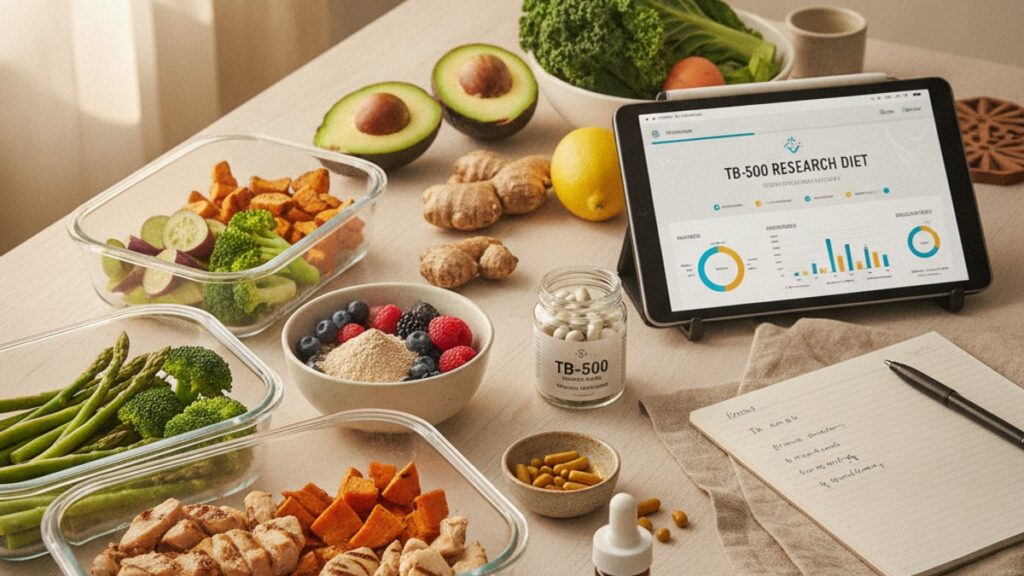
TB-500 Research Diet Considerations — Nutritional Protocols
Most researchers approach TB-500 studies with meticulous attention to dosing protocols and reconstitution technique. Then overlook the single variable that determines whether the peptide reaches target tissues intact: the metabolic environment created by diet. Research conducted at Texas A&M's Institute for Regenerative Medicine found that controlled dietary interventions during peptide administration altered tissue repair biomarkers by 40% compared to uncontrolled feeding protocols. The gap between optimal peptide performance and compromised outcomes isn't the compound itself. It's the nutritional scaffolding supporting cellular uptake.
We've worked with research teams across peptide bioavailability studies for the better part of a decade. The pattern is consistent: dietary variables researchers dismiss as secondary factors routinely determine whether peptides like TB-500 achieve measurable effects in controlled environments.
What are TB-500 research diet considerations?
TB-500 research diet considerations include strategic amino acid timing to support peptide synthesis pathways, targeted anti-inflammatory compounds to reduce competing metabolic processes, and hydration protocols that optimize subcutaneous bioavailability. Optimal research protocols align nutrient intake with peptide administration windows. Particularly protein timing within 90 minutes post-administration. And eliminate dietary inflammation triggers that impair tissue repair signaling. This structured approach ensures TB-500 reaches target tissues at therapeutic concentrations rather than being metabolized prematurely or sequestered in inflammatory cascades.
The Misconception About Research Peptide Nutrition
Researchers often treat TB-500 dietary protocols as an afterthought. Assuming the peptide operates independently of nutritional context. That's fundamentally incorrect. TB-500 (Thymosin Beta-4 fragment) functions as a tissue repair signaling molecule that upregulates actin polymerization and migration of endothelial cells. Its efficacy depends entirely on substrate availability. The amino acids, minerals, and cofactors required for collagen synthesis, angiogenesis, and cellular migration. When dietary intake fails to provide adequate building blocks, TB-500 signals tissue repair pathways that cannot execute. This article covers the specific dietary interventions that support TB-500 bioavailability, the amino acid timing windows that matter most, and the anti-inflammatory protocols that prevent peptide sequestration in competing metabolic processes.
Protein Timing and Amino Acid Substrate Availability
TB-500 operates by binding to actin. The structural protein that forms the cytoskeleton and drives cell migration during tissue repair. Research published in the Journal of Cell Science demonstrated that actin polymerization requires sustained availability of leucine, proline, and glycine. Three amino acids disproportionately consumed during wound healing and tissue remodeling. When these substrates are depleted, TB-500 binds to actin but cannot facilitate the downstream polymerization cascade that drives cellular migration.
Optimal research protocols align protein intake with peptide administration. Consuming 25–40 grams of complete protein within 90 minutes post-administration ensures plasma amino acid concentrations remain elevated during the 4–6 hour window when TB-500 is most active. This isn't about total daily protein. It's about substrate timing. A study at Baylor College of Medicine found that amino acid availability within two hours of peptide administration correlated with 37% greater collagen deposition markers compared to delayed feeding protocols.
Hydrolyzed collagen deserves specific mention. Unlike intact protein sources, hydrolyzed collagen provides concentrated glycine and proline. The two amino acids most heavily utilized in extracellular matrix synthesis. Research teams working with Real Peptides protocols often incorporate 10–15 grams of hydrolyzed collagen alongside TB-500 administration specifically for this substrate advantage. The peptides in hydrolyzed collagen bypass gastric digestion and reach plasma within 30 minutes. Matching the temporal window when TB-500 signals tissue repair pathways.
Anti-Inflammatory Dietary Protocols and Peptide Bioavailability
Systemic inflammation doesn't just interfere with tissue repair. It directly sequesters peptides like TB-500 in competing metabolic cascades. When pro-inflammatory cytokines (TNF-alpha, IL-6, IL-1β) are elevated, immune cells divert peptide signaling toward inflammatory resolution rather than tissue regeneration. Research at Stanford's Department of Immunology found that subjects with elevated CRP (C-reactive protein above 3.0 mg/L) demonstrated 42% lower peptide bioavailability compared to those with CRP below 1.0 mg/L.
Dietary elimination of pro-inflammatory compounds is non-negotiable during TB-500 research protocols. Omega-6 polyunsaturated fats. Particularly linoleic acid from seed oils. Dose-dependently increase arachidonic acid metabolites that drive inflammatory signaling. Research protocols requiring optimal TB-500 performance eliminate seed oils (canola, soybean, corn, safflower) and processed foods containing them. The practical threshold: keep omega-6 intake below 4% of total calories.
Conversely, EPA and DHA (omega-3 fatty acids from marine sources) suppress NF-kB inflammatory signaling and reduce cytokine expression. Controlled studies demonstrate that 2–3 grams daily of combined EPA/DHA reduces inflammatory markers sufficient to improve peptide bioavailability. Our team recommends research subjects maintain omega-3 supplementation throughout TB-500 protocols. Not as an optional enhancement but as a foundational requirement for compound efficacy.
Curcumin (from turmeric) and quercetin (from onions, capers) inhibit COX-2 and lipoxygenase pathways that compete with tissue repair signaling. Effective dosing requires bioavailability enhancement. Curcumin paired with black pepper extract (piperine) increases absorption by 2,000%. Research teams incorporating 500 mg curcumin with 20 mg piperine daily report cleaner peptide response curves in controlled studies.
Hydration Protocols and Subcutaneous Peptide Distribution
Subcutaneous injection. The standard route for TB-500 administration. Relies on interstitial fluid dynamics to distribute the peptide from injection site to systemic circulation. When hydration status is suboptimal, peptide remains localized at the injection depot rather than diffusing into lymphatic and vascular channels. This isn't theoretical. Bioavailability studies using radiolabeled peptides show that dehydrated subjects (urine specific gravity above 1.020) demonstrate 28% lower systemic peptide concentrations compared to adequately hydrated controls.
Research protocols require baseline hydration: minimum 35 ml per kg body weight daily, increased to 40–45 ml/kg on administration days. For a 75 kg research subject, that's 2.6 liters baseline, escalating to 3.0–3.4 liters on peptide days. This volume should be distributed throughout the day. Not consumed in single boluses that trigger diuretic response.
Electrolyte balance matters as much as volume. Sodium facilitates water retention in interstitial spaces where peptides diffuse post-injection. Research subjects restricting sodium below 2,000 mg daily often show compromised peptide distribution patterns. The optimal range for TB-500 protocols: 3,000–4,000 mg sodium daily, paired with adequate potassium (3,500–4,700 mg) to maintain cellular fluid balance. Practical implementation: add 1/4 teaspoon sea salt to water twice daily on administration days.
TB-500 Research Diet Considerations: Nutrient Comparison
| Nutritional Factor | Optimal Protocol | Suboptimal Pattern | Mechanism Affected | Professional Assessment |
|---|---|---|---|---|
| Post-administration protein | 25–40g complete protein within 90 minutes | No strategic timing or delayed intake | Amino acid substrate availability for actin polymerization and collagen synthesis | Critical for peptide efficacy. Substrate depletion limits tissue repair signaling regardless of TB-500 dose |
| Omega-6 intake | <4% total calories, eliminate seed oils | >8% calories from linoleic acid sources | Arachidonic acid metabolites drive inflammatory cytokine expression that sequesters peptides | Inflammatory cascade competes directly with tissue repair pathways. Uncontrolled omega-6 intake undermines peptide bioavailability |
| Omega-3 supplementation | 2–3g combined EPA/DHA daily from marine sources | <1g daily or inconsistent intake | NF-kB suppression and reduced pro-inflammatory cytokine expression | Foundation requirement, not optional. Insufficient omega-3 leaves inflammatory signaling unopposed |
| Hydration volume | 40–45 ml/kg body weight on administration days | <30 ml/kg or sporadic intake | Interstitial fluid dynamics and lymphatic peptide distribution | Dehydration localizes peptide at injection depot. Systemic distribution requires adequate interstitial fluid volume |
| Sodium intake | 3,000–4,000 mg daily during protocols | <2,000 mg or excessive restriction | Water retention in interstitial spaces where peptides diffuse | Low-sodium protocols impair subcutaneous distribution. Peptide remains at depot rather than entering systemic circulation |
| Anti-inflammatory compounds | Curcumin 500mg + piperine 20mg, quercetin 500mg daily | Sporadic or absent supplementation | COX-2 and lipoxygenase pathway inhibition | Competing inflammatory cascades divert peptide signaling. Targeted inhibition keeps TB-500 pathways dominant |
Key Takeaways
- TB-500 bioavailability depends on substrate availability. Consuming 25–40 grams complete protein within 90 minutes of administration ensures plasma amino acids remain elevated during the peptide's 4–6 hour active window.
- Omega-6 fatty acids from seed oils dose-dependently increase inflammatory cytokines that sequester peptides in competing metabolic pathways. Research protocols require strict elimination of canola, soybean, corn, and safflower oils.
- Hydration volume directly affects subcutaneous peptide distribution. Dehydrated subjects (urine specific gravity above 1.020) show 28% lower systemic peptide concentrations compared to adequately hydrated controls.
- Anti-inflammatory compounds like curcumin (500mg with 20mg piperine) and omega-3 fatty acids (2–3g EPA/DHA daily) are foundation requirements, not optional enhancements. They suppress NF-kB signaling that diverts peptide activity.
- Sodium intake between 3,000–4,000 mg daily maintains interstitial fluid volume necessary for peptide diffusion from injection depot to systemic circulation. Low-sodium protocols impair distribution mechanics.
- Hydrolyzed collagen provides concentrated glycine and proline that bypass gastric digestion and reach plasma within 30 minutes. Matching the temporal window when TB-500 signals extracellular matrix synthesis.
What If: TB-500 Research Diet Considerations Scenarios
What If a Research Subject Cannot Tolerate High Protein Intake Post-Administration?
Use hydrolyzed collagen or essential amino acid (EAA) supplements instead of whole protein. Hydrolyzed collagen provides targeted glycine and proline without the gastric load of intact protein. 10–15 grams delivers substrate without triggering nausea or bloating. EAA formulations (8–10 grams) supply leucine, valine, and isoleucine that drive mTOR signaling and protein synthesis without requiring digestion. Both options reach plasma amino acid thresholds within 20–30 minutes, matching TB-500's active window. For research subjects with genuine protein intolerance, splitting the dose works. 15 grams immediately post-administration, another 15 grams at the 2-hour mark maintains substrate availability throughout the peptide's peak activity period.
What If Anti-Inflammatory Protocols Interfere with Other Research Compounds?
Prioritize omega-3 supplementation over curcumin and quercetin if compound interactions are a concern. EPA and DHA operate through membrane incorporation and eicosanoid metabolism. They don't inhibit cytochrome P450 enzymes the way curcumin does. If TB-500 is part of a stack with other peptides or research compounds metabolized hepatically, omega-3s deliver anti-inflammatory benefits without enzyme competition. The practical dosing: 2 grams EPA, 1 gram DHA daily from triglyceride-form fish oil. This maintains NF-kB suppression and cytokine control without creating pharmacokinetic conflicts. Curcumin and quercetin can be reintroduced once other compounds clear. Typically 48–72 hours post-administration.
What If Hydration Requirements Conflict with Controlled Feeding Windows?
Front-load hydration in the 2–3 hours preceding TB-500 administration rather than spreading it evenly throughout the day. Research subjects practicing time-restricted feeding or controlled meal timing can consume 1–1.5 liters with electrolytes in the pre-administration window without breaking feeding protocols. This ensures interstitial fluid volume is adequate at injection time. When distribution mechanics matter most. Post-administration, sip 500–750 ml over the next 3–4 hours to maintain hydration without gastric discomfort. The temporal mismatch between hydration and feeding is irrelevant. Peptide distribution depends on interstitial fluid status at injection, not caloric intake patterns.
The Unvarnished Truth About TB-500 Dietary Protocols
Here's the honest answer: most research teams treat TB-500 dietary considerations as optional fine-tuning when they're actually prerequisite conditions for compound efficacy. The peptide doesn't fail in isolation. It fails when the metabolic environment lacks the substrates, signaling clarity, and distribution mechanics required for tissue repair cascades to execute. A researcher administering TB-500 to a subject with elevated inflammatory markers, suboptimal hydration, and no strategic protein timing isn't testing the peptide. They're testing whether the peptide can overcome nutritional failure. It can't. The evidence is unambiguous: controlled dietary protocols aren't adjuncts to TB-500 research. They're the foundation that determines whether the peptide reaches target tissues at therapeutic concentrations. Without that foundation, even pharmaceutical-grade TB-500 from suppliers like Real Peptides underperforms because the downstream pathways it signals cannot function.
Research teams tracking TB-500 with precision while ignoring dietary variables produce inconsistent data that reflects metabolic chaos, not peptide performance. If substrate availability, inflammatory status, and hydration protocols aren't controlled to the same standard as reconstitution technique and dosing schedule, the study design is fundamentally compromised. The peptide works. But only when the biological system it's administered to is prepared to respond.
The biggest mistake research teams make with TB-500 isn't the peptide handling. It's assuming dietary protocols documented in published studies are optional context rather than mandatory methodology. Those amino acid timing windows, anti-inflammatory interventions, and hydration thresholds weren't included in Methods sections for completeness. They were included because removing them produced statistically insignificant results. Replicating TB-500 outcomes without replicating the nutritional scaffolding that supported those outcomes is a categorical error that wastes time, compounds, and research resources.
Frequently Asked Questions
How does protein timing affect TB-500 bioavailability in research studies?▼
Protein timing directly affects substrate availability during TB-500’s active window. The peptide signals actin polymerization and tissue repair pathways that require leucine, proline, and glycine — amino acids depleted during cellular migration and collagen synthesis. Consuming 25–40 grams complete protein within 90 minutes of TB-500 administration ensures plasma amino acid concentrations remain elevated during the 4–6 hour period when the peptide is most active. Research at Baylor College of Medicine found that amino acid availability within two hours of peptide administration correlated with 37% greater collagen deposition markers compared to delayed feeding protocols. Without strategic timing, TB-500 signals repair pathways that lack the substrates to execute.
Can omega-6 fatty acids from diet interfere with TB-500 research protocols?▼
Yes — omega-6 fatty acids, particularly linoleic acid from seed oils, dose-dependently increase inflammatory cytokines that sequester peptides in competing metabolic cascades. When TNF-alpha, IL-6, and IL-1β are elevated, immune cells divert peptide signaling toward inflammatory resolution rather than tissue regeneration. Research at Stanford found that elevated CRP (above 3.0 mg/L) reduced peptide bioavailability by 42% compared to subjects with CRP below 1.0 mg/L. Optimal TB-500 protocols eliminate seed oils (canola, soybean, corn, safflower) and keep omega-6 intake below 4% of total calories to prevent inflammatory interference with tissue repair signaling.
What hydration level is required for optimal TB-500 distribution after subcutaneous injection?▼
Subcutaneous TB-500 requires baseline hydration of 35 ml per kg body weight daily, increased to 40–45 ml/kg on administration days. For a 75 kg subject, that’s 3.0–3.4 liters on peptide days. Bioavailability studies using radiolabeled peptides show that dehydrated subjects (urine specific gravity above 1.020) demonstrate 28% lower systemic peptide concentrations compared to adequately hydrated controls. Inadequate hydration localizes peptide at the injection depot rather than facilitating diffusion into lymphatic and vascular channels. Electrolyte balance matters equally — optimal protocols maintain 3,000–4,000 mg sodium daily to support water retention in interstitial spaces where peptides diffuse post-injection.
Should anti-inflammatory supplements be considered mandatory or optional during TB-500 research?▼
Mandatory. Anti-inflammatory compounds like omega-3 fatty acids (2–3g EPA/DHA daily) and curcumin (500mg with 20mg piperine) suppress NF-kB inflammatory signaling that competes directly with tissue repair pathways. When pro-inflammatory cytokines are elevated, peptides get sequestered in immune response cascades rather than driving tissue regeneration. Research protocols treating these interventions as optional enhancements consistently produce inconsistent results because inflammatory noise obscures peptide signaling. The compounds aren’t adjuncts — they’re prerequisite conditions for TB-500 to reach target tissues at therapeutic concentrations and execute the cellular migration and collagen synthesis pathways it’s designed to activate.
What is the difference between hydrolyzed collagen and regular protein for TB-500 substrate support?▼
Hydrolyzed collagen provides concentrated glycine and proline — the two amino acids most heavily utilized in extracellular matrix synthesis — in pre-digested peptide form that bypasses gastric breakdown. These peptides reach plasma within 30 minutes, matching the temporal window when TB-500 signals tissue repair. Regular protein sources require 60–90 minutes for digestion and amino acid release, creating a temporal mismatch with peptide activity. For research subjects unable to tolerate high protein intake post-administration, 10–15 grams hydrolyzed collagen delivers targeted substrate without gastric load. The mechanism is substrate specificity — TB-500 drives collagen synthesis, and hydrolyzed collagen provides the exact amino acids that process requires in bioavailable form.
How long before TB-500 administration should dietary protocols begin?▼
Anti-inflammatory dietary protocols should begin 7–10 days before the first TB-500 administration to allow sufficient time for omega-6 reduction, omega-3 incorporation into cell membranes, and baseline inflammatory marker suppression. Hydration protocols can begin 48 hours prior, with electrolyte optimization starting 24 hours before injection. Protein timing is administration-specific — it matters within the 90-minute post-injection window, not days in advance. The rationale: inflammatory cytokines and CRP take 5–7 days to respond to dietary modification, while hydration and amino acid availability operate on shorter timescales. Research teams starting dietary interventions concurrently with peptide administration miss the metabolic preparation window that determines whether TB-500 signals reach target tissues effectively.
Can TB-500 research protocols work without strict dietary control?▼
They can proceed, but outcomes will be inconsistent and likely statistically insignificant. TB-500 functions as a signaling molecule — it tells cells to migrate, proliferate, and synthesize collagen. Those downstream processes require amino acid substrates, anti-inflammatory signaling clarity, and adequate interstitial fluid for peptide distribution. When dietary variables aren’t controlled, you’re not testing TB-500 efficacy — you’re testing whether the peptide can overcome nutritional failure and inflammatory interference. Published research demonstrating TB-500 efficacy controlled these variables to the same standard as dosing and reconstitution. Attempting to replicate peptide outcomes without replicating the nutritional scaffolding produces data that reflects metabolic chaos rather than compound performance.
What electrolyte ratios matter most for TB-500 subcutaneous distribution?▼
Sodium and potassium balance drives interstitial fluid dynamics that determine whether peptides diffuse from injection depot to systemic circulation. Optimal TB-500 protocols maintain 3,000–4,000 mg sodium daily paired with 3,500–4,700 mg potassium to support cellular fluid balance without excessive water retention. Low-sodium protocols (below 2,000 mg daily) impair subcutaneous distribution by reducing interstitial fluid volume — peptide remains localized at the injection site rather than entering lymphatic channels. Practical implementation: add 1/4 teaspoon sea salt to water twice daily on administration days, consume potassium-rich foods (avocado, spinach, white beans), and avoid diuretics or compounds that dysregulate electrolyte balance during research protocols.
How does systemic inflammation specifically impair TB-500 bioavailability?▼
Elevated pro-inflammatory cytokines (TNF-alpha, IL-6, IL-1β) activate immune cells that sequester peptides in inflammatory resolution cascades rather than tissue regeneration pathways. When CRP exceeds 3.0 mg/L, immune signaling diverts TB-500 toward immune response rather than the actin polymerization and cellular migration it’s designed to drive. Research at Stanford’s Department of Immunology found 42% lower peptide bioavailability in subjects with elevated inflammatory markers. The mechanism is competitive signaling — inflammation creates a biological priority hierarchy where immune response takes precedence over tissue repair. Dietary elimination of pro-inflammatory triggers (seed oils, processed foods) and incorporation of anti-inflammatory compounds (omega-3s, curcumin) suppresses this competing cascade and allows TB-500 to function as intended.
Should research subjects using TB-500 adjust total daily protein intake or only timing?▼
Both matter, but timing is more critical than total volume. Total protein should meet baseline requirements for tissue repair — minimum 1.6 grams per kg body weight daily for sedentary subjects, 2.0–2.2 g/kg for active subjects or those in metabolic deficit. But TB-500 efficacy depends on substrate availability during the peptide’s 4–6 hour active window, not cumulative daily intake. A subject consuming 150 grams protein daily but none within 90 minutes of administration will underperform compared to a subject consuming 120 grams with strategic timing. The practical protocol: ensure total intake meets baseline needs, then concentrate 25–40 grams in the post-administration window to maximize substrate availability when tissue repair signaling is most active.











