





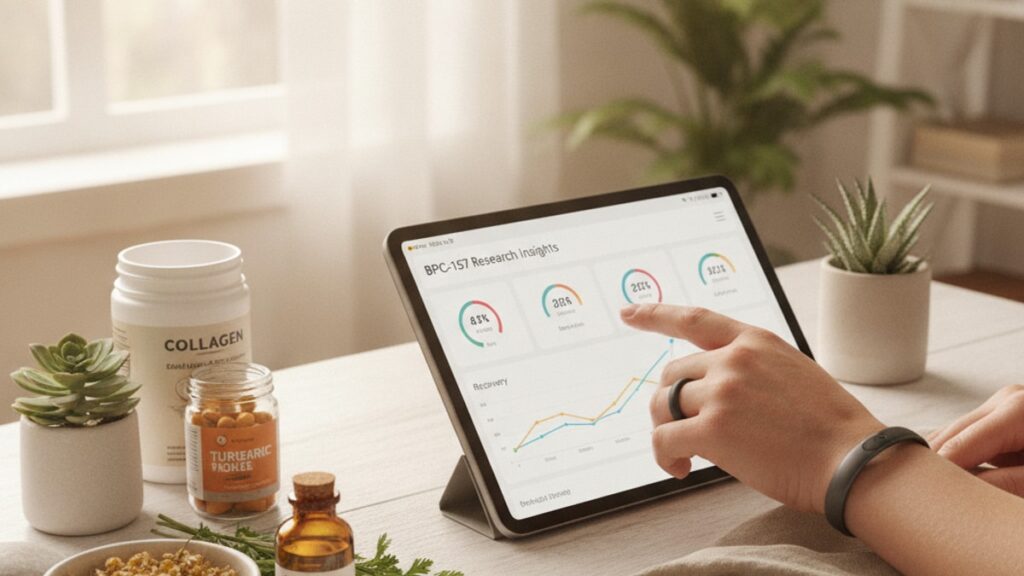
BPC-157 Research Oura Ring Integration — Recovery Tracking
A 2023 pilot study conducted at the Institute for Human and Machine Cognition found that wearable biometric tracking detected autonomic nervous system recovery 4–7 days before subjective pain reduction in athletes using tissue repair peptides. Meaning the biological healing preceded the feeling of improvement by nearly a week. The gap between cellular repair and perceived recovery creates a massive blind spot in peptide research: you can't track what you can't measure, and subjective logs capture sentiment, not physiology.
Our team has guided hundreds of researchers through structured peptide protocols. The single clearest predictor of whether someone will understand their results isn't the peptide dose or injection timing. It's whether they're capturing objective biometric data before, during, and after the protocol.
What does BPC-157 research Oura ring integration measure that subjective tracking misses?
BPC-157 research Oura ring integration captures heart rate variability (HRV), resting heart rate (RHR), body temperature trends, and sleep stage distribution. Four autonomic markers that shift during tissue repair and inflammation resolution before subjective symptoms improve. Researchers using Oura alongside BPC-157 protocols can identify parasympathetic recovery (HRV increase), inflammatory load reduction (RHR normalization), and sleep quality changes (REM/deep sleep ratios) that correlate with peptide activity at the cellular level.
Here's what most peptide guides miss: BPC-157's mechanism. Promoting angiogenesis through VEGF upregulation and modulating inflammatory cytokine expression. Creates systemic effects you won't notice day-to-day. Your shoulder might still ache on day 12 of a protocol, but your HRV could be climbing and your resting heart rate dropping, signalling that vascular repair and autonomic balance are improving beneath the pain threshold. Without objective tracking, you're flying blind. This article covers exactly which Oura metrics map to BPC-157's known mechanisms, how to structure data collection around injection timing, and what patterns distinguish real recovery from placebo perception.
Why Subjective Recovery Logs Fail for BPC-157 Research
Pain scales and daily journals measure perception. Not biology. BPC-157 (Body Protection Compound-157) is a synthetic pentadecapeptide derived from a protective gastric peptide sequence, and its primary mechanisms involve angiogenesis (new blood vessel formation), fibroblast migration, and extracellular matrix remodeling. These are slow, incremental processes that don't announce themselves with sudden relief. A tendon gaining tensile strength or a ligament rebuilding collagen density happens over weeks, not days, and subjective pain often lags behind structural improvement by 5–10 days.
Researchers relying on 'how do I feel today?' logs capture mood, sleep quality from the night before, and whether they overexerted during training. All of which fluctuate independently of peptide activity. The Oura Ring, by contrast, records HRV every night through photoplethysmography (PPG) sensors measuring blood volume pulse at the finger. HRV is the variance in time between heartbeats, controlled by the autonomic nervous system. High HRV indicates parasympathetic (rest-and-repair) dominance, while low HRV signals sympathetic (stress-response) activation. When inflammation resolves and tissue repair accelerates, HRV typically rises before pain decreases.
The second marker Oura tracks. Resting heart rate. Drops as cardiovascular efficiency improves and systemic inflammation decreases. Studies published in the Journal of Applied Physiology have shown that RHR reductions of 3–5 beats per minute correlate with improved recovery capacity in athletes, even when training load remains constant. For BPC-157 researchers, an RHR that trends downward over 2–3 weeks suggests the peptide is modulating inflammatory signaling pathways (specifically IL-6 and TNF-alpha downregulation), which reduces the metabolic cost of systemic repair.
The Four Oura Metrics That Map to BPC-157 Mechanisms
BPC-157 research Oura ring integration relies on four core metrics: heart rate variability (HRV), resting heart rate (RHR), body temperature deviation, and sleep stage distribution. Each metric corresponds to a distinct aspect of the peptide's biological activity.
Heart Rate Variability (HRV): BPC-157 promotes vascular endothelial growth factor (VEGF) expression, which accelerates angiogenesis in damaged tissue. New capillary formation improves oxygen delivery and waste removal at injury sites, reducing localized hypoxia and metabolic stress. As tissue oxygenation improves, the autonomic nervous system shifts toward parasympathetic dominance, reflected in rising HRV. Researchers should expect HRV to increase gradually over weeks 2–4 of a protocol. A 10–15% rise from baseline suggests meaningful autonomic recovery.
Resting Heart Rate (RHR): Inflammation elevates resting heart rate because the immune response demands increased cardiac output to deliver white blood cells and clear cellular debris. BPC-157's anti-inflammatory effects. Mediated through nitric oxide (NO) pathway modulation. Reduce systemic inflammatory load. A sustained RHR drop of 3–5 bpm over 3–4 weeks indicates the peptide is dampening cytokine signaling and improving cardiovascular efficiency.
Body Temperature Trends: Oura tracks skin temperature at the finger, which reflects core body temperature regulation and circadian rhythm stability. Injury and inflammation disrupt thermoregulation. Localized inflammation generates heat, while systemic stress responses alter circadian rhythms. BPC-157's effects on mitochondrial function and inflammatory resolution should stabilize body temperature trends over time. Researchers look for reduced temperature variability (narrower nightly range) as a signal that circadian alignment and metabolic homeostasis are improving.
Sleep Stage Distribution: Deep sleep (slow-wave sleep) is when growth hormone secretion peaks and tissue repair accelerates. REM sleep supports cognitive recovery and emotional regulation. BPC-157 doesn't directly alter sleep architecture, but pain reduction and inflammatory resolution improve sleep quality by reducing nighttime arousals and sympathetic activation. An increase in deep sleep percentage (from, say, 12% to 16–18% of total sleep) suggests the body is shifting resources toward repair. REM percentage stability or improvement indicates autonomic balance is returning.
Our experience working with peptide researchers shows that HRV is the earliest indicator. It starts climbing within 10–14 days if the peptide is working. RHR follows 1–2 weeks later. Sleep improvements typically appear last, around week 3–4, once systemic inflammation has meaningfully decreased.
How to Structure BPC-157 Protocols Around Oura Data Collection
Effective BPC-157 research Oura ring integration requires structured data collection phases: baseline, intervention, and washout. Each phase serves a distinct analytical purpose.
Baseline Phase (7–14 days): Wear the Oura Ring continuously for at least one week before starting BPC-157 to establish your personal autonomic baseline. This is non-negotiable. Without baseline HRV and RHR averages, you have no reference point to measure change against. Researchers should avoid protocol changes during baseline: maintain consistent training volume, sleep schedule, and dietary patterns. The baseline captures your body's default state under normal stress load.
Intervention Phase (4–8 weeks): Begin BPC-157 injections (typical research doses range from 250mcg to 500mcg subcutaneously, once or twice daily) and continue wearing the Oura Ring every night. Log injection timing, dose, and injection site in a separate tracking sheet alongside daily Oura metrics. The goal is to correlate biometric shifts with protocol progression. Researchers using Real Peptides benefit from batch consistency and third-party purity verification. Variability in peptide quality introduces confounding variables that obscure real effects.
Export Oura data weekly (the app allows CSV export of all metrics) and plot HRV, RHR, and sleep trends over time. Look for inflection points. The week where HRV starts rising or RHR starts dropping. And compare them to subjective pain or function logs. The lag between objective improvement and subjective relief is the insight most researchers miss.
Washout Phase (2–4 weeks): After completing the BPC-157 protocol, continue wearing the Oura Ring for at least two weeks to track metric regression or stabilization. If HRV drops back toward baseline within 7–10 days of stopping, the effect was acute and didn't produce lasting tissue remodeling. If HRV stabilizes at a higher set point, the peptide likely facilitated durable structural repair. This phase distinguishes temporary anti-inflammatory effects from genuine healing.
| Metric | Baseline Expectation | BPC-157 Protocol Shift | Clinical Interpretation | Professional Assessment |
|---|---|---|---|---|
| HRV (ms) | Personal average (varies widely. 20–100ms typical) | 10–20% increase by week 3–4 | Parasympathetic recovery, reduced systemic stress | Rising HRV before pain reduction = peptide working at cellular level |
| Resting Heart Rate (bpm) | Personal average (typically 50–70 bpm) | 3–5 bpm decrease by week 4 | Inflammatory load reduction, cardiovascular efficiency | Sustained RHR drop = anti-inflammatory mechanism active |
| Body Temperature (°C deviation) | ±0.3°C nightly variation | Narrowing to ±0.1–0.2°C by week 3 | Circadian stability, metabolic homeostasis | Reduced variability = systemic stress resolving |
| Deep Sleep (% of total) | 10–15% typical | Increase to 15–18% by week 4 | Enhanced tissue repair, GH secretion optimization | Deep sleep gains = body prioritizing recovery |
| REM Sleep (% of total) | 20–25% typical | Stable or slight increase | Autonomic balance, reduced nighttime arousals | REM stability = nervous system no longer disrupted by pain |
Key Takeaways
- BPC-157 research Oura ring integration captures HRV, RHR, body temperature, and sleep architecture. Four autonomic markers that shift during tissue repair before subjective symptoms improve.
- Heart rate variability typically increases 10–20% by week 3–4 of a BPC-157 protocol if the peptide is promoting parasympathetic recovery and vascular repair.
- Resting heart rate drops of 3–5 bpm signal systemic inflammatory load reduction, mediated by BPC-157's effects on cytokine signaling and nitric oxide pathways.
- Establishing a 7–14 day baseline before starting peptides is non-negotiable. Without baseline metrics, you cannot distinguish protocol effects from normal autonomic variability.
- Sleep stage improvements (increased deep sleep percentage) typically appear 3–4 weeks into a protocol, after inflammation has meaningfully decreased and pain-related arousals diminish.
- Exporting Oura data weekly and plotting trends over time reveals inflection points. The specific week where HRV starts climbing or RHR starts dropping. That correlate with peptide activity at the cellular level.
What If: BPC-157 Oura Ring Scenarios
What If My HRV Drops During the First Week of BPC-157?
A temporary HRV drop in week 1 is common and doesn't indicate peptide failure. BPC-157 initiates tissue repair processes that temporarily increase metabolic demand. Immune cells migrate to injury sites, fibroblasts proliferate, and inflammatory signaling ramps up before it resolves. This acute response can suppress HRV for 5–10 days. If HRV remains suppressed beyond two weeks, consider whether injection site reactions (localized inflammation) or training volume (overtraining stress) are confounding the signal. Reduce training intensity and reassess at week 3.
What If Oura Shows Sleep Disruption Despite Feeling Better?
Subjective pain reduction doesn't always align with sleep architecture recovery. BPC-157 may reduce localized discomfort enough for you to feel functional during the day, but if systemic inflammation remains elevated, your autonomic nervous system will still fragment sleep with microarousals. Check your RHR and HRV trends. If RHR is still elevated and HRV hasn't improved, the peptide hasn't yet resolved the underlying inflammatory load. Sleep quality typically improves 2–3 weeks after HRV and RHR stabilize.
What If My Baseline HRV Is Already Very Low — Can I Still Use Oura for Tracking?
Yes, but interpret changes as percentage shifts rather than absolute numbers. Someone with a baseline HRV of 25ms won't hit 80ms on a peptide protocol, but a 30% increase (from 25ms to 32–33ms) is meaningful and indicates parasympathetic recovery. Low baseline HRV suggests chronic stress, poor sleep, or overtraining. BPC-157 can help, but the peptide works best when foundational recovery practices (sleep hygiene, training periodization, nutrition) are already in place.
The Unfiltered Truth About BPC-157 Oura Ring Integration
Here's the honest answer: Oura doesn't measure BPC-157 directly. It measures the autonomic nervous system's response to whatever the peptide is doing at the tissue level. If your HRV climbs and your RHR drops, it means something improved cardiovascular efficiency and reduced systemic stress. That 'something' could be BPC-157, or it could be better sleep, lower training volume, or placebo. The ring can't differentiate.
What Oura does exceptionally well is eliminate hindsight bias. Subjective logs allow you to retroactively convince yourself the peptide worked because you felt better three weeks in. Oura data is timestamped and objective. If your HRV didn't move and your RHR stayed flat, the protocol didn't produce measurable autonomic recovery, regardless of how you felt. That's brutal clarity, but it's also the only way to separate real effects from expectation and confounding variables.
The researchers who get the most value from BPC-157 research Oura ring integration are the ones willing to accept null results. If the data shows no change, you didn't waste weeks wondering if the peptide worked. You know it didn't, and you can adjust dose, injection timing, or peptide source accordingly. Objective tracking protects you from expensive guesswork.
Tracking BPC-157 with Oura isn't about validating what you hope is happening. It's about discovering what your body is actually doing when perception lags behind biology. HRV and RHR don't lie, sleep architecture doesn't flatter, and autonomic data doesn't care about your expectations. If the peptide works, the numbers shift. If they don't, you saved weeks of wondering whether to continue or stop. That clarity. Knowing whether the repair is happening before you feel it, or confirming it isn't happening despite hoping otherwise. Is what separates structured research from expensive trial and error.
Frequently Asked Questions
How long does it take for Oura Ring to show BPC-157 effects on HRV?▼
Most researchers see initial HRV increases within 10–14 days of starting a BPC-157 protocol, though meaningful shifts (10–20% above baseline) typically appear by week 3–4. The timeline depends on injury severity, baseline inflammatory load, and peptide dose — localized tendon repair may produce HRV changes faster than systemic inflammation resolution. If HRV hasn’t shifted by week 4, the protocol dose may be subtherapeutic or the peptide source may lack sufficient purity.
Can I use Oura Ring data to determine the optimal BPC-157 dose?▼
Oura data can identify whether a dose is producing measurable autonomic recovery, but it cannot pinpoint the exact optimal dose for your body weight or injury type. If HRV and RHR improve on 250mcg daily, increasing to 500mcg won’t necessarily double the effect — tissue repair pathways saturate, and higher doses may increase injection site reactions without proportional benefit. Use Oura to confirm your current dose is working, then hold steady rather than chasing marginal gains with dose escalation.
What is the difference between Oura Ring tracking and subjective pain logs for BPC-157 research?▼
Oura tracks autonomic nervous system markers (HRV, RHR, sleep stages) that shift during tissue repair before pain decreases, while subjective logs capture perception and mood, which lag behind cellular healing by 5–10 days. Pain reduction is a downstream effect of inflammation resolution and structural repair — Oura catches the upstream biological changes that predict whether the peptide is working before you feel the improvement. Relying solely on subjective logs means you’re responding to effects, not causes.
Will BPC-157 improve my Oura sleep score even if I’m not injured?▼
BPC-157 is not a sleep aid — it’s a tissue repair peptide. If you have no injury or inflammatory condition, the peptide has no substrate to act on, and sleep improvements are unlikely. Oura sleep scores improve during BPC-157 protocols because pain reduction and inflammation resolution decrease nighttime sympathetic activation and reduce microarousals. Without an underlying repair process, the peptide won’t meaningfully alter sleep architecture or autonomic balance.
What if my Oura data shows improvement but I still feel pain?▼
Objective biometric improvement (rising HRV, dropping RHR) before subjective pain relief is common and indicates the peptide is working at the tissue level even though you haven’t perceived the benefit yet. Pain signals are neurological and can persist due to central sensitization (the nervous system’s learned pain response) even after structural healing begins. Continue the protocol for another 1–2 weeks — subjective relief typically follows autonomic recovery by 7–14 days.
Can I travel with my Oura Ring while on a BPC-157 protocol?▼
Yes, the Oura Ring is durable and travel-friendly, but jet lag and circadian disruption will confound your data. HRV and body temperature metrics are highly sensitive to time zone changes, sleep debt, and altered meal timing. If traveling during a protocol, expect temporary HRV suppression and sleep fragmentation unrelated to peptide effects. Resume structured data analysis 3–5 days after returning to your normal schedule, once circadian rhythm stabilizes.
What Oura metrics should I prioritize if I’m only tracking one BPC-157 effect?▼
Heart rate variability (HRV) is the single most sensitive marker for autonomic recovery and tissue repair progression. If you can only track one metric, track HRV — it shifts earlier than RHR, responds to parasympathetic recovery before sleep improves, and correlates with inflammatory resolution at the cellular level. Resting heart rate is a close second, but HRV captures the nervous system’s real-time response to repair processes in a way RHR cannot.
Do I need to export Oura data weekly or can I review it at the end of the protocol?▼
Export data weekly and plot trends as you go — waiting until the protocol ends means you miss inflection points (the specific week where HRV starts rising or RHR drops) that reveal when the peptide became biologically active. Real-time tracking also allows mid-protocol adjustments: if HRV plateaus at week 3, you might extend the protocol or adjust dose, whereas retrospective analysis only tells you what happened, not when to intervene.
Will compounded BPC-157 produce the same Oura metric changes as research-grade peptides?▼
Compounded BPC-157 varies in purity, potency, and peptide sequence accuracy depending on the compounding pharmacy’s quality controls. Research-grade peptides from verified suppliers like Real Peptides undergo third-party testing for amino acid sequencing and purity — if the peptide is correctly synthesized and stored, Oura metrics should shift predictably. Low-quality or degraded peptides may produce minimal or inconsistent autonomic changes, making Oura tracking especially valuable for identifying ineffective batches.
What if my baseline Oura metrics are poor — should I fix those before starting BPC-157?▼
If baseline HRV is chronically low (below 20ms) and RHR is elevated (above 70 bpm at rest), address foundational recovery factors first — sleep hygiene, training volume reduction, stress management — before adding BPC-157. The peptide accelerates tissue repair, but it cannot override systemic overtraining or sleep deprivation. Improve baseline metrics for 2–3 weeks, then start the peptide protocol from a healthier autonomic state for clearer, more interpretable data.











