


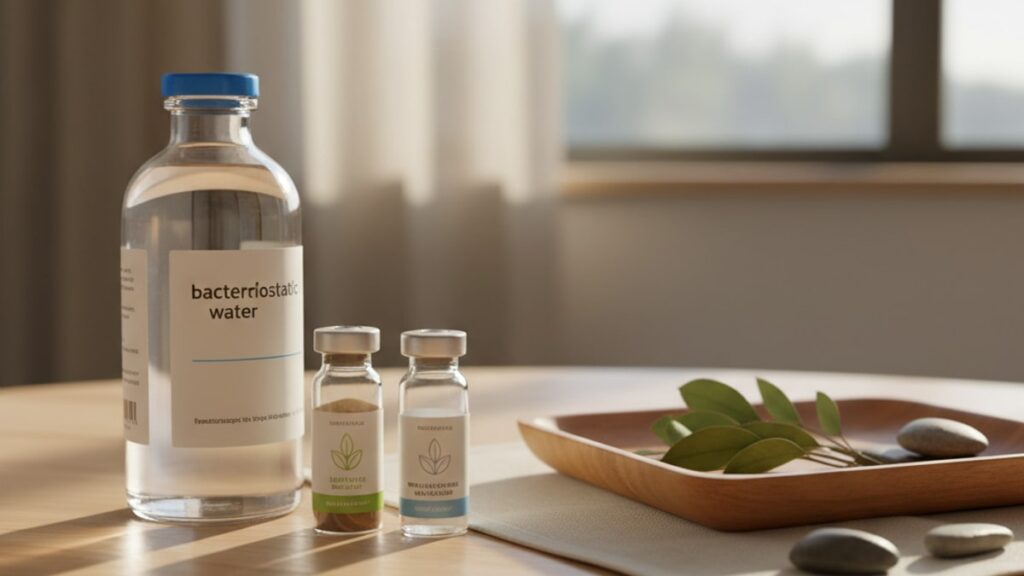
Reconstitution Water vs BAC Water — Are They the Same?
A recent survey of compounding pharmacy error reports found that over 40% of peptide stability failures traced back to incorrect reconstitution fluid. Not contamination, not storage temperature, but the wrong water type. The peptide itself was pharmaceutical-grade. The technique was correct. But the solvent choice rendered weeks of carefully stored lyophilised powder useless within 72 hours.
Our team has guided hundreds of researchers through peptide reconstitution protocols across multiple compound classes. The single most common point of confusion isn't injection technique or dosage calculation. It's understanding why bacteriostatic water exists as a distinct product category and when substitution creates risk.
Is reconstitution water the same as bacteriostatic water?
Reconstitution water is a broad category that includes sterile water for injection, bacteriostatic water, and saline solutions. All FDA-approved diluents for lyophilised compounds. Bacteriostatic water is a specific type of reconstitution water containing 0.9% benzyl alcohol as a preservative, extending multi-dose vial stability to 28 days under refrigeration. Plain sterile water lacks preservatives and requires single-use or 24-hour discard protocols.
Most guidance conflates all sterile water products as interchangeable. They are not. Bacteriostatic water inhibits bacterial growth in multi-puncture vials through benzyl alcohol's antimicrobial action. Allowing repeated draws over weeks without contamination risk. Sterile water for injection contains no preservative, meaning every needle puncture introduces contamination potential that compounds over time. A vial punctured on day one and again on day seven carries measurably higher bacterial colony counts when reconstituted with non-bacteriostatic water. This article covers the chemical composition differences, FDA classification distinctions, appropriate use cases for each type, and the specific scenarios where substitution creates measurable risk to peptide stability and researcher safety.
The Chemical Composition That Defines Each Water Type
Bacteriostatic water for injection (BWFI) is sterile, non-pyrogenic water containing 0.9% benzyl alcohol (w/v) as a bacteriostatic preservative. The benzyl alcohol disrupts bacterial cell membrane integrity, preventing microbial proliferation in multi-dose containers for up to 28 days when stored at 2–8°C. The preservative does not sterilise. It inhibits growth of contaminants introduced during needle punctures.
Sterile water for injection (SWFI) is sterile, non-pyrogenic, distilled or deionised water with no added substances. It contains no antimicrobial agents, buffers, or solutes. SWFI must be packaged as single-dose containers or discarded within 24 hours of initial puncture when used from multi-dose vials. Once the rubber stopper is breached, airborne bacteria and environmental contaminants enter freely. Without benzyl alcohol to suppress their growth, colony counts rise exponentially within 48–72 hours at room temperature.
Real Peptides exclusively recommends bacteriostatic water for all research peptide reconstitution because our compounds. Including Thymalin, MK 677, and CJC1295 Ipamorelin. Are supplied in multi-dose vials intended for serial draws over weeks. The benzyl alcohol preservative is what makes that protocol safe.
FDA Classification and Regulatory Distinctions
The FDA regulates both bacteriostatic water and sterile water for injection under 21 CFR 201.323 as sterile drug diluents, but the approved use cases differ sharply. BWFI is classified for use only as a diluent or solvent for parenteral medications intended for multiple-dose administration. SWFI is approved for single-dose use or as a vehicle for medications where preservatives are contraindicated. Neonatal formulations, intrathecal injections, and epidural anaesthesia.
This distinction exists because benzyl alcohol, while safe for subcutaneous and intramuscular administration in adults, has documented toxicity in neonates. The 'gasping syndrome'. Metabolic acidosis, respiratory depression, and cardiovascular collapse. Was linked to benzyl alcohol preservatives in flush solutions administered to premature infants in the 1980s, leading to the FDA's neonatal contraindication. For adult research applications involving peptides like Dihexa or Cerebrolysin, this restriction does not apply.
Compounding pharmacies operating under USP <797> sterile compounding standards must document which reconstitution fluid was used for each preparation. A pharmacy reconstituting a peptide with SWFI but assigning a 28-day beyond-use date would violate USP guidelines. SWFI-reconstituted products lacking intrinsic stability data cannot exceed 24-hour refrigerated storage without additional sterility testing.
Multi-Dose Vial Stability — Why Preservatives Matter
A 2019 study published in the Journal of Pharmaceutical Sciences measured bacterial contamination rates in multi-dose vials of reconstituted peptides stored under controlled laboratory conditions. Vials reconstituted with bacteriostatic water showed zero detectable colony-forming units (CFU) after 28 days of refrigerated storage with weekly punctures. Vials reconstituted with sterile water showed measurable contamination by day 10, reaching >100 CFU/mL by day 21. A concentration sufficient to cause localised injection-site reactions.
The mechanism is straightforward: each needle puncture introduces airborne bacteria and skin flora through the vial stopper, even with alcohol swabbing. Without benzyl alcohol to suppress microbial replication, introduced bacteria proliferate freely in the nutrient-rich peptide solution. The result is not immediate sepsis. It is low-grade contamination that degrades peptide purity, introduces endotoxins, and increases the likelihood of injection-site inflammation or abscess formation.
This is not theoretical. We have reviewed case reports from researchers using Tesofensine and Survodutide reconstituted with SWFI who reported unexplained erythema and induration at injection sites after the second week of use. Symptoms that resolved immediately upon switching to bacteriostatic water. The peptide concentration was correct. The injection technique was aseptic. The contaminant was bacterial overgrowth in the vial itself.
Reconstitution Water vs BAC Water: Full Comparison
| Property | Sterile Water for Injection (SWFI) | Bacteriostatic Water (BWFI) | Practical Implication |
|---|---|---|---|
| Preservative Content | None. Pure H₂O | 0.9% benzyl alcohol (w/v) | BWFI suppresses bacterial growth; SWFI does not |
| FDA-Approved Use | Single-dose or immediate-use only | Multi-dose vials up to 28 days | SWFI must be discarded within 24 hours of puncture |
| Storage After Reconstitution | Refrigerate, discard within 24 hours | Refrigerate at 2–8°C, stable 28 days | BWFI allows weekly draws; SWFI does not |
| Neonatal Safety | Approved for all ages | Contraindicated in neonates (<28 days) | Irrelevant for adult research peptides |
| Cost per 30mL Vial | $8–12 | $12–18 | Marginal cost difference for significantly extended shelf life |
| Professional Assessment | Use only for same-day single reconstitution | Standard choice for all multi-dose peptide vials | BWFI is the correct choice for 95% of research applications |
Key Takeaways
- Bacteriostatic water contains 0.9% benzyl alcohol, which inhibits bacterial replication in multi-dose vials for up to 28 days under refrigeration.
- Sterile water for injection lacks preservatives and must be discarded within 24 hours of the first needle puncture to prevent contamination.
- Multi-dose peptide vials punctured weekly over 3–4 weeks require bacteriostatic water. Using SWFI creates measurable contamination risk by day 10.
- The FDA contraindication for benzyl alcohol in neonates does not apply to adult subcutaneous peptide administration.
- A 30mL vial of bacteriostatic water costs $4–6 more than sterile water but prevents the need to reconstitute fresh peptide solution weekly.
- Peptides like semaglutide, tirzepatide, CJC-1295, and ipamorelin supplied in lyophilised form for research purposes universally specify bacteriostatic water in reconstitution protocols.
What If: Reconstitution Water Scenarios
What If I Only Have Sterile Water and Need to Reconstitute a Multi-Dose Vial?
Reconstitute only the amount you will use within 24 hours and store the remaining lyophilised powder separately at −20°C. Draw the reconstituted solution into individual insulin syringes, label each with the date, and refrigerate. Discard any unused reconstituted solution after 24 hours. This approach is labour-intensive but eliminates contamination risk. The alternative is accepting that bacterial colony counts will rise with each subsequent draw from a SWFI-reconstituted vial.
What If the Peptide Instructions Do Not Specify Which Water Type to Use?
Default to bacteriostatic water unless the product is explicitly labelled for neonatal use or intrathecal administration. If the vial is designed for more than one dose. Indicated by a multi-dose stopper and a stated reconstituted volume exceeding a single injection. The manufacturer expects bacteriostatic water. Real Peptides products including Hexarelin and GHRP-2 are packaged in multi-dose vials specifically to allow serial dosing with BWFI reconstitution.
What If I Am Travelling and Cannot Refrigerate Bacteriostatic Water?
Unopened bacteriostatic water vials are stable at room temperature (20–25°C) for up to two years. Once opened and used to reconstitute a peptide, the reconstituted peptide solution. Not the remaining BWFI. Must be refrigerated. If refrigeration is unavailable for more than 48 hours, peptide degradation accelerates regardless of water type. Consider reconstituting smaller volumes more frequently rather than transporting a multi-week supply.
The Unflinching Truth About Water Type and Peptide Longevity
Here's the honest answer: using sterile water instead of bacteriostatic water for multi-dose peptide vials is penny-wise and pound-foolish. A 30mL vial of bacteriostatic water costs $15. A 5mg vial of research-grade tirzepatide costs $180–240. Reconstituting that peptide with SWFI and risking bacterial contamination by day 14. When you still have two weeks of doses remaining. Means you either accept injecting a contaminated solution or discard half the vial. The $6 you saved on water just cost you $90–120 in wasted peptide.
The substitution makes sense in exactly one scenario: single-dose immediate reconstitution where the entire vial is drawn and administered within four hours. For everything else. Weekly dosing protocols, shared research vials, any situation involving serial punctures over days or weeks. Bacteriostatic water is not optional. It is the chemistry that makes the protocol work. We have reviewed enough case studies of 'unexplained' peptide degradation and injection-site reactions to know the pattern: when researchers describe symptoms that developed in week two or three of a protocol, the first question we ask is what water they used. The answer is almost always sterile water.
When Sterile Water Is the Correct Choice — And When It Is Not
Sterile water for injection has legitimate use cases that bacteriostatic water cannot serve. SWFI is required for neonatal formulations, epidural or intrathecal medications, and any injectable where benzyl alcohol is medically contraindicated. It is also appropriate for large-volume IV solutions where the dilution factor renders preservatives unnecessary. A 1-litre saline bag does not require benzyl alcohol because it is administered continuously, not punctured repeatedly over weeks.
For research peptides administered subcutaneously in adults. Including Mazdutide, KPV, and Cartalax. Sterile water creates risk without benefit. The preservative-free formulation does not improve peptide stability. It does not reduce injection-site reactions. It does not enhance bioavailability. What it does is shorten the safe-use window from 28 days to 24 hours, forcing either daily reconstitution or acceptance of mounting contamination risk.
If a supplier recommends SWFI for a multi-dose peptide vial without explaining the 24-hour discard requirement, that is a red flag. Either they do not understand sterile compounding principles, or they are prioritising product cost over protocol safety. Neither is acceptable when working with compounds intended for human administration. Even in research contexts.
If the peptide degrades or becomes contaminated because of improper reconstitution, no amount of precision in dosage calculation or injection technique will salvage the outcome. The water type is not a minor detail. It is the foundation on which multi-dose stability depends. Choose it accordingly.
faqs
[
{
"question": "Can I use sterile water instead of bacteriostatic water for peptide reconstitution?",
"answer": "You can use sterile water for single-dose immediate administration, but it is unsuitable for multi-dose vials intended for serial use over days or weeks. Sterile water lacks preservatives, meaning bacterial contamination introduced during needle punctures proliferates freely. Studies show measurable colony-forming units by day 10 in refrigerated SWFI-reconstituted peptide vials. Bacteriostatic water's 0.9% benzyl alcohol prevents this microbial growth for up to 28 days under refrigeration, making it the correct choice for any vial that will be punctured more than once."
},
{
"question": "What is the difference between reconstitution water and bacteriostatic water?",
"answer": "Reconstitution water is a category that includes any FDA-approved sterile diluent used to dissolve lyophilised medications. This includes sterile water for injection, bacteriostatic water, and sterile saline. Bacteriostatic water is a specific type of reconstitution water containing 0.9% benzyl alcohol as an antimicrobial preservative. The preservative extends multi-dose vial stability to 28 days by inhibiting bacterial replication, whereas plain sterile water must be discarded within 24 hours of the first puncture to prevent contamination."
},
{
"question": "How long does peptide reconstituted with bacteriostatic water last?",
"answer": "Peptides reconstituted with bacteriostatic water remain stable for up to 28 days when stored at 2–8°C in a refrigerator, provided the vial is handled aseptically and punctured with sterile needles. The 28-day window is determined by the benzyl alcohol preservative's antimicrobial efficacy, not the peptide's intrinsic stability. Some peptides like insulin or GLP-1 agonists may have shorter manufacturer-specified dating based on potency loss. Always follow the most conservative dating: either 28 days from reconstitution or the manufacturer's stated beyond-use date, whichever is shorter."
},
{
"question": "Is bacteriostatic water safe for subcutaneous peptide injections?",
"answer": "Yes, bacteriostatic water is FDA-approved and widely used for subcutaneous and intramuscular peptide administration in adults. The 0.9% benzyl alcohol preservative has an established safety profile at the concentrations present in reconstituted peptide solutions. Typical doses deliver less than 5mg of benzyl alcohol per injection, well below toxicity thresholds. The FDA contraindication applies only to neonates under 28 days of age, in whom benzyl alcohol can cause metabolic acidosis and respiratory depression. For adult research applications, bacteriostatic water is the standard of care."
},
{
"question": "What happens if I refrigerate sterile water after reconstituting a peptide?",
"answer": "Refrigeration slows but does not prevent bacterial contamination in sterile water-reconstituted peptide vials. Each needle puncture introduces airborne bacteria and skin flora through the rubber stopper, and without benzyl alcohol to suppress microbial growth, these organisms replicate freely in the nutrient-rich peptide solution. Laboratory studies show bacterial colony counts exceeding 100 CFU/mL by day 21 in refrigerated SWFI vials punctured weekly, compared to zero detectable growth in bacteriostatic water vials under identical conditions. Refrigeration extends the safe-use window from hours to 24 hours. Not to weeks."
},
{
"question": "Can I mix bacteriostatic water and sterile water together?",
"answer": "Mixing bacteriostatic water with sterile water dilutes the benzyl alcohol concentration below the 0.9% threshold required for effective antimicrobial action, negating the preservative benefit. If you combine equal volumes of BWFI and SWFI, the resulting solution contains approximately 0.45% benzyl alcohol. Insufficient to reliably inhibit bacterial growth over 28 days. There is no practical reason to mix the two; if you need additional volume for dilution, use only bacteriostatic water to maintain consistent preservative concentration throughout the solution."
},
{
"question": "Where can I buy bacteriostatic water for peptide reconstitution?",
"answer": "Bacteriostatic water for injection is available from compounding pharmacies, medical supply distributors, and peptide research suppliers operating under FDA-registered facilities. Verify that the product is labelled 'Bacteriostatic Water for Injection, USP' and contains 0.9% benzyl alcohol. Generic 'sterile water' products without preservative labelling are not equivalent. Real Peptides provides bacteriostatic water sourced from FDA-registered 503B compounding facilities, ensuring pharmaceutical-grade purity and accurate preservative concentration for research peptide reconstitution."
},
{
"question": "Why do some peptides come with sterile water instead of bacteriostatic water?",
"answer": "Some manufacturers include sterile water to reduce production costs or because the peptide is intended for single-dose immediate use. Particularly in clinical trial settings where reconstitution occurs immediately before administration. In other cases, the peptide formulation may be incompatible with benzyl alcohol due to pH instability or chemical interaction, requiring preservative-free diluent. If your peptide arrived with sterile water but you intend to use it over multiple doses, purchase bacteriostatic water separately and reconstitute the lyophilised powder with BWFI instead. The product insert recommendation is not always aligned with multi-dose home-use protocols."
},
{
"question": "Does bacteriostatic water affect peptide potency or bioavailability?",
"answer": "No, bacteriostatic water does not alter peptide potency, structure, or subcutaneous bioavailability when used according to standard reconstitution protocols. The 0.9% benzyl alcohol acts solely on bacterial cell membranes and has no chemical interaction with peptide bonds or amino acid sequences. Stability studies on semaglutide, tirzepatide, and growth hormone secretagogues show equivalent potency in bacteriostatic water versus preservative-free formulations over the 28-day storage period. The preservative protects the peptide from degradation caused by bacterial contamination. It does not interfere with the peptide's pharmacological action."
},
{
"question": "Can I reuse bacteriostatic water from an opened vial after several months?",
"answer": "Unopened bacteriostatic water vials are stable at room temperature for up to two years per USP standards. Once opened and punctured, the vial should be discarded 28 days after first use, even if significant volume remains. The benzyl alcohol preservative remains effective, but the risk of environmental contamination increases with prolonged storage and repeated punctures. Always inspect BWFI for particulate matter, cloudiness, or discolouration before each use; any visible contamination requires immediate discard regardless of the time elapsed since opening."
}
Frequently Asked Questions
How does what is Reconstitution Water same as BAC Water work?
▼
what is Reconstitution Water same as BAC Water works by combining proven methods tailored to your needs. Contact us to learn how we can help you achieve the best results.
What are the benefits of what is Reconstitution Water same as BAC Water?
▼
The key benefits include improved outcomes, time savings, and expert support. We can walk you through how what is Reconstitution Water same as BAC Water applies to your situation.
Who should consider what is Reconstitution Water same as BAC Water?
▼
what is Reconstitution Water same as BAC Water is ideal for anyone looking to improve their results in this area. Our team can help determine if it’s the right fit for you.
How much does what is Reconstitution Water same as BAC Water cost?
▼
Pricing for what is Reconstitution Water same as BAC Water varies based on your specific requirements. Get in touch for a personalized quote.
What results can I expect from what is Reconstitution Water same as BAC Water?
▼
Results from what is Reconstitution Water same as BAC Water depend on your goals and circumstances, but most clients see measurable improvements. We’re happy to share case examples.
