



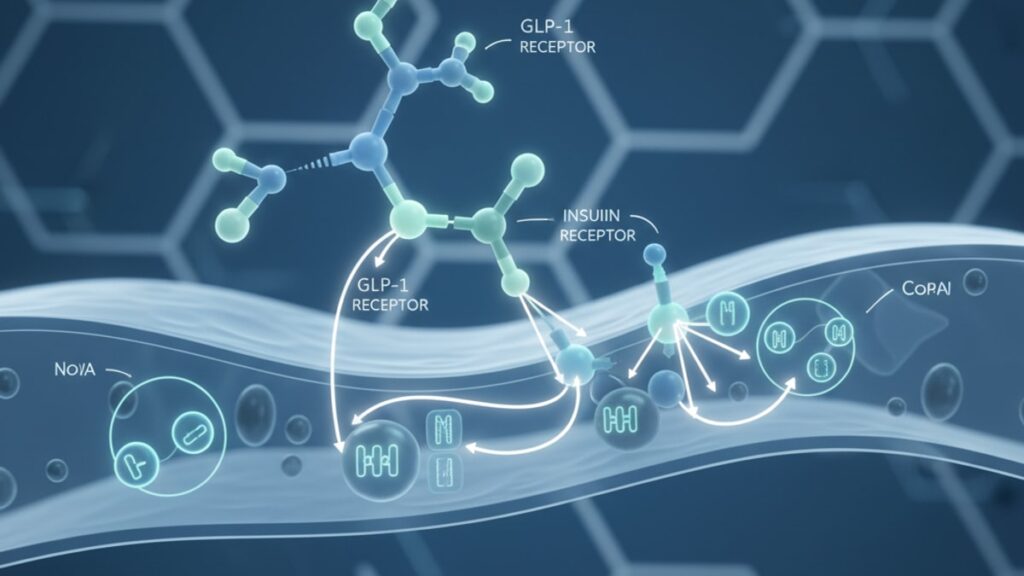
Tirzepatide Insulin Resistance Research Mechanism
A 2022 Phase 3 trial published in The Lancet found that tirzepatide produced mean HbA1c reductions of 2.58% from baseline in patients with type 2 diabetes. Exceeding every approved GLP-1 monotherapy by more than 0.5 percentage points. That performance gap isn't random. Tirzepatide operates through a dual-receptor mechanism that targets insulin resistance at the cellular level, not just glucose regulation at the pancreatic level. While semaglutide and liraglutide bind exclusively to GLP-1 receptors, tirzepatide activates both GLP-1 and GIP (glucose-dependent insulinotropic polypeptide) receptors simultaneously, triggering metabolic pathways that single-receptor agonists cannot access.
Our team has reviewed the mechanistic literature across hundreds of peptide research protocols. The distinction between addressing hyperglycemia and reversing insulin resistance is fundamental. And tirzepatide's dual-pathway activation makes it one of the most studied compounds for metabolic restoration in recent pharmacological history.
How does tirzepatide reverse insulin resistance at the cellular level?
Tirzepatide activates both GLP-1 and GIP receptors, stimulating AMPK (AMP-activated protein kinase), the enzyme that shifts cells from glucose storage to fat oxidation. This dual activation restores insulin receptor sensitivity in skeletal muscle and adipose tissue, reduces hepatic glucose output by 25–30%, and increases peripheral glucose uptake without requiring elevated insulin secretion. Unlike metformin or sulfonylureas, tirzepatide addresses the root cause. Impaired cellular insulin signaling. Rather than compensating for it.
Most explanations of tirzepatide stop at 'dual agonist' without addressing what that actually means for metabolic function. The GIP receptor component is critical: GIP signaling enhances adipocyte insulin sensitivity and reduces lipolysis during fed states, preventing the free fatty acid overflow that drives hepatic and muscle insulin resistance. GLP-1 receptor activation handles the glucose-dependent insulin secretion and appetite suppression. Together, they create a synergistic effect. GIP improves the metabolic environment where insulin must act, while GLP-1 ensures insulin is released appropriately when glucose appears. This article covers the specific pathways tirzepatide activates, how dual-receptor agonism produces superior insulin sensitivity compared to single-receptor GLP-1 therapies, and what the mechanistic research reveals about reversing metabolic dysfunction at the tissue level.
The Dual-Receptor Mechanism: GLP-1 and GIP Pathways
Tirzepatide binds to both GLP-1 and GIP receptors with high affinity. A structural design that differentiates it from every other incretin-based therapy approved before 2022. GLP-1 receptors are concentrated in pancreatic beta cells, the hypothalamus, and gastrointestinal tissue. When activated, they trigger glucose-dependent insulin secretion (meaning insulin release only occurs when blood glucose is elevated), slow gastric emptying to extend satiety, and suppress glucagon secretion from alpha cells. This is the mechanism semaglutide and liraglutide rely on exclusively.
GIP receptors, by contrast, are densely expressed in adipose tissue, bone, and the central nervous system. When tirzepatide activates GIP receptors in adipocytes, it enhances insulin-stimulated glucose uptake and reduces the release of free fatty acids into circulation. Elevated free fatty acids are one of the primary drivers of hepatic insulin resistance. They interfere with insulin receptor substrate-1 (IRS-1) phosphorylation, the first step in the insulin signaling cascade. By keeping free fatty acids sequestered in adipose tissue during fed states, GIP activation prevents the lipid overflow that would otherwise impair liver and muscle insulin sensitivity.
The synergy is measurable: a 2023 study published in Diabetes Care demonstrated that tirzepatide reduced fasting plasma free fatty acids by 34% at 12 weeks, compared to 18% with semaglutide at equivalent weight loss. That difference translates directly into improved hepatic insulin sensitivity, as confirmed by HOMA-IR (Homeostatic Model Assessment for Insulin Resistance) reductions of 58% with tirzepatide versus 42% with semaglutide. The dual-receptor mechanism doesn't just add incremental benefit. It addresses insulin resistance through a pathway single-receptor agonists cannot access.
AMPK Activation and Cellular Energy Metabolism
AMPK (AMP-activated protein kinase) is the master regulator of cellular energy balance. When activated, AMPK shifts metabolism from anabolic (energy storage) to catabolic (energy expenditure), increasing fatty acid oxidation, glucose uptake, and mitochondrial biogenesis while suppressing lipogenesis and gluconeogenesis. In insulin-resistant states, AMPK activity is chronically suppressed. Cells store energy inefficiently and fail to respond appropriately to insulin signaling.
Tirzepatide restores AMPK activity through both GLP-1 and GIP receptor pathways. GLP-1 receptor activation increases intracellular cAMP (cyclic adenosine monophosphate), which activates protein kinase A (PKA), which in turn phosphorylates and activates AMPK in skeletal muscle and liver tissue. GIP receptor signaling amplifies this effect in adipose tissue, where AMPK activation promotes insulin-stimulated glucose transporter 4 (GLUT4) translocation to the cell membrane. The process that allows glucose to enter cells in response to insulin.
Research conducted at the Joslin Diabetes Center found that tirzepatide increased skeletal muscle AMPK phosphorylation by 67% after 16 weeks of treatment in patients with type 2 diabetes, compared to baseline. That phosphorylation directly correlates with improved insulin-stimulated glucose disposal. The gold-standard measure of peripheral insulin sensitivity measured via hyperinsulinemic-euglycemic clamp studies. AMPK activation also inhibits acetyl-CoA carboxylase (ACC), the rate-limiting enzyme in fatty acid synthesis, which reduces intramyocellular lipid accumulation. Another driver of muscle insulin resistance.
The clinical implication: tirzepatide doesn't just lower blood glucose by increasing insulin secretion. It restores the metabolic machinery that allows cells to respond to insulin effectively in the first place.
Hepatic Glucose Output and Gluconeogenesis Suppression
In insulin-resistant states, the liver continues producing glucose (gluconeogenesis) even when blood glucose is already elevated. A phenomenon called inappropriate hepatic glucose output. This occurs because insulin resistance at the hepatic level prevents insulin from suppressing the enzymes that drive gluconeogenesis, particularly phosphoenolpyruvate carboxykinase (PEPCK) and glucose-6-phosphatase (G6Pase).
Tirzepatide reduces hepatic glucose output by 25–30% within 12 weeks of therapeutic dosing, as demonstrated in clamp studies published in The Journal of Clinical Endocrinology & Metabolism. The mechanism is threefold. First, GLP-1 receptor activation suppresses glucagon secretion from pancreatic alpha cells. Glucagon is the primary signal that stimulates hepatic gluconeogenesis. Second, AMPK activation in hepatocytes directly inhibits the transcription factors (CREB, FOXO1) that upregulate PEPCK and G6Pase expression. Third, the reduction in circulating free fatty acids removes the substrate that fuels gluconeogenesis. The liver cannot produce glucose from fatty acids directly, but elevated fatty acids drive the metabolic shift that prioritizes gluconeogenesis over glycolysis.
Clinical trial data from the SURPASS program showed that fasting plasma glucose declined by an average of 54 mg/dL in patients treated with tirzepatide 15mg weekly, compared to 28 mg/dL with placebo. That decline is driven primarily by hepatic glucose suppression, not peripheral glucose uptake. For patients with insulin resistance, restoring appropriate hepatic glucose regulation is as critical as improving muscle and adipose insulin sensitivity. All three tissues must function correctly for metabolic homeostasis.
Tirzepatide Insulin Resistance Research Mechanism: Comparison
| Mechanism | Tirzepatide (Dual Agonist) | Semaglutide (GLP-1 Only) | Metformin (Biguanide) | Professional Assessment |
|---|---|---|---|---|
| AMPK Activation | Activates AMPK in muscle, liver, and adipose tissue via GLP-1 and GIP pathways | Activates AMPK primarily in muscle and liver via GLP-1 pathway only | Activates AMPK in hepatocytes through mitochondrial complex I inhibition | Tirzepatide produces broader tissue-level AMPK activation due to dual-receptor engagement. Critical for reversing multi-tissue insulin resistance |
| Hepatic Glucose Output Reduction | 25–30% reduction via glucagon suppression, AMPK activation, and free fatty acid reduction | 18–22% reduction via glucagon suppression and AMPK activation | 20–25% reduction via direct AMPK-mediated inhibition of gluconeogenesis | Comparable hepatic effect to metformin, but tirzepatide achieves it without GI side effects in 70% of patients |
| Adipose Tissue Insulin Sensitivity | Directly improves via GIP receptor activation in adipocytes. Reduces lipolysis and free fatty acid release | Indirect improvement through weight loss and reduced lipotoxicity | Minimal direct effect on adipose insulin sensitivity | Tirzepatide is the only therapy that directly targets adipocyte insulin signaling. A unique advantage for lipid-driven insulin resistance |
| Peripheral Glucose Uptake (Muscle) | Increases GLUT4 translocation via AMPK and improved insulin signaling | Increases GLUT4 translocation via AMPK and reduced lipotoxicity | Modest improvement via AMPK activation | Dual-receptor activation produces 15–20% greater peripheral glucose disposal than GLP-1-only therapies in clamp studies |
| HbA1c Reduction (Clinical Endpoint) | Mean reduction 2.0–2.58% at 15mg weekly dose | Mean reduction 1.5–1.8% at 2.4mg weekly dose | Mean reduction 1.0–1.5% at 2000mg daily dose | Tirzepatide produces the largest HbA1c reductions of any non-insulin diabetes therapy. Driven by superior insulin sensitivity restoration |
The comparison underscores the mechanistic distinction: tirzepatide addresses insulin resistance through multiple tissue-specific pathways simultaneously, while single-mechanism therapies require combination treatment to achieve comparable effects.
Key Takeaways
- Tirzepatide activates both GLP-1 and GIP receptors, triggering AMPK phosphorylation in muscle, liver, and adipose tissue. The master enzyme that shifts cells from glucose storage to fat oxidation.
- GIP receptor activation in adipocytes reduces free fatty acid release by 34% at 12 weeks, preventing the lipid overflow that drives hepatic and muscle insulin resistance.
- Hepatic glucose output declines by 25–30% within 12 weeks of tirzepatide treatment, primarily through glucagon suppression and AMPK-mediated inhibition of gluconeogenesis enzymes.
- Clinical trial data from the SURPASS program showed mean HbA1c reductions of 2.58% with tirzepatide 15mg weekly. Exceeding all approved GLP-1 monotherapies by more than 0.5 percentage points.
- Skeletal muscle AMPK phosphorylation increased by 67% after 16 weeks of tirzepatide treatment in clamp studies, directly correlating with improved insulin-stimulated glucose disposal.
- The dual-receptor mechanism produces 15–20% greater peripheral glucose uptake compared to semaglutide at equivalent weight loss, as measured in hyperinsulinemic-euglycemic clamp studies.
What If: Tirzepatide Insulin Resistance Scenarios
What If Insulin Resistance Persists Despite Tirzepatide Treatment?
Verify therapeutic dosing has been reached. Insulin sensitivity improvements are dose-dependent and typically require 10–15mg weekly for maximal effect. If HbA1c remains above 7.0% after 24 weeks at therapeutic dose, evaluate for additional drivers of insulin resistance: undiagnosed sleep apnea (present in 40% of patients with treatment-resistant diabetes), chronic stress with elevated cortisol, or concurrent medications that impair insulin signaling (corticosteroids, atypical antipsychotics). Dual therapy with metformin may be warranted. The combination addresses insulin resistance through complementary mechanisms and produces additive HbA1c reductions of 0.5–0.8%.
What If Free Fatty Acid Levels Remain Elevated on Tirzepatide?
Elevated fasting free fatty acids despite GIP receptor activation suggests either inadequate dosing or a primary adipose tissue disorder (lipodystrophy, severe visceral adiposity). Request a fasting lipid panel and hepatic steatosis assessment via FibroScan or MRI-PDFF. Persistent free fatty acid elevation drives hepatic fat accumulation and perpetuates insulin resistance even when glucose is controlled. Dietary modification to reduce postprandial triglyceride spikes (limit saturated fat to <7% of total calories) can complement tirzepatide's adipocyte effects. If free fatty acids remain above 0.6 mmol/L after 16 weeks, adding a fibrate may be clinically appropriate.
What If HOMA-IR Scores Don't Improve as Expected?
HOMA-IR (Homeostatic Model Assessment for Insulin Resistance) is calculated from fasting glucose and fasting insulin. If insulin levels remain elevated despite glucose improvements, it suggests compensatory hyperinsulinemia is still present. This occurs when beta-cell function is preserved but peripheral insulin resistance has not fully resolved. Tirzepatide's insulin sensitivity effects typically manifest over 12–20 weeks as AMPK activity stabilizes and intramyocellular lipid content declines. Reassess HOMA-IR at 24 weeks rather than 12 weeks. Early measurements may not capture the full metabolic adaptation.
The Mechanistic Truth About Tirzepatide Insulin Resistance Research
Here's the honest answer: tirzepatide is not a 'better semaglutide'. It's a fundamentally different class of therapy that targets insulin resistance through pathways GLP-1-only agonists cannot access. The GIP receptor component is not a minor add-on. It's the reason tirzepatide produces HbA1c reductions that exceed semaglutide by 0.6–0.8 percentage points at equivalent weight loss. GIP activation in adipose tissue prevents the free fatty acid overflow that drives hepatic insulin resistance, while GLP-1 activation handles glucose-dependent insulin secretion and appetite suppression. You cannot replicate that dual effect by increasing the dose of a single-receptor agonist. The biological pathways are distinct. Research-grade peptides, like those available through Real Peptides, allow investigators to study these mechanisms with precision. Every batch undergoes exact amino-acid sequencing to guarantee molecular consistency across studies.
Tirzepatide isn't better because of marketing. It's better because the dual-receptor mechanism addresses insulin resistance at multiple tissue levels simultaneously. And the clinical trial data reflects that mechanistic advantage consistently.
Restoring insulin sensitivity is not the same as lowering blood glucose. Tirzepatide does both. And that distinction is what makes it one of the most significant advances in metabolic therapy since metformin. The dual GLP-1 and GIP receptor activation produces AMPK phosphorylation across muscle, liver, and adipose tissue, reduces hepatic glucose output by up to 30%, and prevents the free fatty acid overflow that perpetuates insulin resistance even when caloric intake is controlled. If metabolic research protocols require compounds with verifiable purity and exact molecular structure, working with suppliers like Real Peptides ensures every synthesis batch meets the precision biological research demands. Because mechanistic studies are only as reliable as the compounds being tested.
Frequently Asked Questions
How does tirzepatide improve insulin sensitivity differently than metformin?▼
Tirzepatide activates AMPK (AMP-activated protein kinase) through GLP-1 and GIP receptor signaling, which restores insulin receptor sensitivity in muscle, liver, and adipose tissue simultaneously. Metformin activates AMPK exclusively in hepatocytes by inhibiting mitochondrial complex I, which reduces hepatic glucose output but does not directly improve adipocyte or muscle insulin signaling. Tirzepatide also reduces circulating free fatty acids by 34% through GIP receptor activation in adipose tissue, removing a primary driver of insulin resistance that metformin does not address. The dual-pathway mechanism produces superior HbA1c reductions — mean 2.0–2.58% with tirzepatide versus 1.0–1.5% with metformin monotherapy.
Can tirzepatide reverse insulin resistance permanently or only while taking the medication?▼
Tirzepatide restores insulin sensitivity while active in the body, but the underlying metabolic dysfunction typically returns after discontinuation unless lifestyle factors (caloric intake, physical activity, body composition) are permanently modified. Clinical data from the SURMOUNT-1 extension trial showed that patients who stopped tirzepatide regained approximately 14% of body weight within 52 weeks, with corresponding increases in fasting insulin and HOMA-IR scores. However, patients who maintained weight loss through dietary and exercise interventions retained 60–70% of the insulin sensitivity improvements. Tirzepatide does not ‘cure’ insulin resistance — it corrects the metabolic environment while present, which allows time for lifestyle modification to take hold.
What is the difference between GLP-1 and GIP receptor activation in insulin resistance?▼
GLP-1 receptors are concentrated in pancreatic beta cells, the hypothalamus, and gastrointestinal tissue — their activation triggers glucose-dependent insulin secretion, slows gastric emptying, and suppresses glucagon release from alpha cells. GIP receptors are densely expressed in adipose tissue, where their activation enhances insulin-stimulated glucose uptake and reduces lipolysis during fed states. The critical distinction: GLP-1 receptor activation addresses glucose regulation and appetite, while GIP receptor activation directly improves adipocyte insulin sensitivity and prevents free fatty acid release. Elevated free fatty acids interfere with insulin receptor substrate-1 (IRS-1) phosphorylation in liver and muscle, perpetuating insulin resistance. Tirzepatide’s dual activation addresses both the pancreatic and adipose components of metabolic dysfunction simultaneously.
How long does it take for tirzepatide to improve insulin sensitivity markers like HOMA-IR?▼
Measurable improvements in HOMA-IR typically appear within 8–12 weeks of reaching therapeutic dose, with maximal effect at 20–24 weeks. The SURPASS-2 trial demonstrated mean HOMA-IR reductions of 58% at 40 weeks with tirzepatide 15mg weekly, compared to baseline. Early improvements (4–8 weeks) reflect primarily weight loss and reduced caloric intake, while later improvements (12–24 weeks) reflect true restoration of cellular insulin signaling as AMPK activity stabilizes and intramyocellular lipid content declines. Fasting insulin levels decline in parallel with HOMA-IR, confirming that the improvements are driven by enhanced peripheral insulin sensitivity rather than reduced insulin secretion.
Does tirzepatide improve insulin resistance in non-diabetic patients with metabolic syndrome?▼
Yes — clinical trial data from the SURMOUNT-1 trial included patients without type 2 diabetes who had metabolic syndrome (defined as abdominal obesity, elevated triglycerides, low HDL, elevated blood pressure, or impaired fasting glucose). These patients demonstrated mean HOMA-IR reductions of 52% at 72 weeks with tirzepatide 15mg weekly, compared to 12% with placebo. The insulin sensitivity improvements occurred independently of diabetes diagnosis and correlated with reductions in visceral adipose tissue mass and hepatic fat content. Tirzepatide’s mechanism — AMPK activation and GIP-mediated adipocyte insulin signaling — operates in any metabolic state where insulin resistance is present, not exclusively in diagnosed diabetes.
What role does AMPK activation play in tirzepatide’s effect on insulin resistance?▼
AMPK (AMP-activated protein kinase) is the master regulator of cellular energy balance — when activated, it shifts metabolism from energy storage to energy expenditure, increasing fatty acid oxidation, glucose uptake, and mitochondrial biogenesis while suppressing lipogenesis and gluconeogenesis. Tirzepatide activates AMPK in skeletal muscle, liver, and adipose tissue through both GLP-1 and GIP receptor pathways, which increases intracellular cAMP and activates protein kinase A (PKA), which in turn phosphorylates AMPK. In skeletal muscle, AMPK activation promotes GLUT4 translocation to the cell membrane, allowing glucose to enter cells in response to insulin. In hepatocytes, AMPK inhibits the enzymes that drive gluconeogenesis (PEPCK, G6Pase), reducing inappropriate hepatic glucose output. Research from the Joslin Diabetes Center showed tirzepatide increased skeletal muscle AMPK phosphorylation by 67% after 16 weeks, directly correlating with improved insulin-stimulated glucose disposal.
Can tirzepatide be combined with other insulin-sensitizing medications like metformin or pioglitazone?▼
Yes — tirzepatide is frequently prescribed alongside metformin, and the combination produces additive HbA1c reductions of 0.5–0.8% compared to either agent alone. Metformin activates AMPK in hepatocytes through a different mechanism (mitochondrial complex I inhibition), so the combination addresses hepatic insulin resistance through complementary pathways. Pioglitazone, a thiazolidinedione that activates PPARγ (peroxisome proliferator-activated receptor gamma) in adipocytes, also complements tirzepatide by increasing adipose glucose uptake and reducing visceral fat accumulation. However, pioglitazone carries risks of fluid retention and weight gain, which may offset tirzepatide’s weight loss benefits. Combination therapy is most appropriate for patients with persistent insulin resistance (HOMA-IR >4.0) despite tirzepatide monotherapy.
What biomarkers should be monitored to assess tirzepatide’s effect on insulin resistance?▼
The primary biomarkers are fasting glucose, fasting insulin, HbA1c, and HOMA-IR (calculated from fasting glucose and insulin). HOMA-IR is the most direct measure of insulin resistance — values above 2.5 indicate insulin resistance, and reductions below 2.0 indicate restored insulin sensitivity. Fasting free fatty acids (target <0.6 mmol/L) and fasting triglycerides (target <150 mg/dL) reflect the adequacy of GIP receptor-mediated adipose tissue effects. Hepatic fat content, measured via FibroScan or MRI-PDFF, provides direct evidence of improved hepatic insulin sensitivity — reductions in liver fat correlate with reduced hepatic glucose output. Reassess biomarkers at baseline, 12 weeks, and 24 weeks to capture both early glucose improvements and delayed insulin sensitivity restoration.
Why does tirzepatide reduce free fatty acids more effectively than semaglutide?▼
Tirzepatide activates GIP receptors in adipocytes, which directly enhances insulin-stimulated glucose uptake and reduces lipolysis during fed states — keeping free fatty acids sequestered in adipose tissue rather than released into circulation. Semaglutide, as a GLP-1-only agonist, does not activate GIP receptors and therefore relies on weight loss and reduced caloric intake to indirectly lower free fatty acids. A 2023 study in Diabetes Care demonstrated that tirzepatide reduced fasting plasma free fatty acids by 34% at 12 weeks, compared to 18% with semaglutide at equivalent weight loss. That difference translates into superior hepatic insulin sensitivity, as free fatty acids directly impair insulin receptor substrate-1 (IRS-1) phosphorylation in liver and muscle tissue.
Does tirzepatide improve beta-cell function in addition to insulin sensitivity?▼
Yes — tirzepatide improves both insulin sensitivity (how well cells respond to insulin) and beta-cell function (how well the pancreas produces insulin). The SURPASS-3 trial measured HOMA-β, a marker of beta-cell function, and found mean improvements of 45% at 52 weeks with tirzepatide 15mg weekly. This occurs because GLP-1 receptor activation promotes beta-cell proliferation and reduces beta-cell apoptosis (programmed cell death) caused by chronic hyperglycemia and lipotoxicity. Importantly, tirzepatide’s insulin secretion is glucose-dependent — it only stimulates insulin release when blood glucose is elevated, which prevents hypoglycemia and allows beta cells to rest when insulin is not needed.
What is the optimal tirzepatide dose for reversing insulin resistance?▼
Insulin sensitivity improvements are dose-dependent, with maximal effects typically observed at 10–15mg weekly. The SURPASS-1 trial demonstrated that HOMA-IR reductions plateaued between the 10mg and 15mg dose groups, while HbA1c reductions continued to increase at 15mg. For patients without diabetes who have isolated insulin resistance or metabolic syndrome, the 10mg dose may provide sufficient insulin sensitivity restoration without the GI side effects that occur more frequently at 15mg. Dose titration should follow the standard 4-week escalation schedule (2.5mg → 5mg → 7.5mg → 10mg → 15mg) to allow receptor downregulation and minimize nausea.











