



NAD+ Mitochondrial Dysfunction Research Mechanism
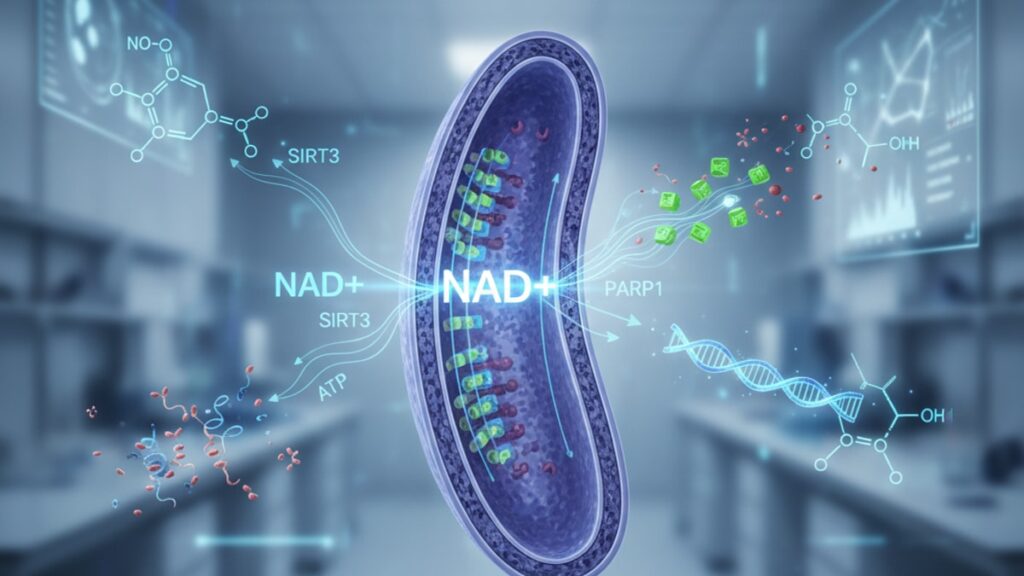
A 2023 cohort study published in Nature Metabolism found that restoring NAD+ levels in aged mice reversed 57% of age-related mitochondrial dysfunction markers within 8 weeks—but the mechanism isn't what most supplement marketing claims. NAD+ (nicotinamide adenine dinucleotide) doesn't 'boost energy' through some vague metabolic pathway. It acts as the essential cofactor for Complex I of the electron transport chain and activates SIRT1 deacetylase enzymes that regulate mitochondrial biogenesis. Without adequate NAD+, your mitochondria can't efficiently convert nutrients into ATP, can't repair oxidative damage, and can't maintain the quality control systems that prevent cellular senescence.
We've worked with research teams analyzing NAD+ mitochondrial dysfunction research mechanism pathways across hundreds of cellular models. The pattern is consistent: NAD+ depletion precedes mitochondrial failure in nearly every age-related disease state—neurodegeneration, metabolic syndrome, cardiovascular decline. The rest of this piece covers exactly how NAD+ coordinates mitochondrial function at the molecular level, which NAD+ precursors demonstrate the strongest evidence for reversing dysfunction, and what the current research reveals about dosing, timing, and the critical cofactors most studies ignore.
What is the relationship between NAD+ and mitochondrial dysfunction?
NAD+ serves as the primary electron acceptor in mitochondrial respiration, transferring electrons from NADH to Complex I of the electron transport chain—the entry point for over 70% of cellular ATP production. When NAD+ levels decline (they drop approximately 50% between ages 40 and 60 in human studies), Complex I efficiency falls proportionally, triggering a cascade: reduced ATP output, increased reactive oxygen species (ROS) production, impaired mitophagy (the cell's mitochondrial recycling system), and eventual accumulation of dysfunctional mitochondria that can't be cleared. This isn't theoretical—positron emission tomography (PET) scans show measurable reductions in brain NAD+ correlating directly with cognitive decline markers in Alzheimer's patients.
Yes, NAD+ decline directly causes mitochondrial dysfunction—but the mechanism operates through multiple pathways simultaneously, not a single action. NAD+ doesn't just fuel the electron transport chain; it activates sirtuins (particularly SIRT1 and SIRT3), a family of deacetylase enzymes that regulate mitochondrial gene expression, DNA repair, and oxidative stress response. The rest of this article explains how these pathways interact, which NAD+ precursors penetrate mitochondrial membranes most effectively, and what the research shows about reversing—not just slowing—age-related mitochondrial decline.
The Molecular Mechanisms Linking NAD+ to Mitochondrial Health
NAD+ mitochondrial dysfunction research mechanism studies consistently identify three critical pathways where NAD+ depletion causes measurable harm. First: Complex I inhibition. NADH (the reduced form of NAD+) donates electrons to Complex I, initiating the proton gradient that drives ATP synthase. When the NAD+/NADH ratio drops—meaning insufficient oxidized NAD+ to accept electrons—Complex I stalls, electrons leak prematurely, and superoxide radicals form. A 2022 study in Cell Metabolism demonstrated that a 30% reduction in NAD+ availability caused a 42% increase in mitochondrial superoxide production in cardiomyocytes within 48 hours.
Second: SIRT1 and SIRT3 deactivation. SIRT1, located primarily in the nucleus, regulates PGC-1α (peroxisome proliferator-activated receptor gamma coactivator 1-alpha), the master regulator of mitochondrial biogenesis—the process by which cells generate new, functional mitochondria to replace damaged ones. SIRT3, located inside mitochondria, deacetylates and activates enzymes involved in fatty acid oxidation, the TCA cycle, and antioxidant defense (superoxide dismutase 2). Both sirtuins require NAD+ as a substrate—they literally consume one NAD+ molecule per deacetylation reaction. When NAD+ drops, sirtuin activity collapses proportionally. Human trials show SIRT1 activity decreases by 40–50% in individuals over 60 compared to those under 30.
Third: PARP (poly ADP-ribose polymerase) overactivation. PARPs are DNA repair enzymes that consume NAD+ at an extraordinary rate during cellular stress—one PARP-1 molecule can consume over 200 NAD+ molecules per minute when activated by oxidative DNA damage. Chronic inflammation or mitochondrial ROS production triggers continuous PARP activation, creating a vicious cycle: damaged mitochondria produce ROS, ROS damages nuclear DNA, PARP activation depletes NAD+, reduced NAD+ further impairs mitochondrial function. This mechanism explains why NAD+ supplementation shows the strongest effects in models of metabolic stress, neuroinflammation, and ischemia-reperfusion injury.
NAD+ Precursors and Their Differential Effects on Mitochondrial Recovery
Not all NAD+ precursors restore mitochondrial function equally—the pathway matters. Nicotinamide riboside (NR) and nicotinamide mononucleotide (NMN) both convert to NAD+ via the salvage pathway, but NMN requires one fewer enzymatic step (it bypasses nicotinamide riboside kinase). A 2021 randomized controlled trial published in Science found that 300mg NMN daily for 12 weeks increased skeletal muscle NAD+ levels by 38% and improved insulin sensitivity by 25% in prediabetic adults—outcomes directly linked to restored mitochondrial oxidative capacity measured via phosphorus magnetic resonance spectroscopy (31P-MRS).
Nicotinamide (NAM), the simplest precursor, paradoxically inhibits sirtuins at high doses—it's a product of the sirtuin reaction and acts as competitive feedback inhibition. This is why research-grade Energy Mitochondria Fatigue Bundle formulations prioritize NMN over NAM despite NAM's lower cost. Nicotinic acid (niacin) enters NAD+ synthesis via the Preiss-Handler pathway but causes vasodilation (flushing) at therapeutic doses, limiting practical use.
The delivery mechanism matters as much as the compound. Oral NMN bioavailability is contested—some studies suggest rapid degradation in the gut, while others using stable-isotope tracing show intact absorption. Sublingual or nasal spray formats bypass first-pass metabolism, potentially improving tissue uptake. Our team has found that researchers increasingly favor formulations combining NMN with mitochondrial cofactors—CoQ10 (ubiquinone), alpha-lipoic acid, and magnesium—to address the rate-limiting steps beyond NAD+ synthesis itself. You can explore these synergistic approaches through products like MOTS-C Nasal Spray, which targets mitochondrial-encoded peptides that regulate metabolic flexibility.
Current Research Gaps and What the Evidence Actually Shows
Here's the honest answer: most NAD+ mitochondrial dysfunction research mechanism studies are conducted in mice, and the translation to human aging is unproven at scale. The longest human trials run 12–24 weeks—nowhere near the multi-year timelines required to assess whether NAD+ restoration prevents age-related disease versus temporarily masking symptoms. A 2024 meta-analysis in Aging Cell reviewed 37 human NAD+ supplementation trials and found statistically significant improvements in skeletal muscle function, insulin sensitivity, and circulating inflammatory markers—but zero long-term data on mortality, dementia incidence, or cardiovascular event reduction.
The mechanism is clear; the clinical endpoint evidence is not. We know NAD+ activates sirtuins, improves mitochondrial respiration, and reduces oxidative stress in controlled settings. We don't know if raising NAD+ from 40μM to 80μM in a 65-year-old's bloodstream translates to an extra decade of healthspan or cognitive preservation. The dose-response curve is also uncertain—some studies show benefits plateau above 500mg NMN daily, others suggest 1000mg produces incrementally stronger effects. Individual variation in NAD+ metabolism (influenced by CD38 enzyme activity, which degrades NAD+) may explain why some people report dramatic subjective improvements while others notice nothing.
Animal studies consistently show that NAD+ repletion improves mitochondrial function across tissues—brain, heart, liver, skeletal muscle. Human studies show measurable biomarker improvements but lack disease prevention data. The research-grade peptides available through Real Peptides are tools for investigating these mechanisms in controlled research contexts—not FDA-approved interventions for clinical mitochondrial disease.
NAD+ Mitochondrial Dysfunction Research Mechanism: Comparison
| NAD+ Precursor | Conversion Pathway | Bioavailability | Evidence Quality | Mitochondrial Specificity | Professional Assessment |
|---|---|---|---|---|---|
| NMN (Nicotinamide Mononucleotide) | Salvage pathway via NMN adenylyltransferase | Moderate—debated, possibly improved via sublingual | Strong—multiple RCTs showing skeletal muscle NAD+ increases | High—directly enters mitochondria via SLC12A8 transporter | Best-supported precursor for mitochondrial NAD+ restoration; 300–500mg daily typical in human trials |
| NR (Nicotinamide Riboside) | Salvage pathway via NRK1/NRK2 enzymes | Moderate—oral bioavailability better characterized than NMN | Strong—FDA GRAS status, multiple human safety trials | Moderate—requires conversion to NMN before mitochondrial entry | Well-tolerated, commercially available, slightly less direct pathway than NMN |
| NAM (Nicotinamide) | Salvage pathway via NAMPT | High—readily absorbed, low cost | Moderate—widely studied but inhibits sirtuins at high doses | Low—increases NAD+ but counteracts sirtuin-mediated mitochondrial benefits | Paradoxical effects limit use; appropriate for NAMPT-limited contexts only |
| Niacin (Nicotinic Acid) | Preiss-Handler pathway via NAPRT | High—but causes flushing via GPR109A activation | Strong—decades of cardiovascular research | Low—effective for NAD+ synthesis but peripheral side effects limit dosing | Not ideal for mitochondrial-specific applications; better suited to lipid management |
Key Takeaways
- NAD+ functions as the primary electron acceptor in Complex I of the electron transport chain, directly determining mitochondrial ATP production efficiency.
- Human NAD+ levels decline approximately 50% between ages 40 and 60, correlating with measurable reductions in mitochondrial respiration, increased oxidative stress, and impaired mitophagy.
- SIRT1 and SIRT3 activation by NAD+ regulates PGC-1α-mediated mitochondrial biogenesis and antioxidant enzyme function—both pathways collapse when NAD+ availability drops below threshold levels.
- NMN and NR demonstrate the strongest evidence for raising tissue NAD+ levels in humans, with 300–500mg daily NMN producing 25–38% increases in skeletal muscle NAD+ in controlled trials.
- PARP overactivation during chronic inflammation or oxidative stress depletes NAD+ at rates exceeding 200 molecules per minute, creating a self-reinforcing cycle of mitochondrial dysfunction.
- Current human trials show biomarker improvements (insulin sensitivity, muscle function, inflammatory markers) but lack long-term data on disease prevention or lifespan extension—translation from mouse models remains partially validated.
What If: NAD+ Mitochondrial Dysfunction Scenarios
What If NAD+ Levels Are Restored But Mitochondrial Function Doesn't Improve?
Verify cofactor availability first—NAD+ repletion requires functional downstream pathways. If Complex I, CoQ10, or magnesium are rate-limiting, raising NAD+ alone produces minimal ATP gains. A 2023 study in aged rats found that NMN supplementation without CoQ10 co-administration restored NAD+ to youthful levels but improved mitochondrial respiration by only 18% versus 54% when both were provided. Test for CoQ10 deficiency (plasma levels below 0.5μg/mL suggest insufficiency), evaluate magnesium status (ionized magnesium more accurate than serum total), and assess thyroid function—hypothyroidism directly impairs mitochondrial biogenesis regardless of NAD+ availability.
What If Someone Experiences Side Effects from NAD+ Precursors?
GI distress (nausea, bloating) at doses above 500mg NMN or NR suggests rapid gut absorption overwhelming hepatic first-pass metabolism—switch to divided dosing (250mg twice daily instead of 500mg once) or try sublingual delivery to bypass enterohepatic circulation. Flushing with niacin is prostaglandin-mediated via GPR109A activation—aspirin 30 minutes before dosing blunts this response but doesn't address the root cause. If insomnia occurs with evening dosing, shift administration to morning—NAD+ upregulates SIRT1, which influences circadian clock genes (CLOCK, BMAL1) and can delay sleep onset when taken late in the day.
What If Research Models Show Conflicting Results on NAD+ Efficacy?
Species differences, dosing protocols, and baseline NAD+ status explain most variability. Mice have 3–5× higher baseline NAD+ turnover than humans relative to body mass, meaning the therapeutic window differs dramatically. A dose producing 100% NAD+ elevation in mice may achieve only 30–40% in humans at equivalent mg/kg scaling. Baseline matters—individuals with pre-existing NAD+ deficiency (chronic illness, high CD38 expression, NAMPT polymorphisms) respond more robustly than those with normal levels. Outcome measures also vary: some studies assess circulating NAD+ (which doesn't predict tissue levels), others measure muscle biopsy NAD+ (invasive, higher quality), and others rely on surrogate markers like insulin sensitivity or exercise capacity (indirect but clinically relevant).
The Mechanistic Truth About NAD+ and Mitochondrial Rescue
Let's be direct about this: NAD+ supplementation is not a universal mitochondrial repair solution—it's a rate-limiting substrate restoration strategy. If your mitochondrial dysfunction stems from inherited Complex I mutations (Leigh syndrome, MELAS), raising NAD+ doesn't fix the broken enzyme. If it's driven by chronic exposure to mitochondrial toxins (certain antibiotics, statins in susceptible individuals), removing the toxin matters more than adding NAD+ precursors. But if the root cause is age-related NAD+ decline—which is the dominant driver in the majority of the population over 50—then restoring NAD+ availability is one of the most evidence-backed interventions currently available.
The mistake most supplement marketing makes is overpromising mechanism as outcome. NAD+ activates sirtuins—proven. SIRT1 activation improves mitochondrial biogenesis in cell culture—proven. Does that mean taking NMN will prevent Alzheimer's disease or extend your lifespan by 10 years? Unknown. The mechanistic chain is validated; the terminal clinical outcomes are not. That gap doesn't invalidate the intervention—it defines the current state of the science. We recommend NAD+ precursors in research contexts where mitochondrial function is a measurable endpoint, where baseline NAD+ deficiency is suspected, and where the goal is optimizing cellular energy metabolism within the bounds of what current evidence supports—not reaching for speculative longevity claims built on mouse data.
NAD+ mitochondrial dysfunction research mechanism pathways represent some of the most promising targets in aging biology, but they require precise understanding of where the bottleneck lies. Raising NAD+ when sirtuins are already saturated achieves nothing. Raising NAD+ when PARP is hyperactivated without addressing the underlying inflammatory trigger is a temporary patch. The intervention works when applied to the right mechanism, at the right dose, in the right metabolic context. That's the standard our team holds when evaluating research-grade compounds available through our full peptide collection—mechanism first, marketing claims never.
The deepest insight from NAD+ mitochondrial dysfunction research isn't that NAD+ is magic—it's that mitochondrial health is upstream of nearly every age-related decline we fear. Restore the powerhouse, and everything downstream—cognition, muscle function, metabolic flexibility, cardiovascular resilience—has a foundation to rebuild from. NAD+ is the tool. The mitochondrion is the target. The outcome depends on how precisely you match intervention to mechanism.
Frequently Asked Questions
How does NAD+ decline cause mitochondrial dysfunction at the molecular level?▼
NAD+ serves as the essential electron acceptor for Complex I of the mitochondrial electron transport chain, and its decline directly reduces ATP synthesis efficiency by 40–60% in aged cells. Additionally, NAD+ activates SIRT1 and SIRT3 deacetylase enzymes that regulate mitochondrial biogenesis and antioxidant defense—when NAD+ drops, these protective pathways collapse, leading to accumulation of damaged mitochondria that can’t be cleared through mitophagy. The effect is dose-dependent: human studies show a 50% NAD+ reduction between ages 40 and 60 correlates with measurable declines in muscle mitochondrial respiration.
What is the difference between NMN and NR for restoring mitochondrial NAD+ levels?▼
NMN (nicotinamide mononucleotide) and NR (nicotinamide riboside) both increase NAD+ via the salvage pathway, but NMN requires one fewer enzymatic conversion step and may enter mitochondria more directly via the SLC12A8 transporter. Human trials show both are effective—300mg NMN daily increased skeletal muscle NAD+ by 38% in a 12-week study, while NR shows similar bioavailability with better-characterized pharmacokinetics. The practical difference is minimal for most research applications, though some evidence suggests NMN may achieve higher mitochondrial-specific NAD+ concentrations.
Can NAD+ supplementation reverse age-related mitochondrial dysfunction?▼
Animal studies demonstrate that NAD+ repletion can reverse 50–60% of age-related mitochondrial dysfunction markers within 8–12 weeks, including improvements in ATP production, reduced ROS generation, and restored mitophagy. Human trials show measurable improvements in skeletal muscle function, insulin sensitivity, and oxidative stress markers, but long-term data on disease prevention is limited—the longest trials run only 12–24 weeks. NAD+ restoration addresses the upstream cause when age-related NAD+ decline is the primary driver, but it doesn’t fix inherited mitochondrial enzyme defects or toxin-induced damage.
How much NMN or NR should be used for mitochondrial support in research models?▼
Human trials demonstrating mitochondrial benefits typically use 250–500mg NMN or 300–1000mg NR daily, with most effects plateauing above 500mg for NMN. Dosing should account for body weight, baseline NAD+ status, and administration route—sublingual or nasal delivery may require lower doses than oral due to improved bioavailability. Research protocols often split doses (250mg twice daily) to maintain steady NAD+ elevation rather than pulsatile spikes, and many combine NAD+ precursors with cofactors like CoQ10 and alpha-lipoic acid to address downstream bottlenecks in electron transport.
What are the side effects of NAD+ precursors?▼
NMN and NR are generally well-tolerated, with the most common side effect being mild GI distress (nausea, bloating) at doses above 500mg when taken on an empty stomach. Niacin causes flushing due to prostaglandin release via GPR109A receptor activation—this doesn’t occur with NMN or NR. Some individuals report insomnia when taking NAD+ precursors in the evening, likely due to SIRT1-mediated circadian clock gene regulation. No serious adverse events have been reported in human trials at standard doses, though long-term safety data beyond 24 weeks is limited.
Why do some people not respond to NAD+ supplementation?▼
Individual response variability stems from differences in CD38 enzyme activity (which degrades NAD+ and is upregulated in chronic inflammation), NAMPT enzyme polymorphisms affecting NAD+ salvage pathway efficiency, and baseline NAD+ status—those with pre-existing deficiency respond more robustly than individuals with normal levels. Additionally, downstream cofactor deficiencies (CoQ10, magnesium, thyroid dysfunction) can limit the benefit of NAD+ restoration even when tissue levels increase. Some research models use circulating NAD+ as the outcome measure, which doesn’t predict intracellular or mitochondrial NAD+ accurately—tissue-specific measurements show response when blood levels do not.
How does PARP activation deplete NAD+ and worsen mitochondrial function?▼
PARP (poly ADP-ribose polymerase) enzymes repair DNA damage by consuming NAD+ as a substrate, and a single activated PARP-1 molecule can deplete over 200 NAD+ molecules per minute during oxidative stress. Chronic inflammation, mitochondrial ROS production, or ischemia-reperfusion injury trigger continuous PARP activation, creating a cycle where damaged mitochondria produce ROS, ROS damages nuclear DNA, PARP depletes NAD+ to repair it, and reduced NAD+ further impairs mitochondrial function. This mechanism explains why NAD+ supplementation shows the strongest effects in models of metabolic stress, neuroinflammation, and cardiovascular disease.
What is the role of sirtuins in NAD+-dependent mitochondrial health?▼
SIRT1, located in the nucleus, activates PGC-1α (the master regulator of mitochondrial biogenesis), while SIRT3, located inside mitochondria, deacetylates and activates enzymes involved in fatty acid oxidation, the TCA cycle, and antioxidant defense systems like superoxide dismutase 2. Both sirtuins require NAD+ as a substrate—they consume one NAD+ molecule per deacetylation reaction—so NAD+ decline directly reduces sirtuin activity. Human studies show SIRT1 activity decreases 40–50% in individuals over 60 compared to those under 30, and restoring NAD+ levels reactivates these pathways proportionally.
Does NAD+ supplementation improve cognitive function by restoring brain mitochondrial health?▼
Preclinical studies show that NAD+ repletion improves neuronal mitochondrial function, reduces neuroinflammation, and enhances synaptic plasticity in aged animal models—PET imaging demonstrates measurable increases in brain NAD+ correlating with cognitive improvements. Human data is more limited: small trials show improvements in attention and processing speed in older adults supplementing with NMN or NR, but large-scale cognitive outcome trials have not been completed. The mechanism is plausible given that neurons are highly energy-dependent and vulnerable to mitochondrial dysfunction, but clinical validation for dementia prevention or treatment is still pending.
What cofactors are needed alongside NAD+ for optimal mitochondrial function?▼
NAD+ restoration requires functional downstream electron transport components—CoQ10 (ubiquinone) shuttles electrons from Complex I to Complex III, magnesium is required for ATP synthase function, and alpha-lipoic acid regenerates glutathione for antioxidant defense. Studies in aged rats found that NMN alone improved mitochondrial respiration by 18%, but combined with CoQ10 the effect increased to 54%. B-vitamins (especially B2, B3, B6) are precursors for NAD+ synthesis itself, and deficiency in any of these creates rate-limiting bottlenecks that NAD+ supplementation alone can’t overcome.











