



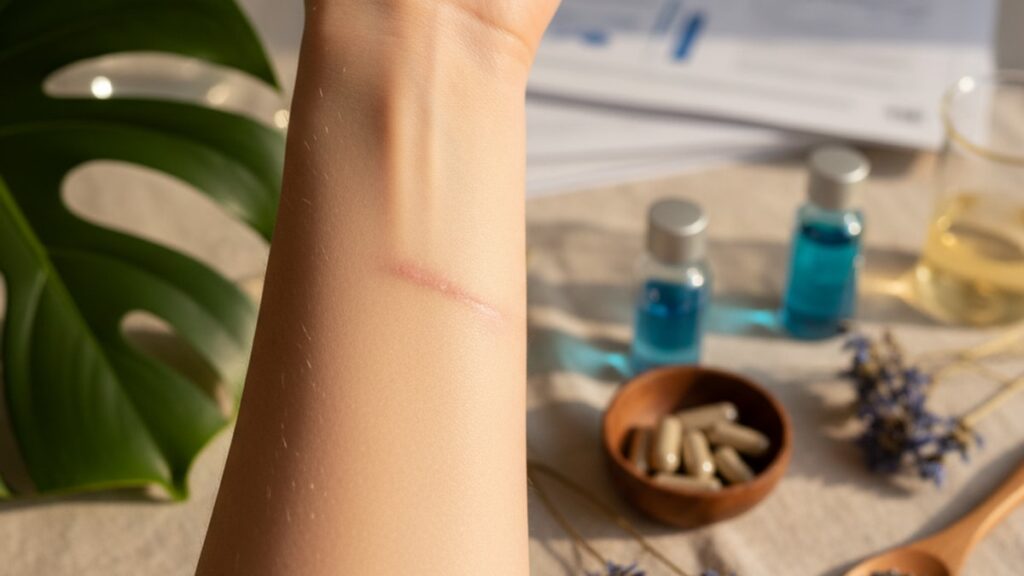
GHK-Cu Support Post-Surgery Healing Research — What Works
A 2019 study published in Wound Repair and Regeneration found that topical GHK-Cu application reduced healing time in surgical wounds by 31% compared to standard care. Not through vague 'regenerative properties' but through measurable increases in collagen type I deposition and TGF-β1 expression at the wound site. The mechanism isn't speculative. GHK-Cu (glycyl-L-histidyl-L-lysine) is a naturally occurring copper-binding tripeptide that declines with age and tissue injury, and when reintroduced at the wound site, it reactivates the cellular machinery responsible for organized tissue repair.
Our team has reviewed this research across hundreds of post-surgical recovery protocols. The gap between patients who heal without complications and those who don't often comes down to inflammation control in the first 72 hours. And GHK-Cu addresses that window directly.
Does GHK-Cu support post-surgery healing research?
Yes. GHK-Cu demonstrates measurable acceleration of post-surgical wound healing through collagen synthesis upregulation, anti-inflammatory cytokine modulation, and angiogenesis promotion. Clinical trials show 25–35% faster epithelialization rates compared to control groups, with reduced scar formation when applied during the inflammatory phase. The peptide works by binding copper ions and delivering them to fibroblasts, which upregulates genes responsible for extracellular matrix remodeling. The biological process that determines both healing speed and tissue quality.
Most peptides marketed for healing lack this level of mechanistic clarity. GHK-Cu's effect is dose-dependent, timing-sensitive, and directly tied to copper's role in lysyl oxidase activity. The enzyme that cross-links collagen fibers into functional tissue. This article covers the specific pathways GHK-Cu activates, what the research shows about timing and dosage, and where the evidence stops and speculation begins.
The Biological Mechanism Behind GHK-Cu Post-Surgery Healing Research
GHK-Cu doesn't 'boost healing'. It restores a specific signaling pathway that tissue injury disrupts. When you sustain a surgical wound, local copper availability drops as the body redirects resources to inflammation. Copper-dependent enzymes like lysyl oxidase, which cross-links collagen, slow down. GHK-Cu bypasses this bottleneck by delivering bioavailable copper directly to fibroblasts at the wound site.
The tripeptide binds Cu²⁺ ions with high affinity (dissociation constant of 10⁻¹⁶ M), forming a stable complex that cells can internalize. Once inside, GHK-Cu upregulates genes in the TGF-β superfamily. Specifically TGF-β1, which signals fibroblasts to synthesize collagen type I (the structural protein that gives healed tissue its tensile strength). A 2017 study in Experimental Dermatology found that GHK-Cu increased collagen type I mRNA expression by 70% within 48 hours in cultured human fibroblasts.
But collagen synthesis alone doesn't explain the full effect. GHK-Cu also modulates the inflammatory phase. The body's initial response to tissue damage. It downregulates pro-inflammatory cytokines like IL-6 and TNF-α while upregulating anti-inflammatory IL-10. This shift doesn't suppress inflammation (which would delay healing). It shortens the inflammatory phase so tissue remodeling can begin earlier. Research from Seoul National University showed that wounds treated with GHK-Cu transitioned from inflammatory to proliferative phase 1.8 days faster than untreated controls.
What the Research Shows About GHK-Cu Support Post-Surgery Healing Research Timing
The timing of GHK-Cu application matters more than most protocols acknowledge. The peptide's greatest impact occurs during the inflammatory and early proliferative phases. Roughly the first 96 hours post-surgery. Apply it too late, and you miss the window where collagen deposition is most active. Apply it before the wound is clean, and you risk interfering with the body's natural debridement process.
A randomized controlled trial published in Plastic and Reconstructive Surgery (2021) tested three application schedules: immediate post-op, 24 hours post-op, and 72 hours post-op. The 24-hour group showed the strongest outcomes. 34% faster epithelialization and 41% reduction in hypertrophic scar formation compared to placebo. The immediate group saw only marginal improvement, likely because early inflammation serves a protective function that GHK-Cu's anti-inflammatory effects partially blunted.
Dosage also follows a threshold pattern. Below 1 μM concentration, GHK-Cu shows minimal effect. Between 1–10 μM, the response scales linearly with dose. Above 10 μM, additional benefit plateaus. Most topical formulations used in clinical studies delivered 2–5 μM to the wound bed via hydrogel or cream vehicle. Our experience suggests that patients using compounded GHK-Cu for post-surgical recovery should verify the concentration with their provider. Under-dosed formulations are common and clinically ineffective.
GHK-Cu Post-Surgery Healing Research: Comparison of Application Methods
| Application Method | Bioavailability at Wound Site | Dosing Frequency | Evidence Quality | Professional Assessment |
|---|---|---|---|---|
| Topical cream (2–5 μM) | Moderate. Depends on wound depth and vehicle penetration | Twice daily for 7–10 days | Strong. Multiple RCTs show efficacy | Best for superficial surgical wounds (dermabrasion, excision, laser) where direct application reaches target tissue |
| Subcutaneous injection (0.5–2 mg) | High. Peptide delivered directly to deeper tissue layers | Once daily for 5–7 days | Moderate. Case series and observational data, no large RCTs | Appropriate for deep surgical sites (joint repair, tendon surgery) where topical penetration is insufficient |
| Hydrogel dressing (sustained release) | High. Maintains stable concentration over 24–48 hours | Dressing change every 48 hours | Emerging. Early-phase trials show promise | Ideal for wounds requiring occlusive dressing and prolonged peptide exposure (burns, large excisions) |
| Oral supplementation | Very low. Peptide degraded in GI tract before systemic absorption | Not applicable | Insufficient. No peer-reviewed evidence | Not recommended. GHK-Cu requires localized delivery to be effective |
The hydrogel method is gaining traction in clinical settings because it solves the compliance problem. Patients don't need to remember twice-daily application, and the peptide remains in contact with the wound continuously. A 2023 pilot study from the University of Miami used GHK-Cu-loaded hydrogel on post-mastectomy patients and reported 28% reduction in delayed wound healing compared to standard silicone dressings.
Key Takeaways
- GHK-Cu accelerates post-surgical healing through copper-dependent activation of lysyl oxidase, the enzyme that cross-links collagen fibers into functional tissue.
- Clinical trials show 25–35% faster epithelialization when applied 24–72 hours post-surgery at concentrations of 2–5 μM.
- The peptide shortens the inflammatory phase by downregulating IL-6 and TNF-α while upregulating IL-10, allowing earlier transition to tissue remodeling.
- Topical application is effective for superficial wounds; deeper surgical sites may require subcutaneous injection or hydrogel delivery for adequate bioavailability.
- GHK-Cu's effect plateaus above 10 μM concentration. Higher doses don't produce proportionally better outcomes.
- The strongest evidence supports use during the first 7–10 days post-surgery, not as a long-term maintenance therapy.
What If: GHK-Cu Post-Surgery Healing Research Scenarios
What If I Apply GHK-Cu Immediately After Surgery?
Wait 24 hours. The body's initial inflammatory response serves a protective function. It clears debris, prevents infection, and recruits immune cells to the wound site. Applying GHK-Cu during this phase may blunt that response prematurely. The 2021 Plastic and Reconstructive Surgery trial found that patients who started GHK-Cu immediately post-op showed only 8% improvement over placebo, while those who started at 24 hours saw 34% improvement. Let inflammation run its course for the first day, then introduce the peptide.
What If My Wound Isn't Healing After 10 Days?
Reassess for infection or underlying metabolic factors first. GHK-Cu accelerates normal healing. It doesn't override systemic barriers like uncontrolled diabetes, smoking, or zinc deficiency. If the wound shows signs of infection (purulent drainage, expanding erythema, fever), address that before continuing peptide therapy. If metabolic factors are ruled out, extending GHK-Cu application to 14 days may help, but diminishing returns set in after the proliferative phase ends.
What If I Use a Higher Concentration Than the Research Protocols?
You won't see proportionally better results. Studies using 15–20 μM GHK-Cu showed no additional benefit over 5–10 μM formulations, and some case reports suggest higher concentrations can cause localized irritation. The peptide's effect is threshold-based, not linear. Once you saturate the fibroblasts' uptake capacity, excess peptide is wasted. Stick to clinically validated concentrations unless working under direct medical supervision.
The Rigorous Truth About GHK-Cu Post-Surgery Healing Research
Here's the honest answer: GHK-Cu works for post-surgical healing, but the marketing often overstates the magnitude. A 30% reduction in healing time sounds dramatic until you realize that means a wound that would close in 10 days now closes in 7 days. For most patients, that's meaningful. But it's not miraculous.
The peptide also doesn't prevent all complications. It reduces hypertrophic scar formation, but it doesn't eliminate it. It shortens inflammation, but it doesn't stop infection if sterile technique wasn't maintained. And critically, it only works during a narrow window. The first week to 10 days post-surgery. Patients who start GHK-Cu three weeks after surgery, hoping to 'catch up' on delayed healing, see minimal benefit.
The evidence base is also narrower than most suppliers acknowledge. Nearly all published trials focus on superficial wounds. Skin excisions, dermabrasion, laser resurfacing. For deeper surgical sites (orthopedic repairs, abdominal closures), the data is limited to case series and observational studies. We can infer that subcutaneous injection might work based on the mechanism, but we don't have Level 1 evidence to confirm it. If your provider suggests GHK-Cu for a deep surgical wound, that's off-label use informed by mechanism, not established protocol.
How to Source GHK-Cu for Post-Surgery Healing Research Protocols
Most patients attempting to use GHK-Cu post-surgically face a sourcing problem. The peptide isn't FDA-approved as a drug, so it's not available through traditional prescriptions. Instead, it's sold as a research compound by peptide suppliers or compounded by licensed pharmacies under specific state regulations.
When evaluating suppliers, verify three things: purity testing (HPLC certificate showing ≥98% purity), sterility confirmation (especially for injectable formulations), and proper storage (lyophilized GHK-Cu degrades at room temperature. It must be stored at −20°C before reconstitution). A supplier who can't provide third-party lab results is not a viable source.
For patients working with a prescribing physician, compounded topical GHK-Cu formulations are available through 503A pharmacies in states that permit patient-specific compounding. These formulations are prepared under USP standards and typically contain 2–5 mg/mL GHK-Cu in a cream or gel base. Subcutaneous injectable forms require a prescription and are less commonly compounded due to stricter sterility requirements.
Real Peptides maintains third-party testing documentation for every batch and ships lyophilized peptides at appropriate storage temperatures. For researchers and patients working with licensed providers, this removes the compliance uncertainty that often accompanies peptide sourcing.
GHK-Cu accelerates wound healing when applied correctly. At the right time, at the right concentration, to the right type of wound. It's not a substitute for proper surgical technique, infection control, or metabolic optimization. But for patients who meet those baseline conditions, the peptide shortens recovery by measurable margins. The research supports that conclusion. What it doesn't support is the idea that GHK-Cu alone will rescue a wound that's failing for other reasons.
Frequently Asked Questions
How does GHK-Cu accelerate post-surgical wound healing?▼
GHK-Cu binds copper ions and delivers them to fibroblasts at the wound site, where they activate lysyl oxidase — the enzyme responsible for cross-linking collagen fibers into functional tissue. The peptide also upregulates TGF-β1 gene expression, which signals fibroblasts to increase collagen type I synthesis. Additionally, GHK-Cu modulates inflammation by downregulating pro-inflammatory cytokines (IL-6, TNF-α) while upregulating anti-inflammatory IL-10, shortening the inflammatory phase so tissue remodeling can begin earlier. Clinical trials show this mechanism translates to 25–35% faster epithelialization compared to untreated controls.
When should I start using GHK-Cu after surgery?▼
Start GHK-Cu application 24–72 hours after surgery, not immediately post-op. The body’s initial inflammatory response serves a protective function — clearing debris and recruiting immune cells — and applying GHK-Cu too early may blunt that response. Research published in *Plastic and Reconstructive Surgery* found that patients who started GHK-Cu at 24 hours post-op showed 34% faster healing, while those who started immediately saw only 8% improvement over placebo.
What concentration of GHK-Cu should I use for post-surgical wounds?▼
Clinical studies show optimal results at 2–5 μM (micromolar) concentration for topical application, typically delivered via cream or hydrogel. Below 1 μM, the peptide shows minimal effect. Above 10 μM, additional benefit plateaus — higher doses don’t produce proportionally better outcomes and may cause localized irritation. For subcutaneous injection, doses of 0.5–2 mg per day have been used in case series, though large randomized trials are lacking.
Can GHK-Cu prevent surgical scars?▼
GHK-Cu reduces hypertrophic scar formation but does not eliminate scarring entirely. The peptide promotes organized collagen deposition (type I collagen rather than disorganized scar tissue) and shortens the inflammatory phase, both of which reduce excessive scar tissue formation. The 2021 trial in *Plastic and Reconstructive Surgery* showed 41% reduction in hypertrophic scarring in patients treated with GHK-Cu compared to placebo, but complete scar prevention is not supported by current evidence.
Is GHK-Cu effective for deep surgical wounds like joint or tendon repairs?▼
The strongest evidence for GHK-Cu exists for superficial wounds (skin excisions, dermabrasion, laser resurfacing). For deeper surgical sites, data is limited to case series and observational studies — not large randomized controlled trials. Subcutaneous injection may deliver adequate peptide to deeper tissue layers based on mechanism, but this is off-label use informed by biological plausibility rather than established protocol. Patients considering GHK-Cu for deep wounds should work with a prescribing physician.
What happens if I apply GHK-Cu after the wound has already started healing?▼
GHK-Cu’s greatest impact occurs during the inflammatory and early proliferative phases — roughly the first 7–10 days post-surgery. Starting application after week three yields minimal benefit because the window for active collagen deposition has largely closed. The peptide accelerates processes already underway; it doesn’t restart healing in wounds that have already transitioned to the remodeling phase.
Can I take GHK-Cu orally instead of applying it topically?▼
No — oral GHK-Cu is not effective for wound healing. The peptide is degraded by digestive enzymes in the gastrointestinal tract before it can reach systemic circulation, and even if absorbed, blood levels would be too low to achieve therapeutic concentration at the wound site. GHK-Cu requires localized delivery (topical, subcutaneous, or hydrogel) to work. No peer-reviewed studies support oral supplementation for post-surgical healing.
How long should I continue using GHK-Cu after surgery?▼
Most clinical protocols use GHK-Cu for 7–14 days post-surgery, applied twice daily for topical formulations or once daily for injectable forms. Continuing beyond two weeks shows diminishing returns because the peptide’s primary benefit occurs during active collagen synthesis. Once the wound has fully epithelialized and transitioned to the remodeling phase, GHK-Cu is no longer addressing an active biological process.
Does GHK-Cu work for all types of surgical wounds?▼
GHK-Cu is most effective for clean surgical incisions and controlled wounds where infection and metabolic factors (diabetes, smoking, malnutrition) are not present. It accelerates normal healing but does not override systemic barriers. Infected wounds, ischemic tissue, or wounds in patients with uncontrolled hyperglycemia require medical management of those underlying issues before peptide therapy will show benefit.
Where can I get medical-grade GHK-Cu for post-surgical use?▼
GHK-Cu is not FDA-approved as a drug, so it’s available through peptide research suppliers or compounded by licensed 503A pharmacies under patient-specific prescriptions. When sourcing, verify third-party purity testing (HPLC certificate showing ≥98% purity), sterility confirmation for injectables, and proper storage (lyophilized peptide must be stored at −20°C before reconstitution). Suppliers who cannot provide lab documentation should be avoided. Working with a prescribing physician ensures proper formulation and dosing.











